|
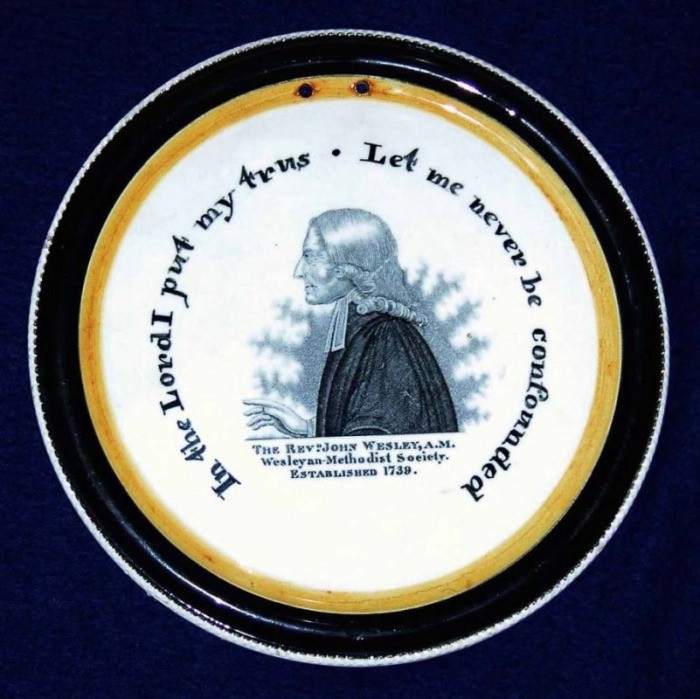
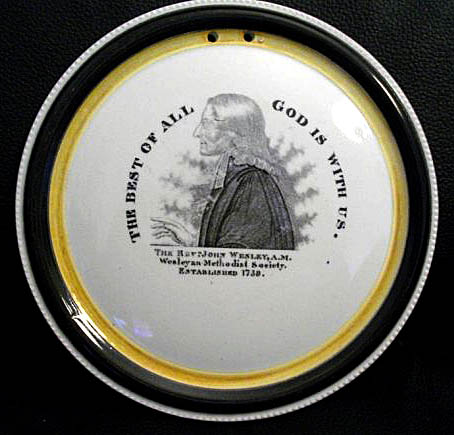
12/24/2010 0 Comments More on the 'Dixon' WesleyThanks to Donald H Ryan and The Museum of Methodism, Wesley's Chapel, London, for some more superb Wesley plaques which I've added today. The two below, although unmarked, I think further strengthen the 'Dixon' attribution for these circular plaques. See the recently updated Dixon plaques page for more information. I've also added some Wesley plaques to the relief plaques page. 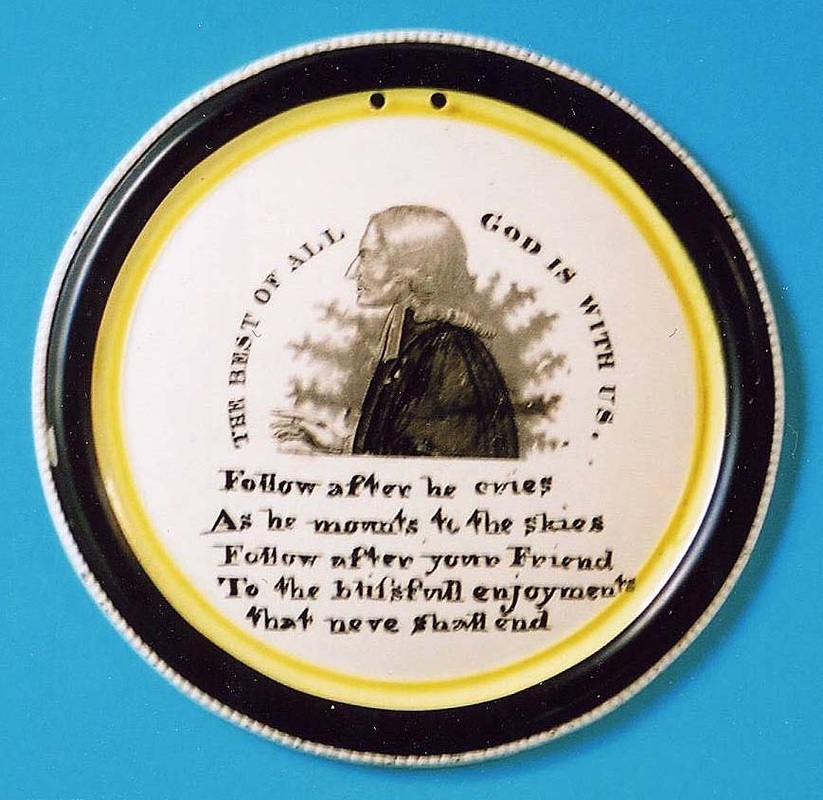 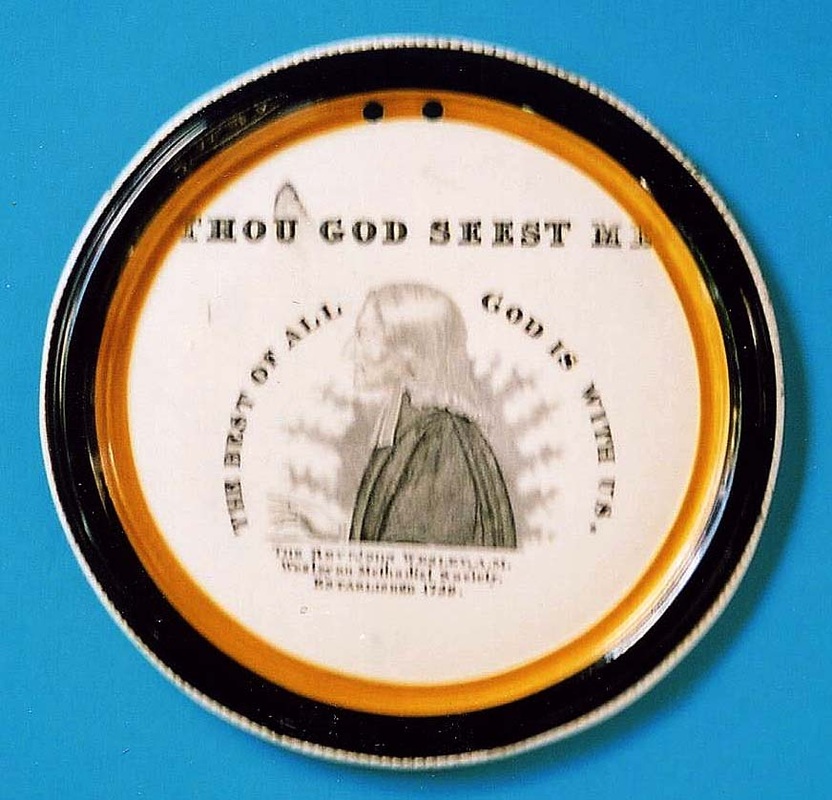 Merry Christmas to everyone from MSTP!
0 Comments
12/22/2010 0 Comments The 'Maling' ClarkePlease read my previous blog post on the 'Maling' Wesley first. I've seen fewer Clarke plaques (of the kind below) than Wesleys. The below left plaque has distinctive green-flecked brush stokes and is, on that basis, attributed to Maling. It has a diagonally hatched background with distinctive flaws. Compare it with the 'non-Maling' blue-bordered plaque (below right). The diagonal hatching to Clarke's right, continues lower on the 'Maling' version. Compare, also, the jagged edge on the bottom of Clarke's jacket. However, the easiest way to distinguish the 'Maling' Clarke is that the full stop and letter 'F' in FSA, have merged into each other so it looks like a letter 'E'. In contrast 'LLD' and 'FSA' on the 'non-Maling' plaque aren't punctuated. (Click on the images to enlarge, and to navigate between them.) 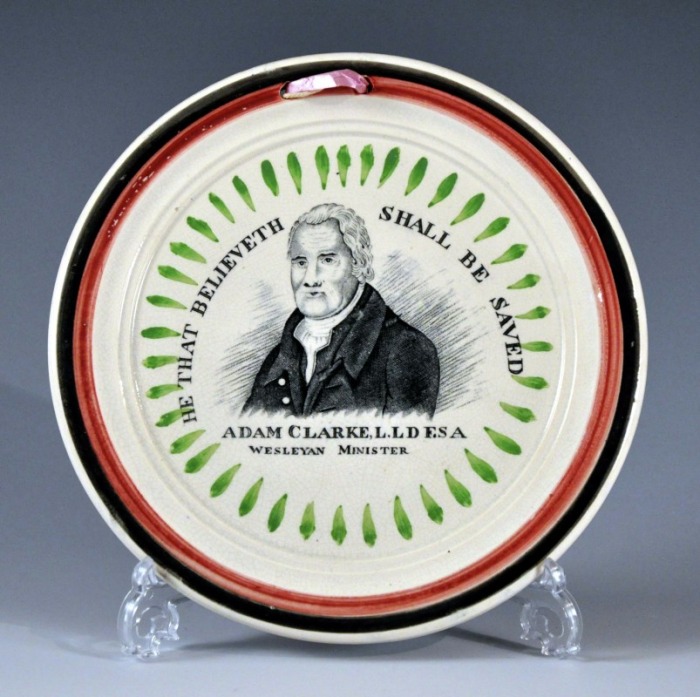  All of the following plaques are the 'Maling' Clarke. Like the Wesley, the 'Maling' Clarke appears on plaques with leaf-moulded borders. 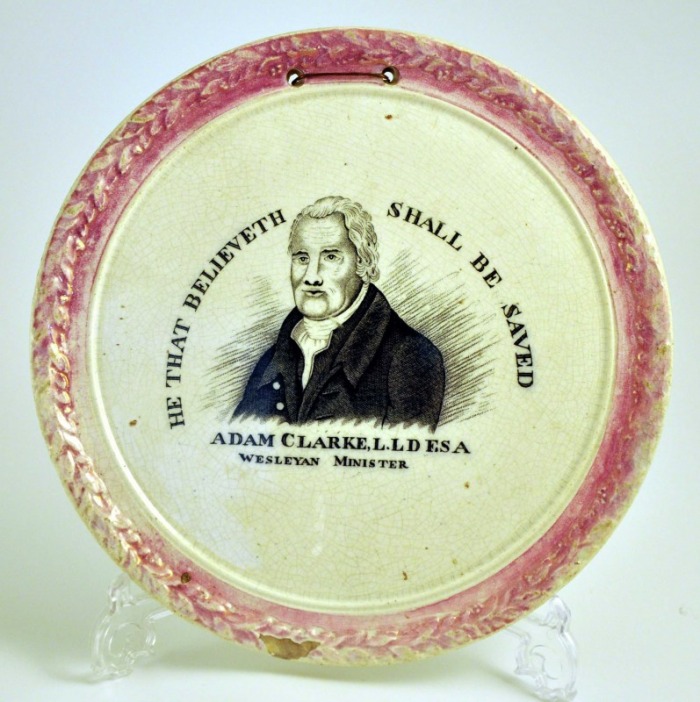 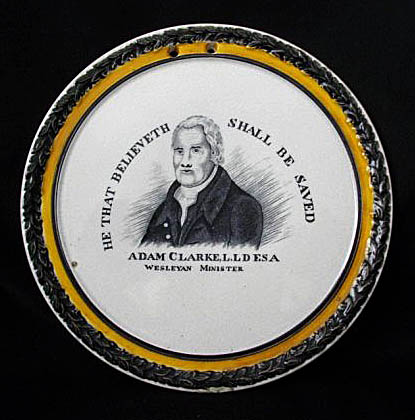 It also appears on pink-lustre plaques and black and yellow bordered plaques without leaf borders. 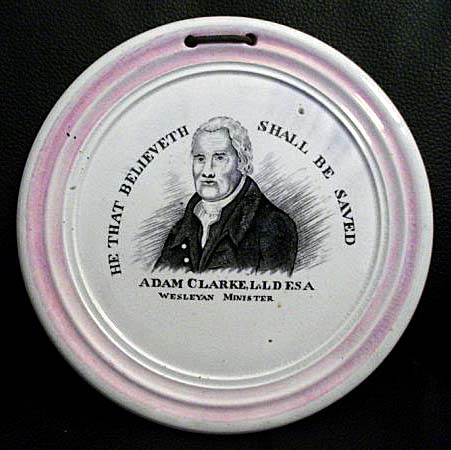 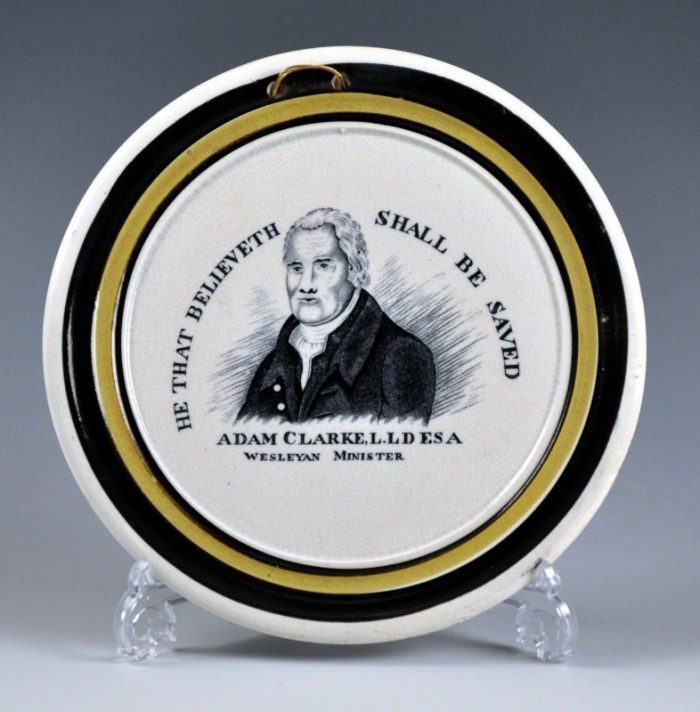 12/21/2010 0 Comments The 'Maling' WesleyThis attribution is more controversial than my Dixon blog post because there are no known Wesley plaques with the Maling impressed mark. Maling plaques made between 1817 and c1830 (like the one below left) usually have the semi-circular impressed 'MALING' mark. Unmarked circular plaques (c1830–c1840) are often attributed to Maling if they are decorated with green-flecked brushstrokes (right below). See my September 29 blog post for another tentative link between these unmarked plaques and Maling. 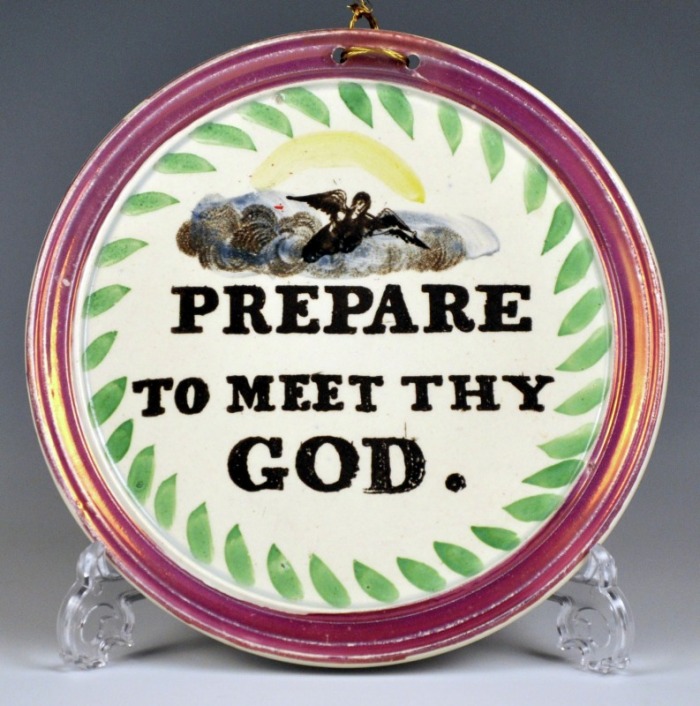 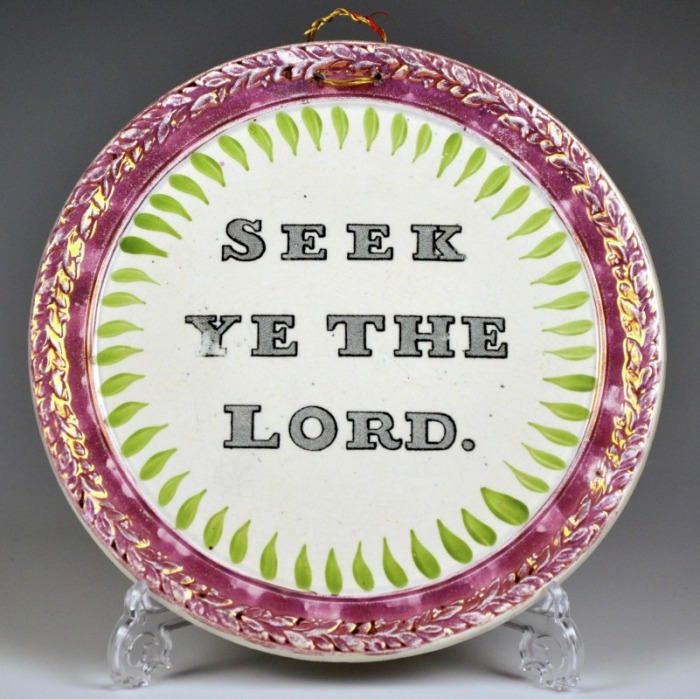 Until someone convinces me otherwise, I'll refer to the Wesley transfer that appears on these green-flecked plaques as the 'Maling' Wesley. So what are its attributes? It appears on circular plaques bordered by moulded leaves in a variety of colour combinations. The 'Maling' Wesley transfer has a diagonally hatched background with a unique flaw. Imagine Wesley is holding a cigarette between his fingers, and a white smoke ring is drifting from its end, which you can faintly make out against the hatched background. 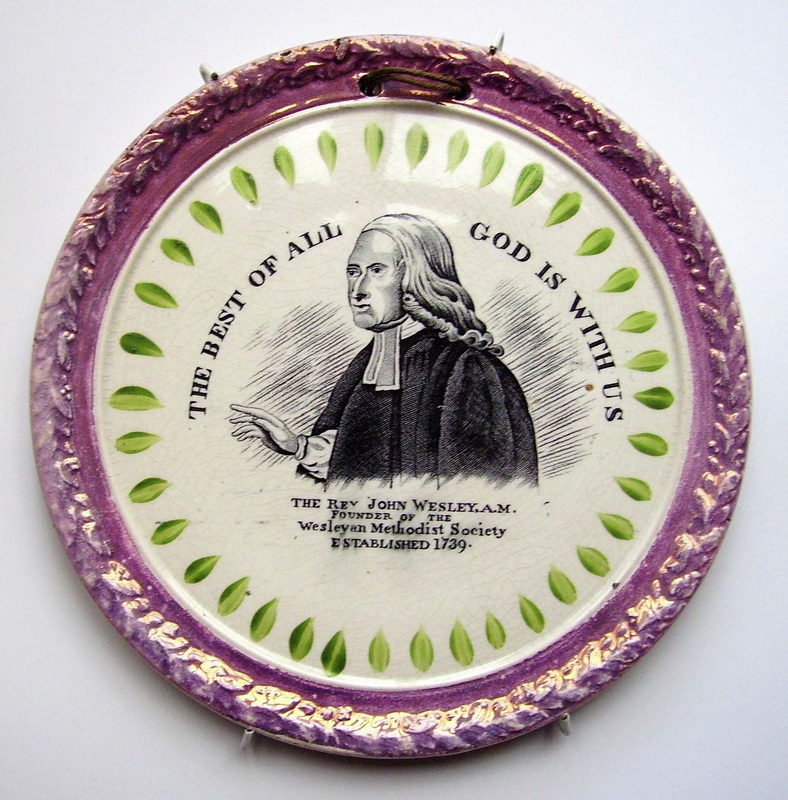 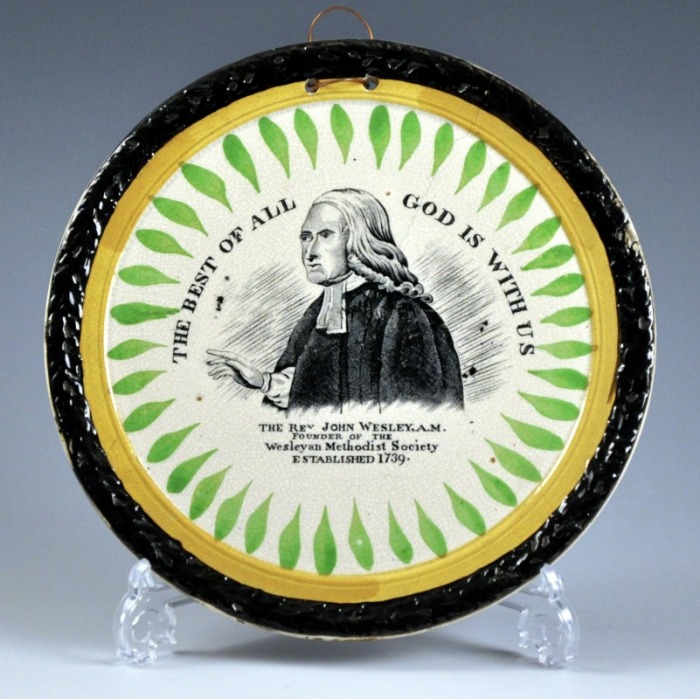 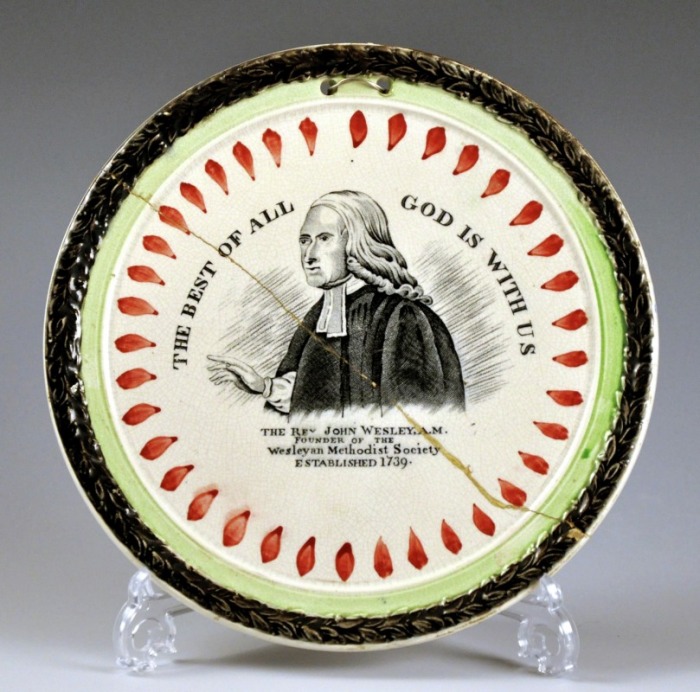 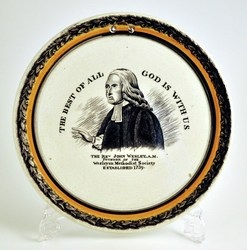 It also appears on plaques without leaf borders. Compare the two green-bordered plaques below. The one on the left is the 'Maling' transfer with the smoke ring. The one on the right isn't. (Click on the images to enlarge and to move backwards and forwards between them.) The two plaques beneath them with blue outer borders are also 'non-Maling', i.e. no smoke ring. Note that unlike the 'Maling' Wesley, there is no full stop on these plaques after the date '1739'. The 'non-Maling' plaques aren't pearlware. Their body is off-white and speckled. These plaques are also flatter and thinner than their 'Maling' counterparts. 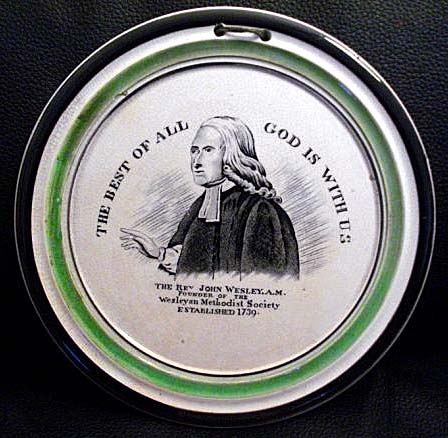 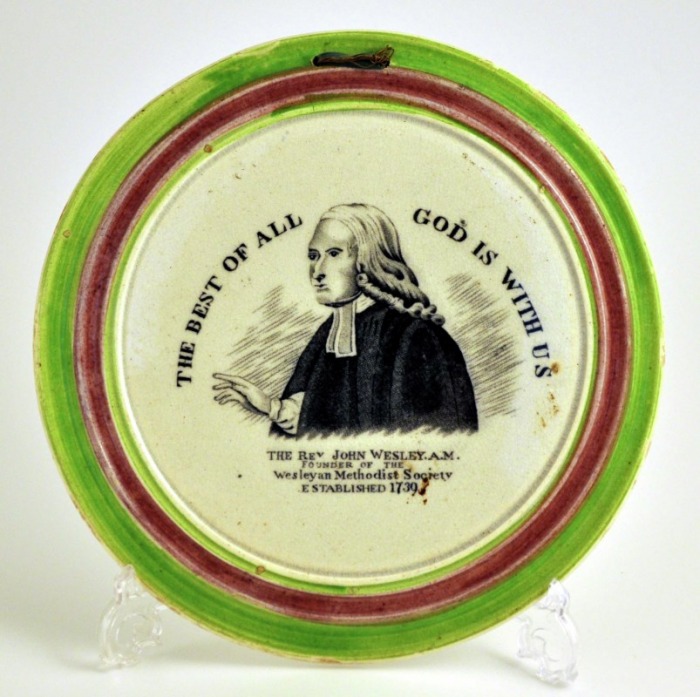  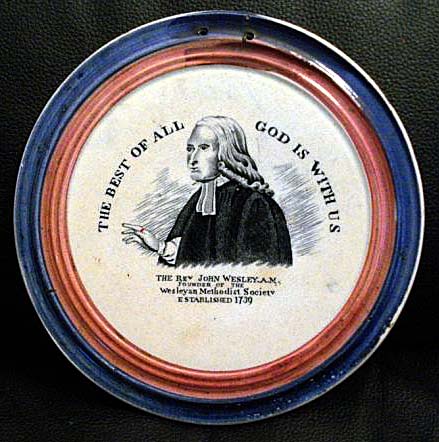 Finally, below are two pink-bordered plaques with the 'Maling' Wesley transfer. I've seen several examples of the left plaque (Wesley and Clarke) and nearly all have faded lustre borders. 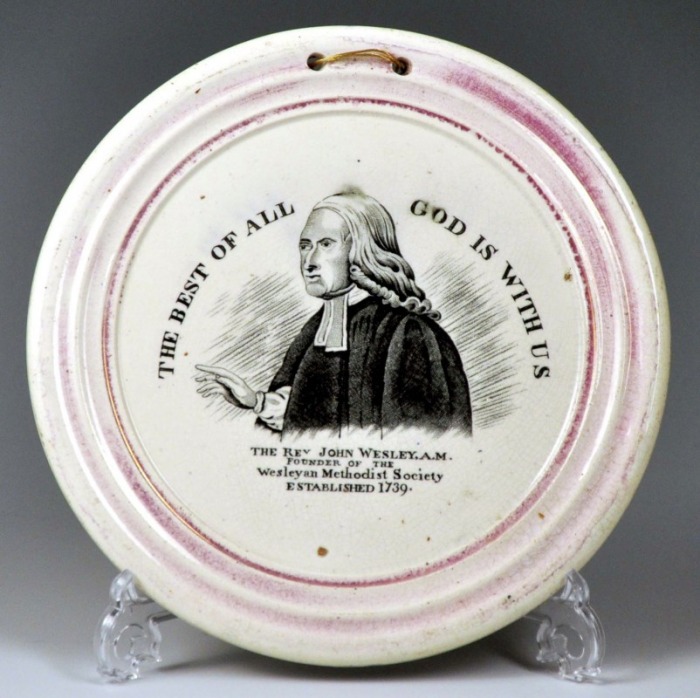 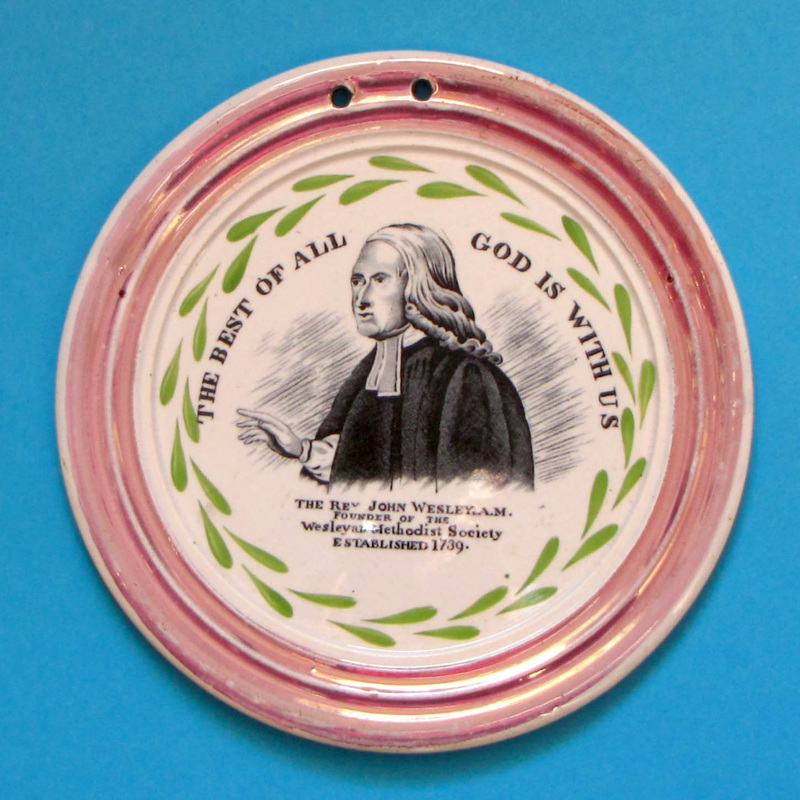 If anyone knows of a 'Maling' Wesley on a jug, bowl or plate, please contact me. It might help to prove (or disprove!) the attribution.
12/20/2010 0 Comments The 'Dixon' ClarkeFor just about every Wesley, there's a Clarke to pair. So further to my December 17 blog post, here are the corresponding Clarkes. NB the transfer on the circular black and yellow bordered plaque, unlike the Wesley, appears to be a reasonable print. The Clarke transfer attributed to 'Dixon' (below left) has a curvy undulating 'aura'. Its peaks (or prongs to use the term in my Wesley blog post) cling much closer to Clarke's outline, particularly at the bottom right, where the first is almost lost in Clarke's jacket. The below right plaque, in contrast, has pointed prongs much more similar to Wesley's. (Click on the photos to enlarge and to navigate between the images.)   The below left plaque is also attributed to Dixon. The below right (non-Dixon) version has a similar curvy aura, but the peaks are much higher to the right of Clarke, particularly at the bottom. The white spaces between the peaks are thinner. 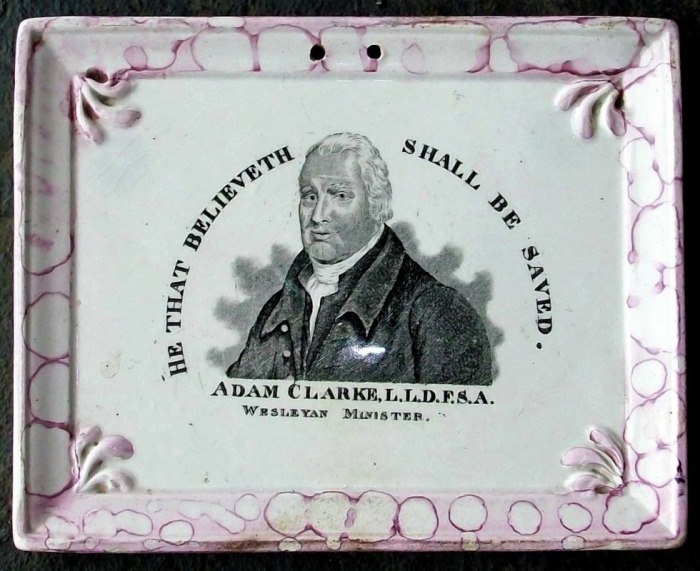 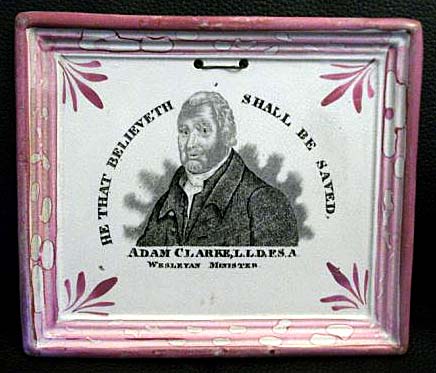 The next two plaques are both Dixon. The left has the Dixon, Phillips and Co, surrounding anchor, impressed mark. I've suggested a date range of 1834–1850 for this mark. The right plaque is later, c1851–1865, and has the impressed mark Dixon Co.  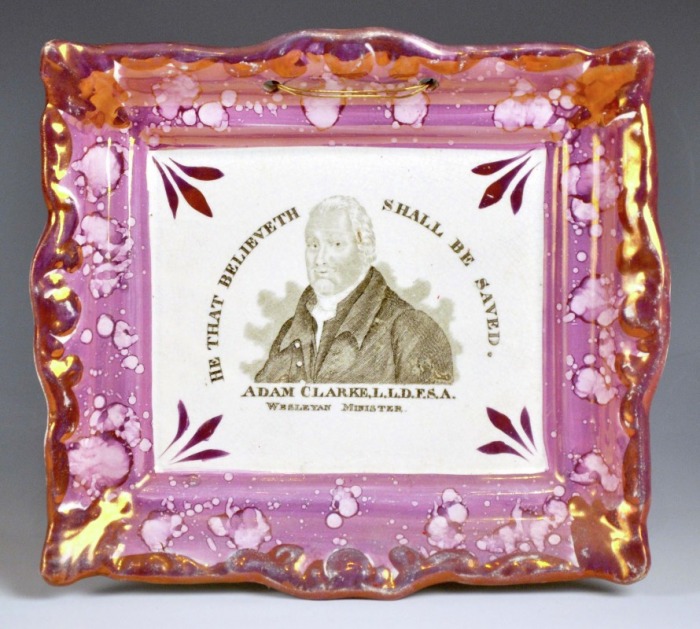 The final plaque is attributed to John Carr's Low Lights Pottery in North Shields, but also has the 'Dixon' Clarke transfer. It seems likely, therefore, that it post dates 1865 when the Garrison Pottery (Dixon & partners) closed. The copper transfer plates were sold to other potteries in that year. Again, the transfer plate looks to have been re-engraved to improve clarity.  If anyone reading this disagrees with my logic, please get in touch. Also, I'd love to hear from anyone with a Clarke plaque that pairs with plaque 6 in my Wesley blog post.
12/20/2010 0 Comments George IVThanks to George H Haggarty of the National Museums Scotland for getting in touch. I've added some extra information and two superb George IV plaques to the relief plaques page. 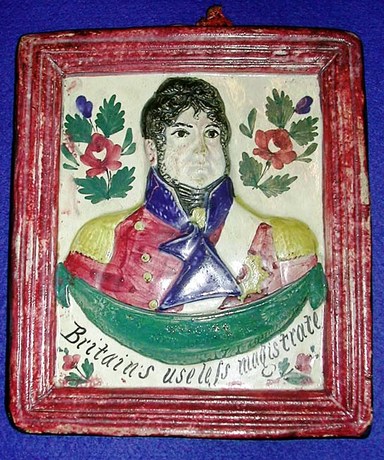 12/17/2010 0 Comments The 'Dixon' WesleyA plaque currently listed on eBay got me thinking. The circular form, and black and yellow borders, are generally associated with the earlier years of transfer-printed plaque production (1820–1840). See the plaque dates page for an overview. But the transfer itself is worn and degraded – in this case lacking a nose. In fact, of the 5 or 6 plaques I've seen of this kind (e.g. below left photo), all of them have been pretty worn looking. There are several transfers based on the Edridge portrait, with subtle variations. I'm going to stick my neck out and attribute this one to the Dixon & Co partnerships in Sunderland. So what are its defining features? Unlike the Edridge portrait, the Wesleys on plaques tend to be surrounded by what I can only describe as an 'aura' – a kind of divine force field radiating out from Wesley in prongs. The defining feature of the Dixon transfer (below left) is that to the right of Wesley there are 6 prongs, whereas on other Wesley transfers there are only 5 prongs. (Note also that the plaque below right has an extra line of script, 'FOUNDER OF THE', in the title.) The Dixon transfer, unlike the others, has a full stop after the word 'Society'.  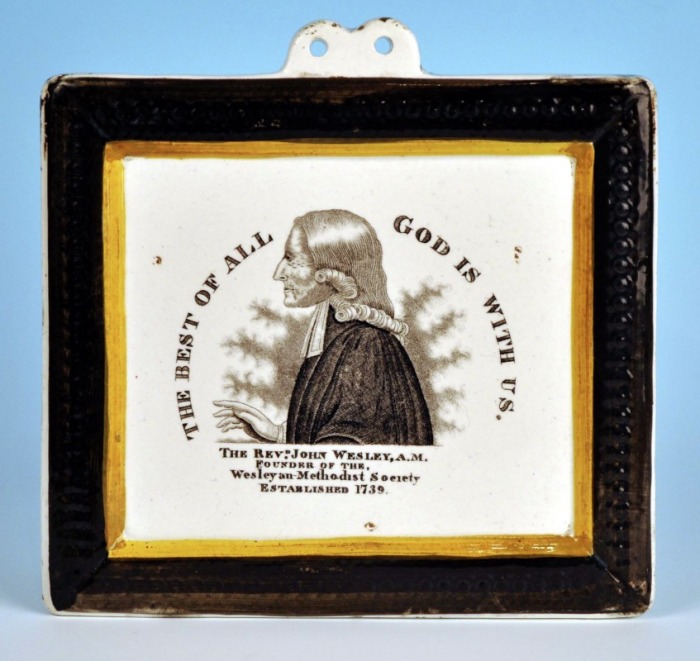 Small rectangular plaques with three 'feathers' in each corner, like the one below left, are known to exist with the Dixon, Phillips and Co, surrounding anchor, impressed mark. This one is unmarked. The transfer is identical to the one above it, though crisper in definition. Note the added banner 'THOU GOD SEEST ME'. This feature, which also appears on Clarke plaques, is unique (as far as I know) to Dixon. The below right plaque is a variation of the non-Dixon plaque above it. It has a 5-pronged aura, but lacks the words 'FOUNDER OF THE' in the title. 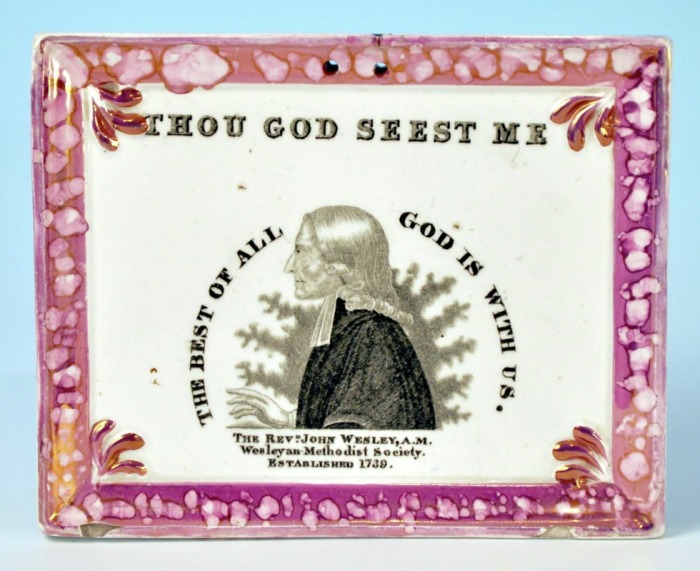 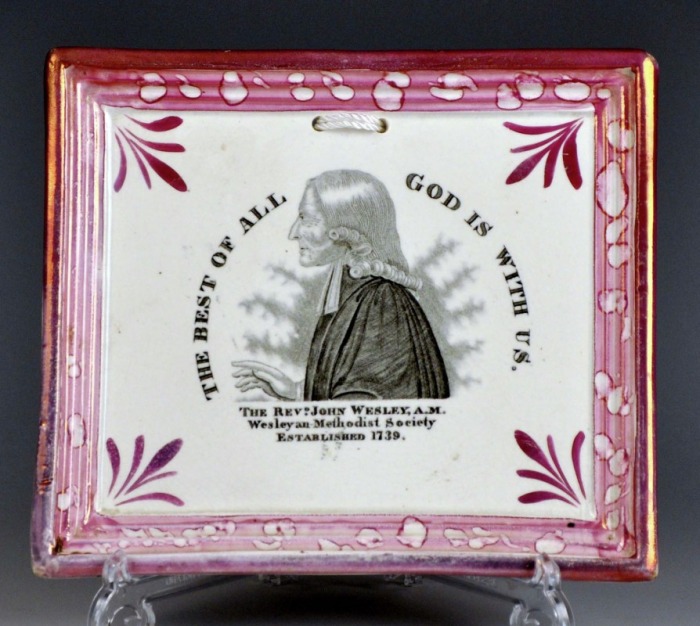 Neither of the next two plaques was made by Dixon. They are both of later forms with wide borders. The plaque on the left does, however, have the 'Dixon' Wesley transfer with 6 prongs. The plaque is attributed to John Carr's Low Lights Pottery in North Shields. It seems likely, therefore, that it post dates 1865 when the Garrison Pottery (Dixon & partners) closed. The copper transfer plates were sold to other potteries in that year. The Carr pottery also produced Masonic plaques with the two columns (see emblems and armorials) more usually associated with Dixon. It is likely that Carr had the plates re-engraved to restore clarity. The below right plaque, from an as yet unidentified pottery, appears to have the same transfer as the small plaque above it. 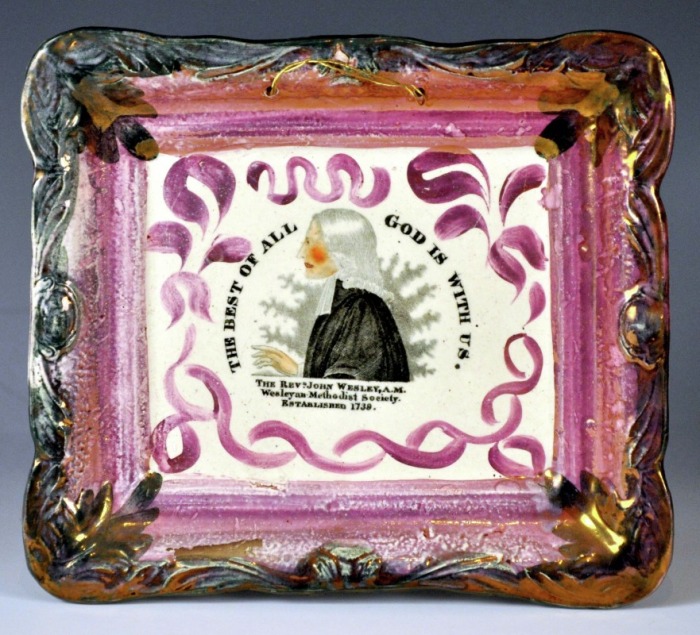 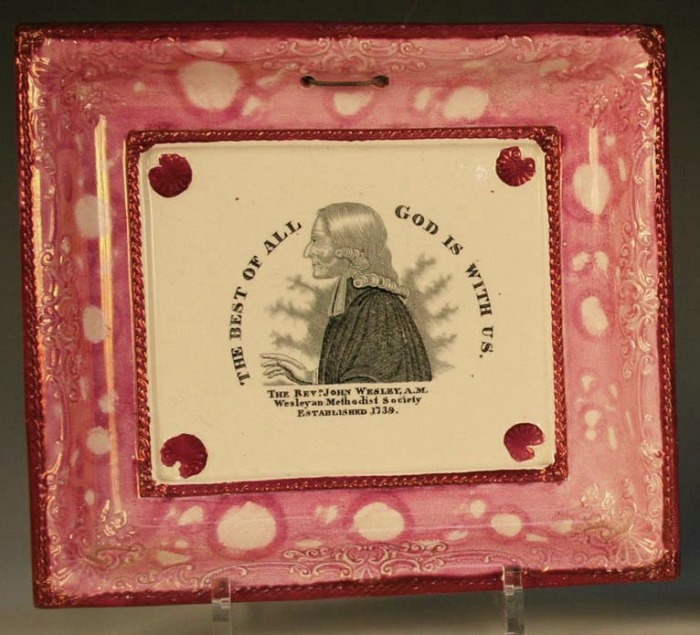 The final two plaques are both Dixon. The left has the Dixon, Phillips and Co, surrounding anchor, impressed mark. My research suggests a date range of 1834–1850 for this mark. The right plaque is later, I suggest 1851–1865, and has the impressed mark Dixon Co. Plaques exist with and without the 'THOU GOD SEEST ME' banner, for both impressed marks. 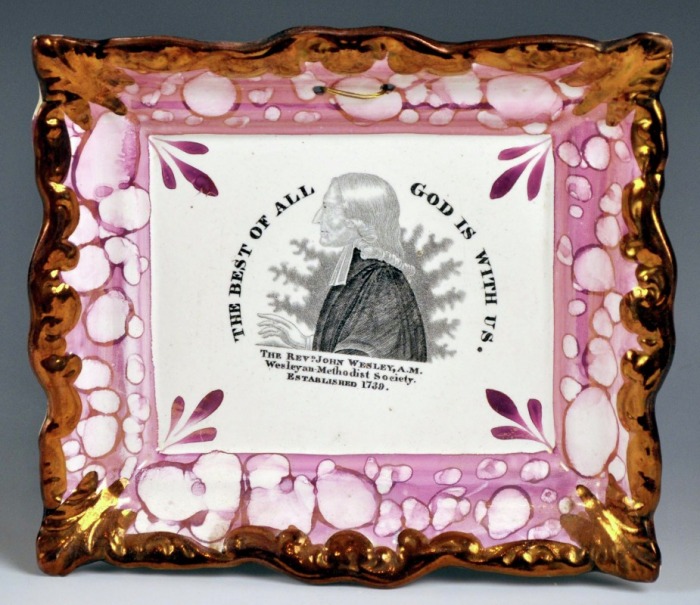  By looking at the degradation of the transfer of the circular black and yellow plaque, and comparing it with the plaques above, it should be possible to date it. My guess would be 1840s, or perhaps even 50s, which is later than I'd previously supposed. |
Proudly powered by Weebly