|
9/29/2010 0 Comments Plaques with 'scalloped' cornersThanks to Ian Holmes for the two photographs below. The top left plaque has a Robert Maling (Tyneside) impressed mark. The top right plaque has a Moore & Co (Wearside) impressed mark. The four plaques below have no makers' marks. All the plaques have what I've previously referred to as scalloped corners – they are rounded and vaguely shell-like. 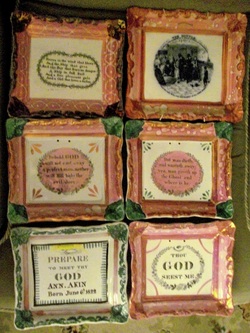 The Moore & Co plaque is larger and clearly comes from a different mould. If a mould is taken from an existent object, the objects produced from the secondary mould will be smaller than the original, as the clay shrinks during firing (this happens with Staffordshire figures reproduced that way). However, I can't assert with any confidence that the Maling plaques were produced from a secondary mould of a Moore & Co plaque. It would have been easy enough for either pottery to make a copy from scratch (think about the many mould variations of the more common bordered plaques), and my guess is that the Maling plaque (top left) is older than the Moore & co plaque (top right). The Moore & Co version (top of the pile in the photo below) is shallower (flatter). 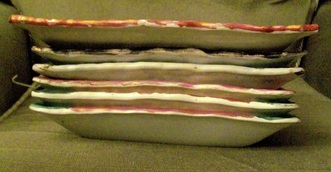 Ian and I have both wondered whether all of the smaller versions of these plaques can be attributed to Maling. Maling was renowned for decorating items using green enamels (see many examples on the Maling plaques page). Another tentative link is provided by the two plaques below. I recently purchased the unmarked plaque on the left. The right plaque, though also unmarked, is of a form often attributed to Maling. 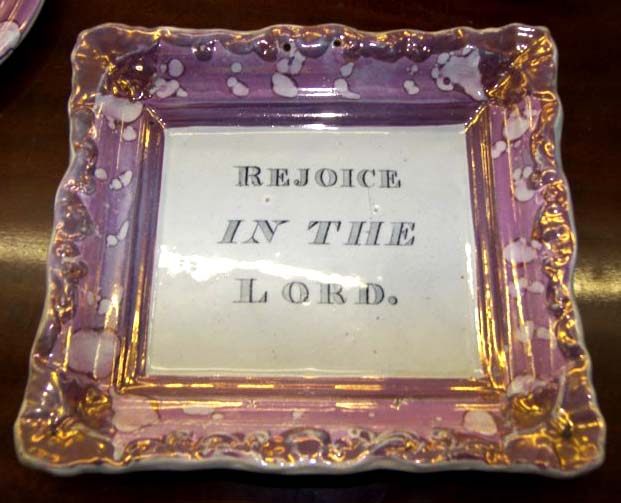 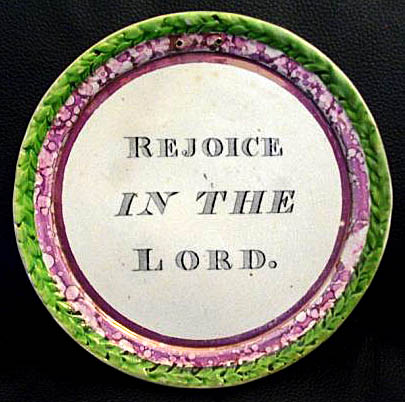 The only fly in the ointment of our efforts to attribute all the smaller, 'scalloped-cornered' plaques to Maling, is the plaque below. It has the as yet unidentified printed mark 'B. & Co.'. So not Maling. Ian has found a printed mark 'I B & Co' for Bell at the Albion Pottery (also Tyneside). So perhaps it is Bell & Co. 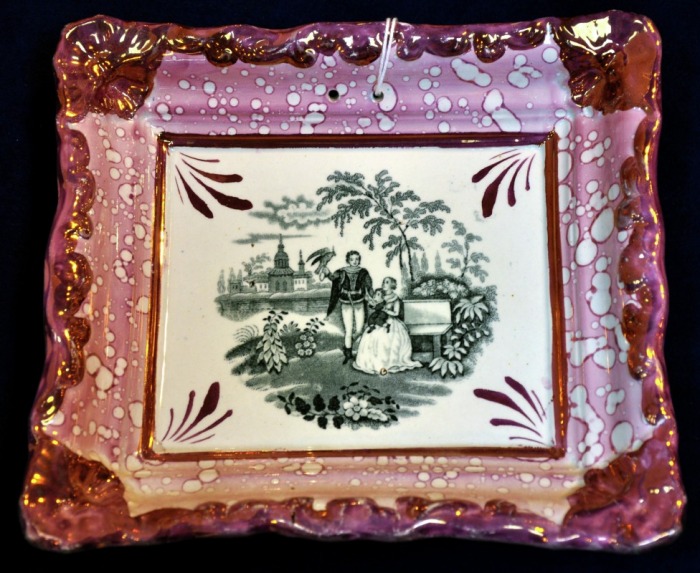 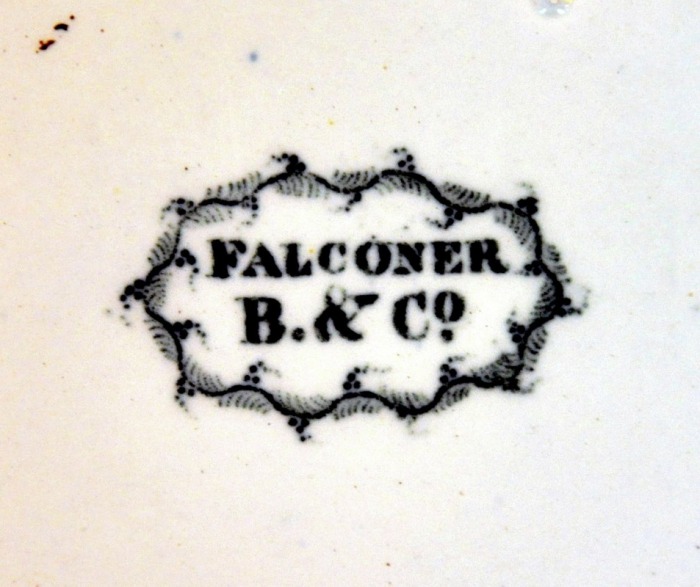 I'd love to hear from anyone with a marked plaque of this smaller Maling-type form. Even if the mark is Maling.
0 Comments
Leave a Reply. |
Proudly powered by Weebly