|
1/18/2011 0 Comments The C, C & Co Wesley?The first time I saw a small, circular, pink-lustre-bordered plaque with a Wesley, my instinct was that it must be from Cornfoot, Colville & Co's Low Lights Pottery, North Shields. On closer examination though, I realised that most of the Wesleys and Clarkes on these small round plaques have transfers associated with Scott of Southwick. But that still leaves our Wesley from my last blog post, with a bobbly, brussels-sprouts-on-a-stalk-like aura. I've posted it below, alongside three verse plaques with the impressed mark 'C. C&Co.' for comparison. 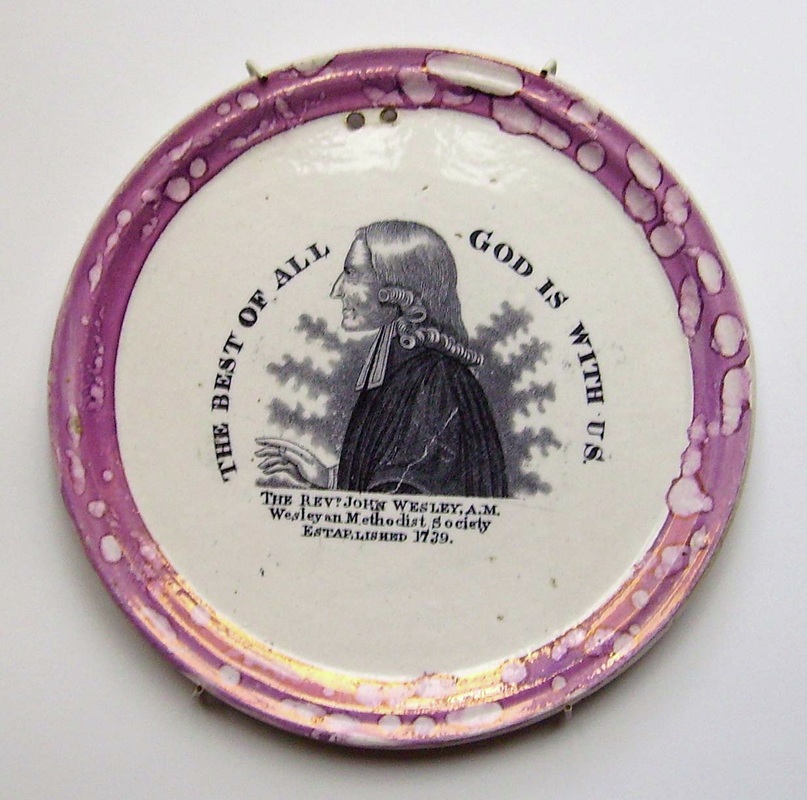 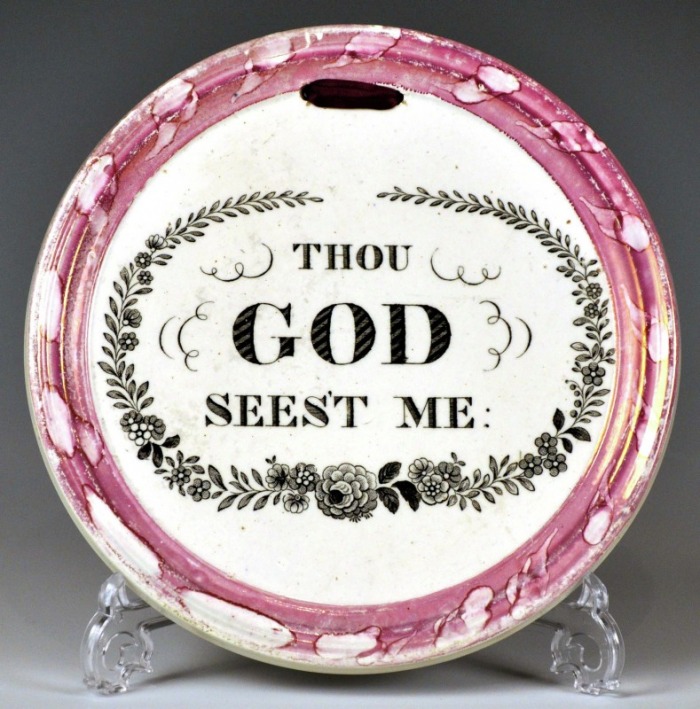  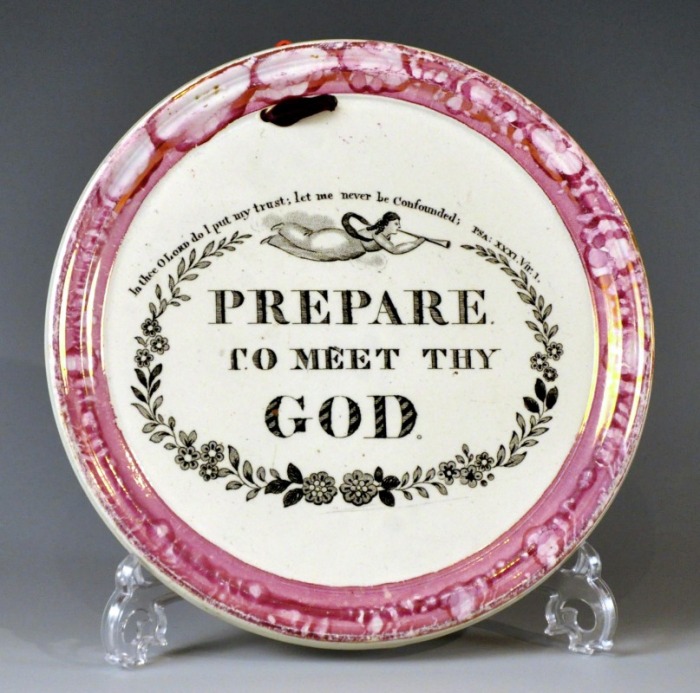 Like the C, C & Co plaques, the Wesley plaque is 167mm in diameter. The colour, quality and application of the lustre are also very similar. If the Wesley is C, C & Co, that explains the rarity of the transfer. The pottery closed c1832, the year that Adam Clarke died and North East potteries started mass-producing Wesley and Clarke commemoratives. So assuming C, C & Co made a Wesley and Clarke in 1832, they couldn't have been in production for more than a year or so. Of course, the Wesley could be older, and we don't have an Adam Clarke as yet. Another reason I think that the Wesley is relatively early (C, C & Co era), is the quality of the transfer. As mentioned in my previous post, the lettering has long elegant serifs. It seems more likely that the 'Southwick' Wesley was copied from this transfer than vice versa, and that some of the refinement was lost in the process. C, C & Co were pretty good at marking their wares, so if the attribution is correct, someone out there surely has a marked example. P.S. The C, C & Co Clarke?The plaque on the left below pairs with the Wesley above. I've put it next to the 'Southwick' Clarke for comparison (click on the images to enlarge and to move between them). The C, C & Co-attributed Clarke (left) again has refined lettering, and though the aura differs from its Wesley pair, it is more bobbly than its 'Southwick' counterpart. Sadly, it doesn't have an impressed mark. 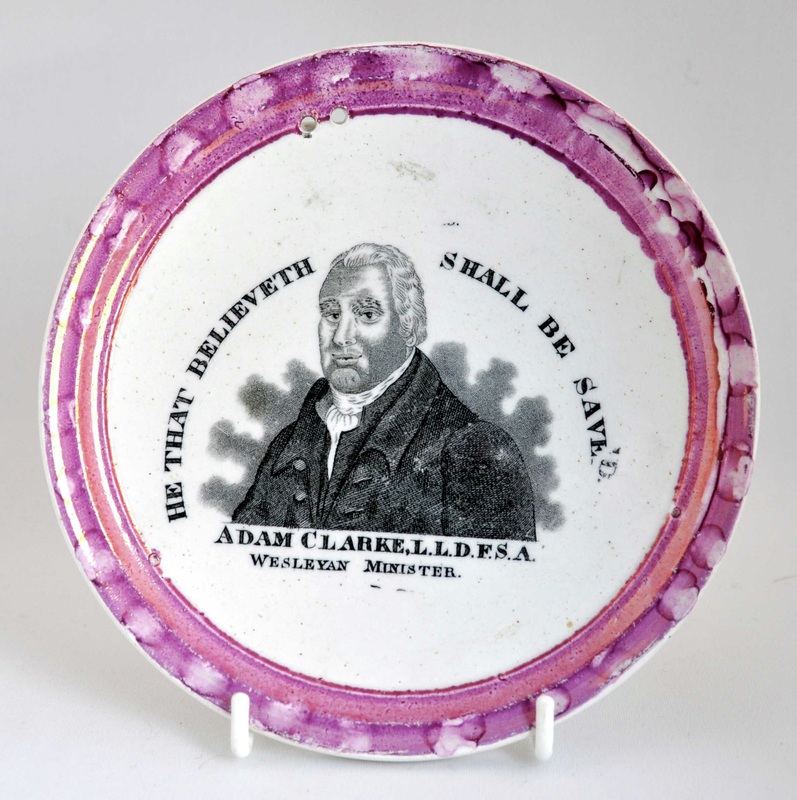 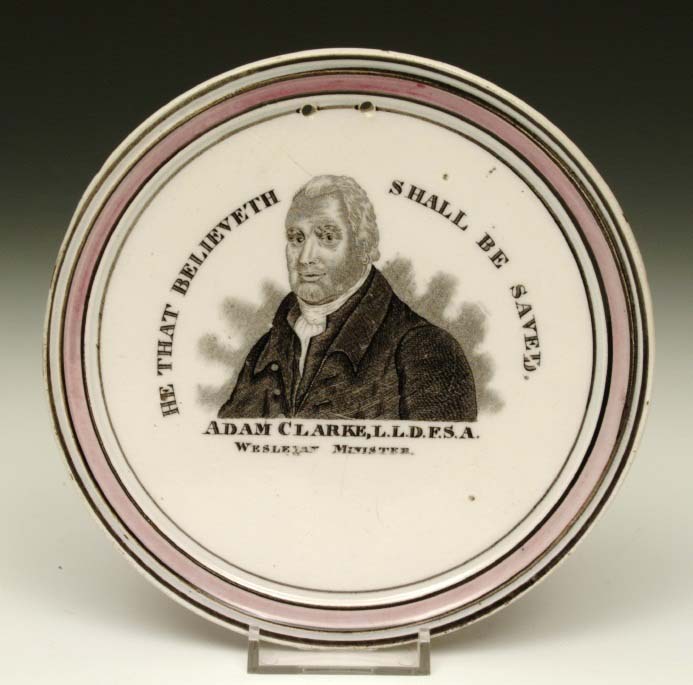
0 Comments
Leave a Reply. |
Proudly powered by Weebly