|
12/5/2011 0 Comments Thou God Sees't MeI've been adding photos of a collection of about 50 'Thou God' plaques. It is unusual for a collector to limit their scope to one verse. My first observation is that there isn't a single transfer in the collection that I haven't seen before. So this website must be closer to being a complete record than I'd imagined. There are, however, some interesting new variations of hand-painted plaques. The two plaques below caused my heart to skip a beat. 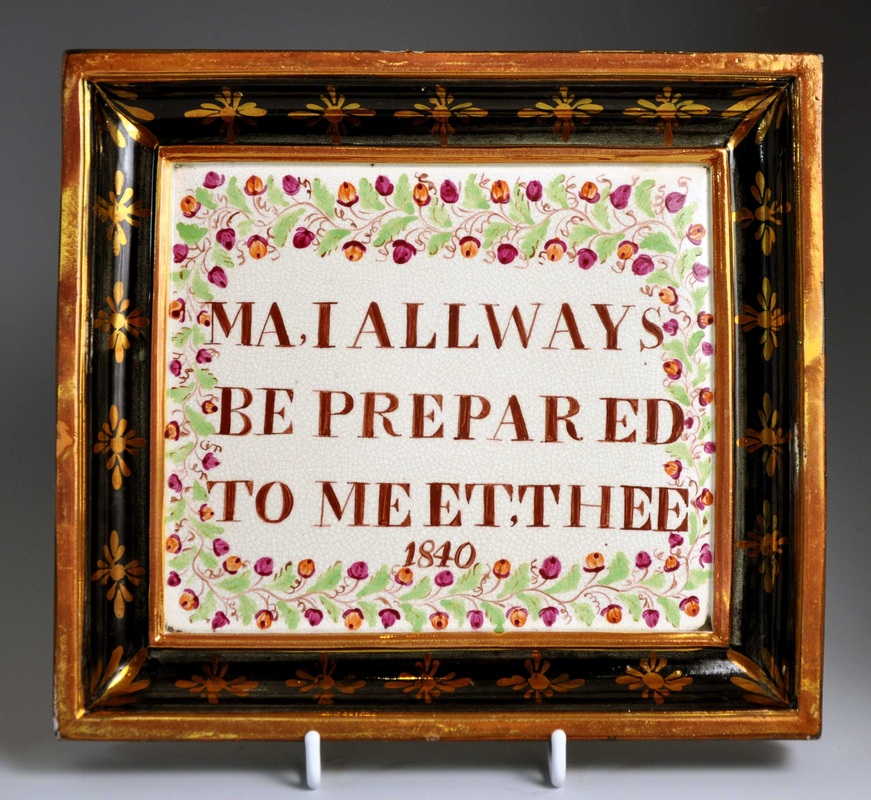 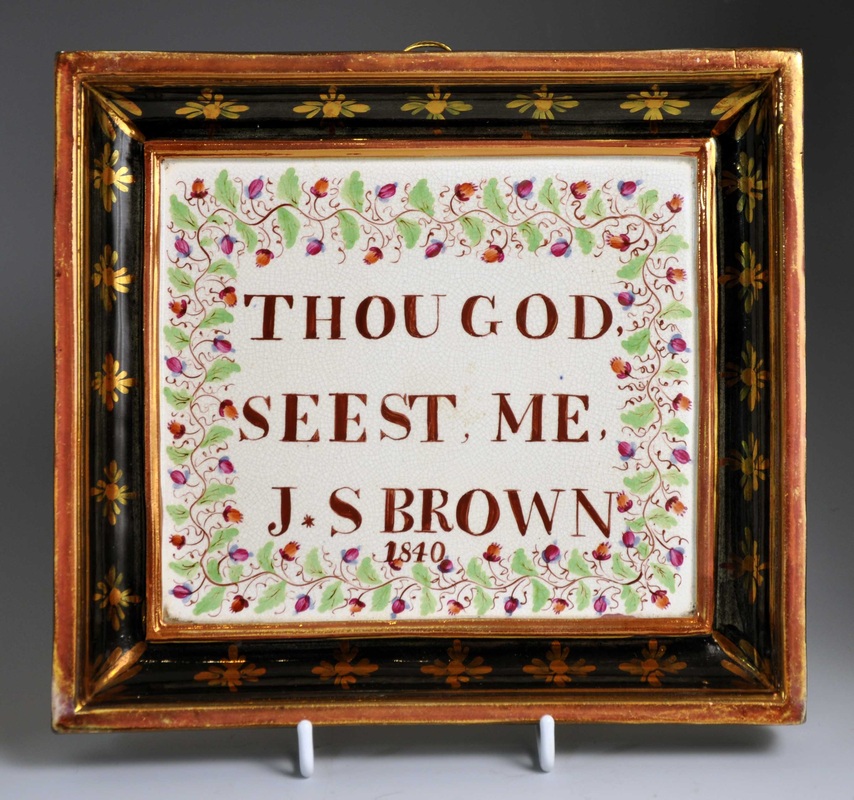 There are also some variations of decoration that I've never seen before. Do you remember the Thou God (below left) from my November 13th posting? Well here's a plaque (below right) that further ties this transfer into the Maling attribution. Note that the centre of the plaque has been washed with pink lustre. 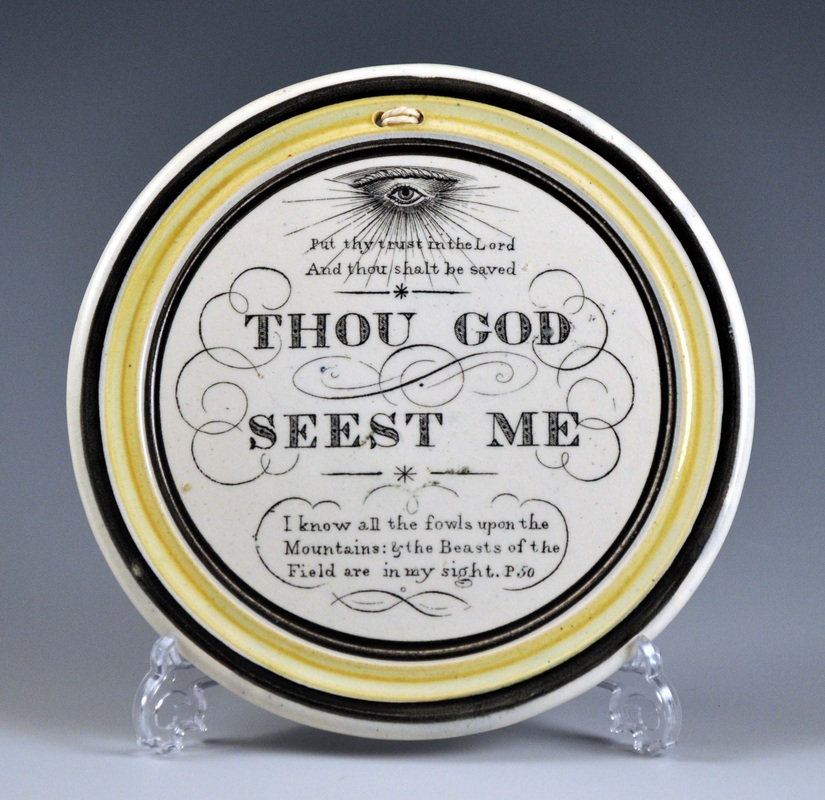 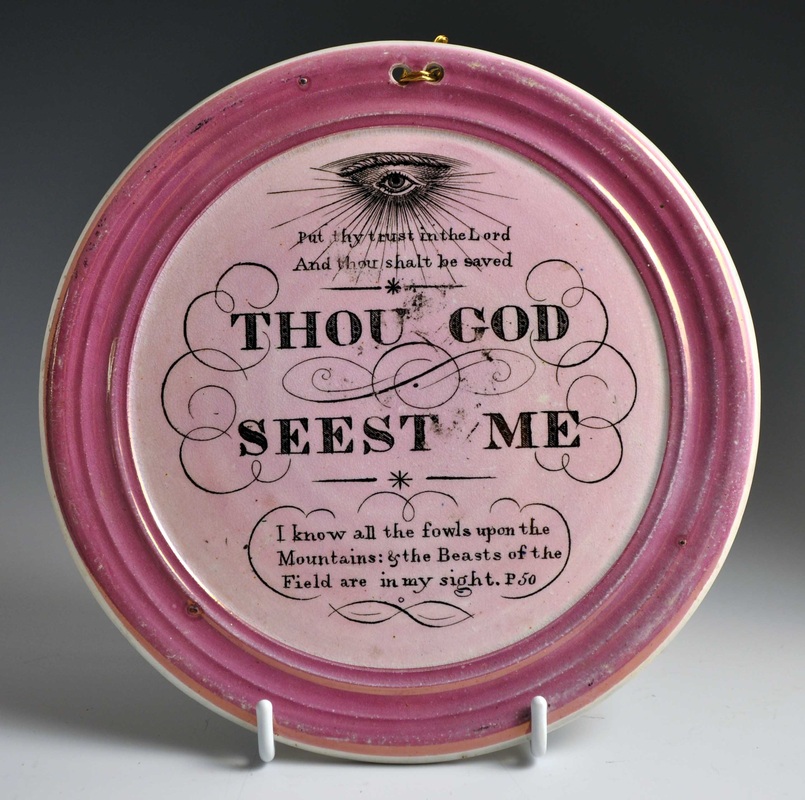 That feature ties these plaques to another group I've tentatively suggested might be Maling. See the Tyneside plaques page. The left plaque below, again with an all-seeing eye, has a wash of pink lustre in the centre. The circular plaque is thicker than average – about 1cm at the edge. Some earlier known Maling plaques appear on this thicker circular form. Maling is also known to have used the plaque form below right. 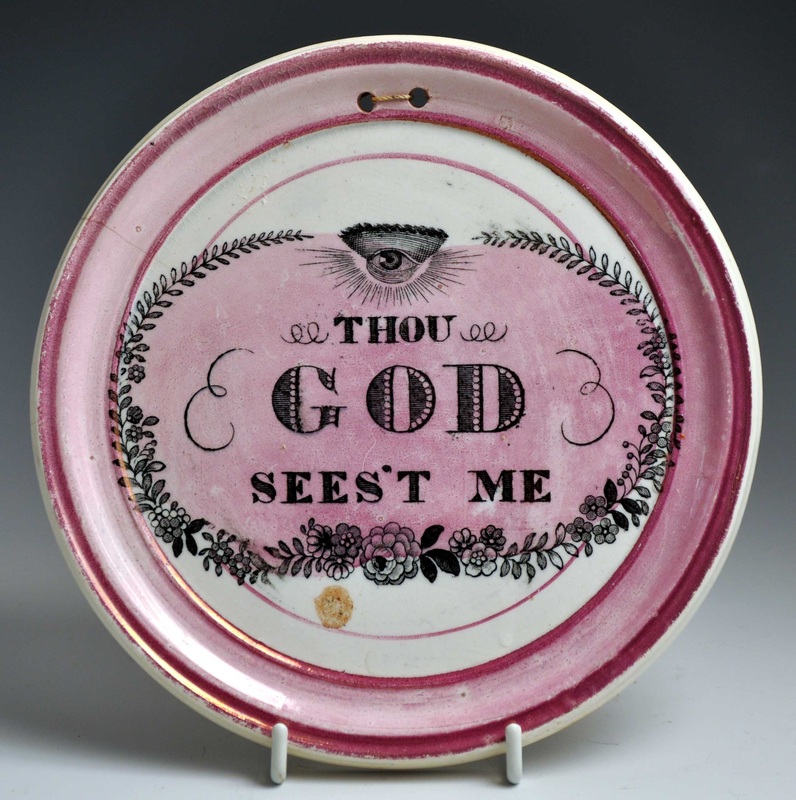 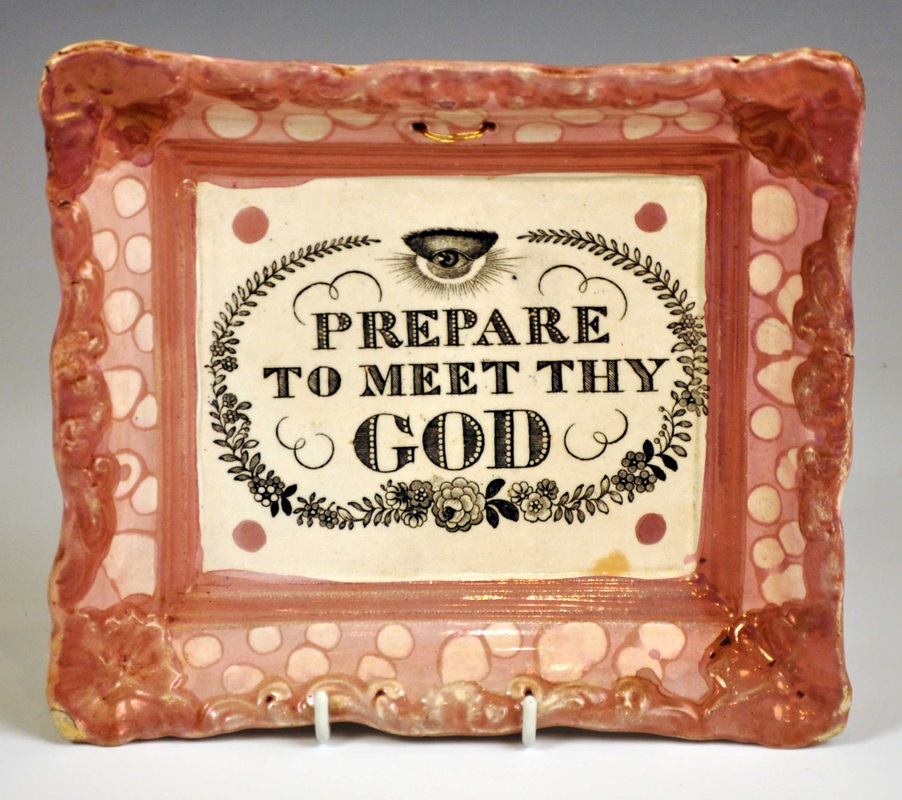 The next plaque (top left below) is probably the most exciting in terms of moving attributions on. Like those above, it's unmarked, but it incorporates a feature peculiar to Maling. Note the yellow sun rays radiating from the eye. Top right is a typical early rectangular Maling plaque. I haven't recorded the plaque mould of the top left before. However, its colouring is very similar to the bottom left plaque, which belongs to the group I've described above. And hey presto, the transfer on the top left plaque also appears on plaques with green corners (below right), which are often attributed to Maling.   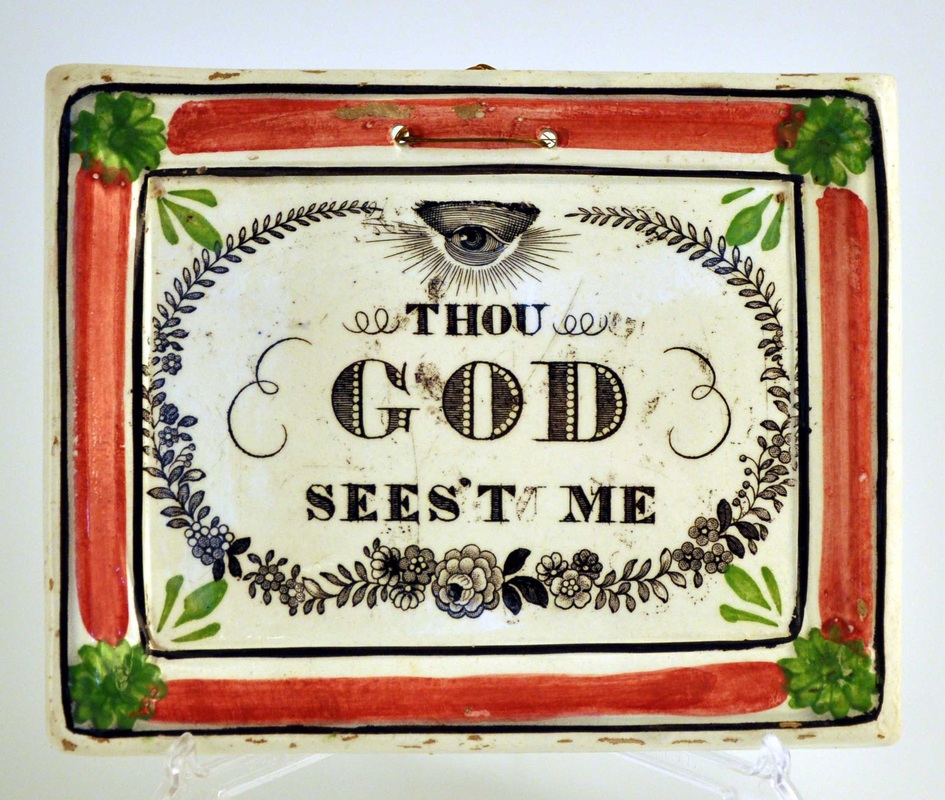 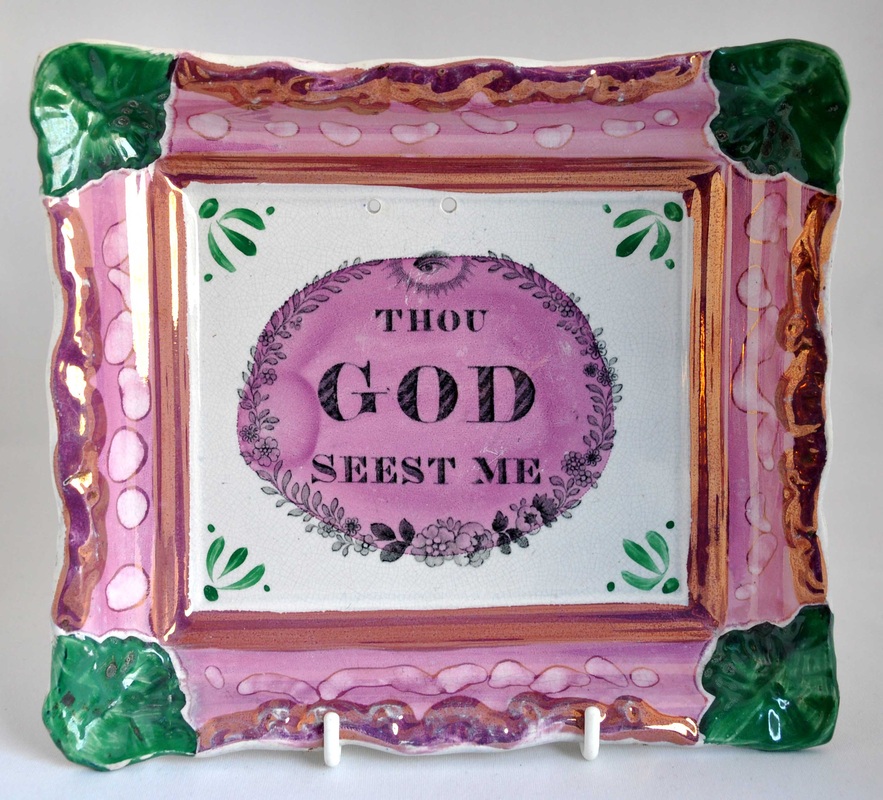 The Maling attribution for the items above needs more work. Maling were very good at marking their plaques of the 1820s, but marked examples from the 30s and 40s are rare. Judging by their prolific output of earlier plaques, it seems a safe bet that high-volume plaque production continued over subsequent decades. As always, if you have an interesting variation that might help tie up the attribution, please get in touch.
0 Comments
Leave a Reply. |
Proudly powered by Weebly