A East View of the Cast Iron Bridge over the River Wear
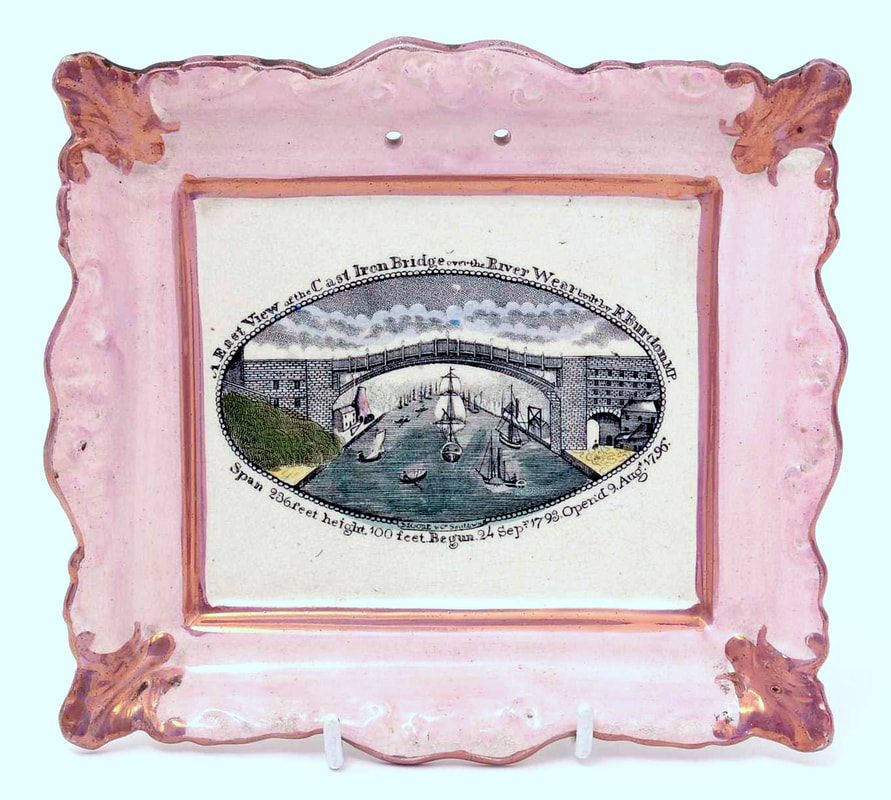
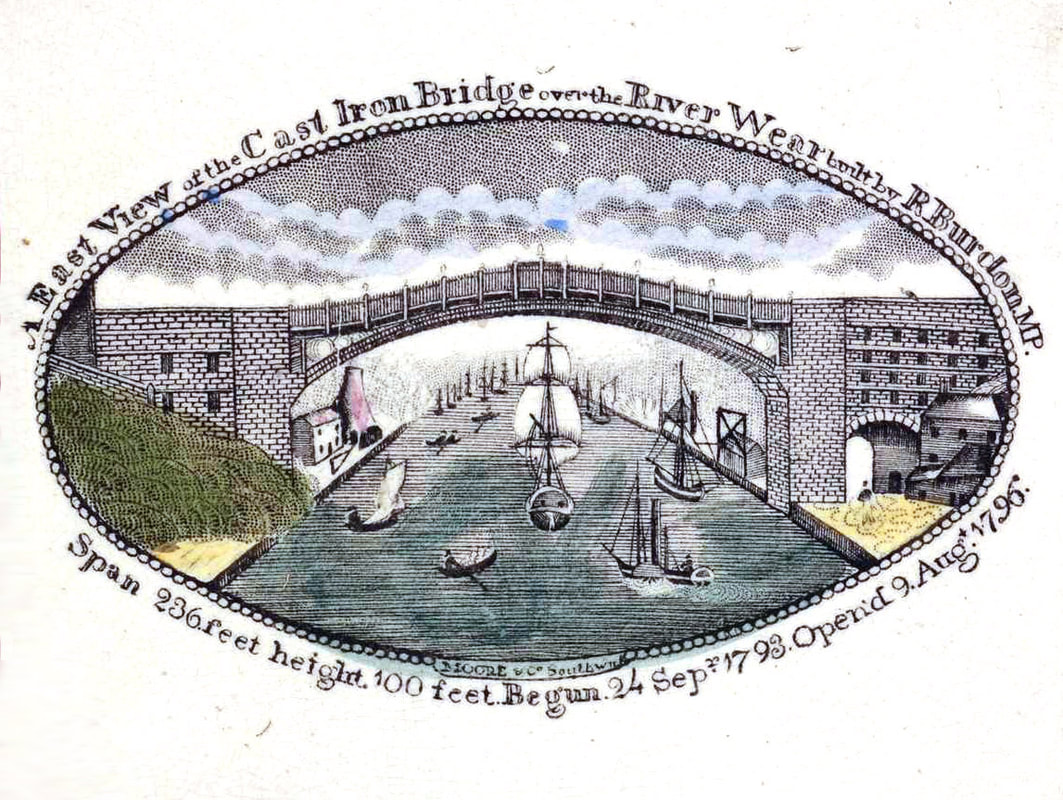
The Tyne and Wear Museum book, 'Sunderland Pottery' (Baker), lists and numbers the many variations of Wear bridge transfers. The above transfer is variations number 8, with a printed mark 'Moore & Co', c1840.
Visit here the bridge 8 page on my other site to see this transfer on jug, mugs and bowls, etc.
Visit here the bridge 8 page on my other site to see this transfer on jug, mugs and bowls, etc.
A West View of the CAST IRON BRIDGE over the River Wear Sunderland
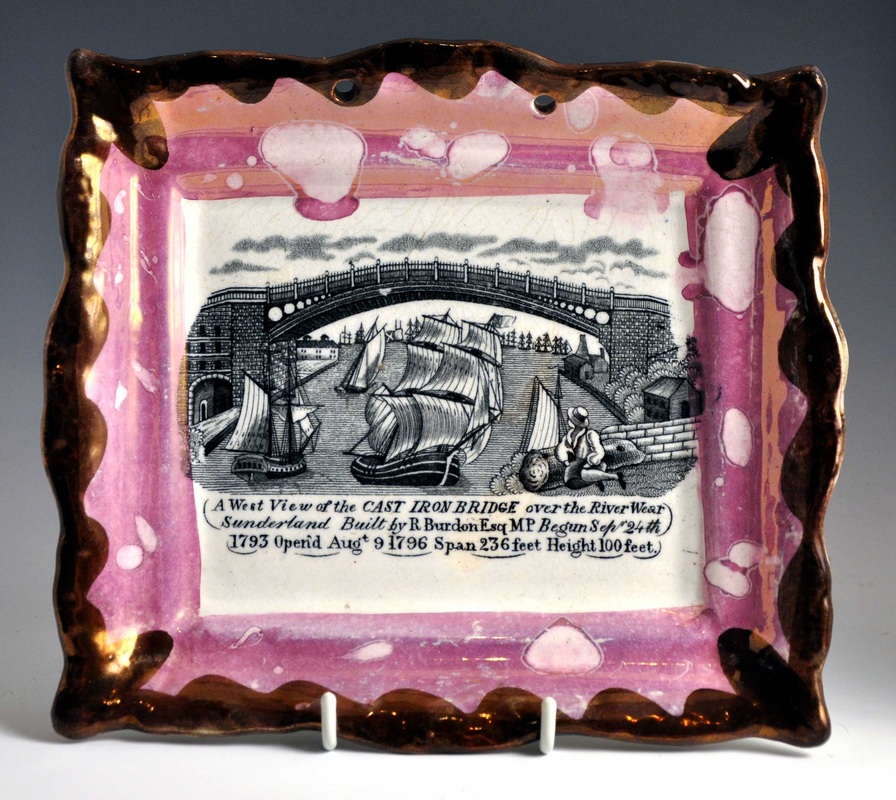
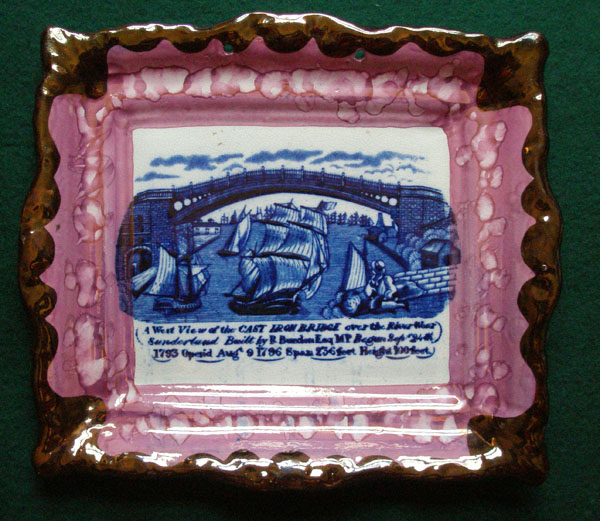
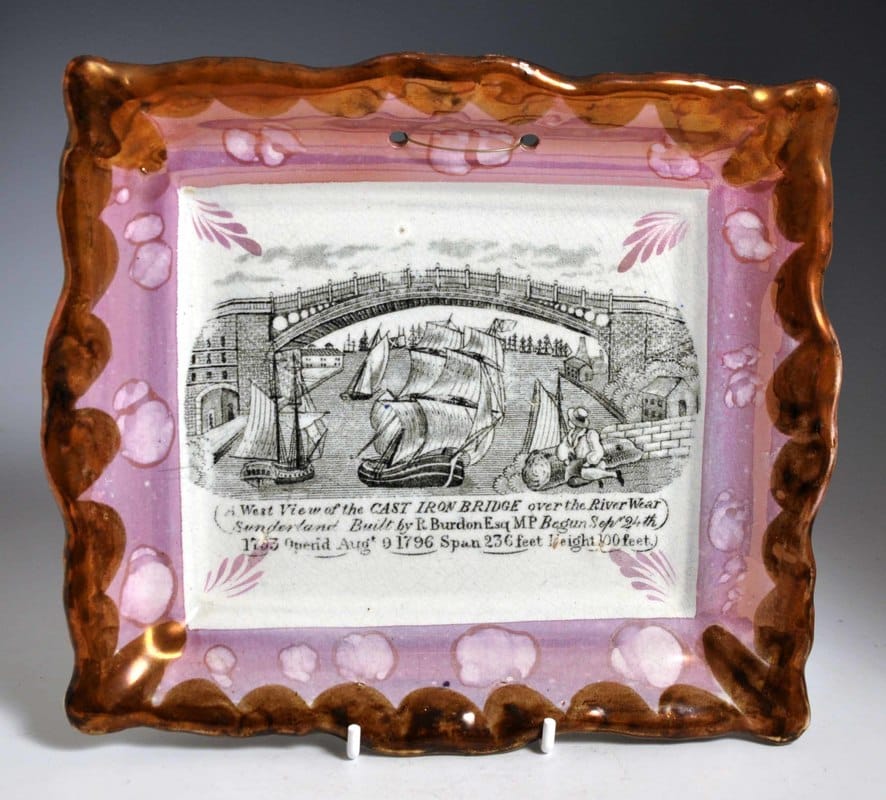
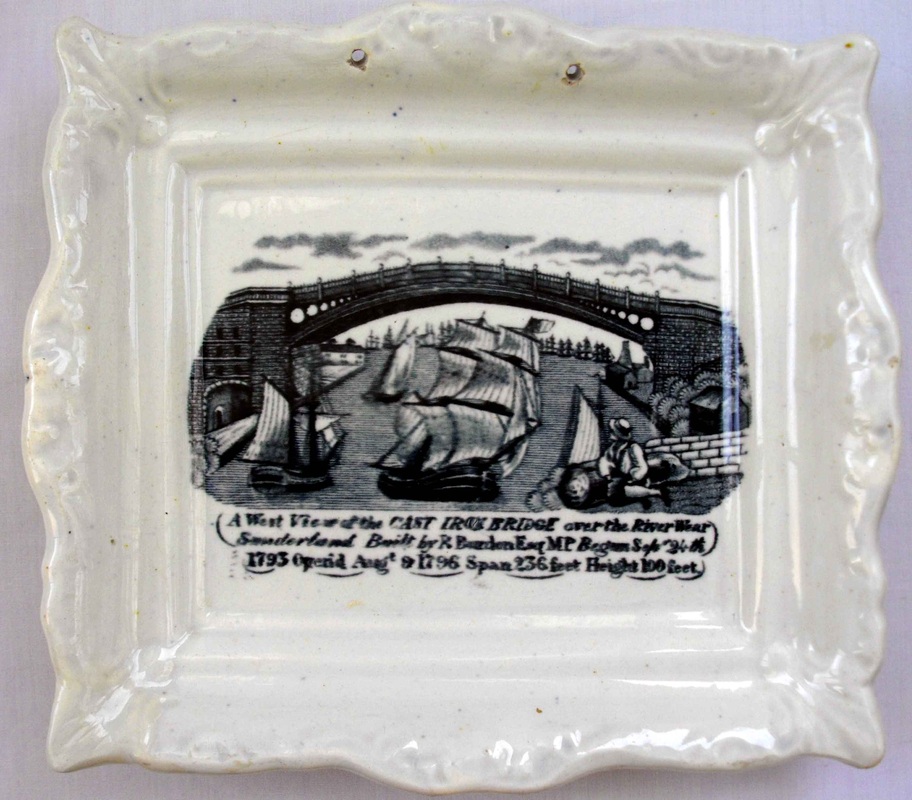

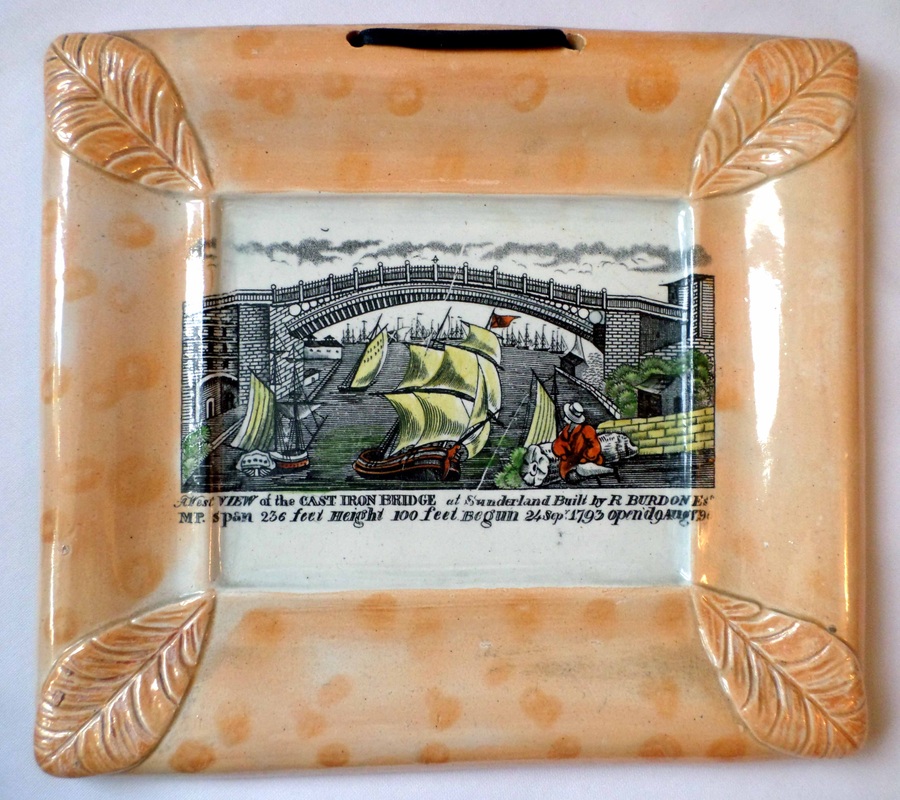
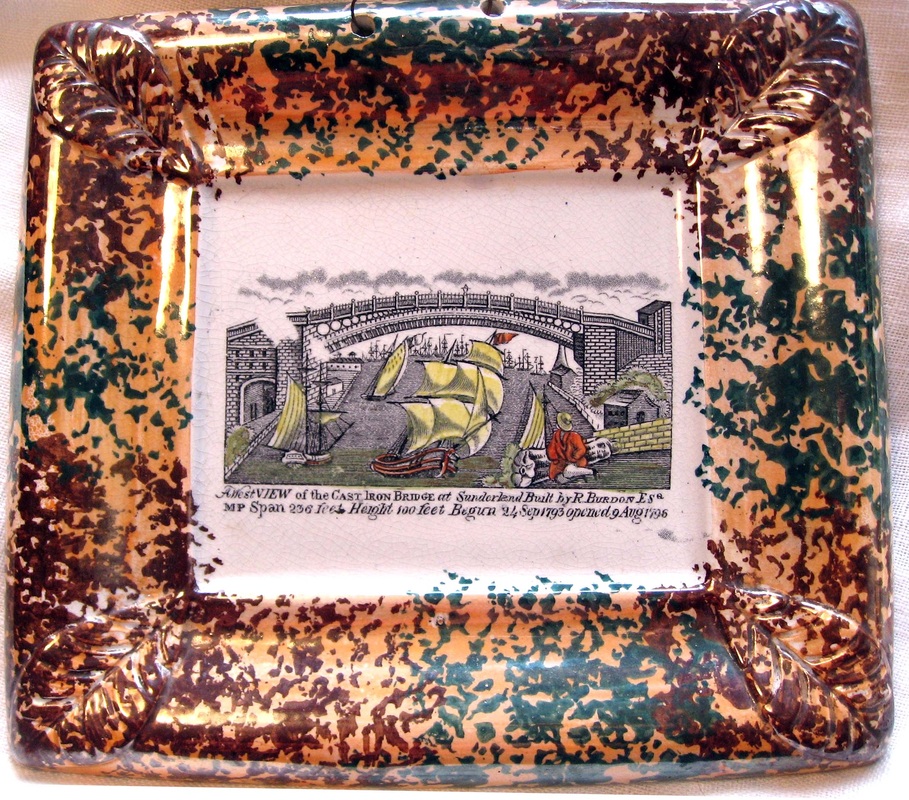
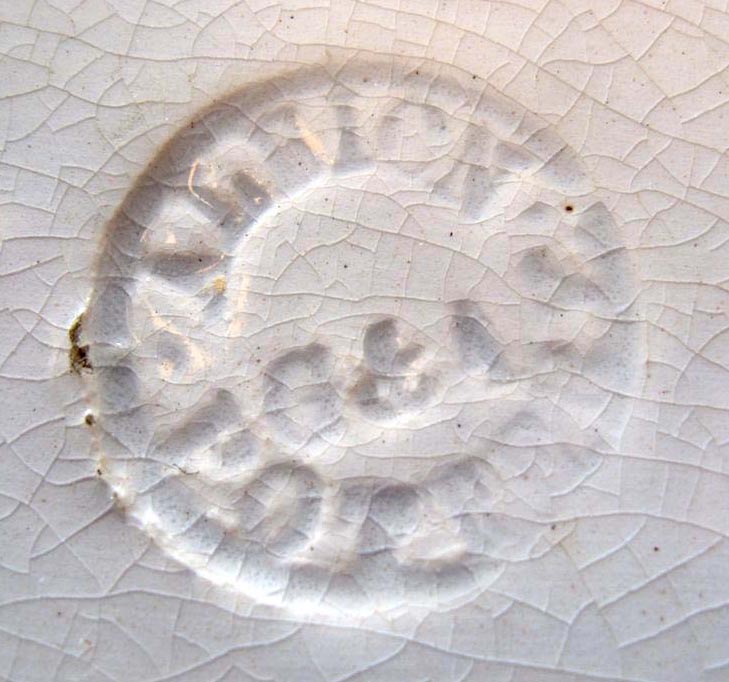
The above transfers are variations of number 9, described by Baker as 'Circa 1850. Possibly Sunderland ('Garrison') Pottery'. However, the first four plaques, although unmarked, are attributed to John Carr's Low Lights Pottery, North Shields. The transfer reads: 'A West View of the CAST IRON BRIDGE over the River Wear Sunderland. Built by R Burdon Esq MP Begun Sept 24th 1793 Open'd Augt 9 1796 Span 236 feet Height 100 feet.'. The others are from the Albion pottery. They have a slightly different transfer – note that the title is only two lines long. The orange-bordered plaque and speckle-bordered plaque have circular impressed marks (the mark shown is from the plaque beside it). All the above plaques were made in Tyneside (not Wearside as might be supposed).
Visit here the bridge 9 page on my other site to see this transfer on jugs, mugs and bowls, etc.
Visit here the bridge 9 page on my other site to see this transfer on jugs, mugs and bowls, etc.
A West VIEW of the IRON BRIDGE over the WEAR
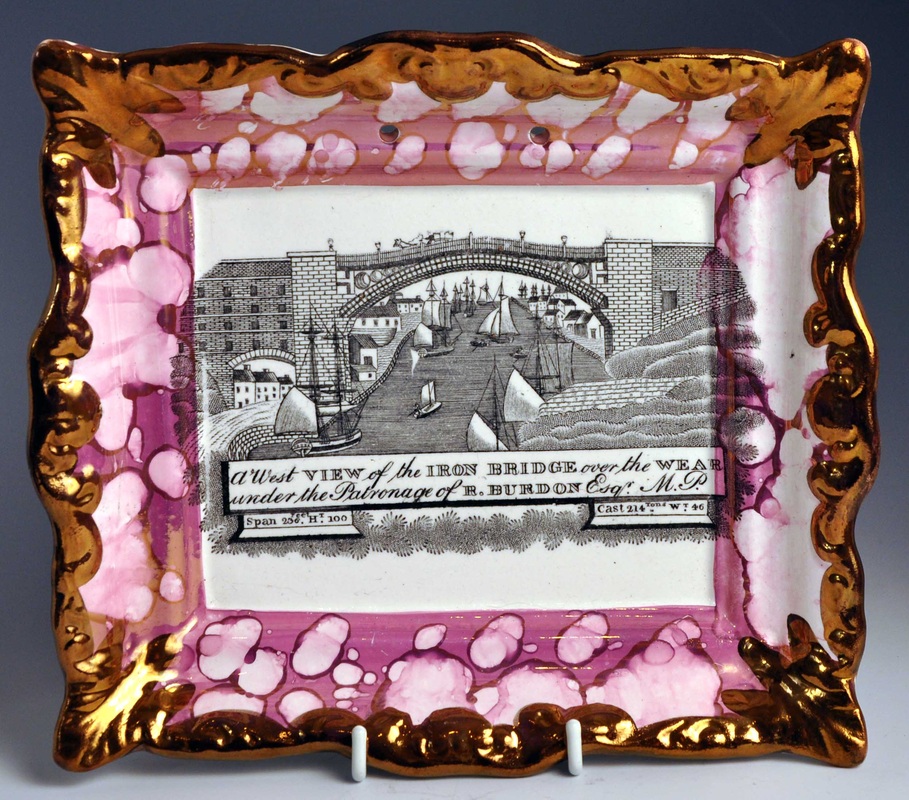
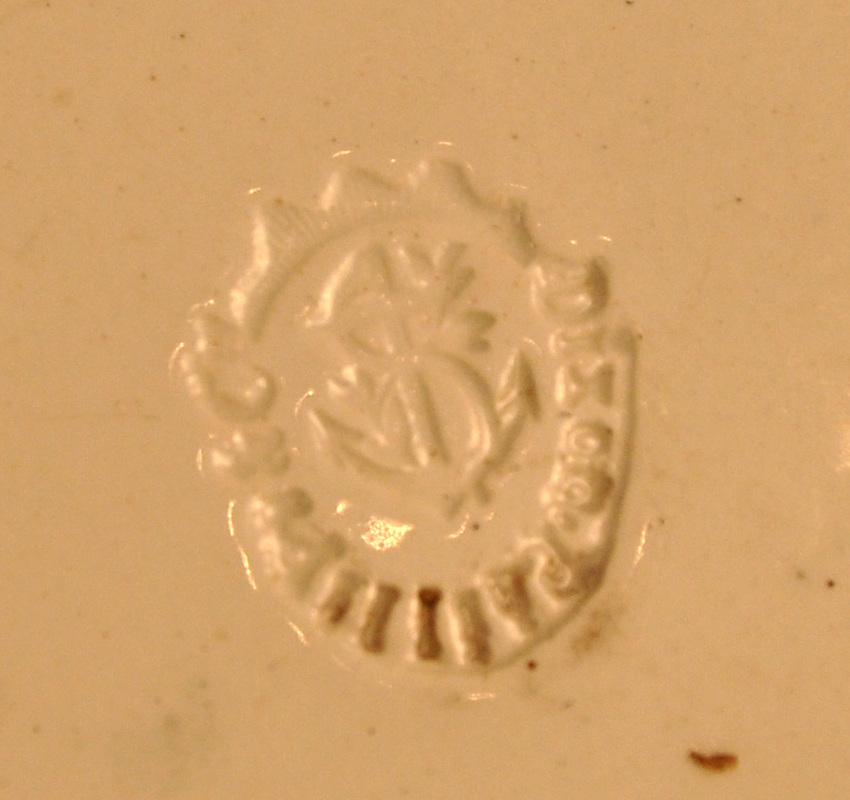
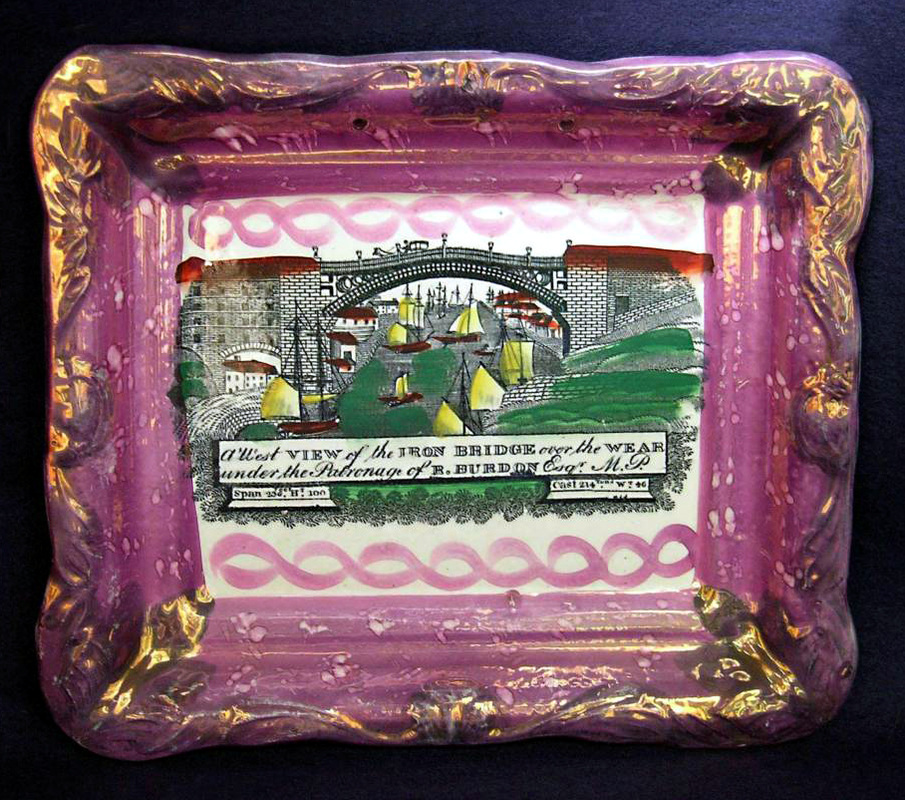
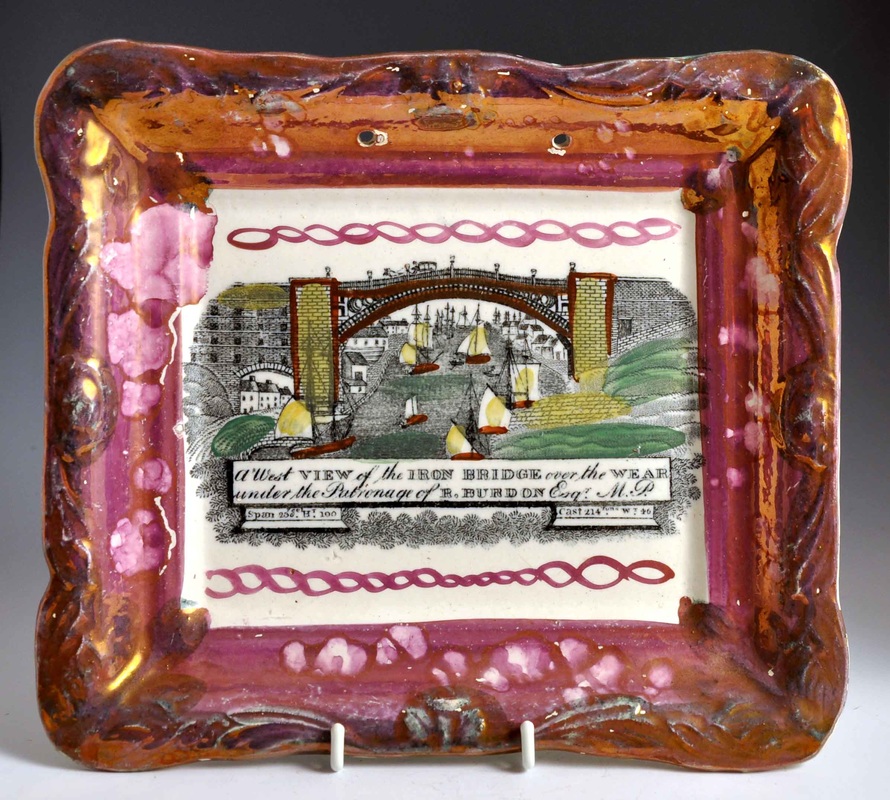
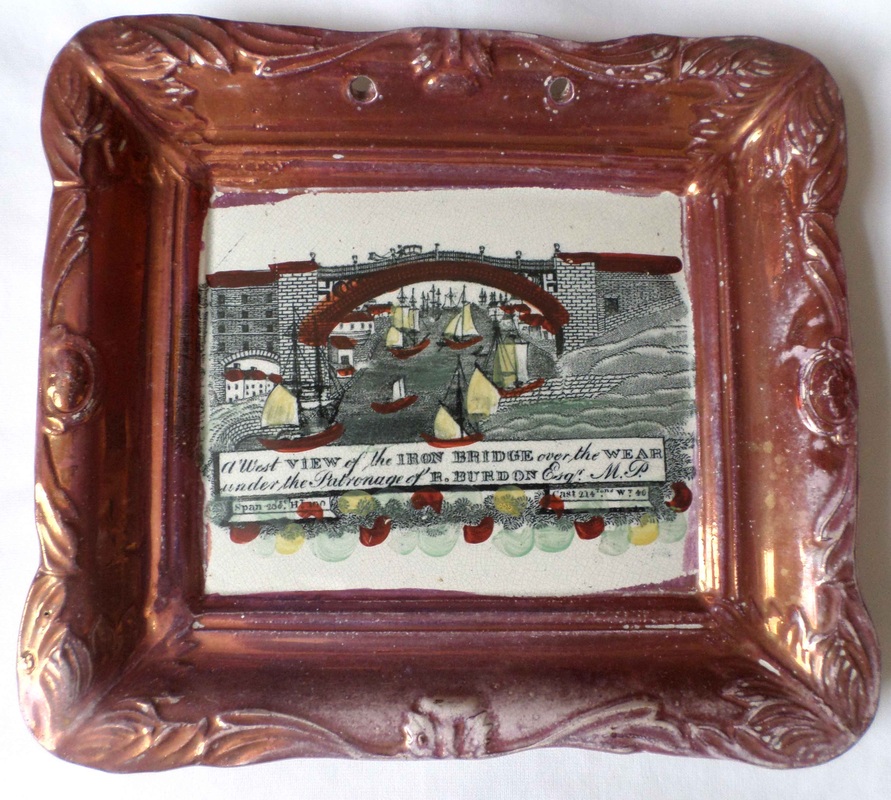
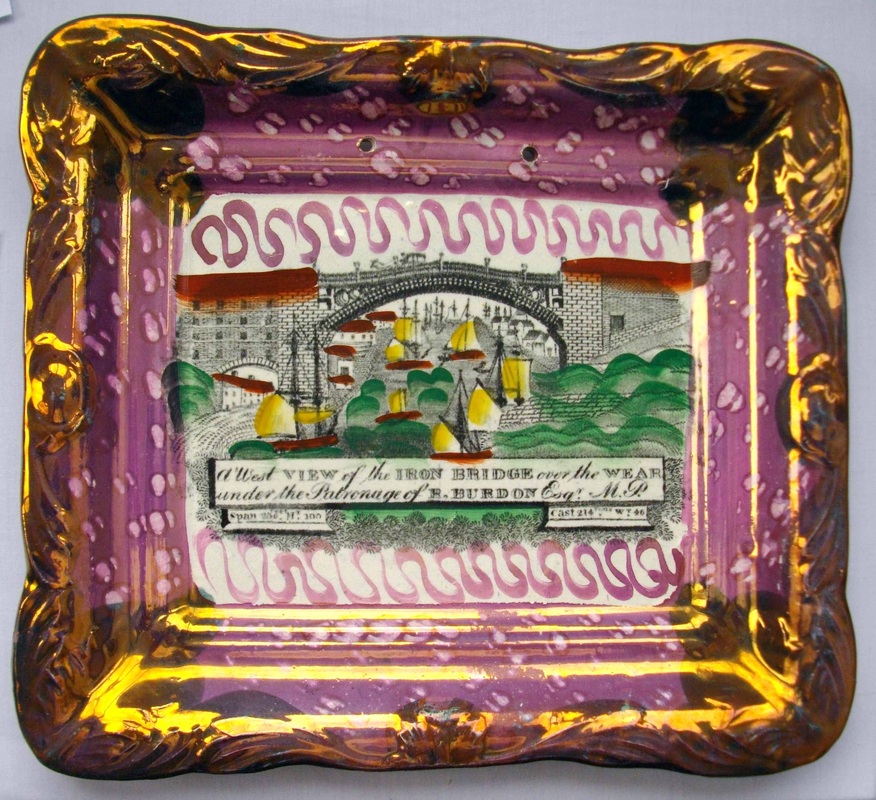
The above plaques have a variation of transfer 14, though without the maker's printed inscription 'DIXON & Co Sunderland 1813' at the base of the transfer. The first has the Dixon, Phillips & Co anchor mark. Baker writes 'Frequently marked "Dixon & Co., Sunderland, 1813" or "Phillips & Co., Sunderland".' The title reads: 'A West VIEW of the IRON BRIDGE over the WEAR under the Patronage of R.BURDON Esq. M P'. The other plaques are attributed to John Carr's Low Lights Pottery, North Shields. The Dixon copper transfer plate appears to have been acquired by Carr c1865 when the Garrison Pottery closed.
Visit this page on my other site to see more Dixon examples on jugs and bowls, etc.
Visit this page to see more Carr examples.
Visit this page on my other site to see more Dixon examples on jugs and bowls, etc.
Visit this page to see more Carr examples.
NEW BRIDGE OVER THE WEAR AT SUNDERLAND
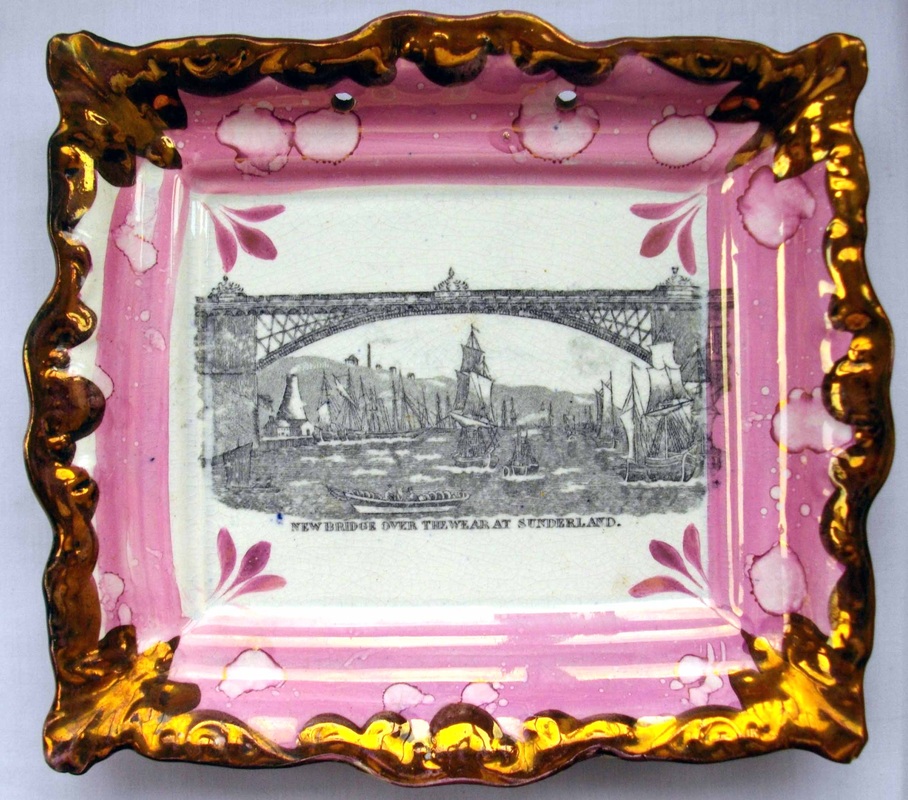
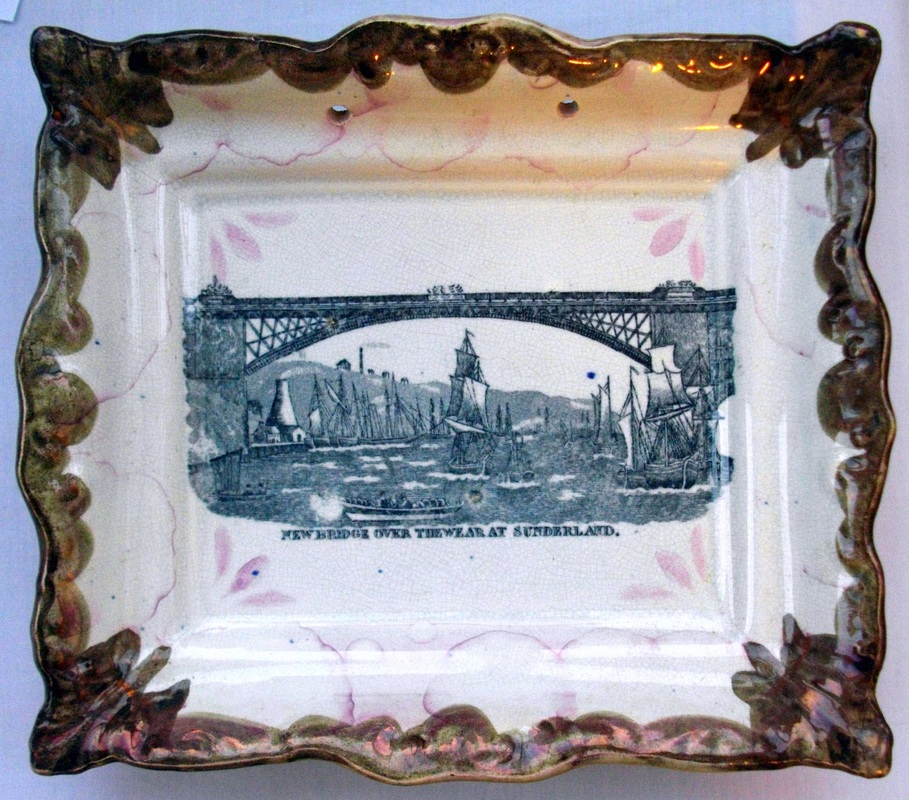

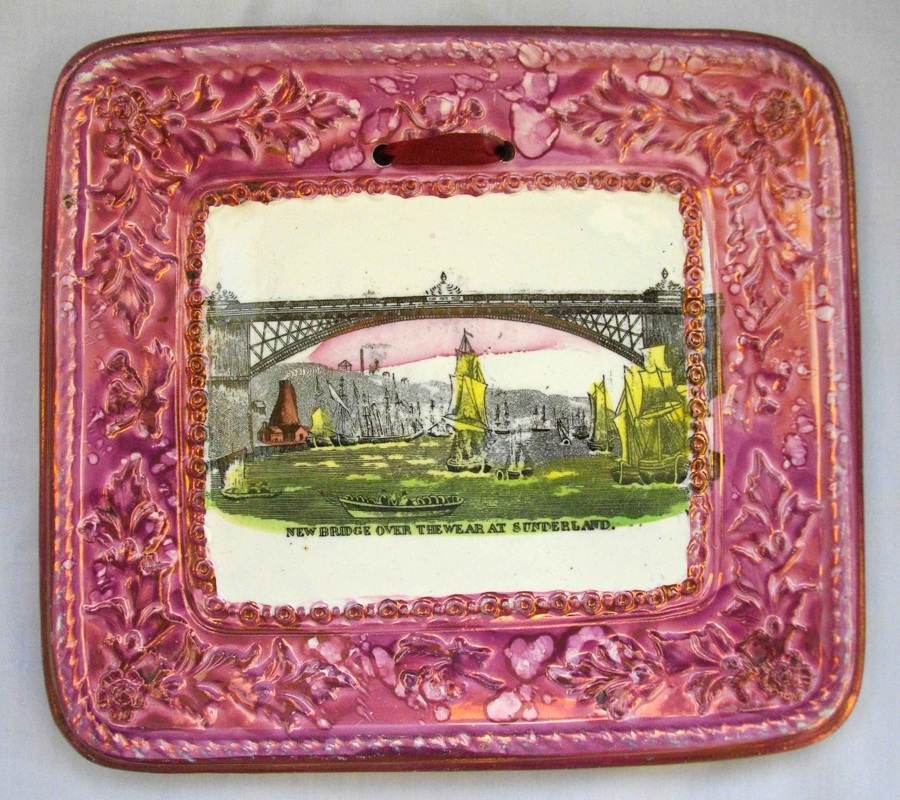
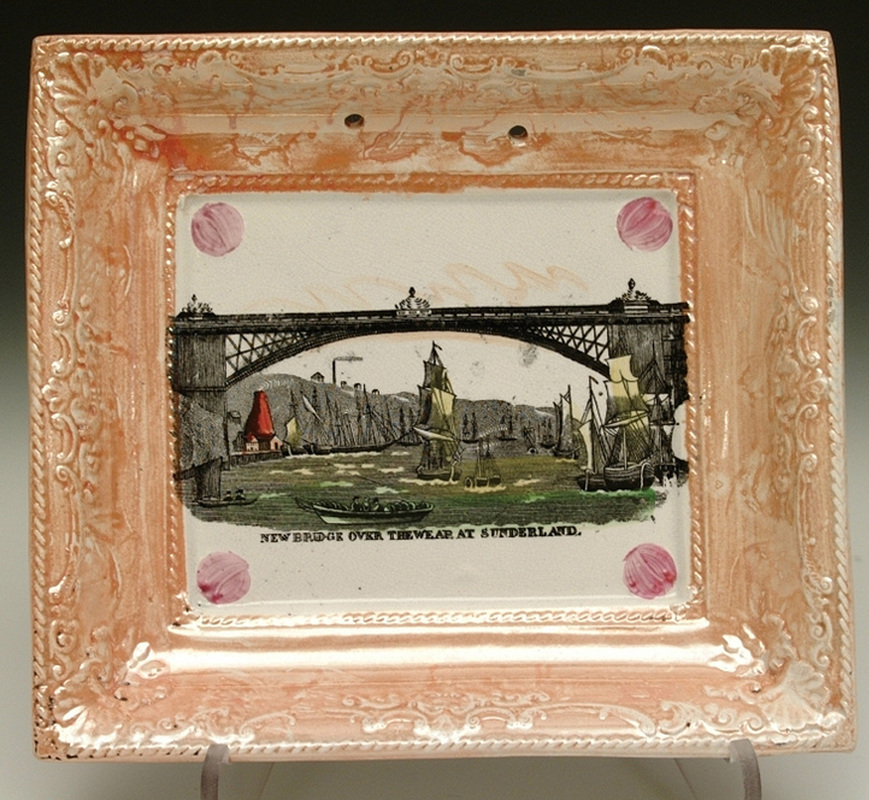
The plaques above are transfer 15. The first two are both from the Garrison (Dixon) pottery, and the second three are attributed to Scott. Baker says the transfer, 'circa 1859–70', was used at 'Scott's Southwick Pottery, Moore's Wear Pottery and probably Ball's Deptford Pottery'. The title reads: 'NEW BRIDGE OVER THE WEAR AT SUNDERLAND'.
Visit the bridge 15 page on my other site to see examples on jugs, bowls, etc.
Visit the bridge 15 page on my other site to see examples on jugs, bowls, etc.
SUNDERLAND BRIDGE
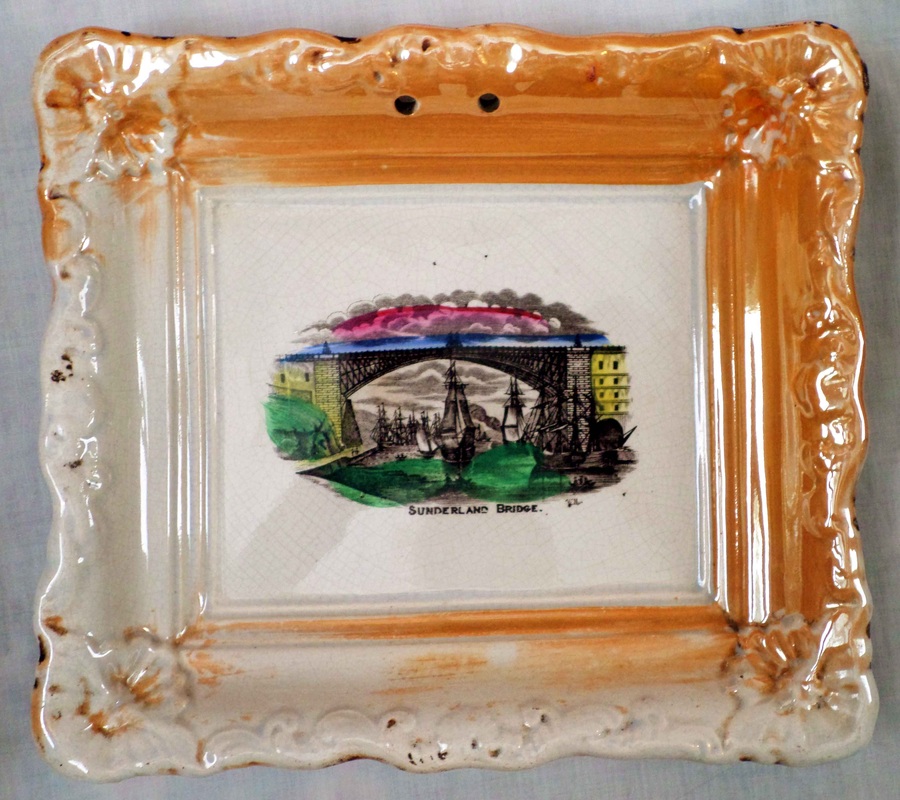
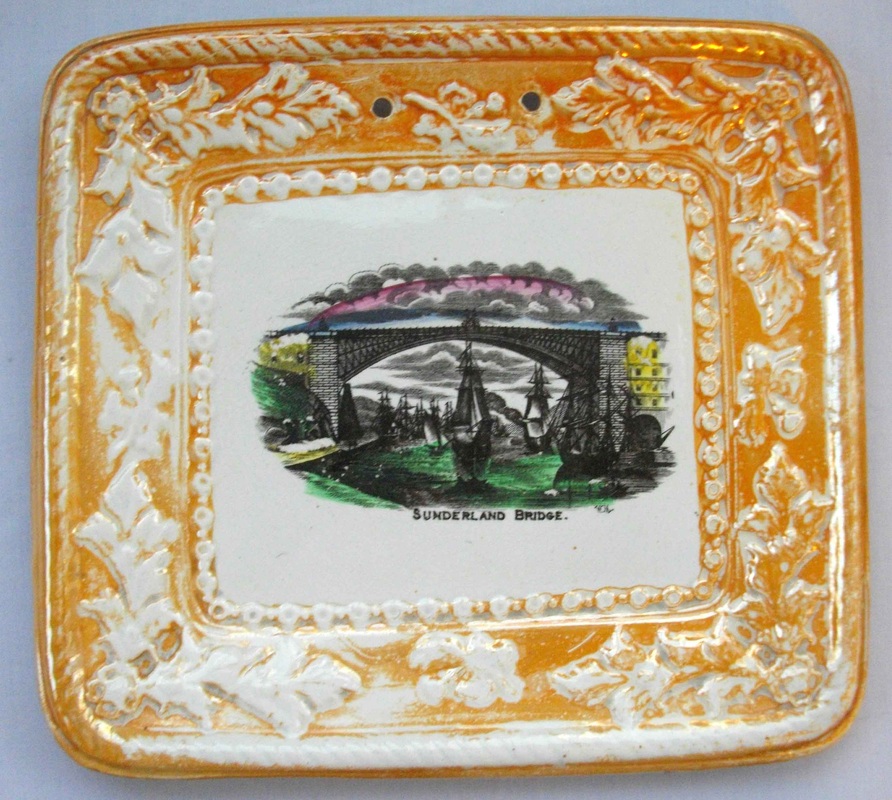
The two orange plaques are transfer 17, 'Circa 1870, which Baker describes as 'probably Ball's Deptford Pottery'. Their title is: 'SUNDERLAND BRIDGE.'. The first orange plaque is of a shape associated with Moore & Co, and the second attributed to Scott.
Ian Sharp writes of this transfer on a jug:
Transfer of the new levelled bridge, which was completed in 1859. This transfer bears the initials of William Mowat (W.M.) , lower right hand side. Other transfers bearing Mowat’s initials have appreared on pieces manufactured by Thomas Fell of Newcastle. Mowat worked as an engraver in Dean Street, Newcastle on Tyne in the 1850s–1870s.
Visit the bridge 17 page on my other site to see examples on jugs, bowls, etc.
Ian Sharp writes of this transfer on a jug:
Transfer of the new levelled bridge, which was completed in 1859. This transfer bears the initials of William Mowat (W.M.) , lower right hand side. Other transfers bearing Mowat’s initials have appreared on pieces manufactured by Thomas Fell of Newcastle. Mowat worked as an engraver in Dean Street, Newcastle on Tyne in the 1850s–1870s.
Visit the bridge 17 page on my other site to see examples on jugs, bowls, etc.
AN EAST VIEW of the NEW BRIDGE SUNDERLAND

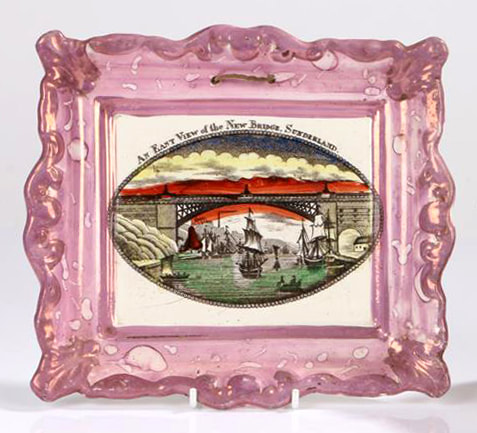
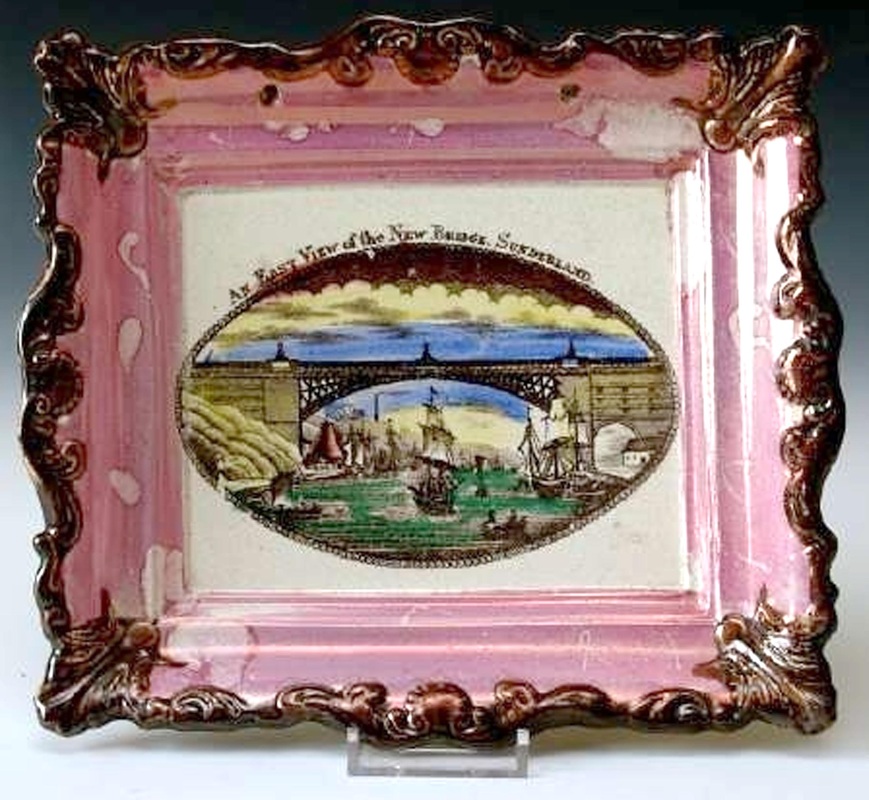
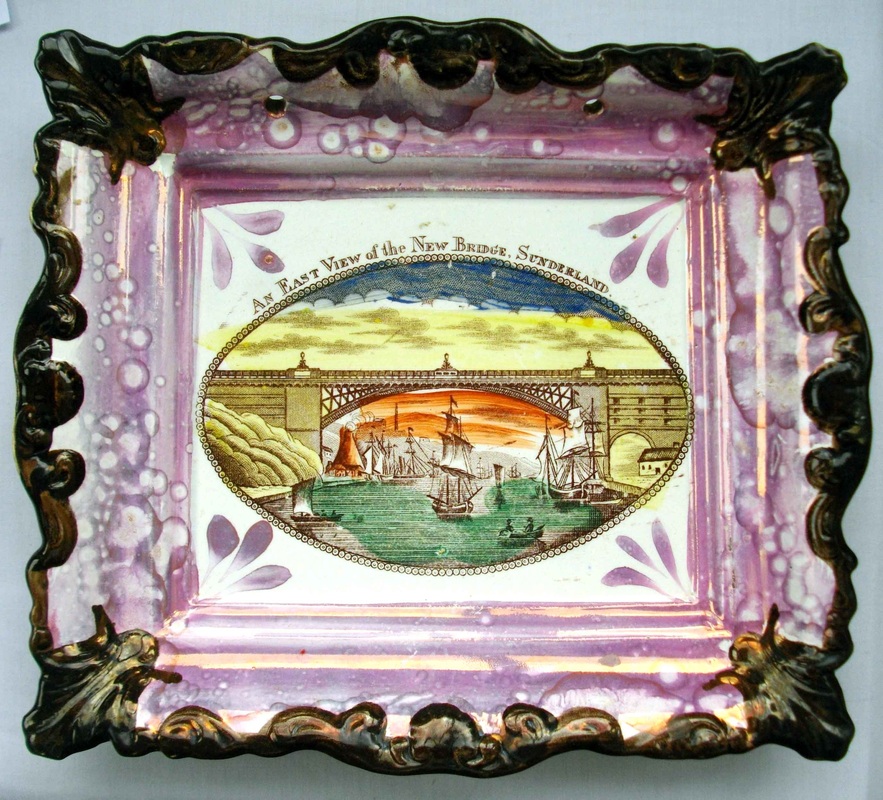
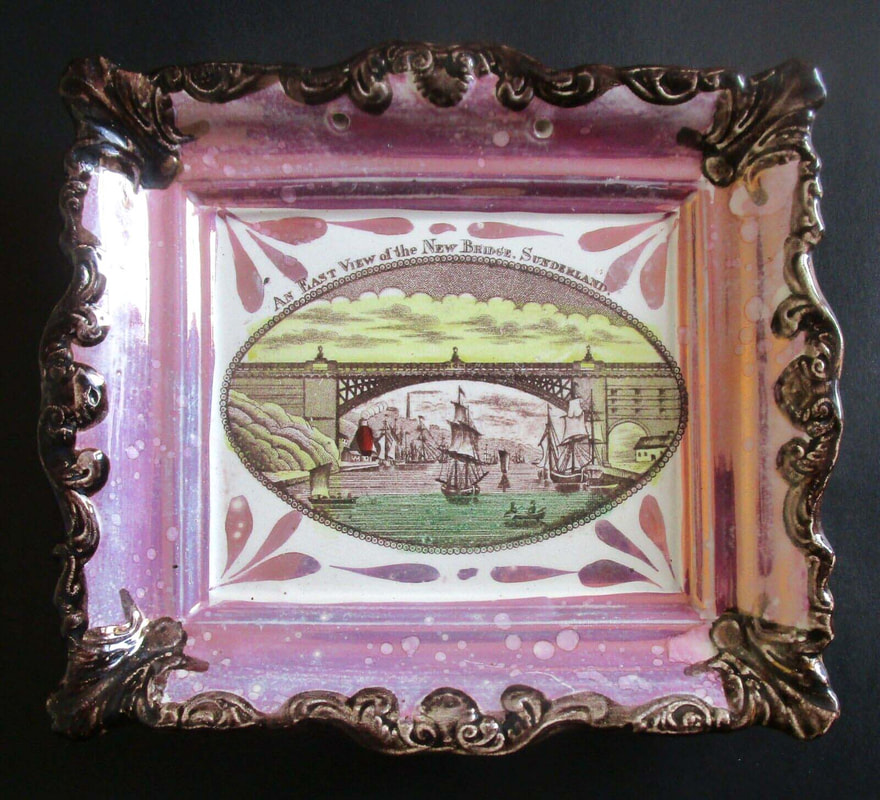
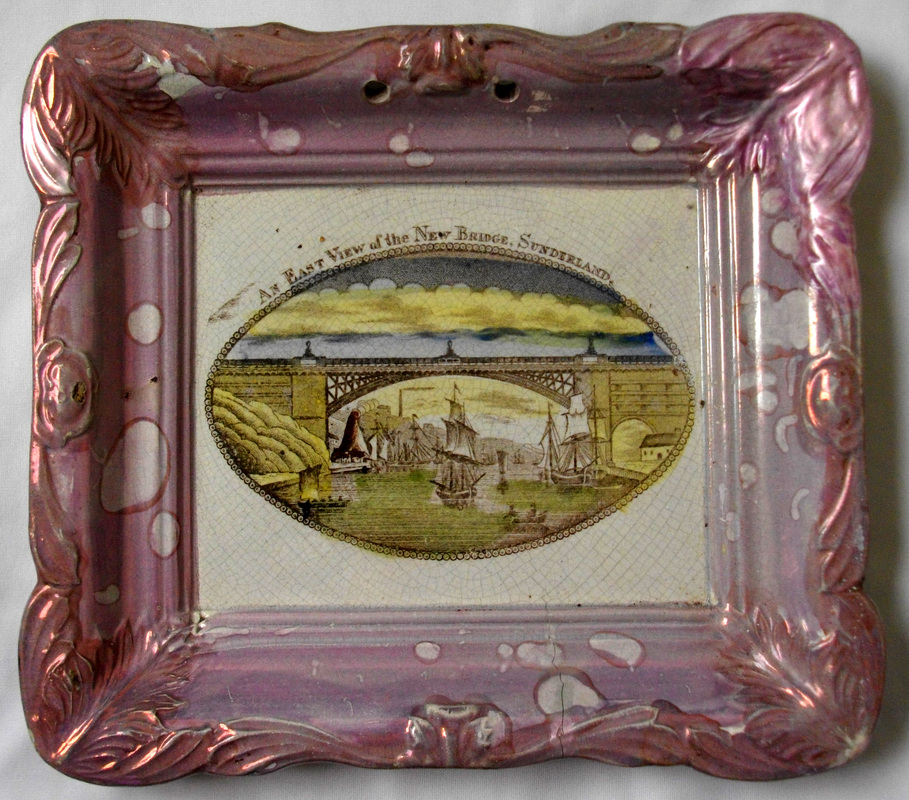
The above plaques are transfer 18, Circa 1859–70 (N.B. the New Bridge was completed in 1859). The first five are attributed to Moore's Wear Pottery, and the last to either John Carr's Low Lights Pottery or Ball's Deptford Pottery. The title is: 'AN EAST VIEW of the NEW BRIDGE SUNDERLAND.'.
See the bridge 18 page of my other site, for this transfer on mugs, jugs and bowls, etc.
See the bridge 18 page of my other site, for this transfer on mugs, jugs and bowls, etc.
WEST VIEW of the CAST IRON BRIDGE at Sunderland
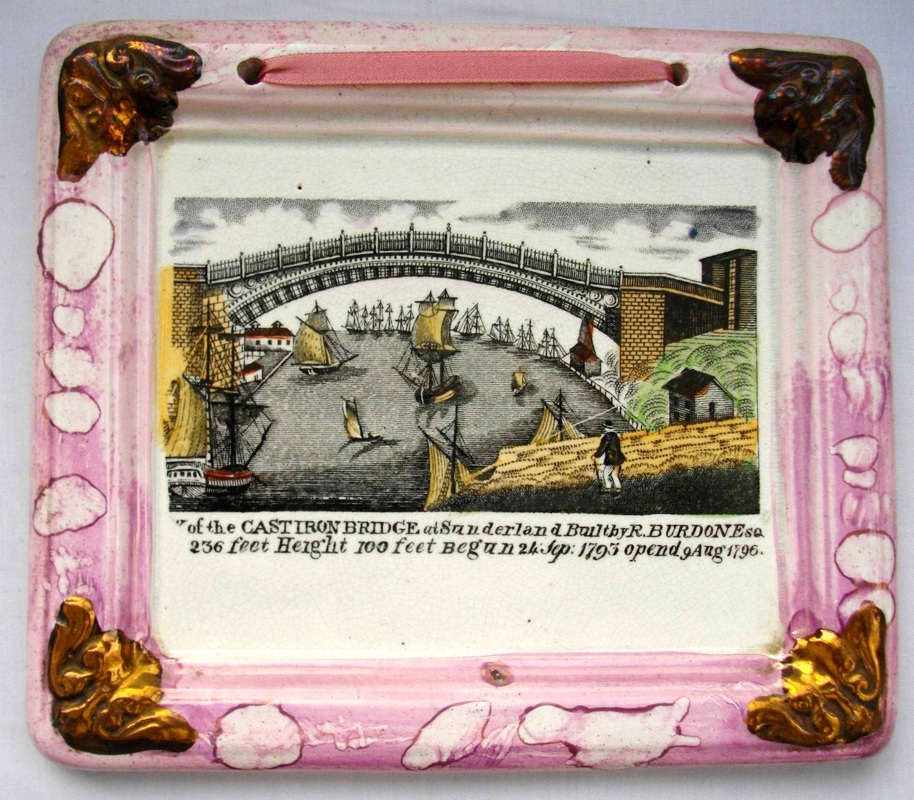
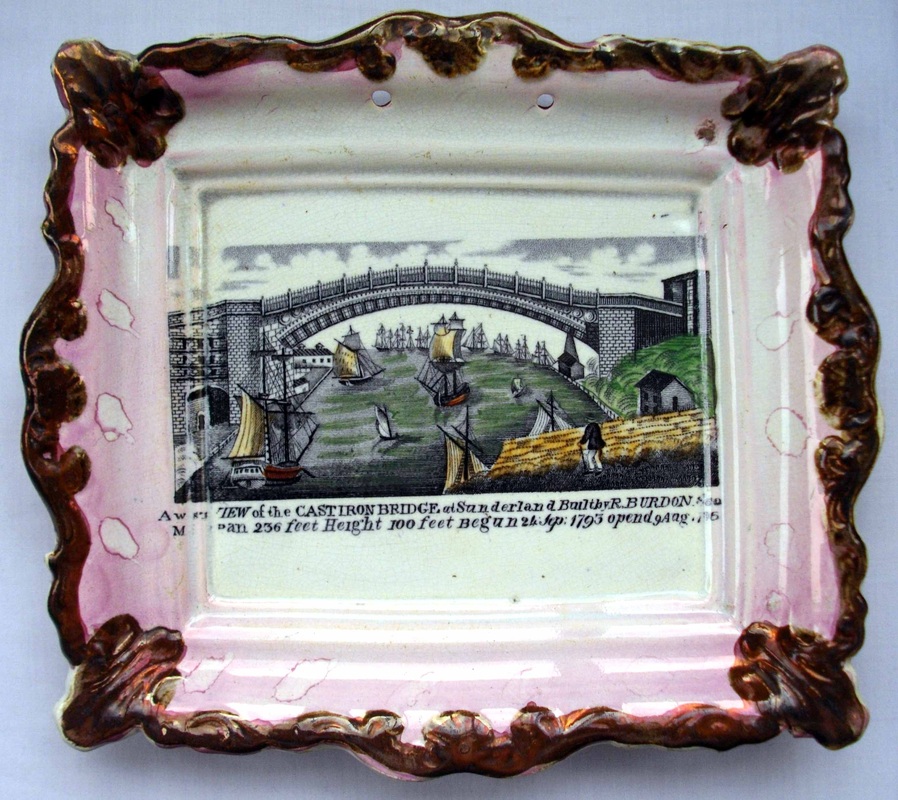
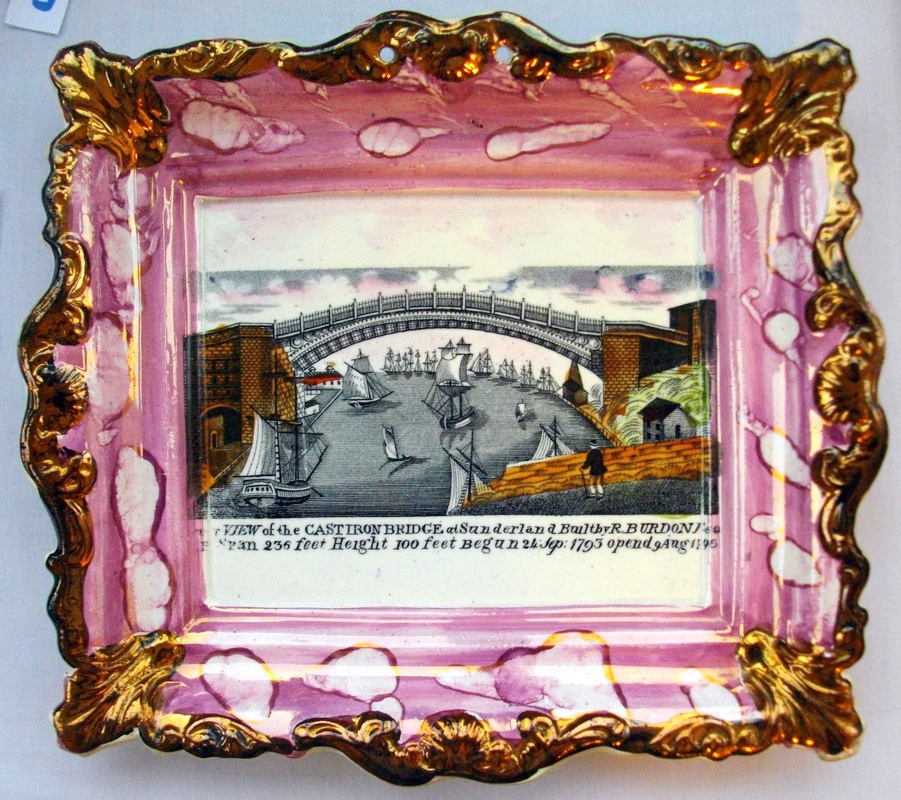


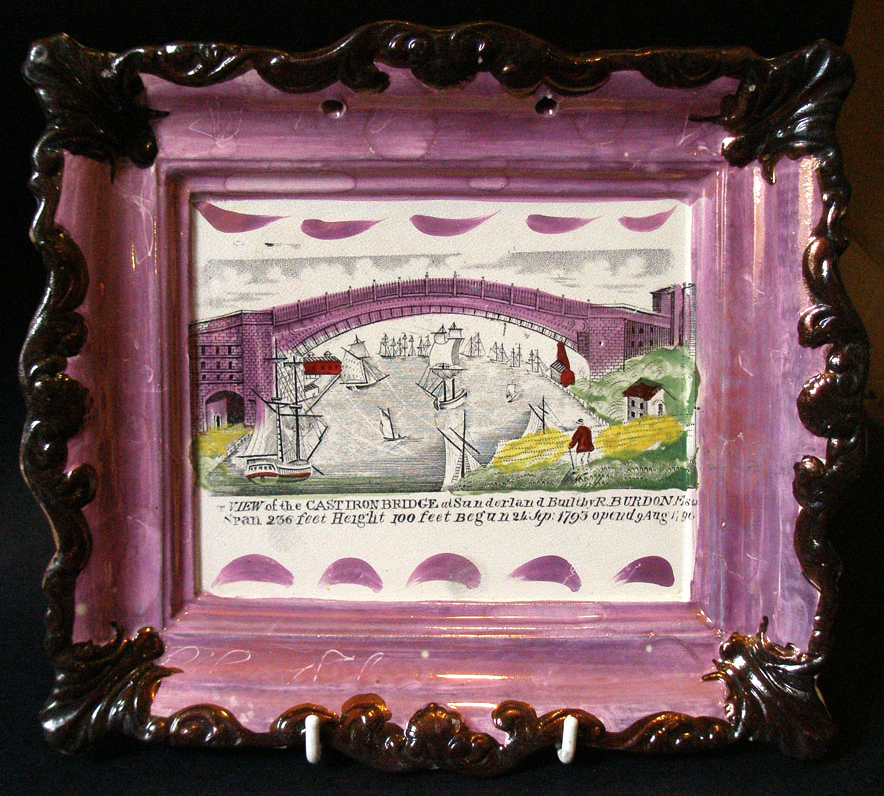
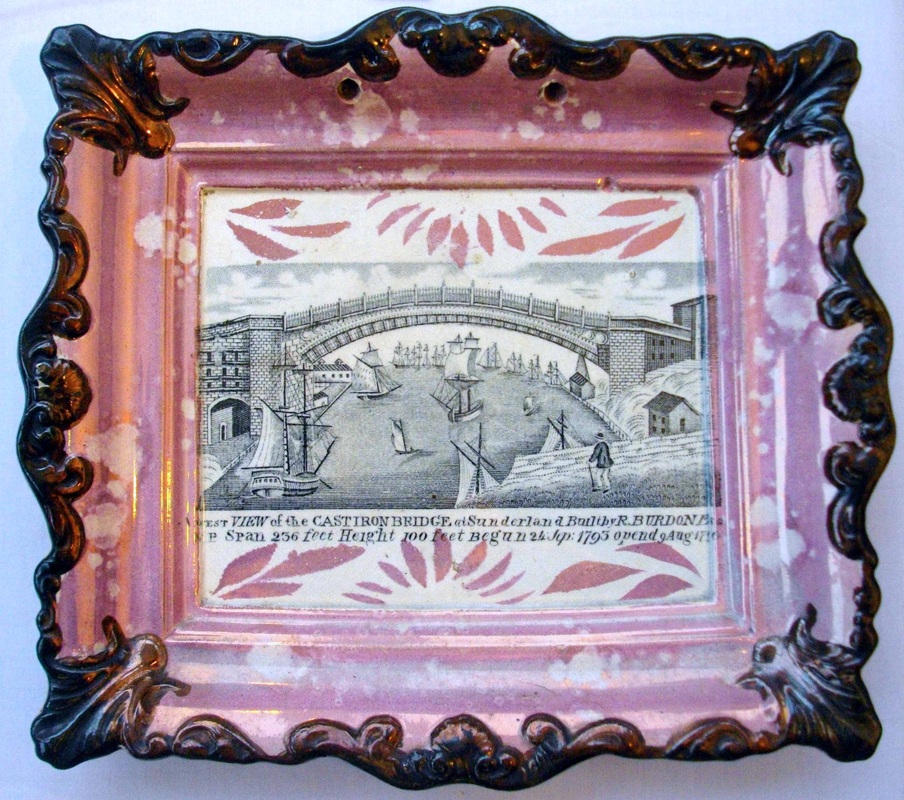
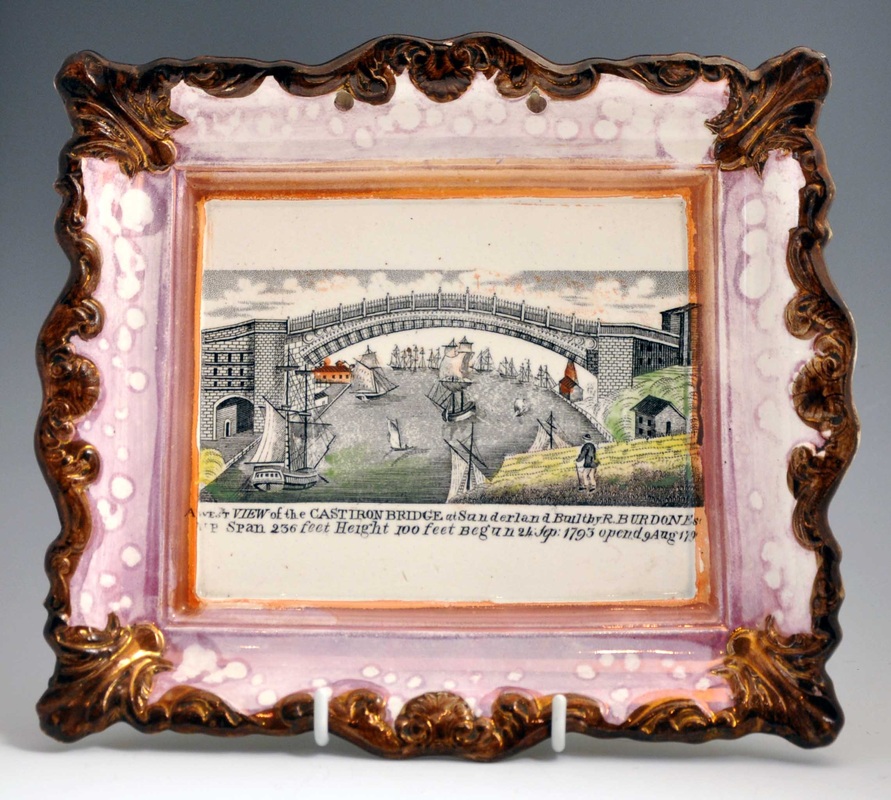
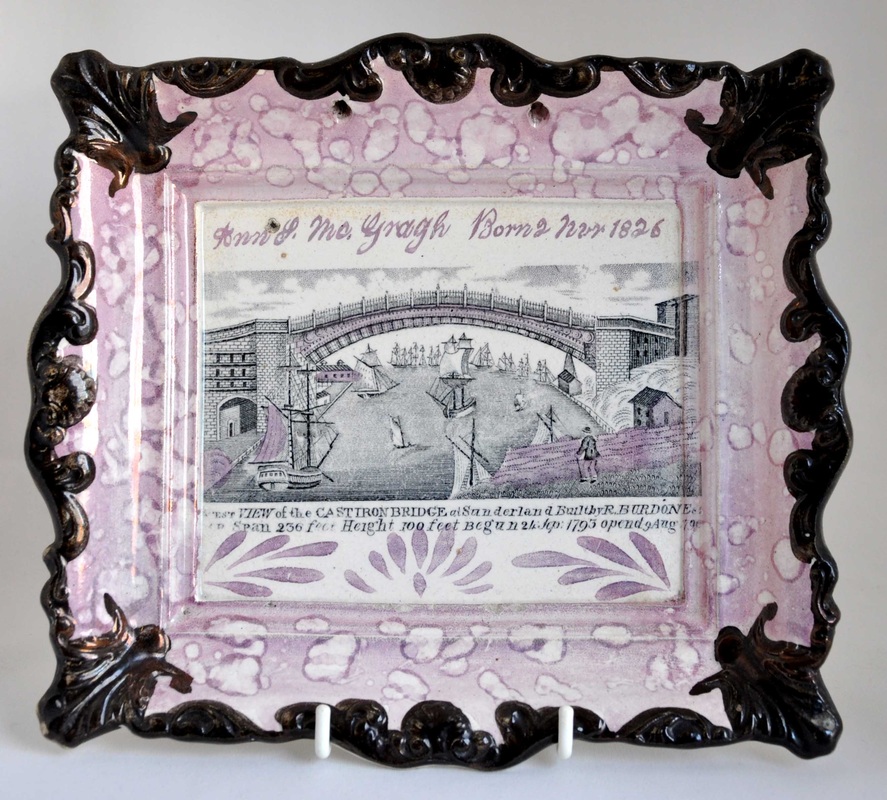
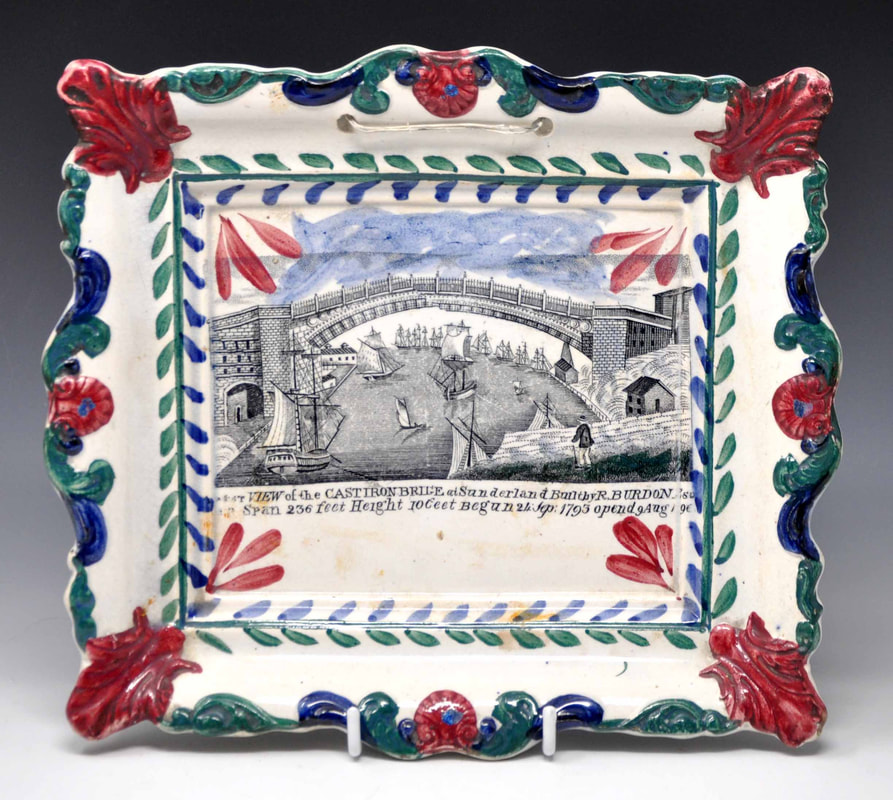
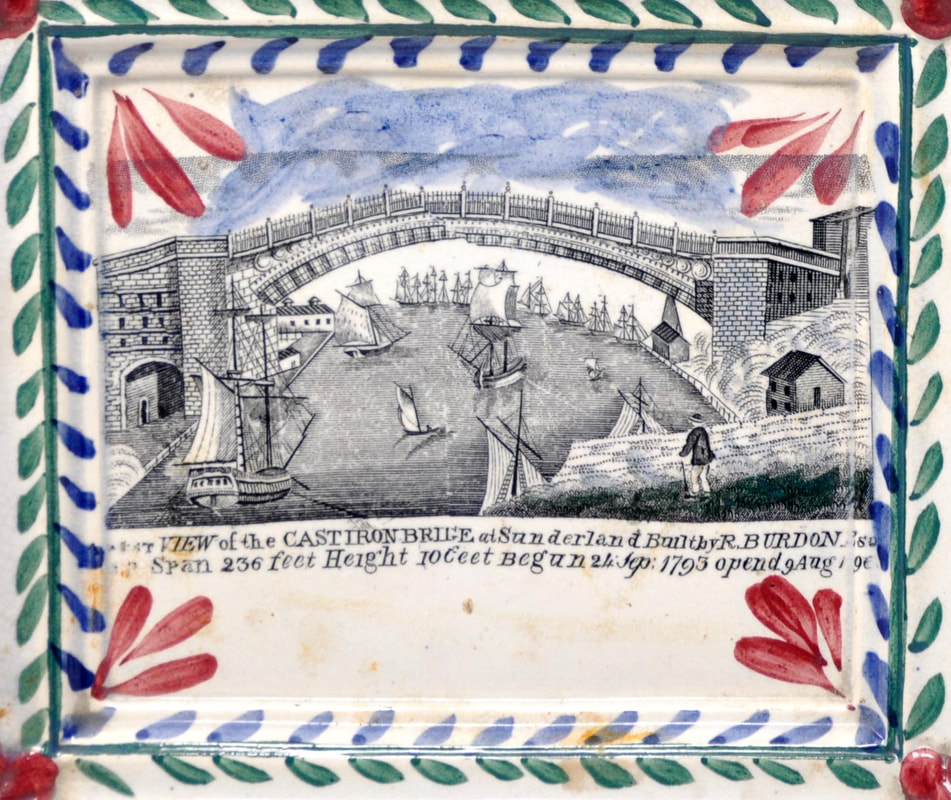
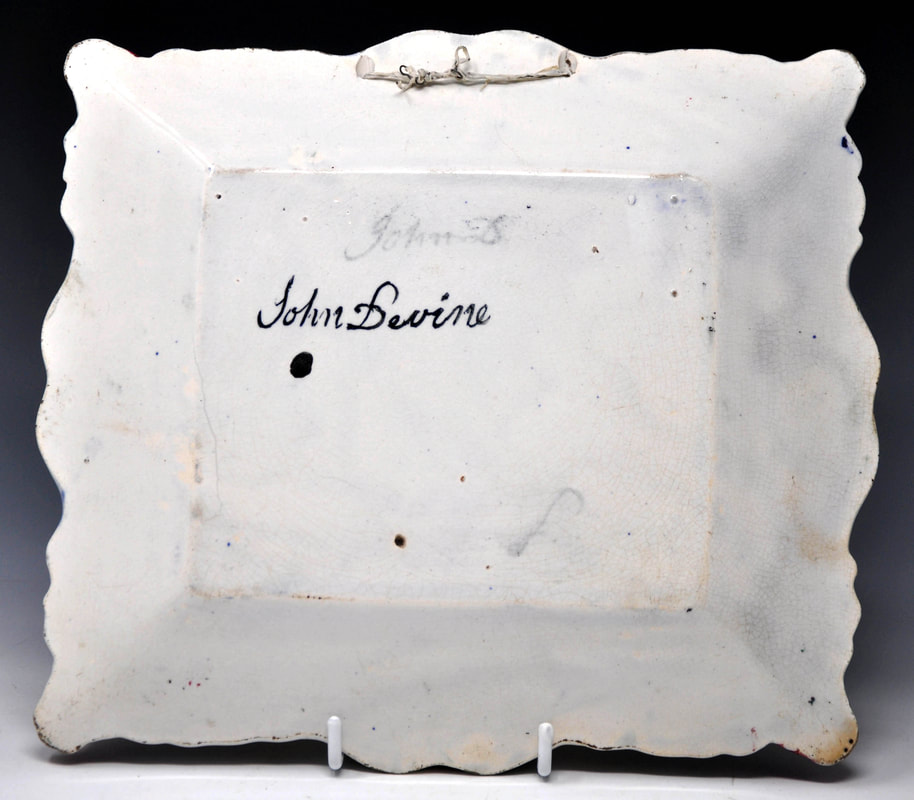
The above plaques are transfer 29, 'Circa 1850.' Baker writes 'Probably Sunderland ('Garrison') Pottery.' However, although the first three rows are unmarked, they are attributed to Newbottle High Pottery. The last plaque has the signature of a young Newbottle potter, John Devine, and is the only known marked example from that pottery. It was perhaps made as an apprentice piece. Read more here. The title reads: 'WEST VIEW of the CAST IRON BRIDGE at Sunderland Built by R BURDON Esq Span 236 feet Height 100 feet Begun 24 Sep 1793 opend 9 Aug 1796'.
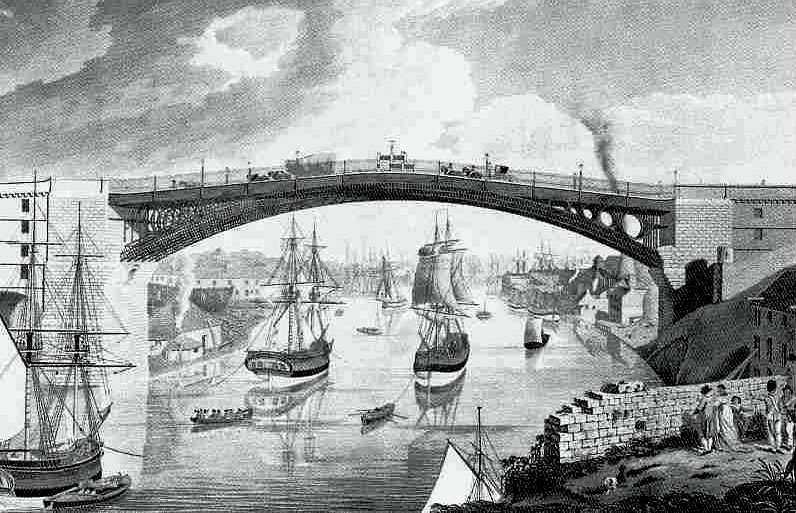
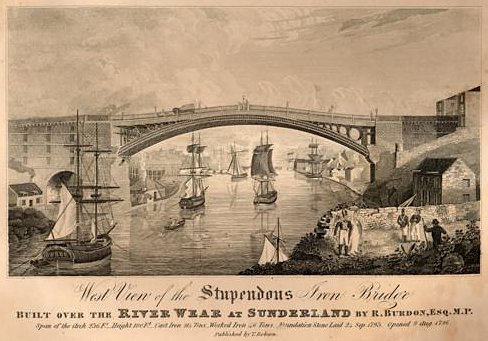
The two prints below show similar views of the bridge with a broken wall on the right in the foreground. Click on the links for the sources.
http://www.wearsideonline.com/sunderland_wearmouth_bridge.html
http://sine.ncl.ac.uk/view_image.asp?digital_doc_id=4004
Visit the bridge 29 page on my other site, to see this transfer on jugs, bowls, etc.
The two prints below show similar views of the bridge with a broken wall on the right in the foreground. Click on the links for the sources.
http://www.wearsideonline.com/sunderland_wearmouth_bridge.html
http://sine.ncl.ac.uk/view_image.asp?digital_doc_id=4004
Visit the bridge 29 page on my other site, to see this transfer on jugs, bowls, etc.
A WEST VIEW of the CAST IRON BRIDGE over the RIVER WEAR
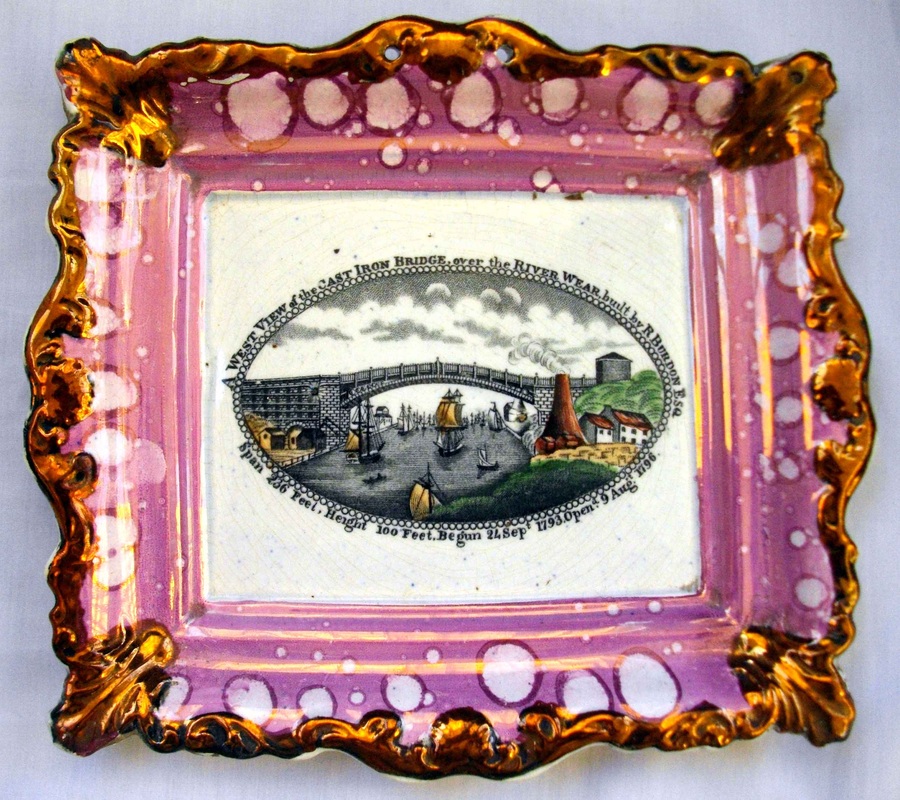
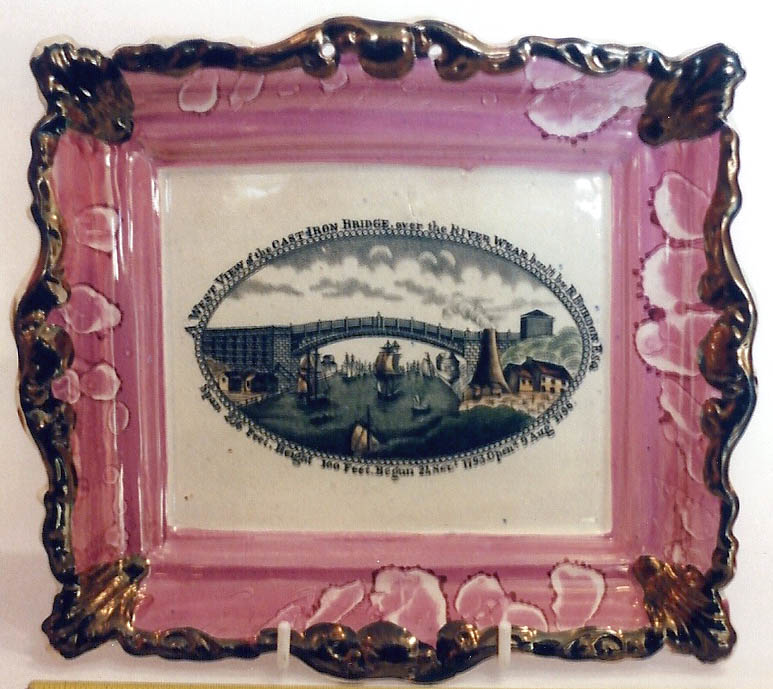
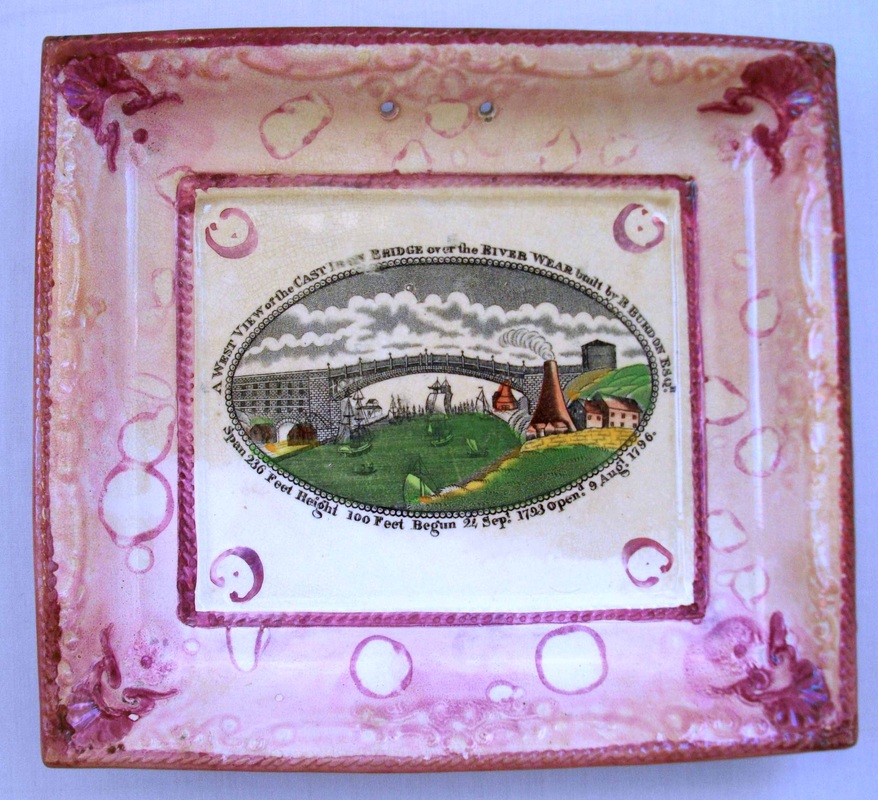
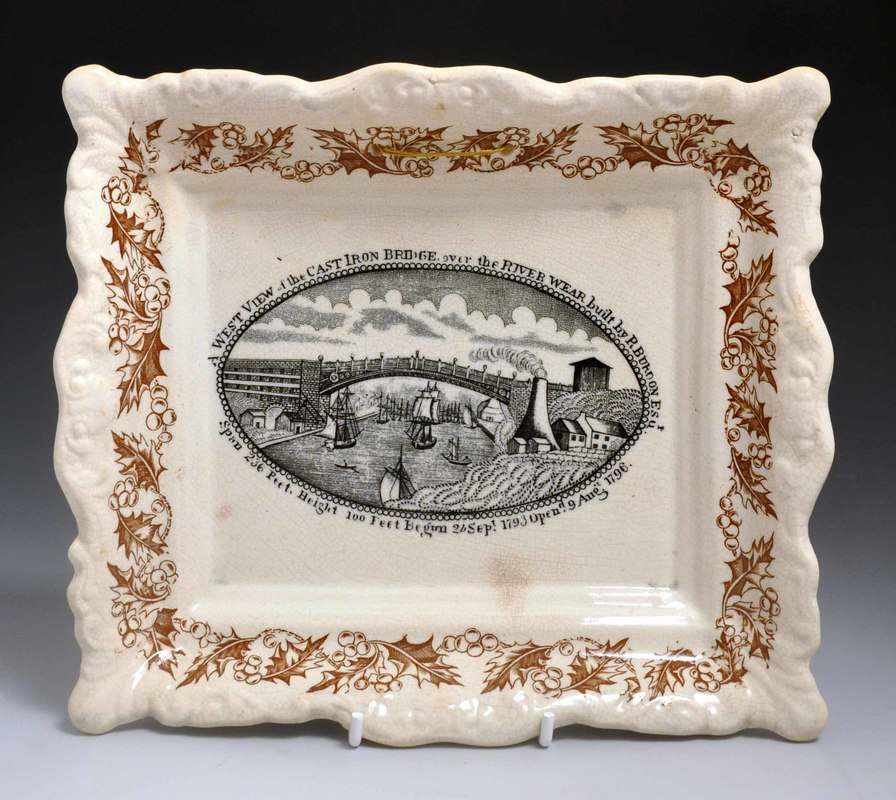
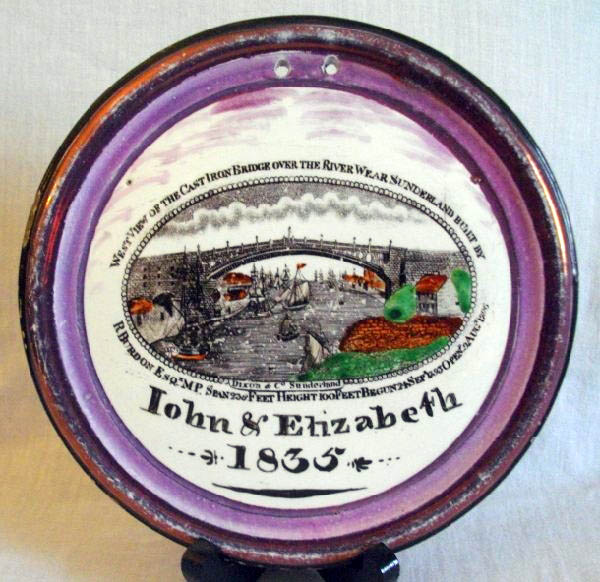
The first four have variations of transfer 31. The first is attributed to Newbottle High Pottery, and the second to Moore's Wear Pottery, late 1850s. The third is from a different transfer plate, and attributed to Scott's, circa 1860. The fourth is yet another variation of this transfer on a plaque with unusual leaf-printed borders. N.B. there are many variations of this transfer found on lustre items (read more here). The title reads: 'A WEST VIEW of the CAST IRON BRIDGE over the RIVER WEAR built by R BURDON Esq Span 236 feet. Height 100 feet. Begun 24 Sept. 1793 opend. 9 Aug 1796'. Interestingly, the transfer shows the conical brick structure of a kiln to the right of the bridge (the map in Baker suggests this is Burnside's Pottery). This gives an idea of the proximity of the potteries to the bridge view. The circular plaque is transfer 41, 'Circa 1820. Marked "Dixon & Co., Sunderland".' The title reads: ' WEST VIEW OF THE CAST IRON BRIDGE OVER THE RIVER WEAR SUNDERLAND BUILT BY R BURDON ESQ MP SPAN 236 FEET HEIGHT 100 FEET BEGUN 24 SEPT 1793 OPEN 9 AUG 1796'. The maker's mark is on the front incorporated into the transfer. There is hand-painted text beneath, 'John & Elizabeth 1835'. The plaque was presumably commissioned as a wedding gift.
For the Newbottle version of the transfer on jugs, bowls, etc, please visit this page of my other website.
For Scott's versions of the transfer, visit this page.
For Dixon's mugs, jugs, etc, with the bridge 41 transfer, visit this page.
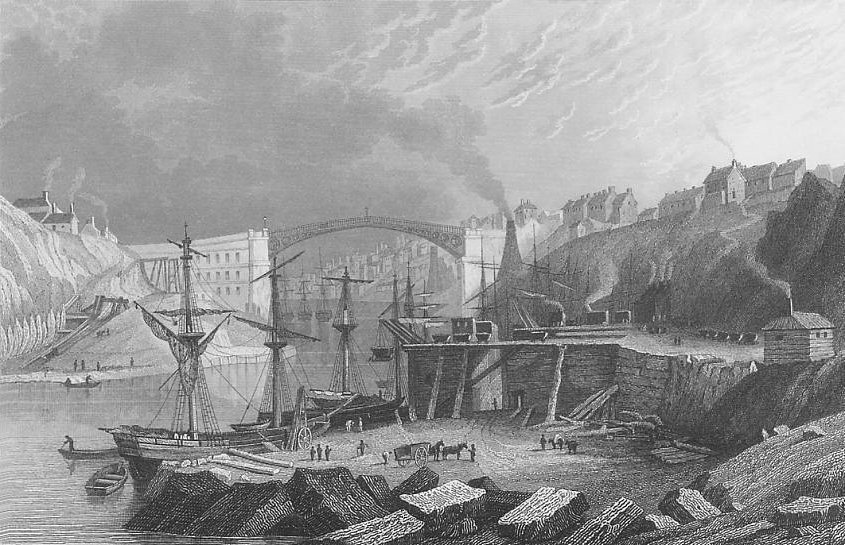
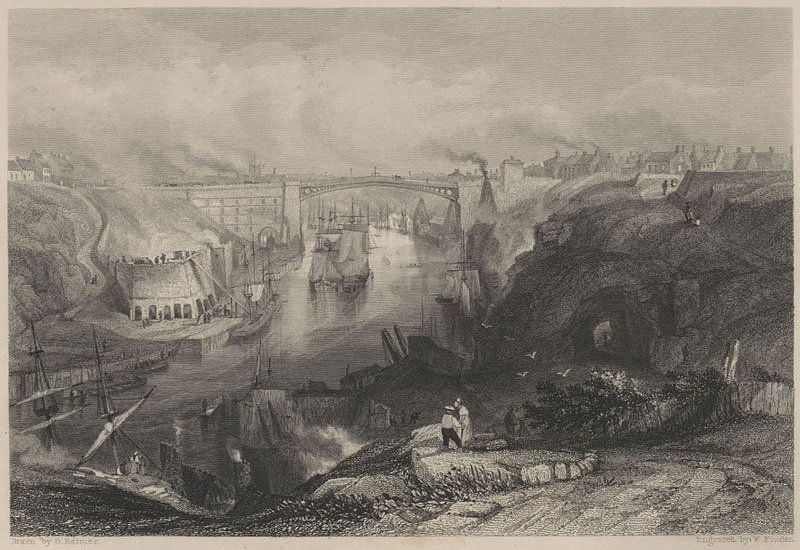
The two prints below show views of the bridge with the pottery kiln in front of it. Thanks to The Sunderland Site for sourcing them.
For the Newbottle version of the transfer on jugs, bowls, etc, please visit this page of my other website.
For Scott's versions of the transfer, visit this page.
For Dixon's mugs, jugs, etc, with the bridge 41 transfer, visit this page.
The two prints below show views of the bridge with the pottery kiln in front of it. Thanks to The Sunderland Site for sourcing them.
CAST IRON BRIDGE OVER THE WEAR SUNDERLAND
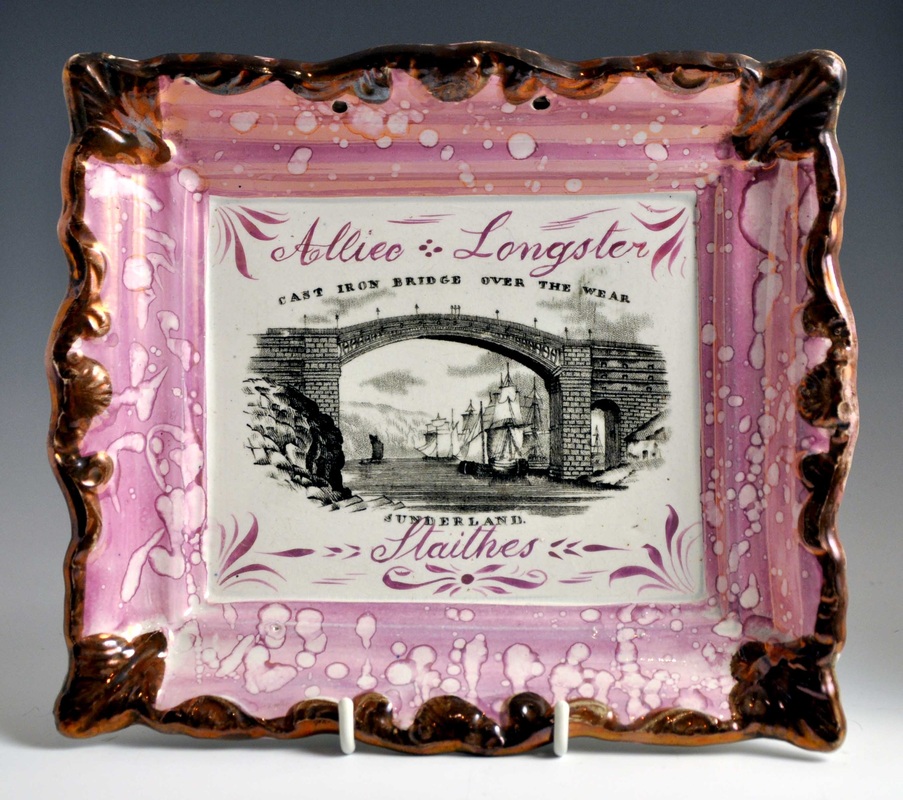
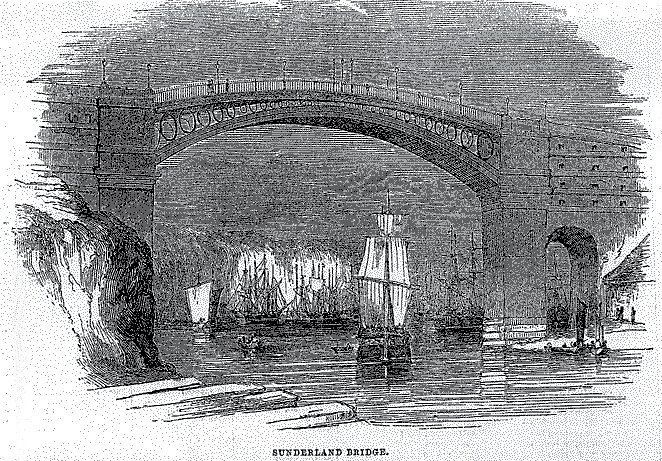

The left plaque has been decorated with the inscription 'Allice Longster Staithes'. The transfer on the right plaque has been applied upside down, so that the hanging holes appear at the bottom. These are the only two plaques I've seen with this transfer.
This transfer isn't listed in Baker. A variation of the transfer appears on marked Maling Pottery. Though the plaques above are unmarked, it is probable that, despite their subject, they were made in Newcastle. The transfer often appears with Newcastle High Level Bridge, so it's likely there's a pair to this plaque. The print is from the Illustrated London News in 1842.
See this page on my other site for jugs, mugs and bowls with this transfer.
This transfer isn't listed in Baker. A variation of the transfer appears on marked Maling Pottery. Though the plaques above are unmarked, it is probable that, despite their subject, they were made in Newcastle. The transfer often appears with Newcastle High Level Bridge, so it's likely there's a pair to this plaque. The print is from the Illustrated London News in 1842.
See this page on my other site for jugs, mugs and bowls with this transfer.