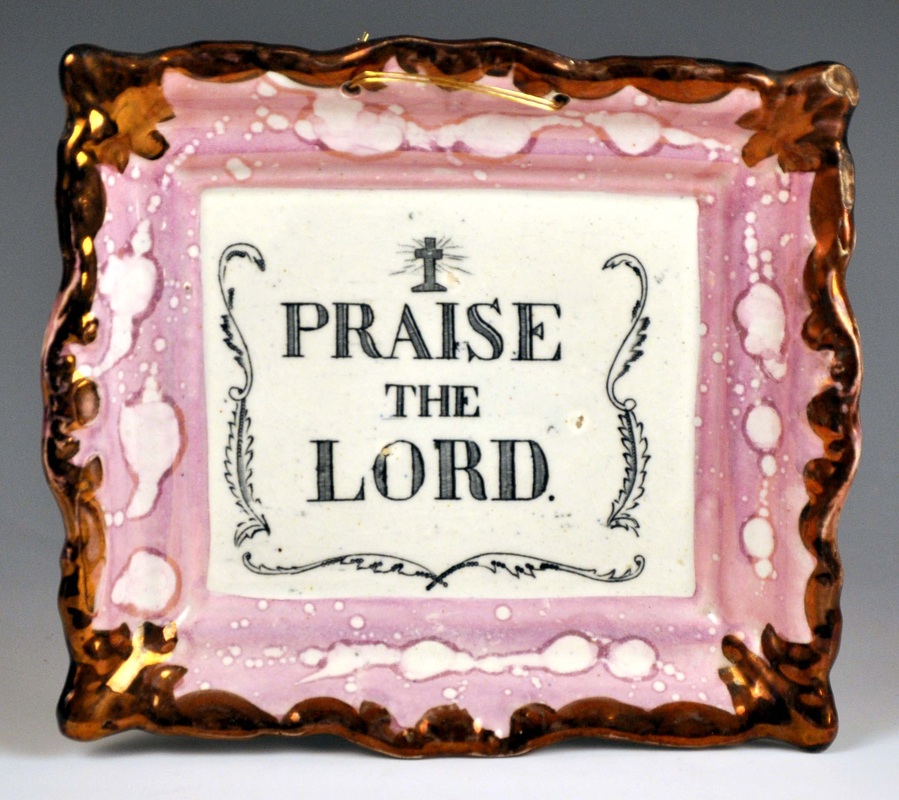
Praise ye the lord
For an overview of pink lustre plaques with religious subjects, click on the religious heading above.
Praise ye the lord is the third most common verse found on plaques. The earliest plaques I've seen with this verse were made c1830s. This verse was never used by Maling, Dixon or Cornfoot, Colville and Co, so small circular examples from the 1830s are less common.
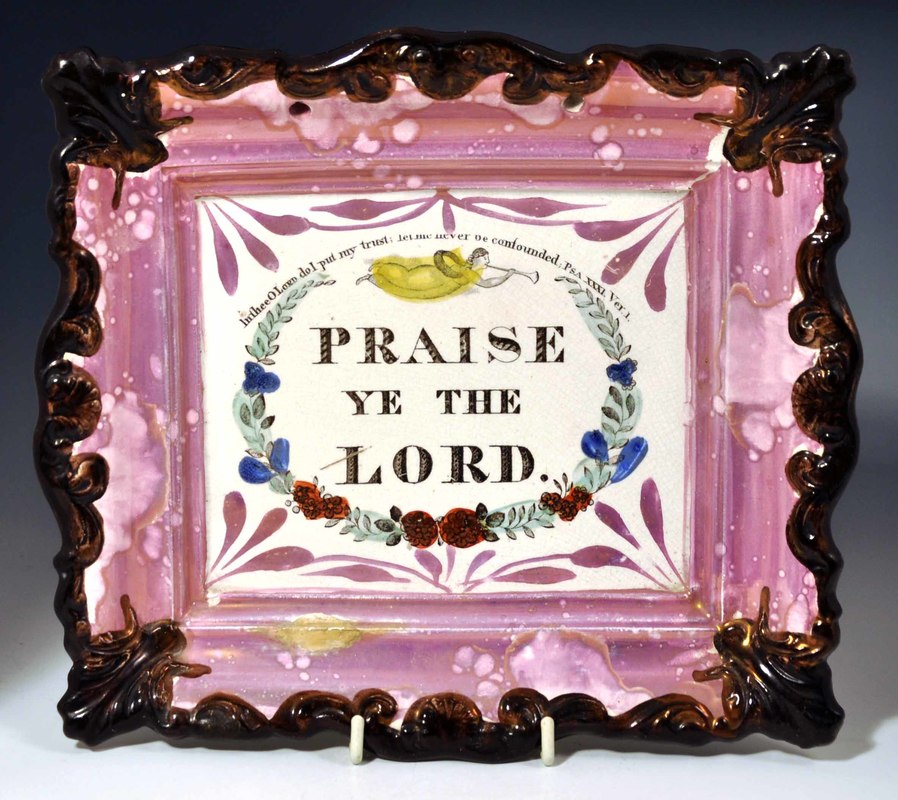
The Sunderland engraver who made 4 Prepare to meet thy god transfer plates (Sunderland plates 1-5) engraved counterpart 'Praise ye the lord' plaques with the trumpeting angel and verse: Scott (plate 1), Newbottle (plate 3) and Moore (plate 4). N.B. as with 'Thou god sees't me', there does not appear to be a pair to plate 2 or 5.
The Sunderland engraver who made 4 Prepare to meet thy god transfer plates (Sunderland plates 1-5) engraved counterpart 'Praise ye the lord' plaques with the trumpeting angel and verse: Scott (plate 1), Newbottle (plate 3) and Moore (plate 4). N.B. as with 'Thou god sees't me', there does not appear to be a pair to plate 2 or 5.
Thomas Fell, St Peter's Pottery, Newcastle
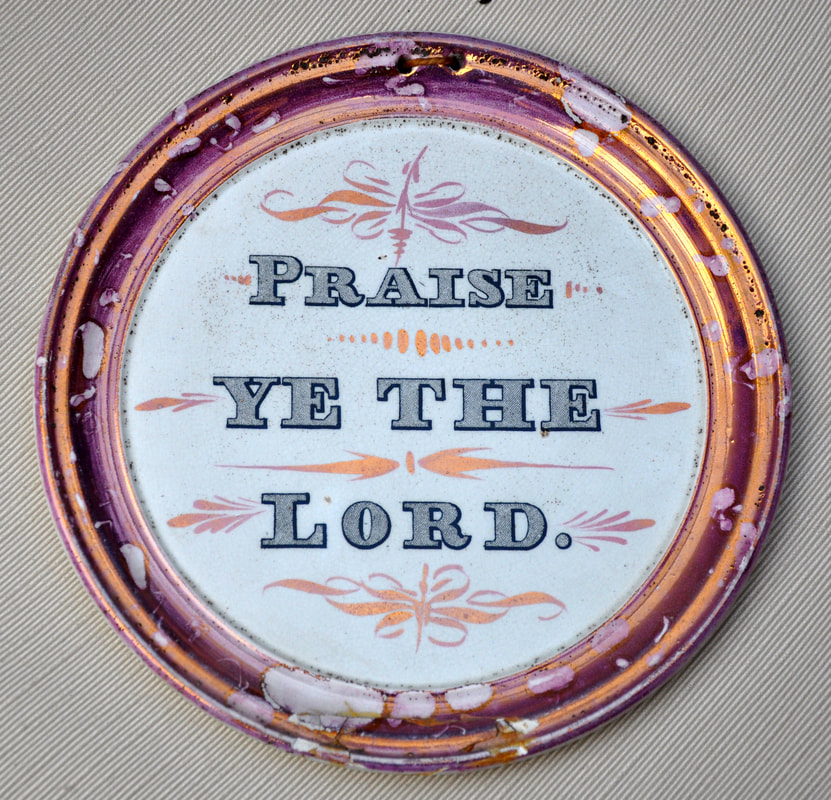
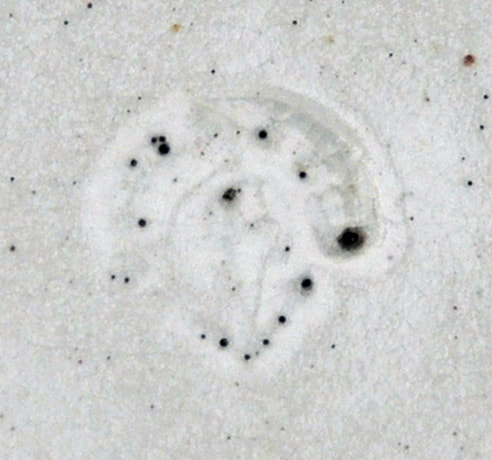
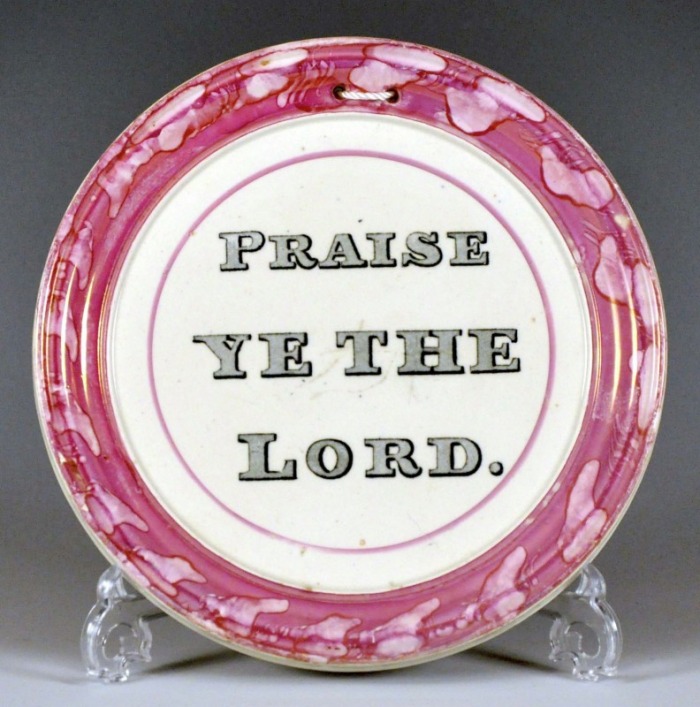
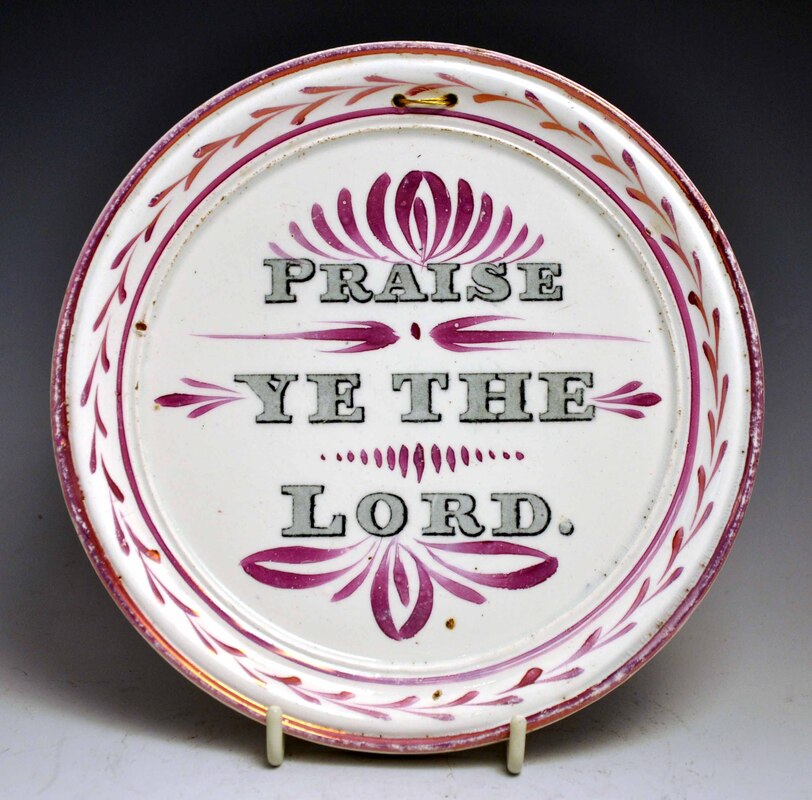
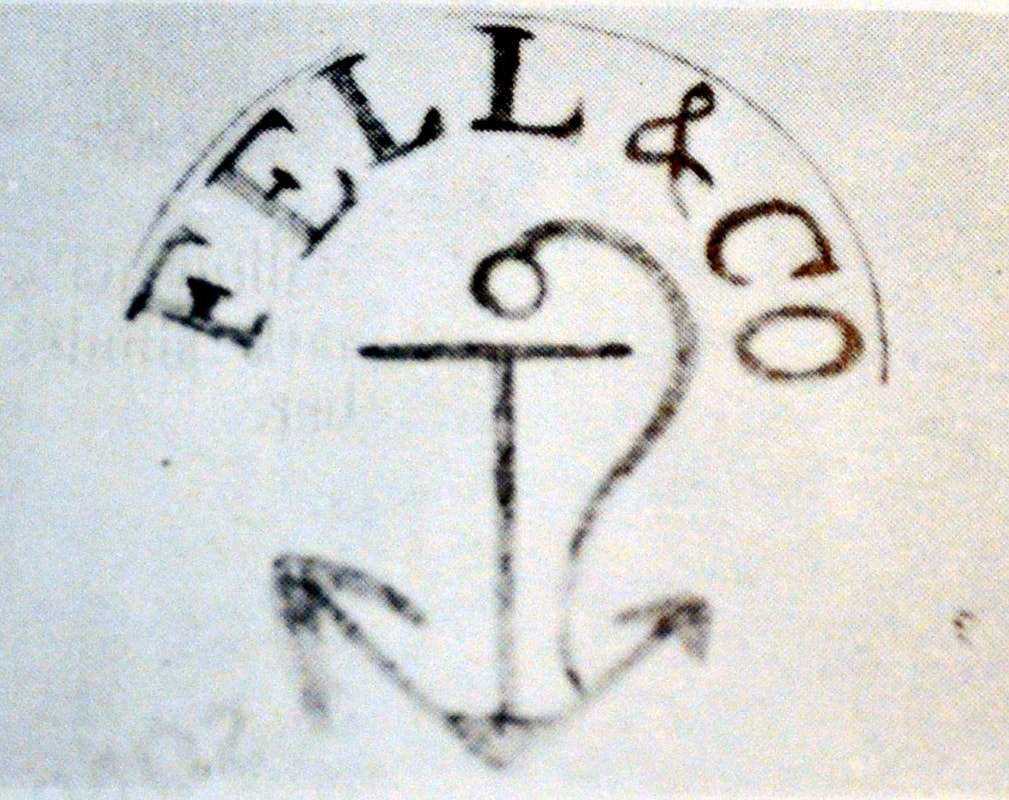
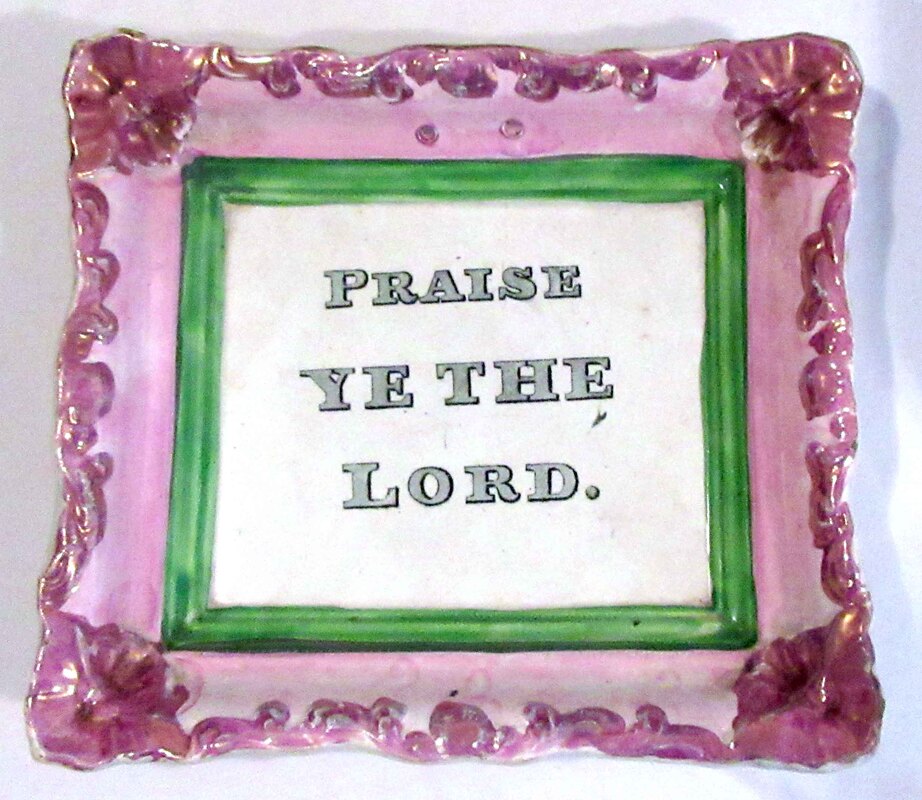
Three rare small round plaques from c1830s with the verse. The first has an indistinct Fell mark. The drawing, from Bell's 'Tyneside Pottery', shows how it should look. The last rectangular plaque, also attributed to Fell, has the transfer with a distinctive green border.
Attributed to Scott of Southwick, and attributed to Ball's Deptford Pottery (Sunderland plate 1)
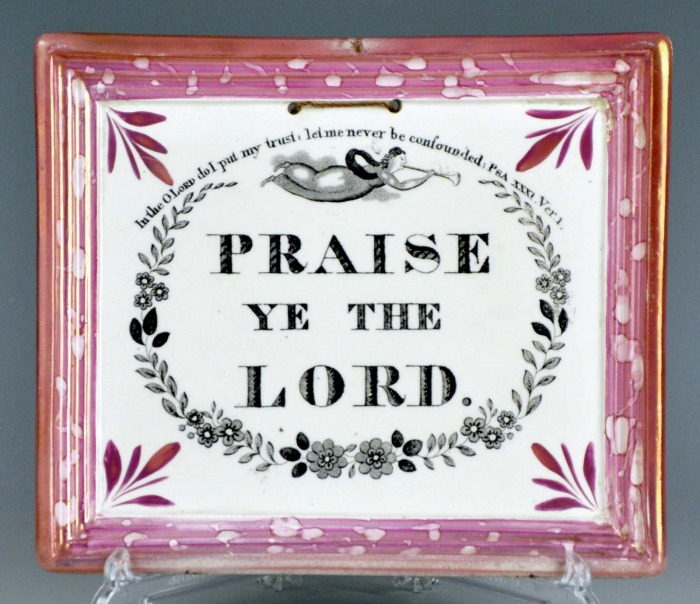
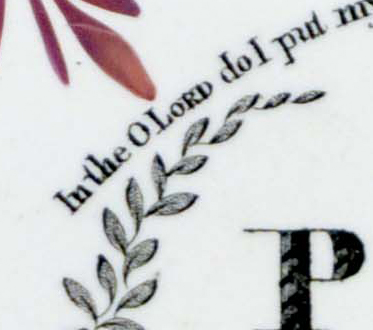


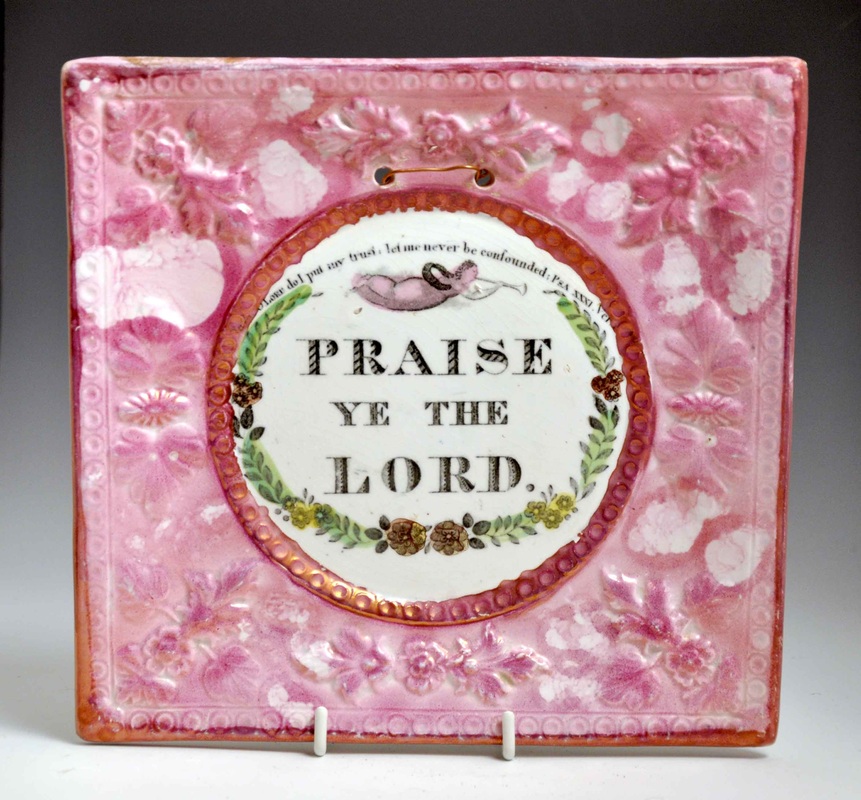

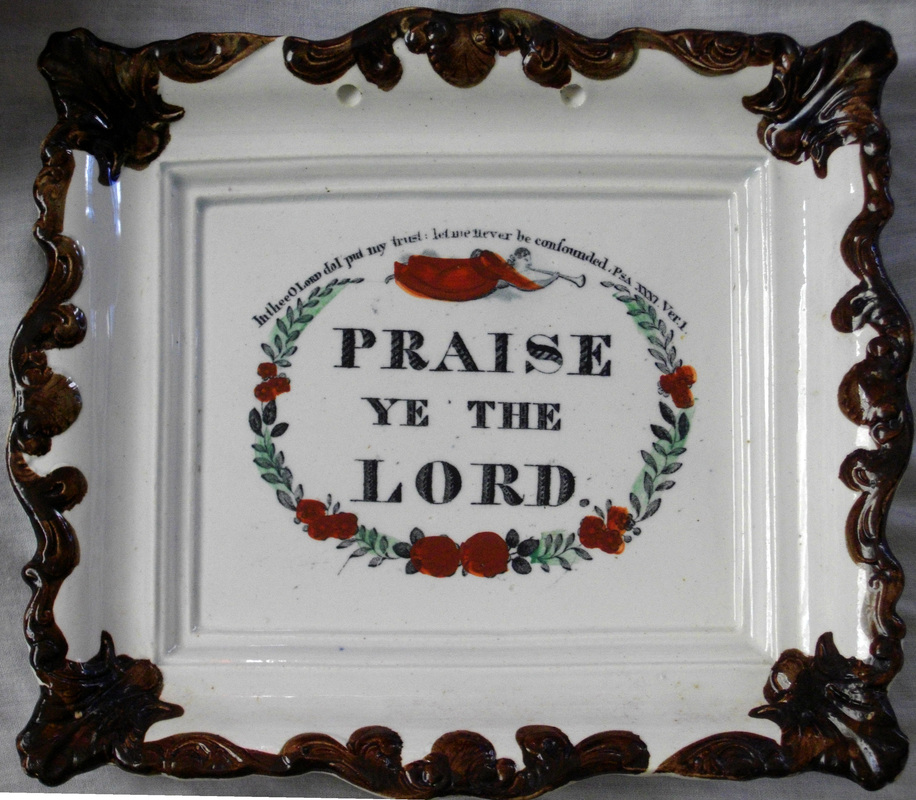
The above plaques are attributed to Scott of Southwick on the basis that the Wesley transfer associated with Scott appears on these plaque forms. The transfer has an easily distinguishable fault. Instead of the verse at the top reading 'In thee O Lord...', it begins 'In the O Lord...'.
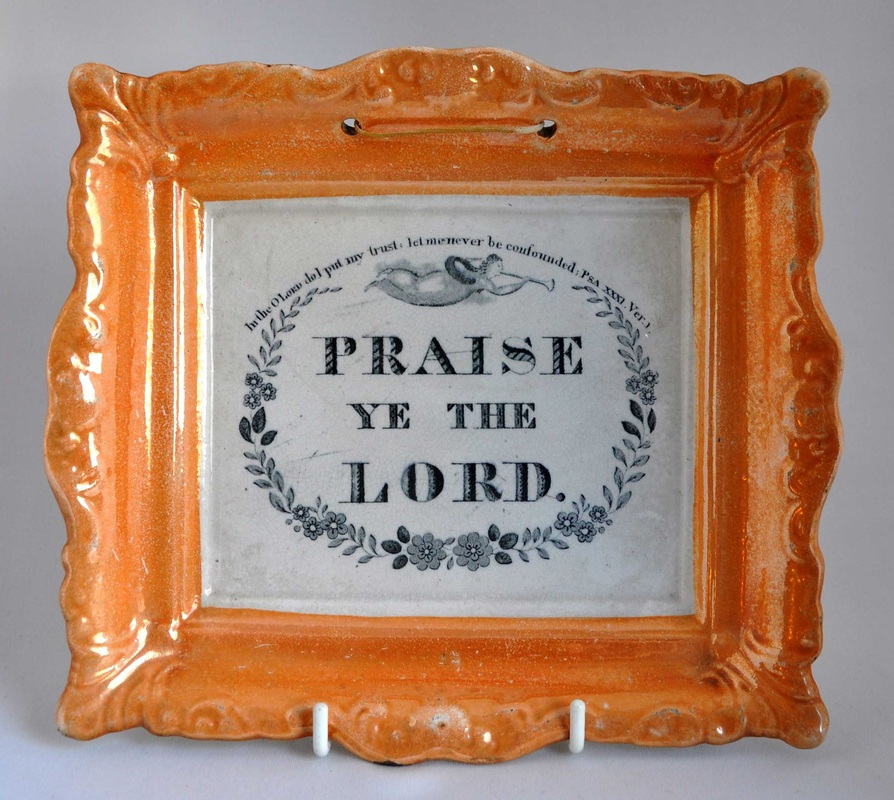
The orange plaques below are also attributed to Scott, but post 1860. These later plaques tend to be more heavily potted, and the quality of the transfer imprint poorer.
The orange plaques below are also attributed to Scott, but post 1860. These later plaques tend to be more heavily potted, and the quality of the transfer imprint poorer.
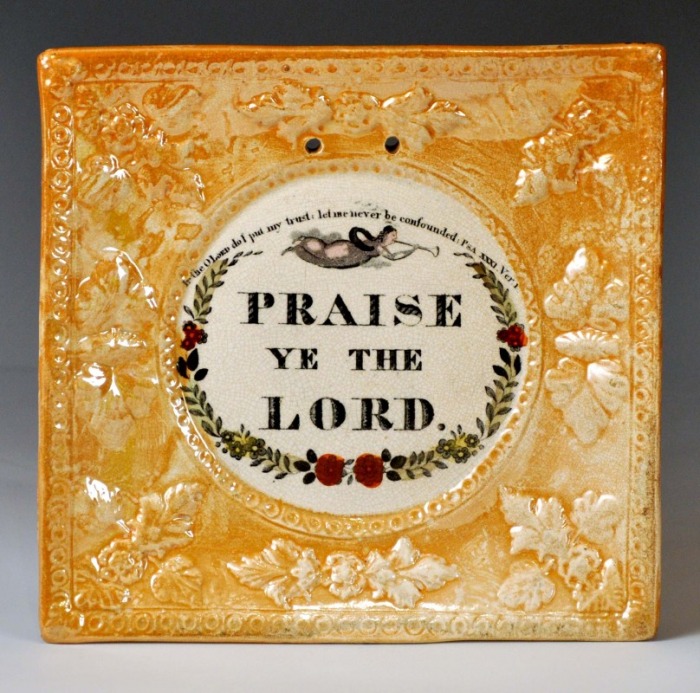
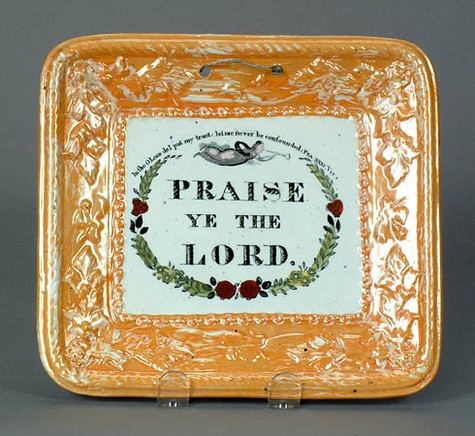
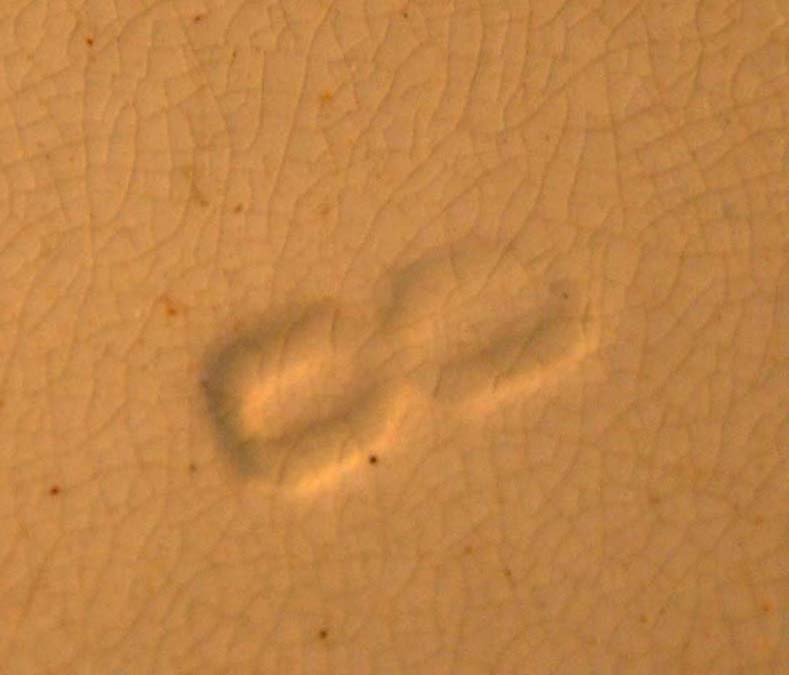
The plaque below has an impressed mark like a number 8, is on the reverse. It is likely later than those above (post 1890), and attributed to Ball's Deptford Pottery.
Attributed to Newbottle 'High' Pottery (Sunderland plate 3)
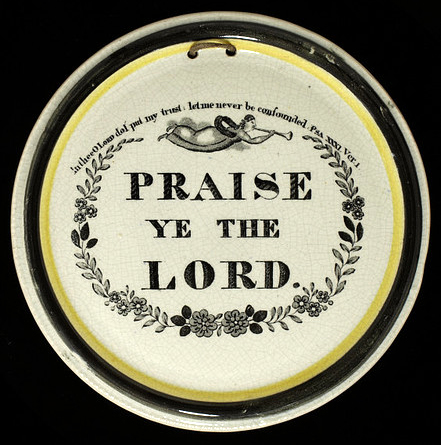


The c1840 plaque above was presented to the V&A by descendents of the owners of the Newbottle 'High' Pottery.
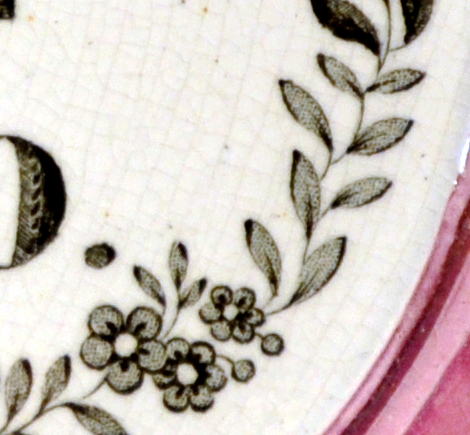
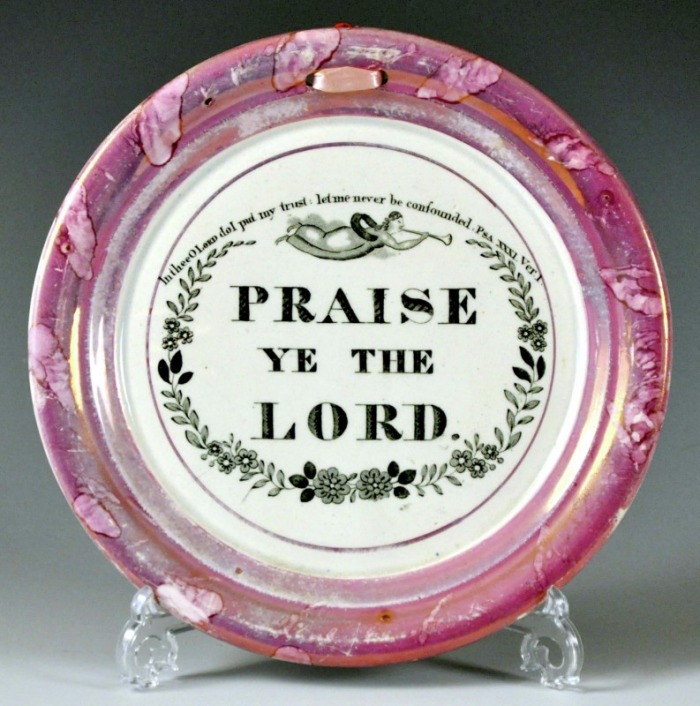
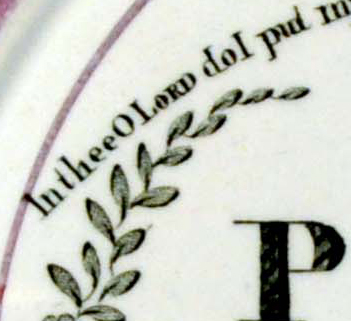
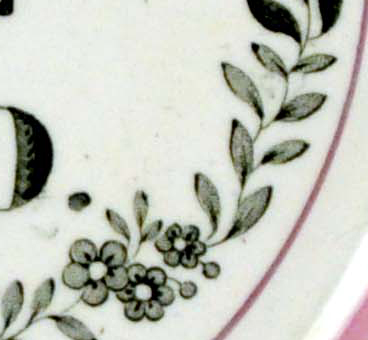
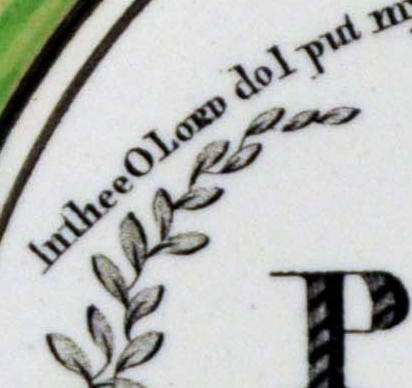
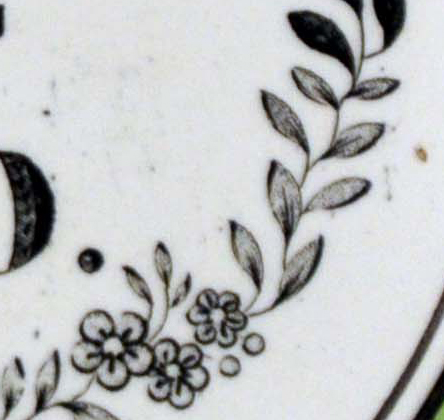
The plaques below, attributed to Newbottle, come from the same transfer plate as the plaque above. The leaves under the letter 'O' in 'O Lord' (first detail) are shaded on the left side. The circles to the right of the flowers (second detail) are joined to the wreath by stalks. N.B. these miniscule differences do not correspond with the details on the Sunderland plate 3 'Prepare' and 'Thou god'.
The first plaque below is c1830s. The others were likely produced c1845–60.
The plaques below, attributed to Newbottle, come from the same transfer plate as the plaque above. The leaves under the letter 'O' in 'O Lord' (first detail) are shaded on the left side. The circles to the right of the flowers (second detail) are joined to the wreath by stalks. N.B. these miniscule differences do not correspond with the details on the Sunderland plate 3 'Prepare' and 'Thou god'.
The first plaque below is c1830s. The others were likely produced c1845–60.
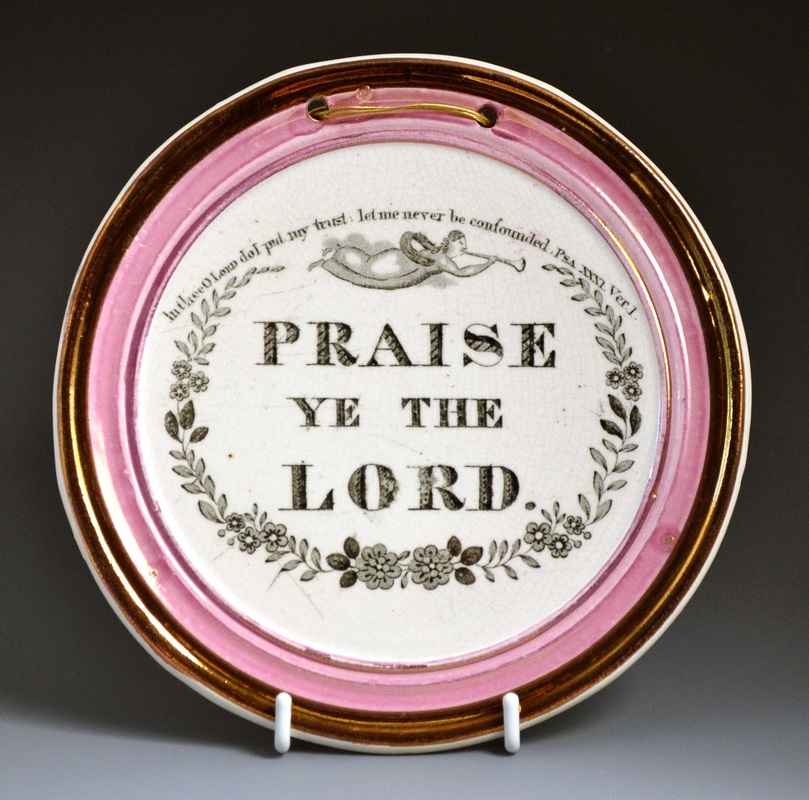

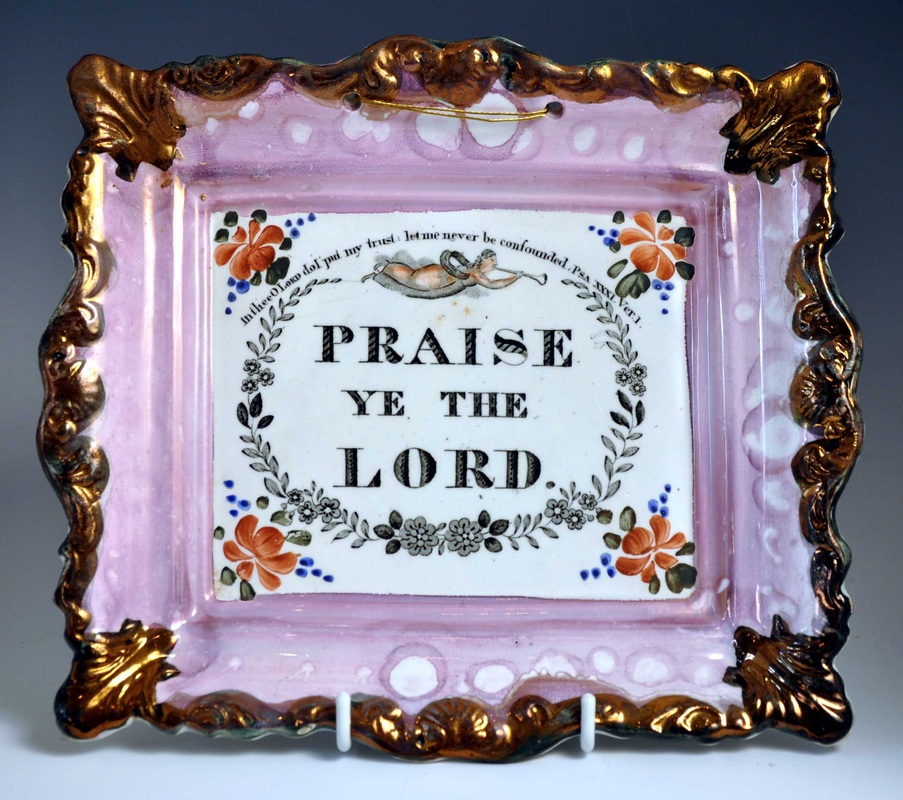
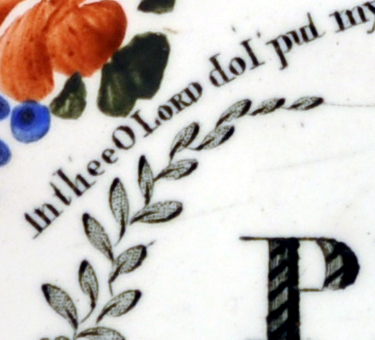

This transfer appears on plaques with copper-lustre borders, painted very precisely so that white edges show from the front (first below), and on larger-sized plaques (third below). Hand-painted flowers in each corner around the transfer appear to be specific to this pottery and period.
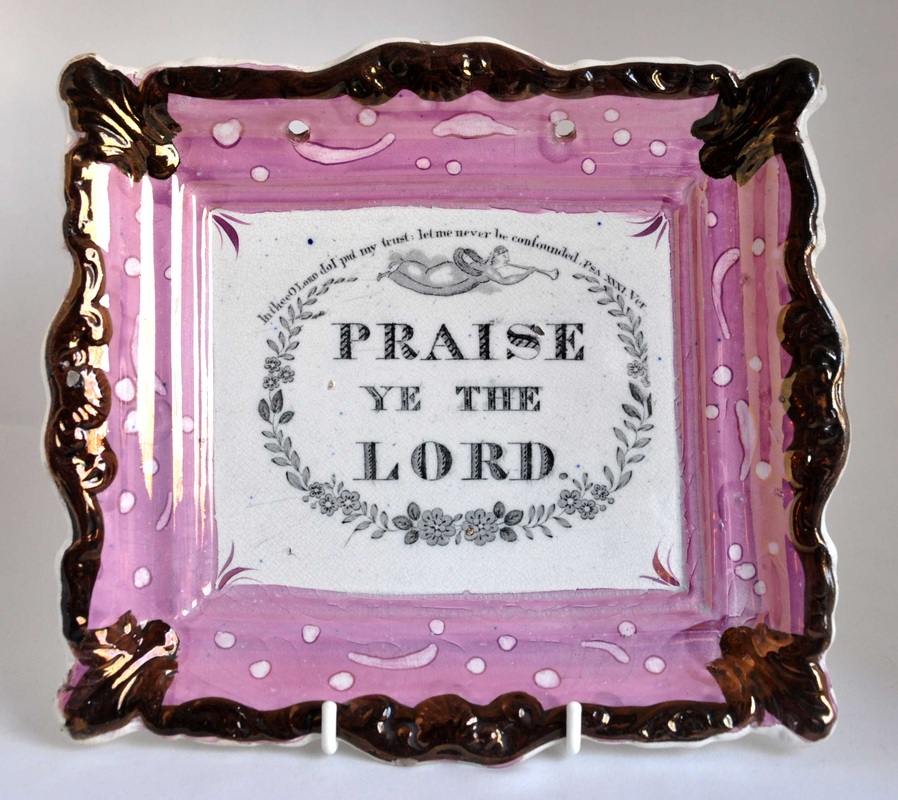
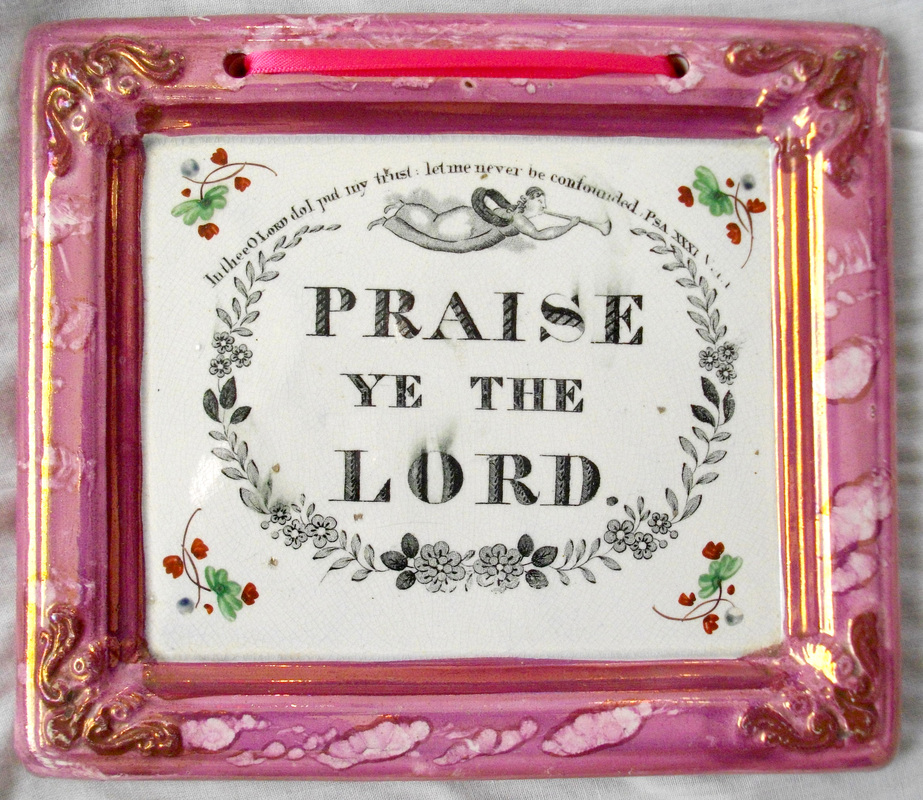

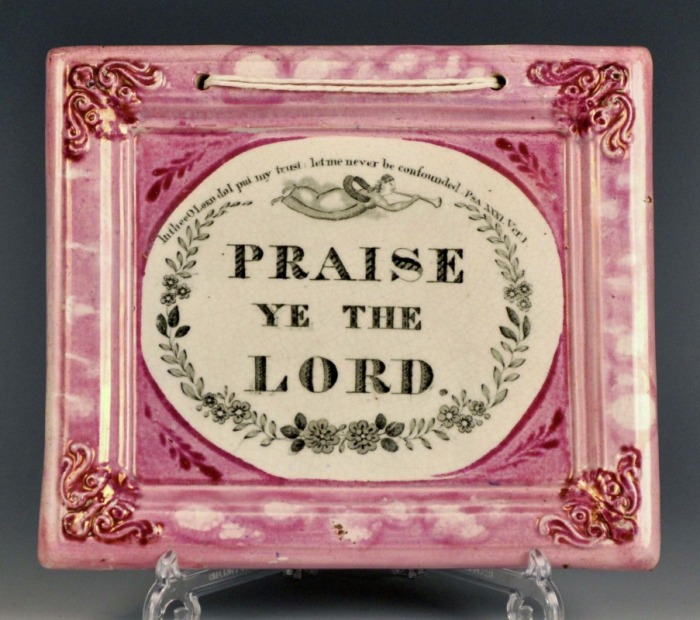

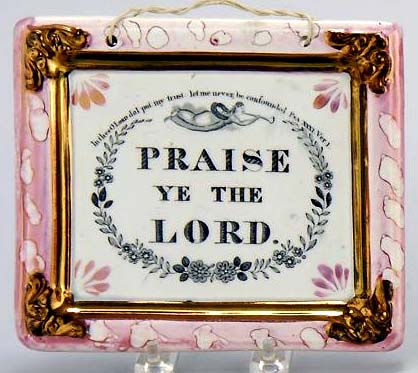
The plaques below, attributed to Newbottle, likely date from the 1860s. The bottom centre has unusual colouring to the corners and border. The last plaque has blue borders.
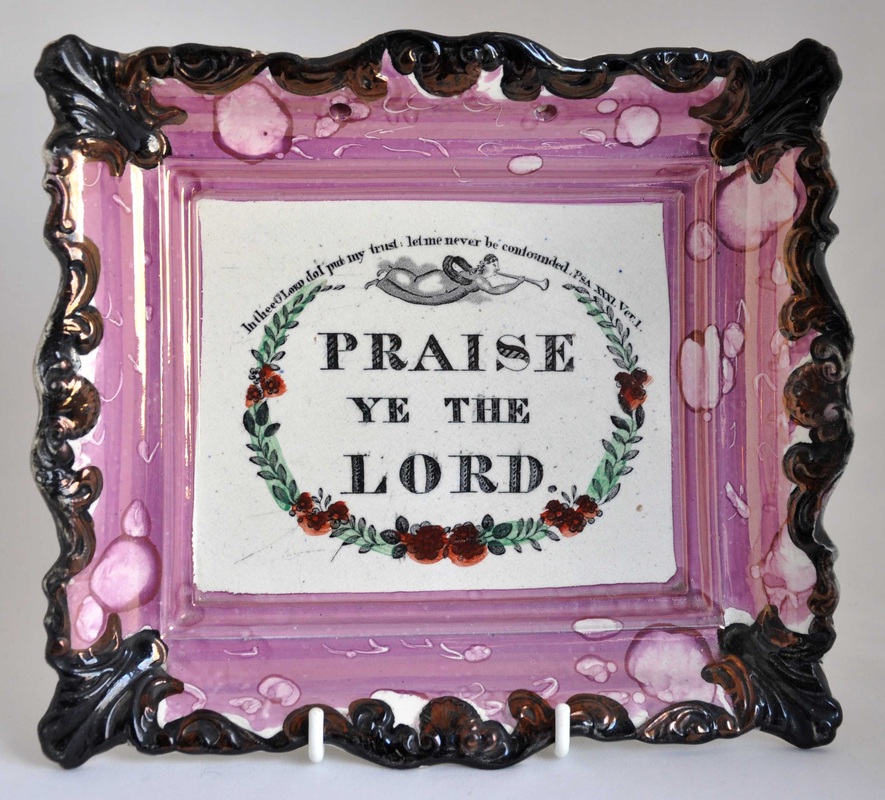
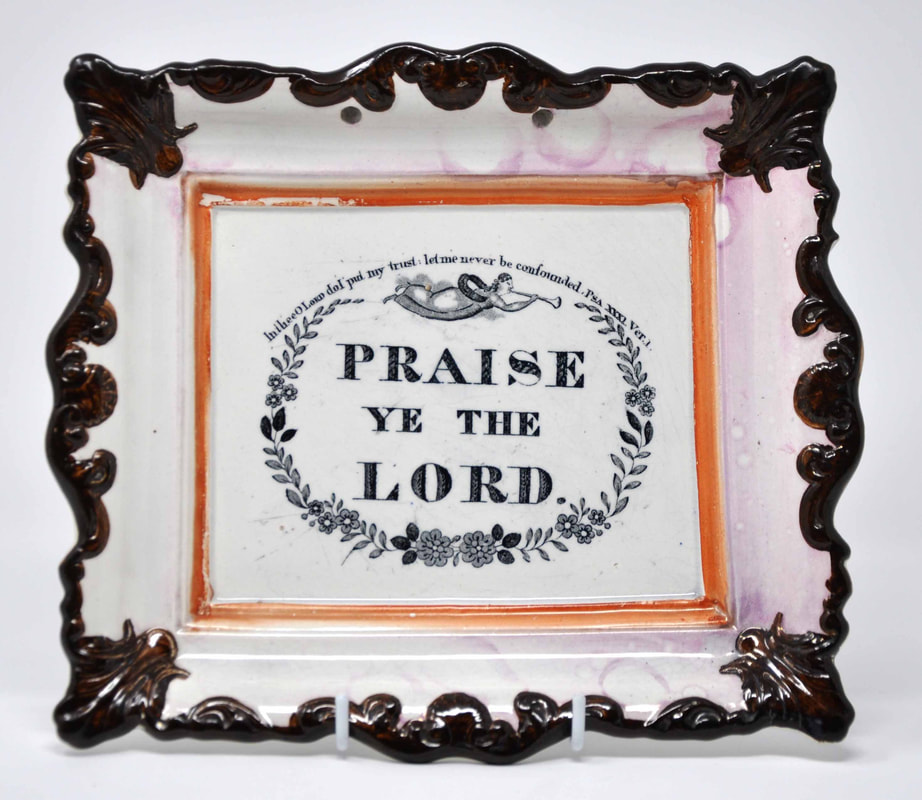
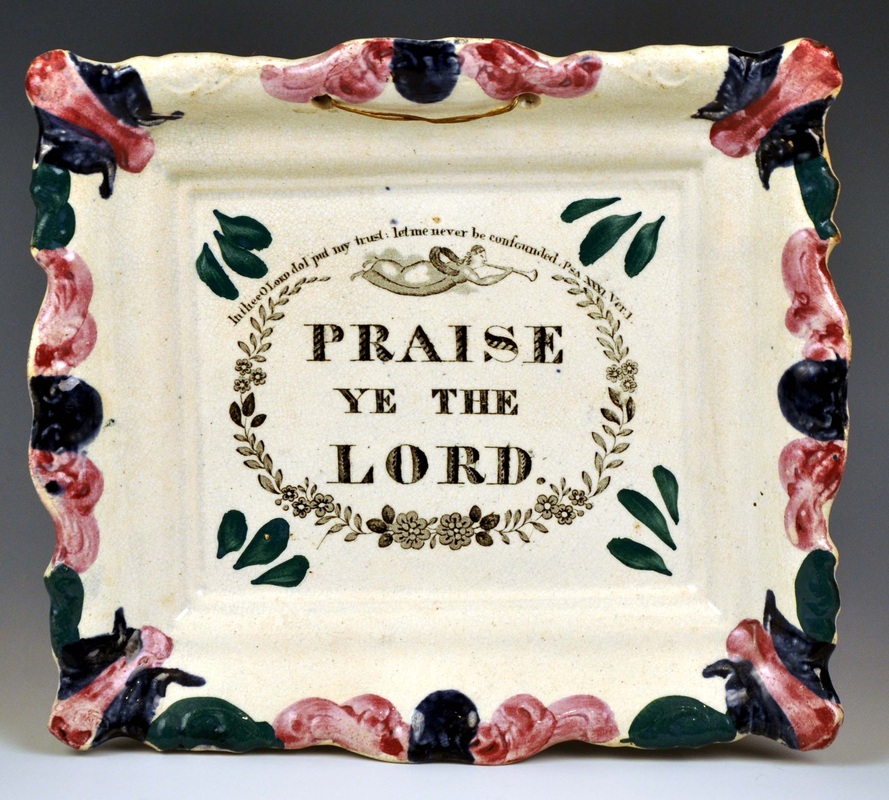
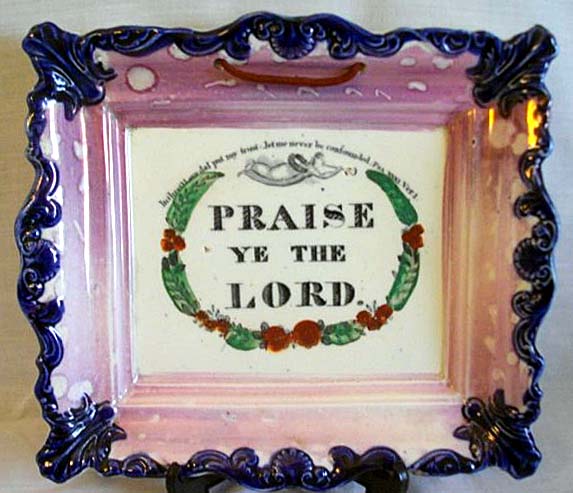
Moore & Co, Wear Pottery (Sunderland plate 4)
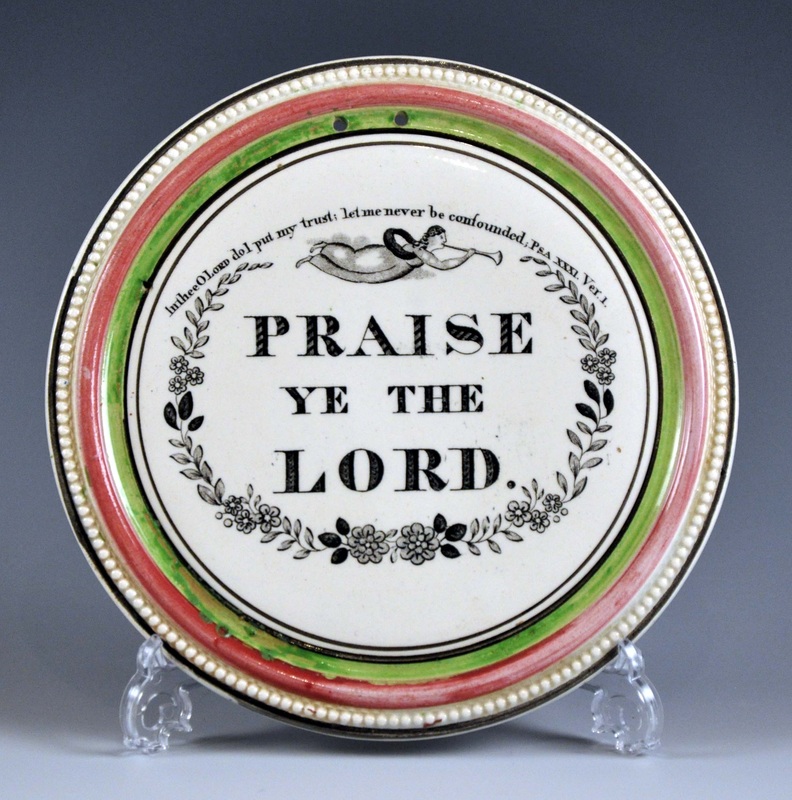
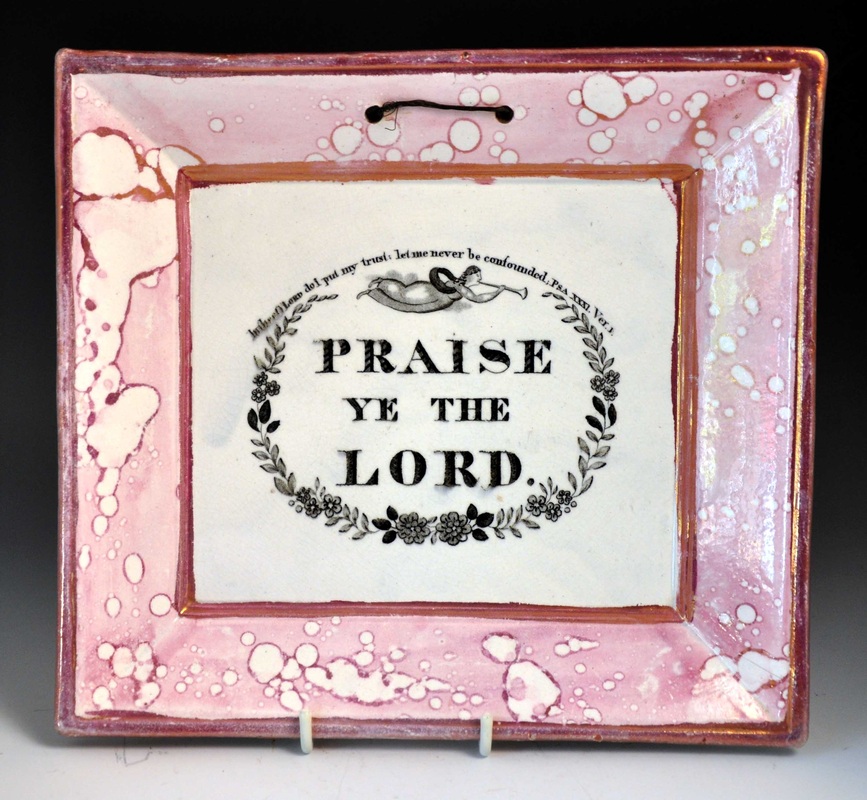
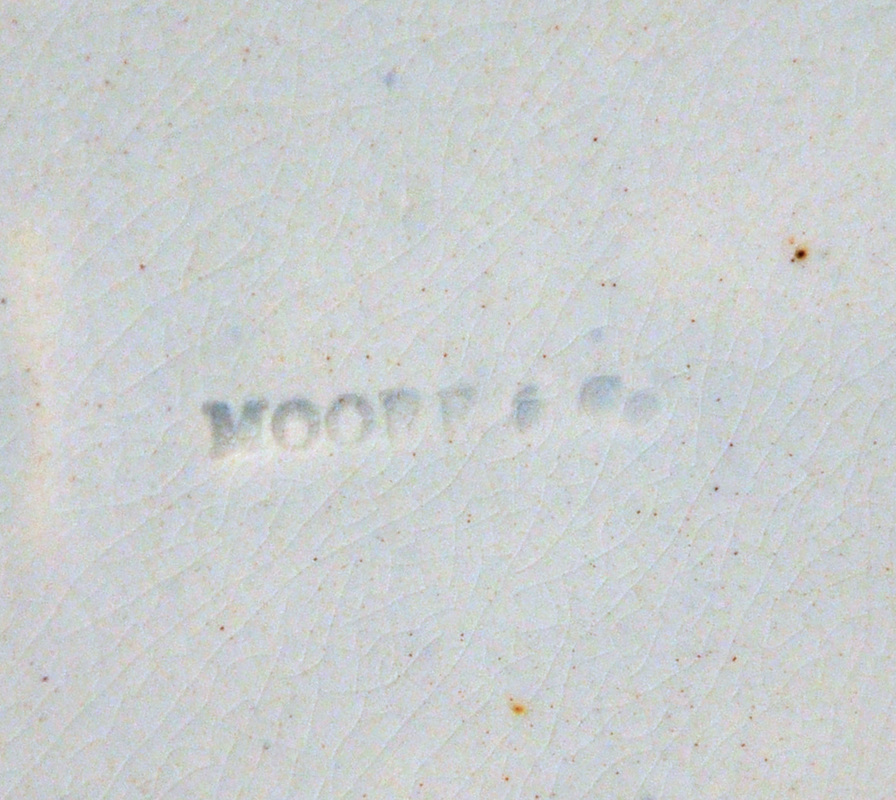

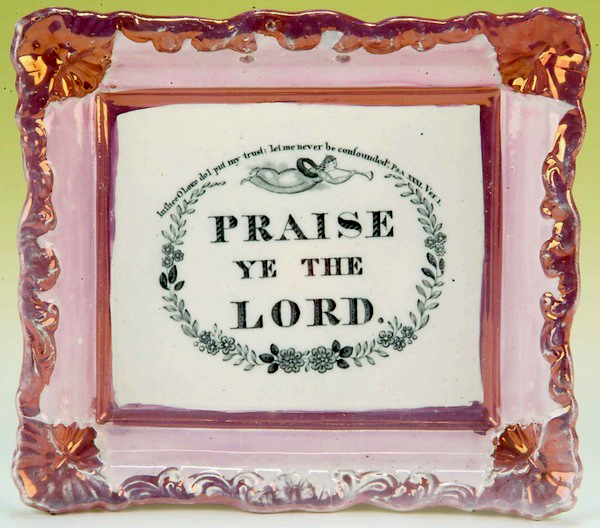
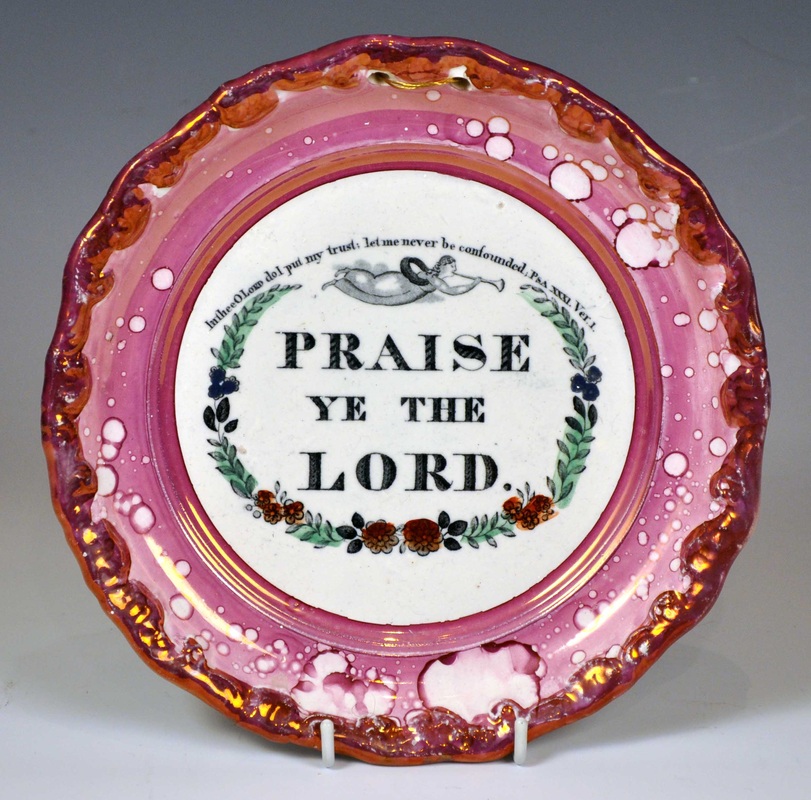
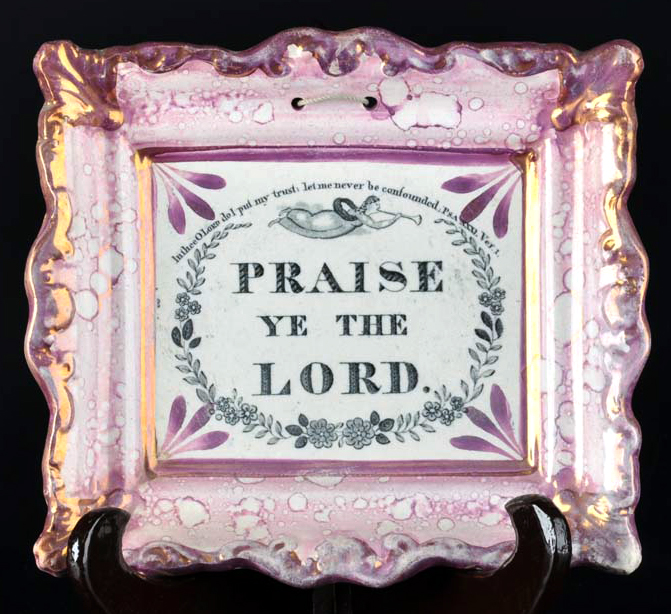
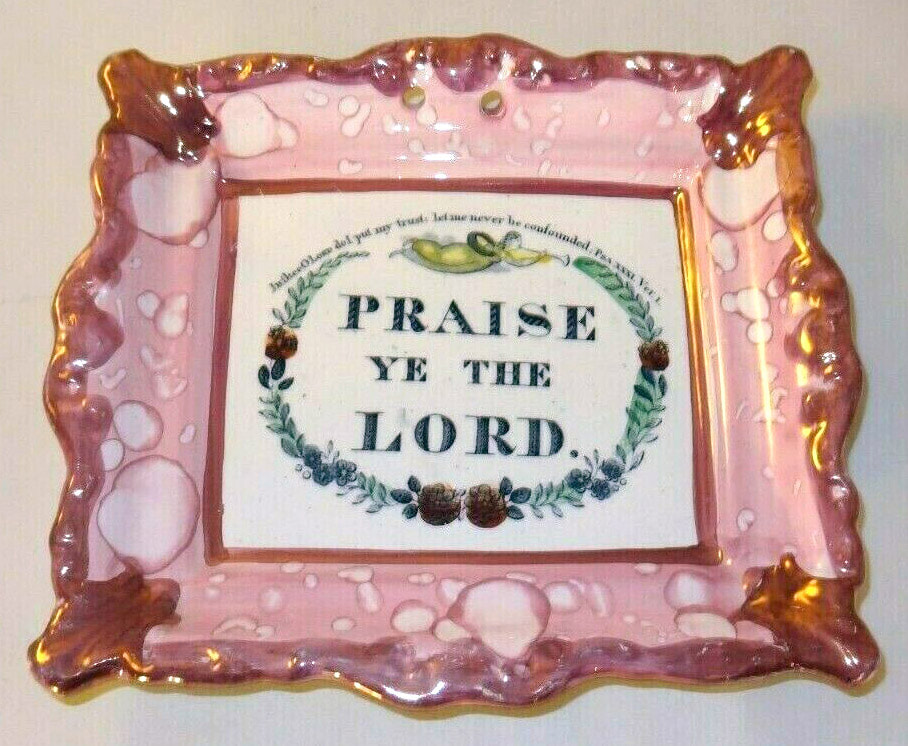
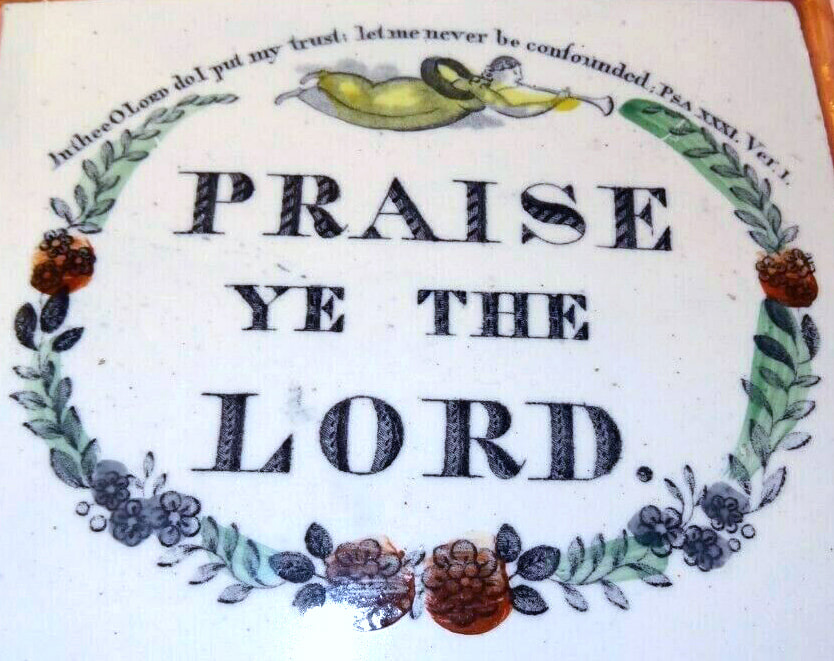
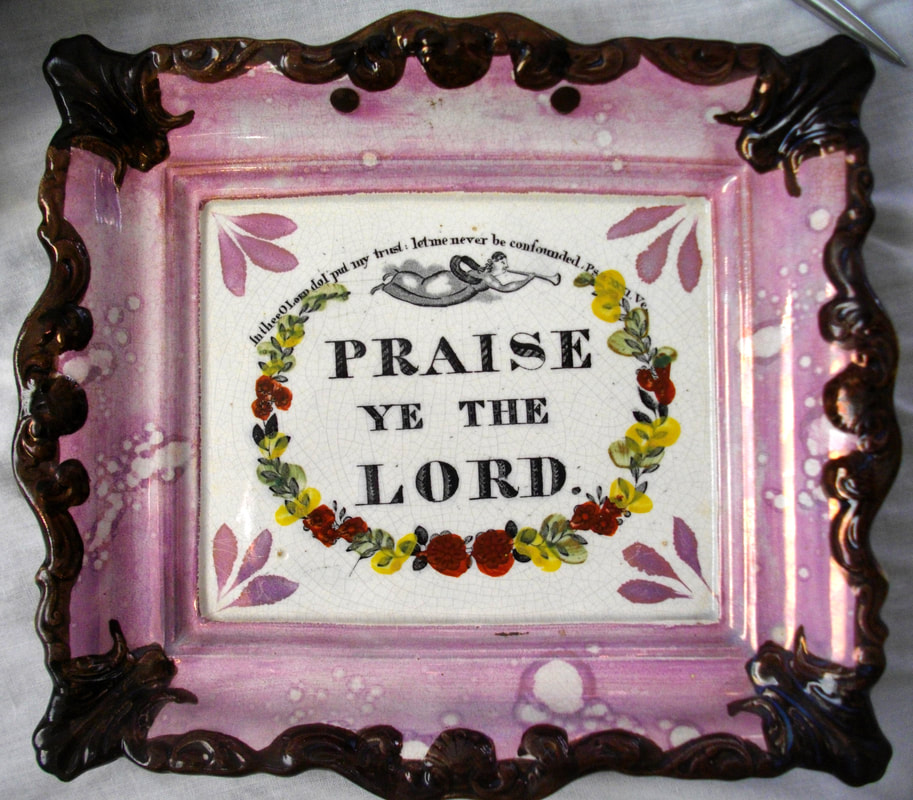
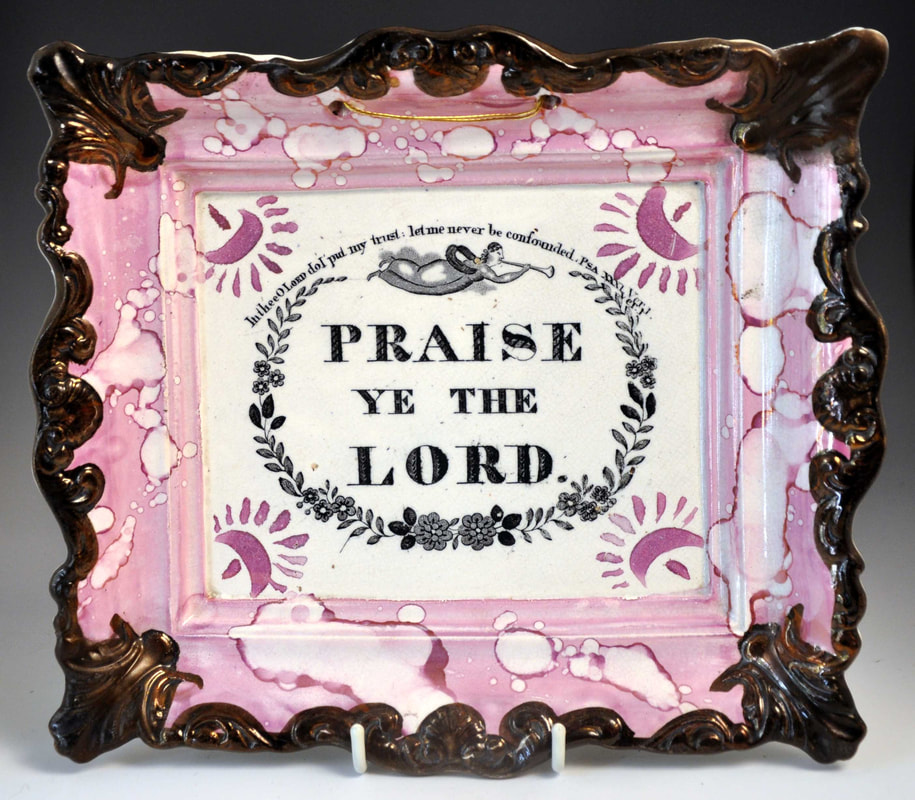
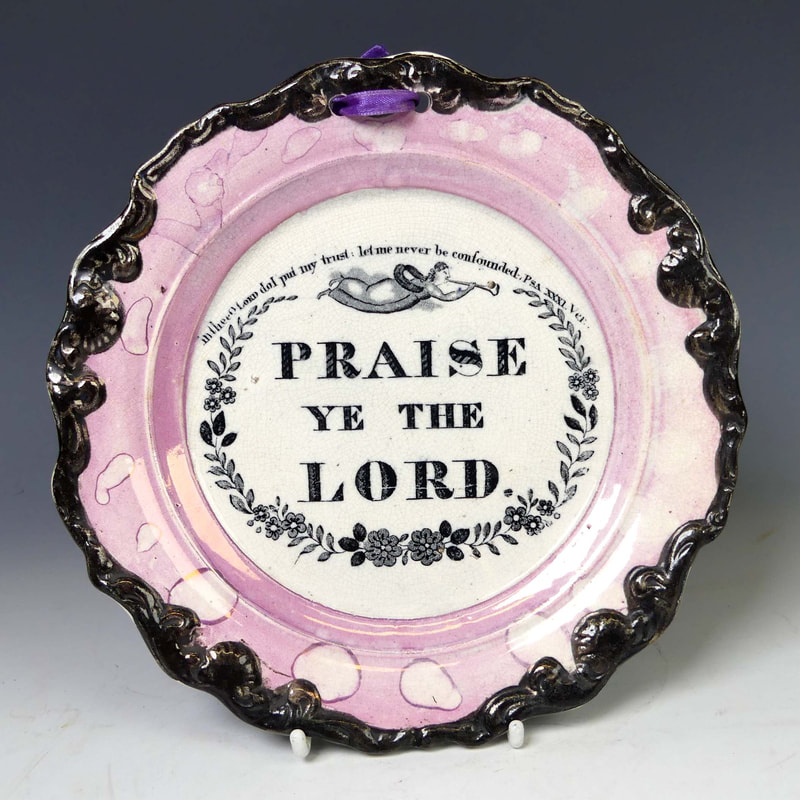
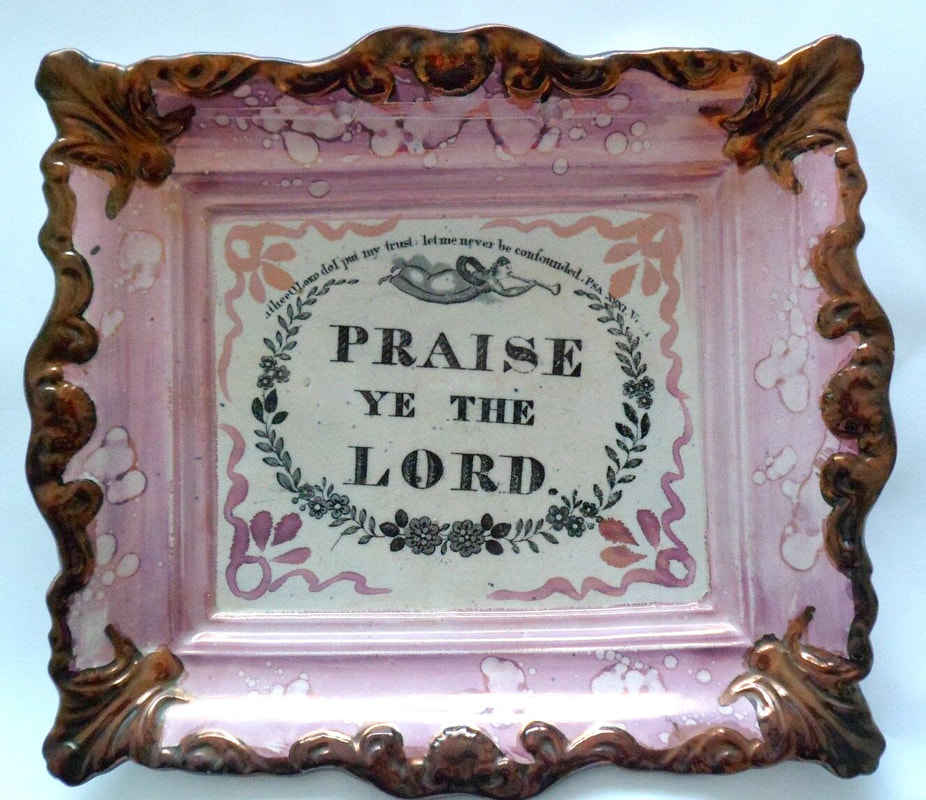
The first plaque above is particularly fine, and attributed to Moore's, c1830s. The second plaque is from a rare mould - a simplified form of the 1840s' plaques that appear marked Waverley, and has an impressed mark (centre image). The other plaques are also attributed to Moore & Co, c1840s to 1850s. The last three plaques have coloured over-enamels or lustre decoration around the transfer, which are common features of the later plaques below.
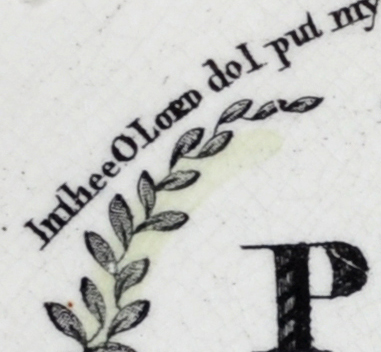
The plaques below come from the same transfer plate as those above, and likely date from the 1860s. The leaves under the letter 'O' in 'O Lord' (first detail) are shaded on the right side. The circles to the right of the flowers (second detail) are joined to the wreath by stalks, although the imprint is weaker and harder to see. N.B. these miniscule differences do not correspond with the details on the Sunderland plate 4 'Prepare' and 'Thou god'. The transfer plate has an easily identifiable flaw, which shows on many (not all) of its imprints. There is a small nick (marked in red on the second detail below) above the letter 'D' in 'LORD'. This appears on both the early and late versions.
The plaques below come from the same transfer plate as those above, and likely date from the 1860s. The leaves under the letter 'O' in 'O Lord' (first detail) are shaded on the right side. The circles to the right of the flowers (second detail) are joined to the wreath by stalks, although the imprint is weaker and harder to see. N.B. these miniscule differences do not correspond with the details on the Sunderland plate 4 'Prepare' and 'Thou god'. The transfer plate has an easily identifiable flaw, which shows on many (not all) of its imprints. There is a small nick (marked in red on the second detail below) above the letter 'D' in 'LORD'. This appears on both the early and late versions.
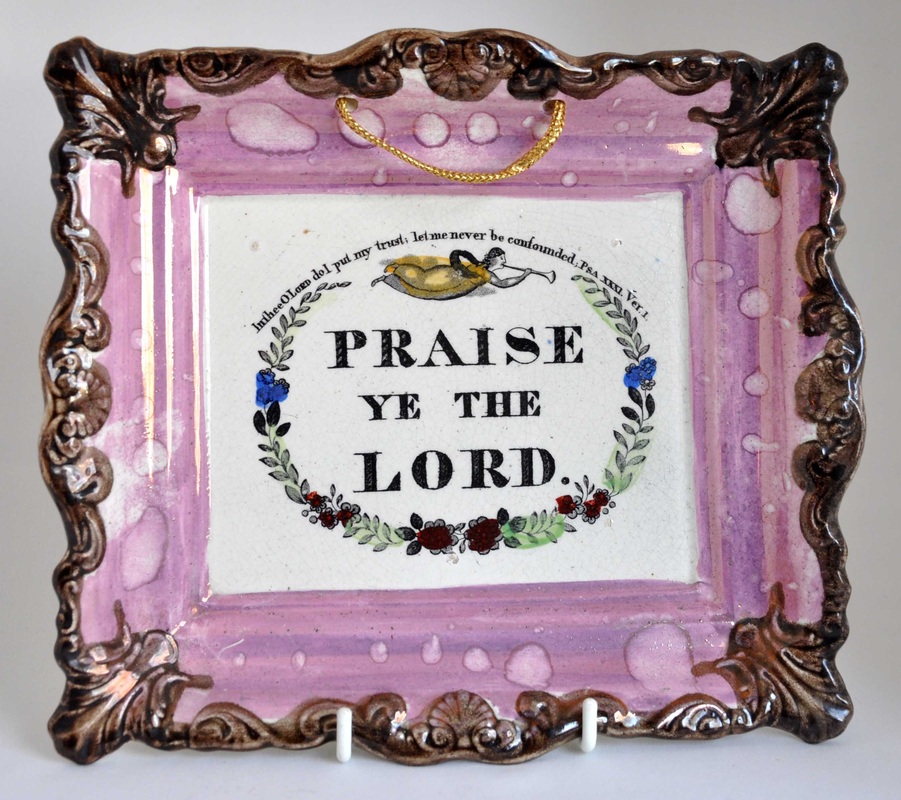

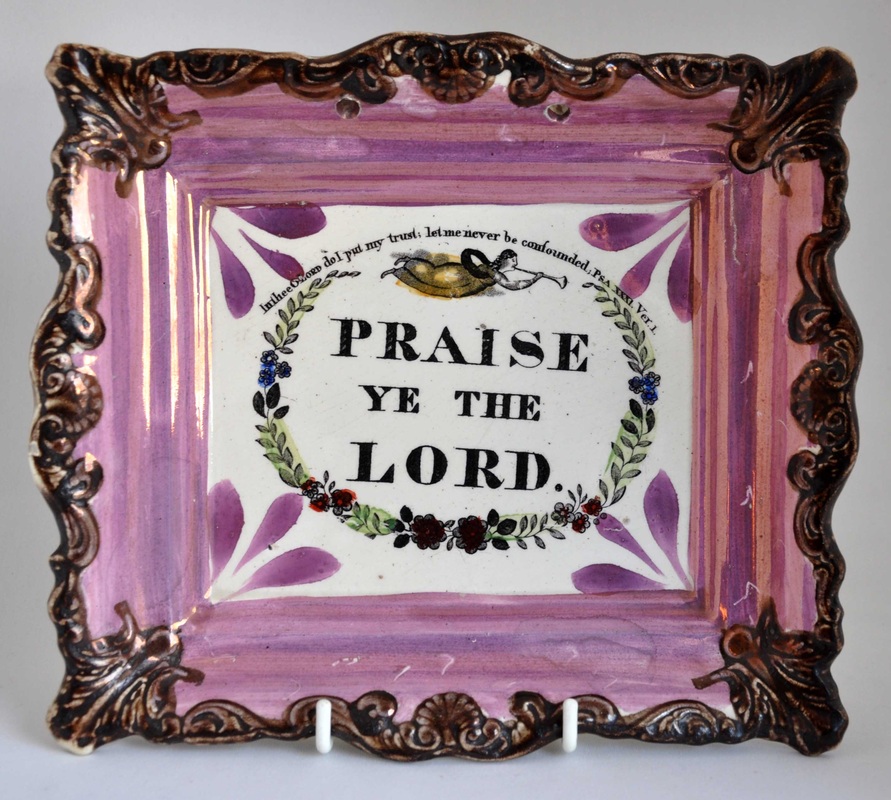
Attributed to Moore & Co, Wear Pottery, and Scott of Southwick, Sunderland
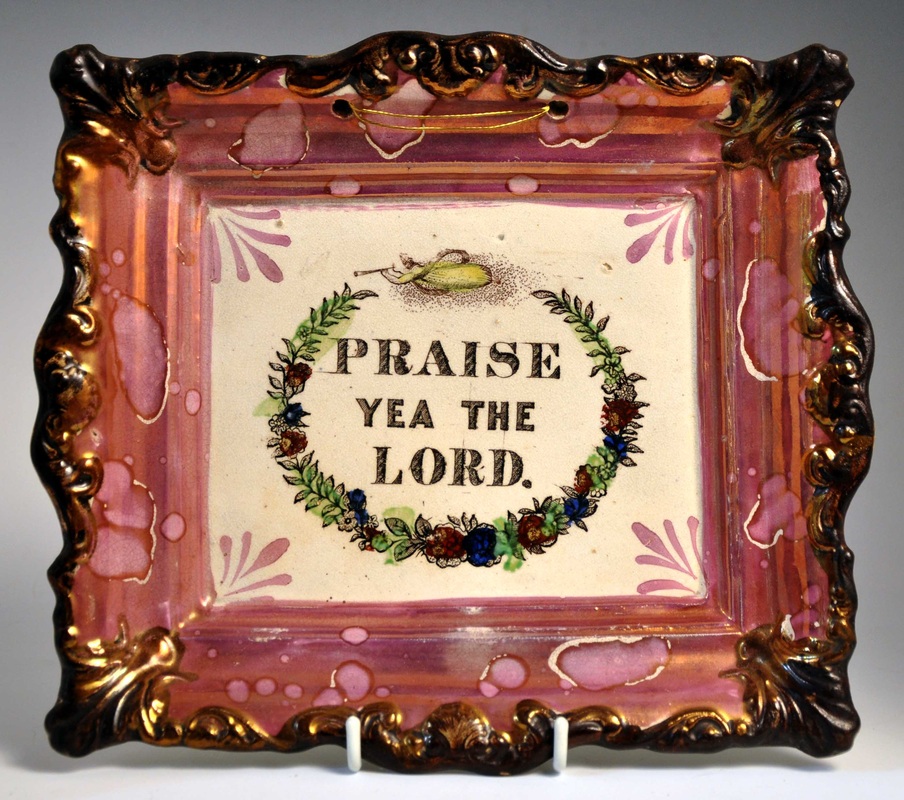
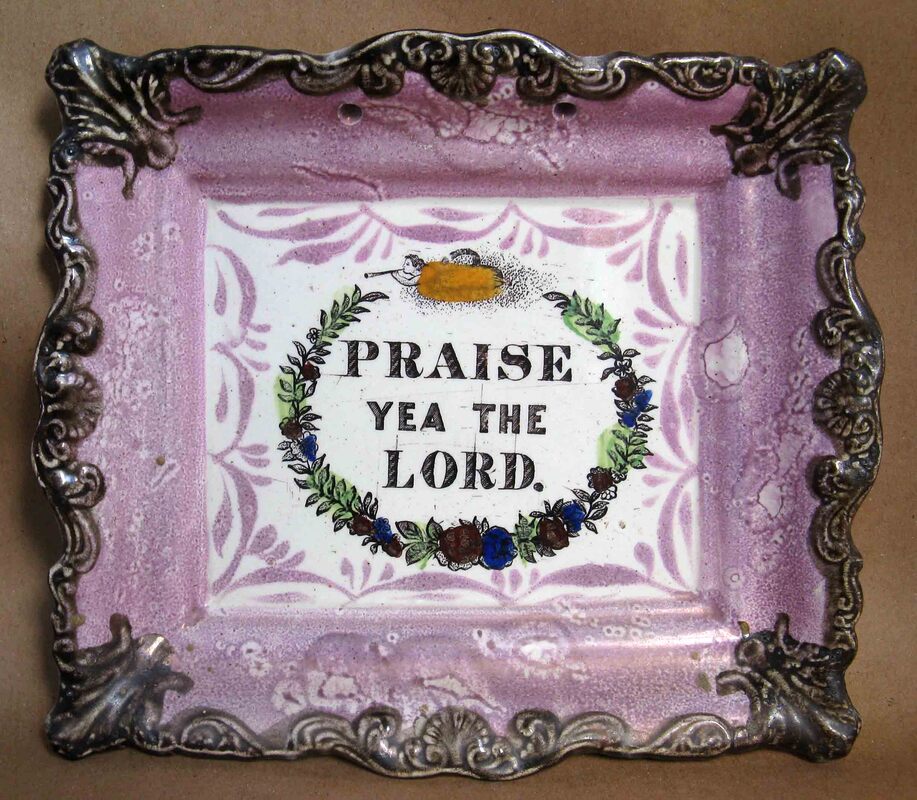
As discussed above, Dixon's did not have a 'Praise Ye' transfer. Moore's acquired the Dixon 'Prepare' and 'Thou God' transfer plates, when the Garrison Pottery closed in 1865. Moore's appears to have had the above transfer engraved to complete the set. The plaques above are attributed to Moore's, c1865. The orange lustre plaques below likely date from the 1870s. The left plaque below is a form associated with Moore's and the centre and right with Scott's. During this late period it's possible that both potteries sent items to Sheepfolds Warehouse for decoration. The third plaque has a white border with orange trim.
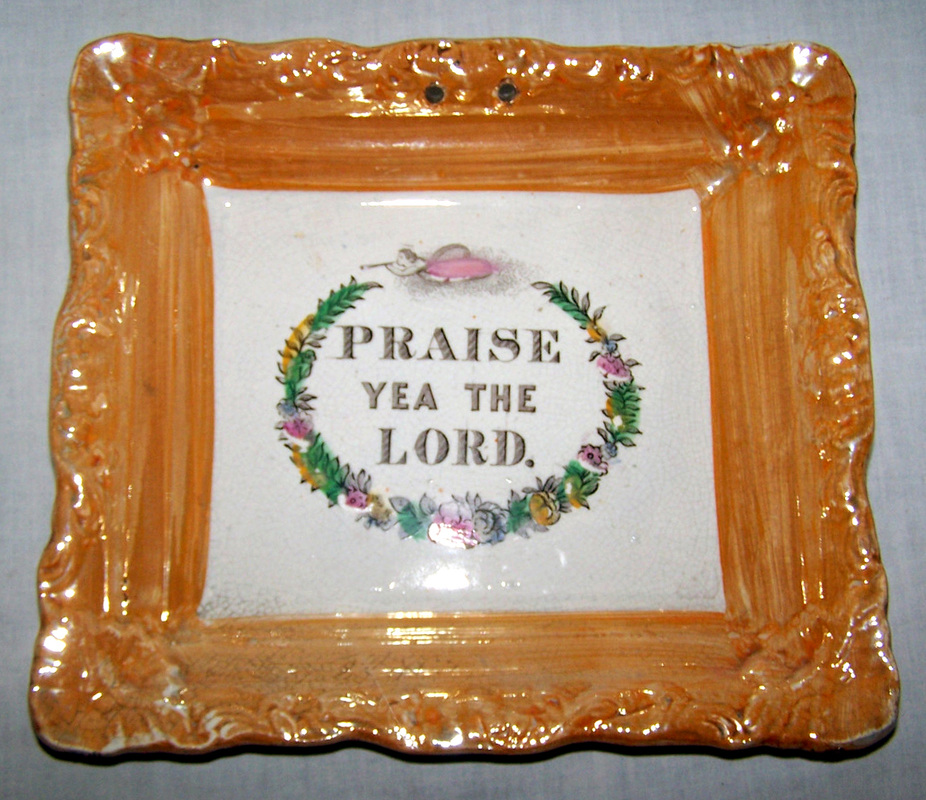
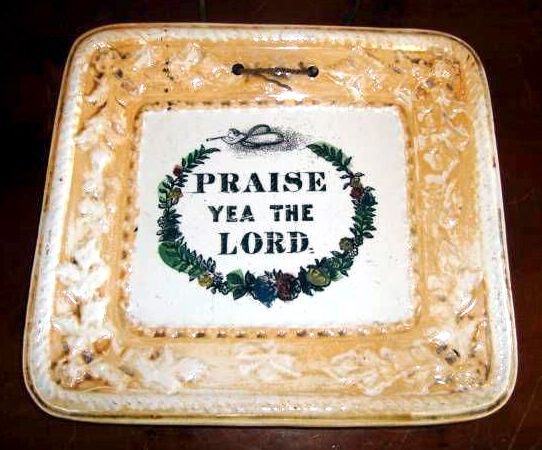
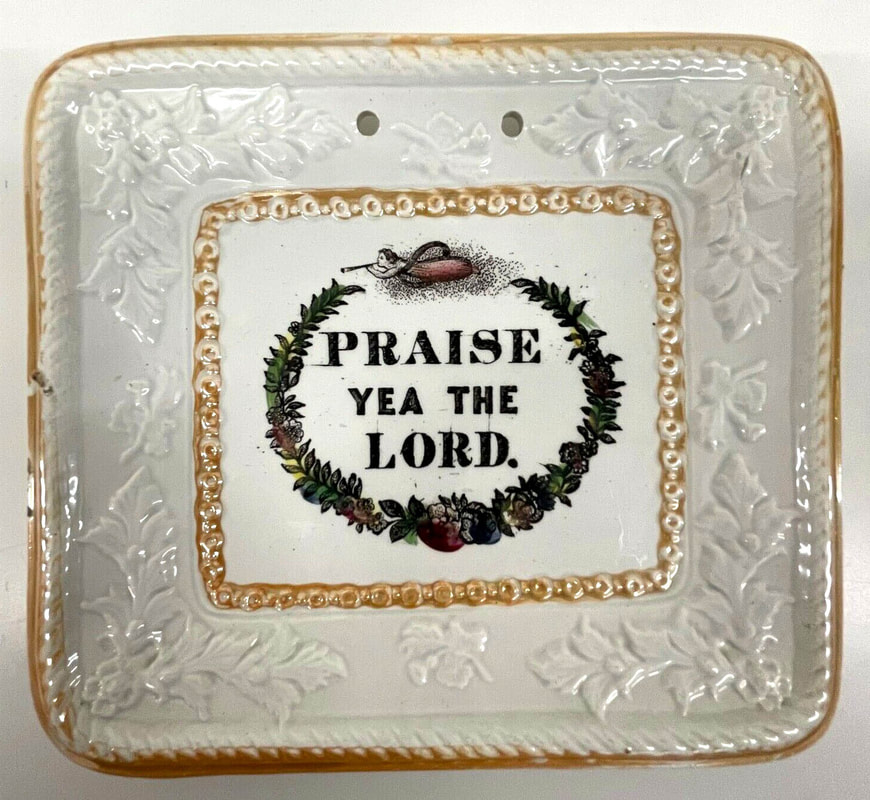
Attributed to Moore & Co, Wear Pottery and Scott's Southwick Pottery
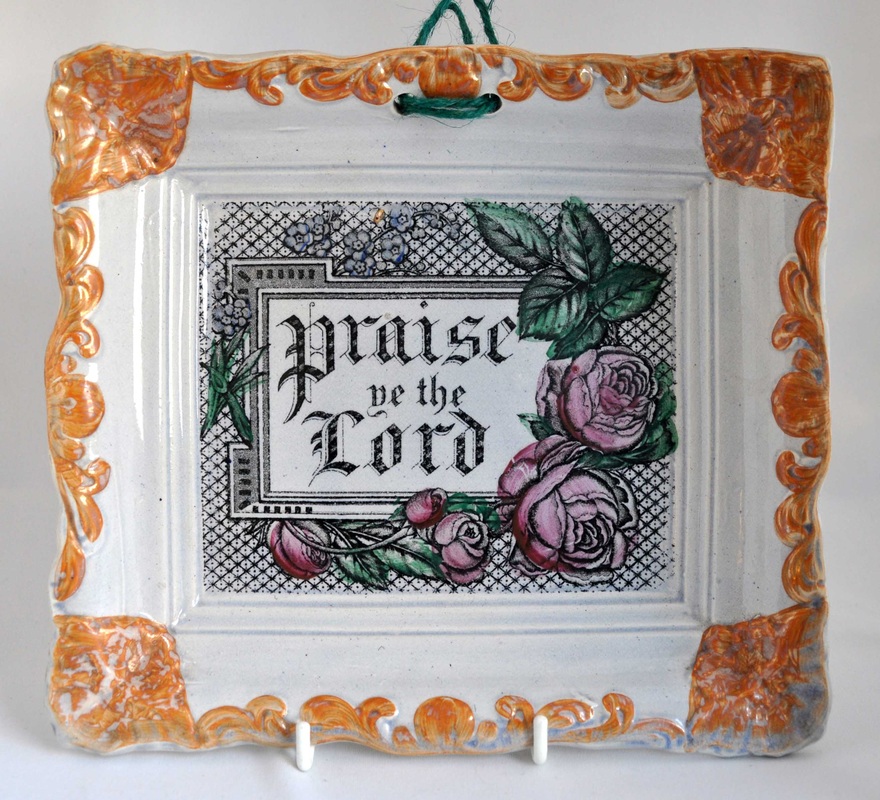
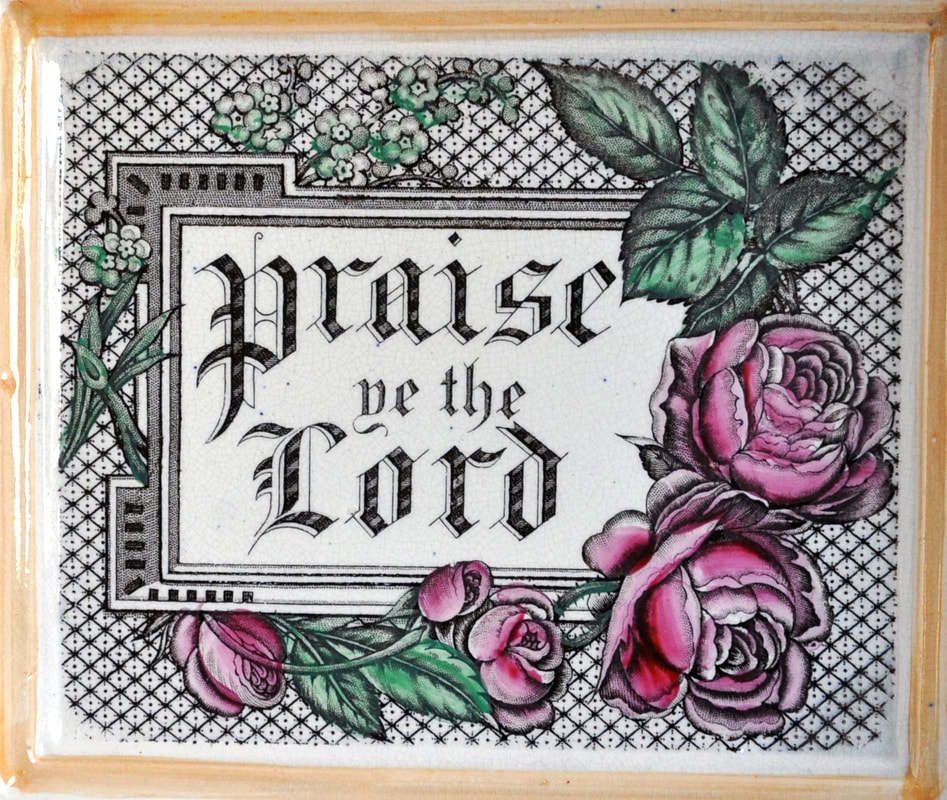
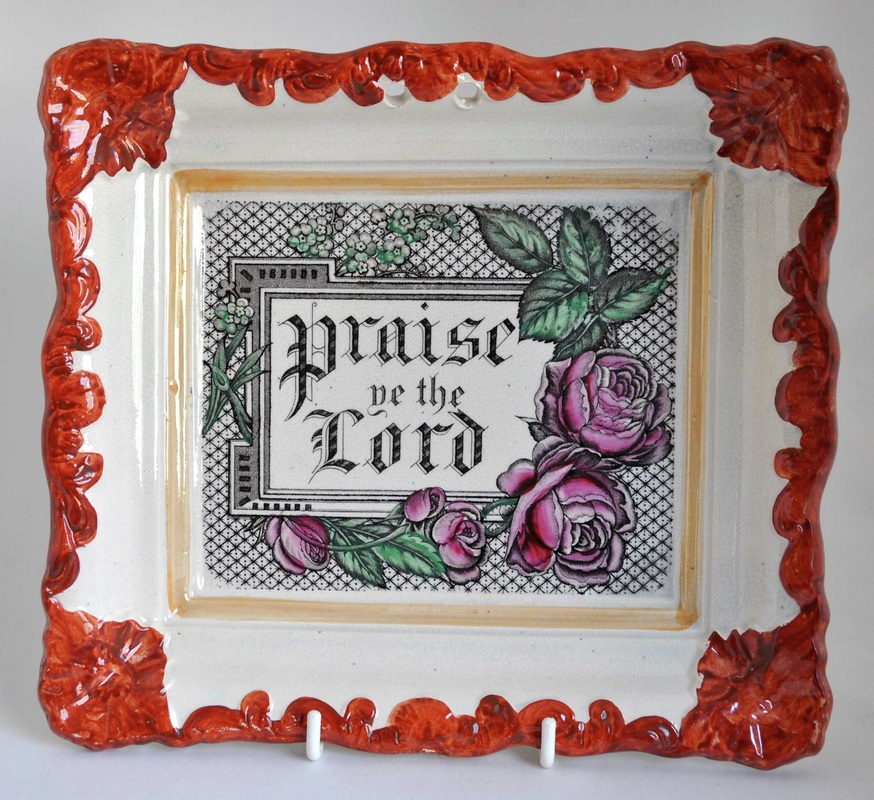
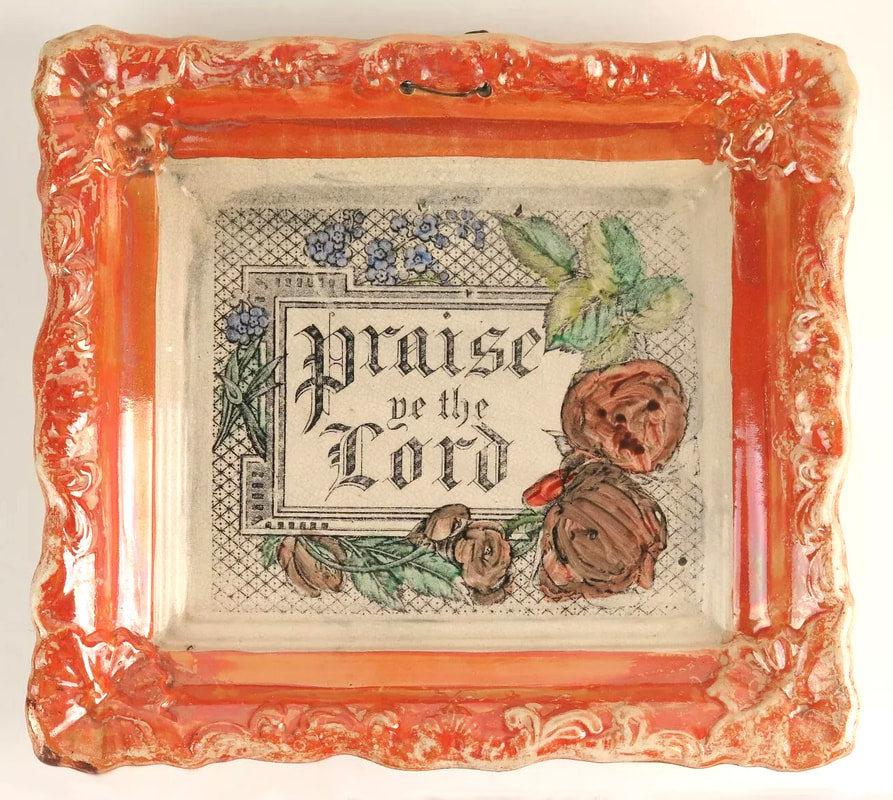
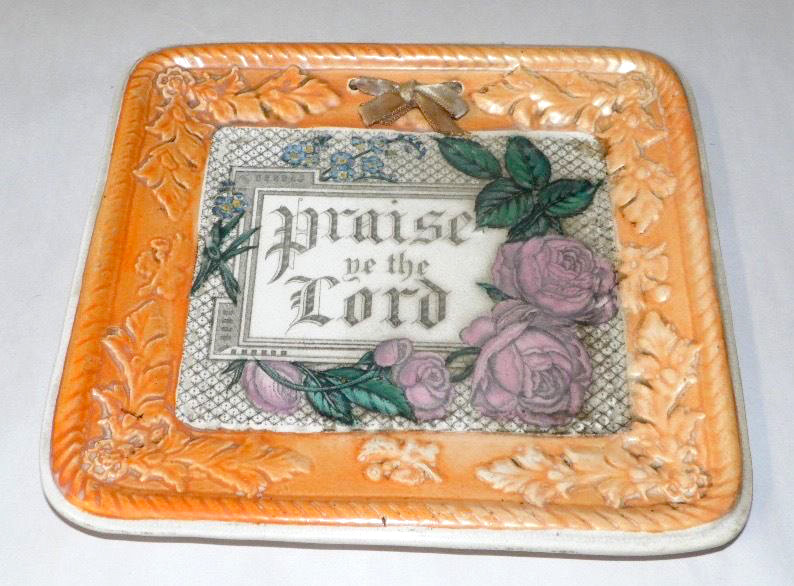
The first plaque form above is typical of Moore's. The bottom centre plaque form is attributed to Scott's.
Albion Pottery, Newcastle

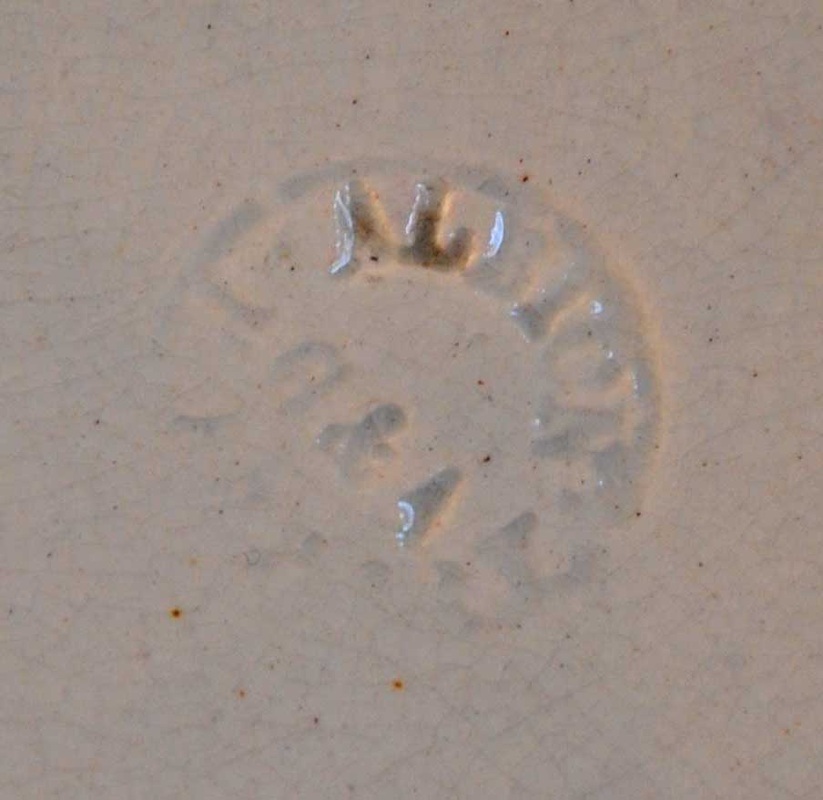
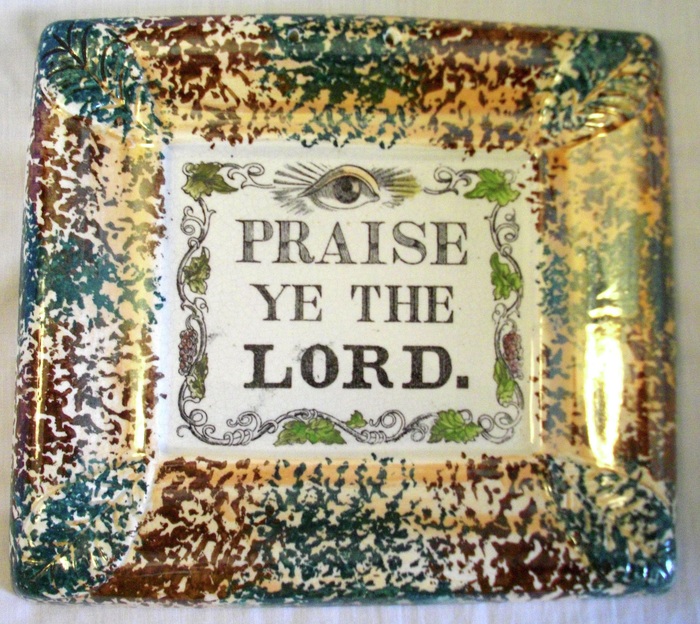
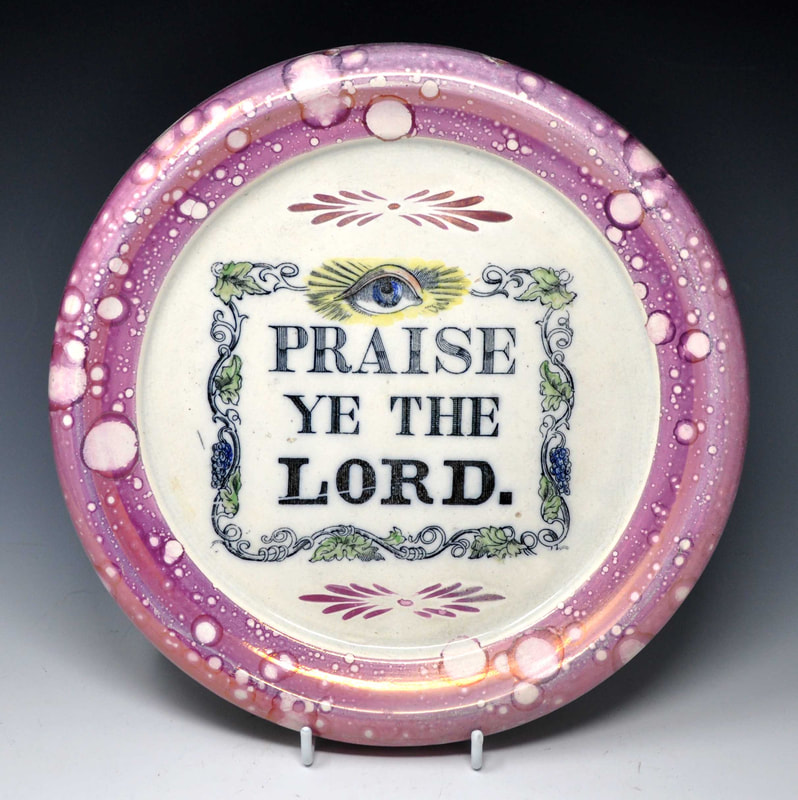
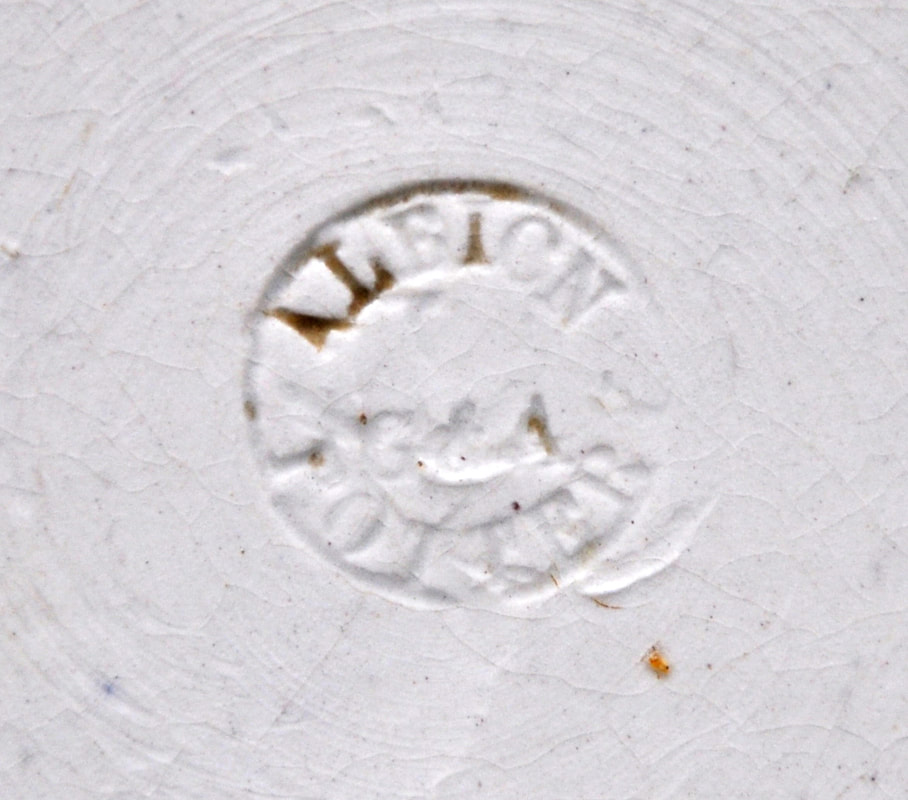
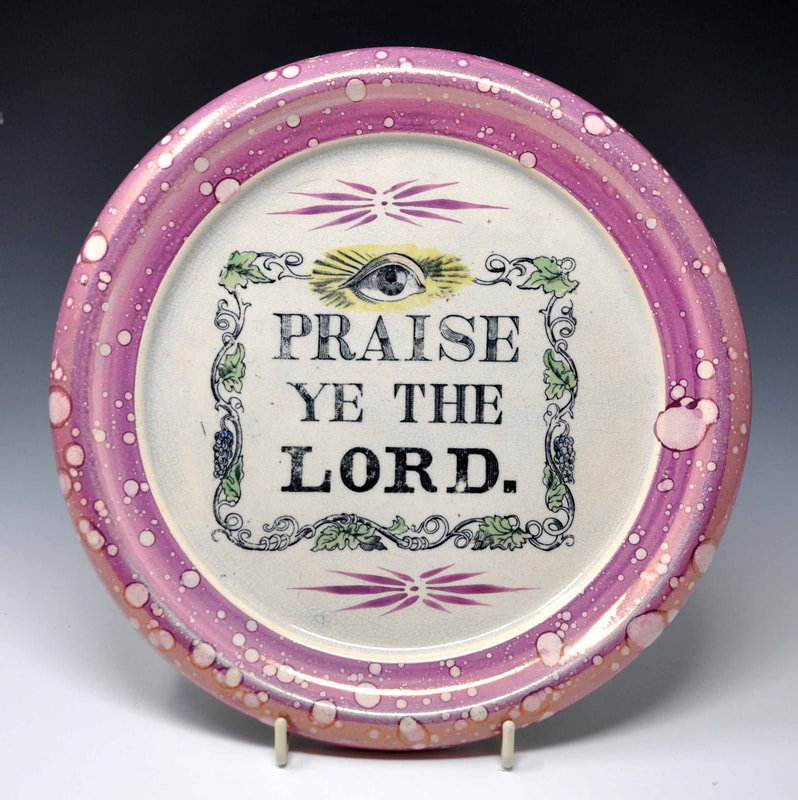
The plaques above have the Albion Pottery impressed mark, with G&A in the centre. Galloway and Atkinson used this mark c1864. The plaque has the thick borders that became fashionable in the 1860s (see Plaque dates). The unusually large-sized circular plaques below (diameter 9.5 inches / 24 cm) are of a form unique to the Albion Pottery. The first has an impressed mark.
Unidentified 'Praise the lord'