Thou god see'st me
For an overview of pink lustre plaques with religious subjects, click on the religious heading above.
Thou god see'st me is the second most common verse found on plaques. Roughly speaking, I'd guess there were about 6 'Thou Gods' made for every 10 'Prepares'.
Click on the Maling plaques and Dixon plaques pages to see early examples from these ownerships, which are outside the scope of this page.
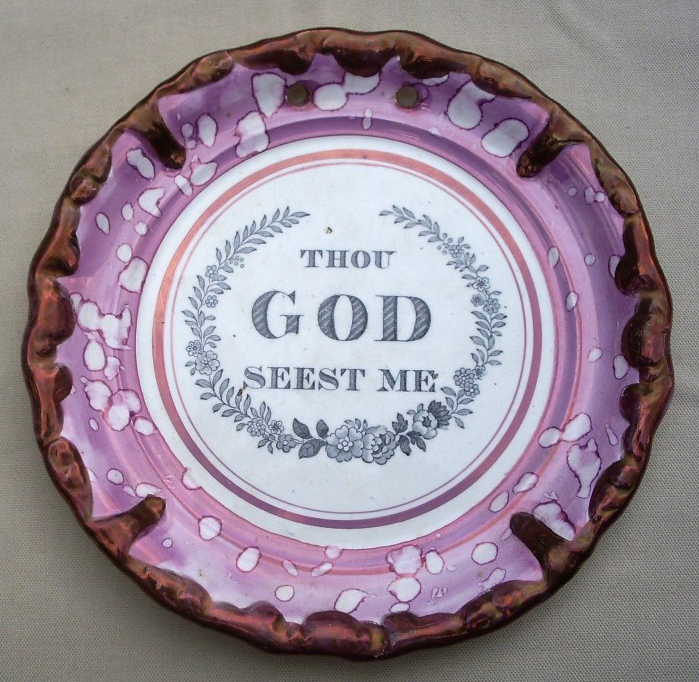
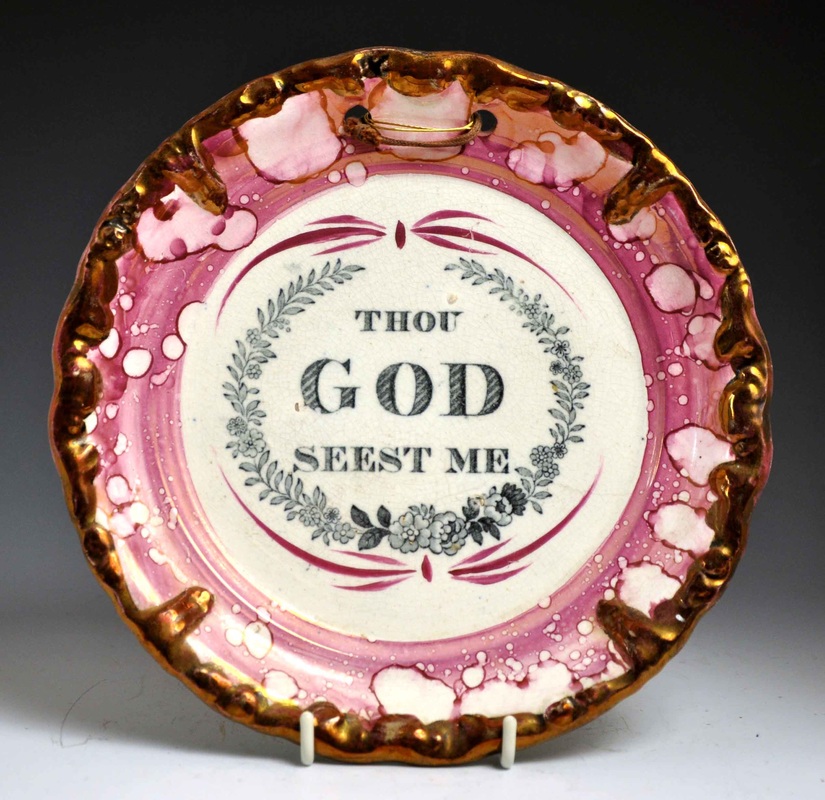
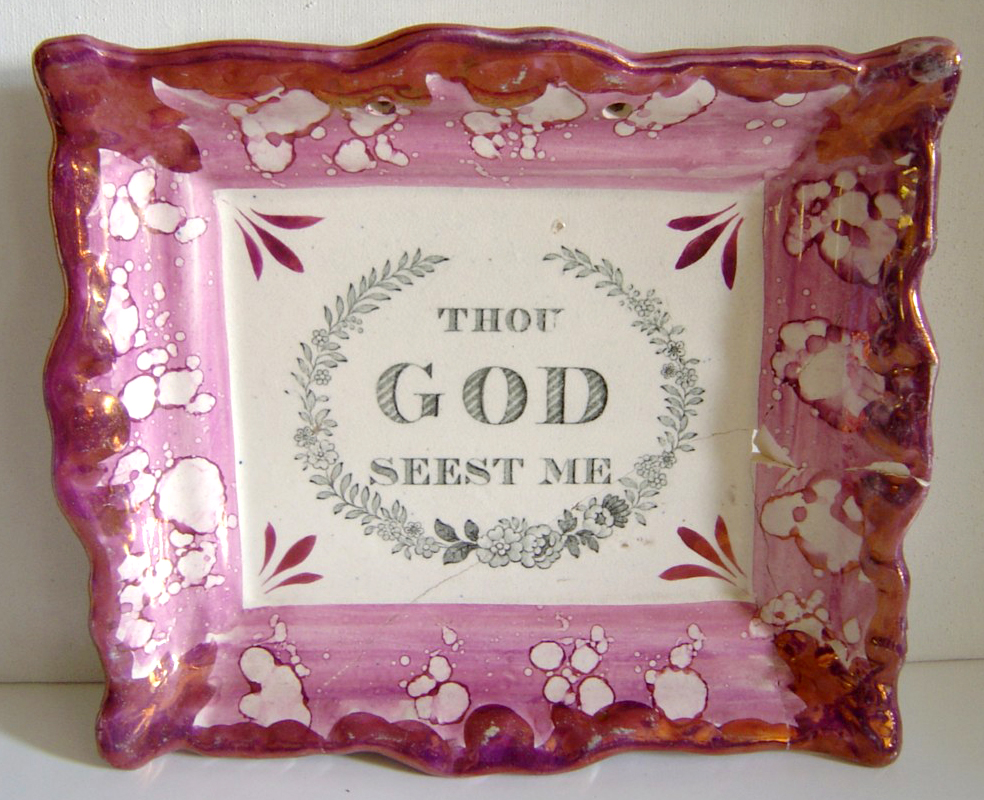
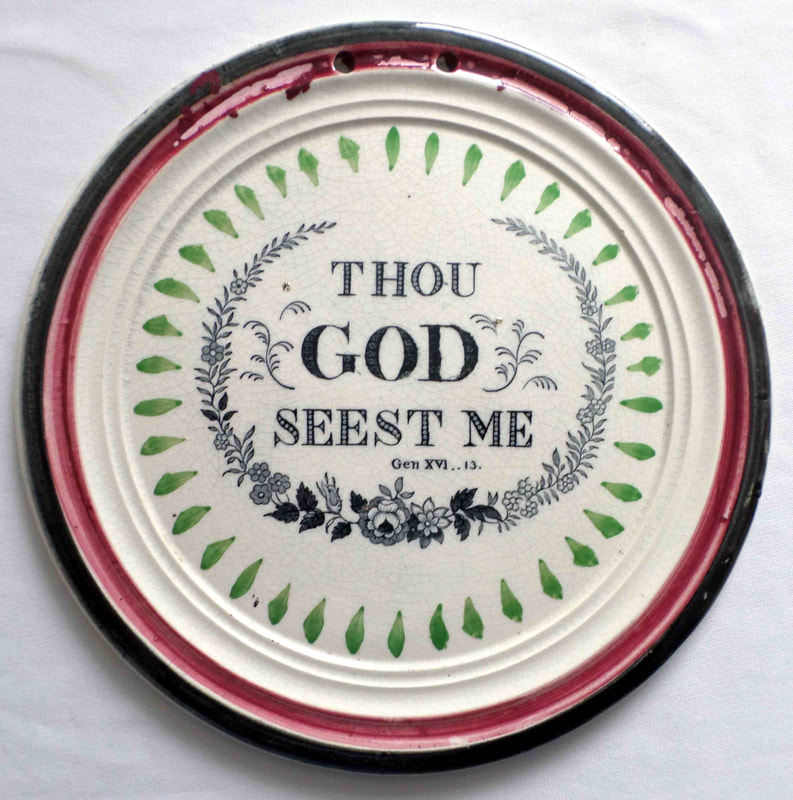
The earliest plaques tend to be circular (though Maling also made small rectangular versions), and often the text is hand painted. Cornfoot, Colville and Co, 1828–1832, made a transferred version with the verse in floral wreath. Unlike the corresponding 'Prepare', there is no trumpeting angel or verse at the top.
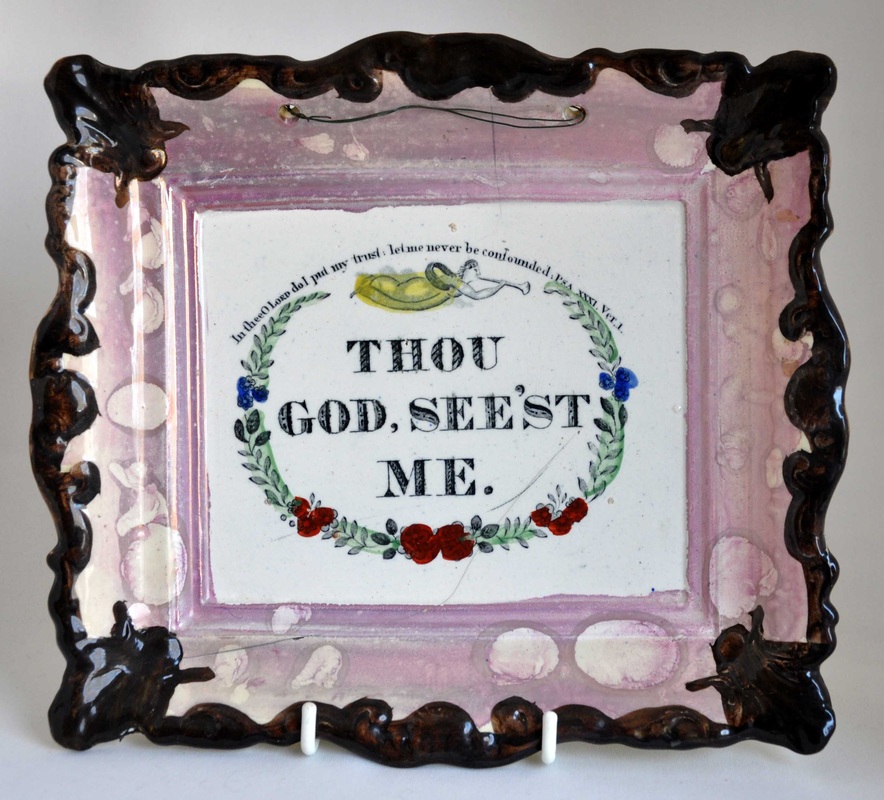
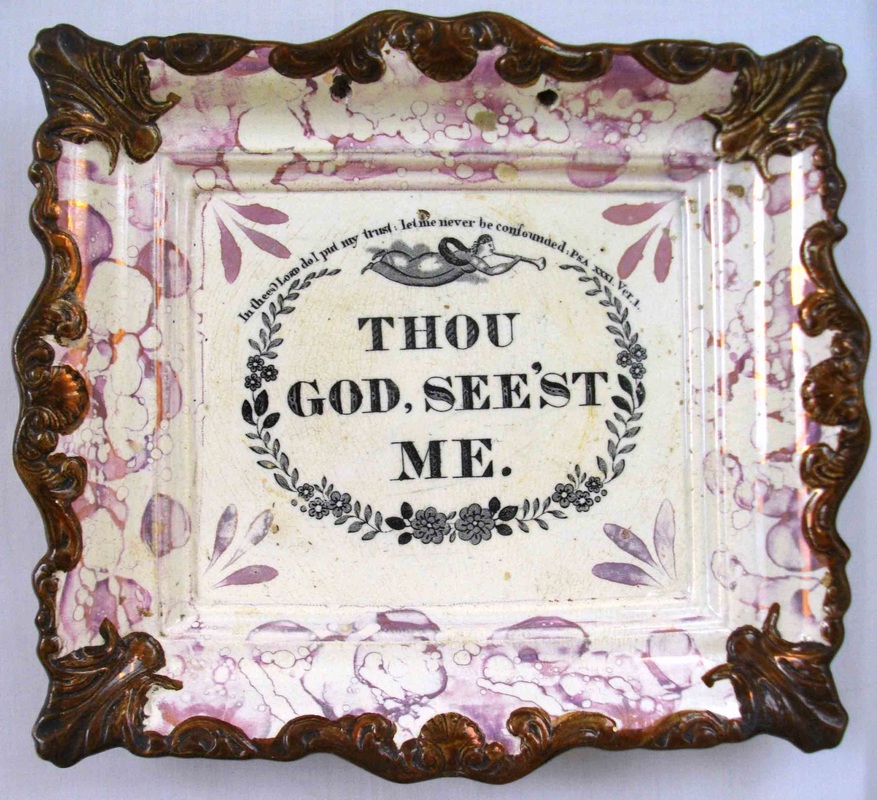
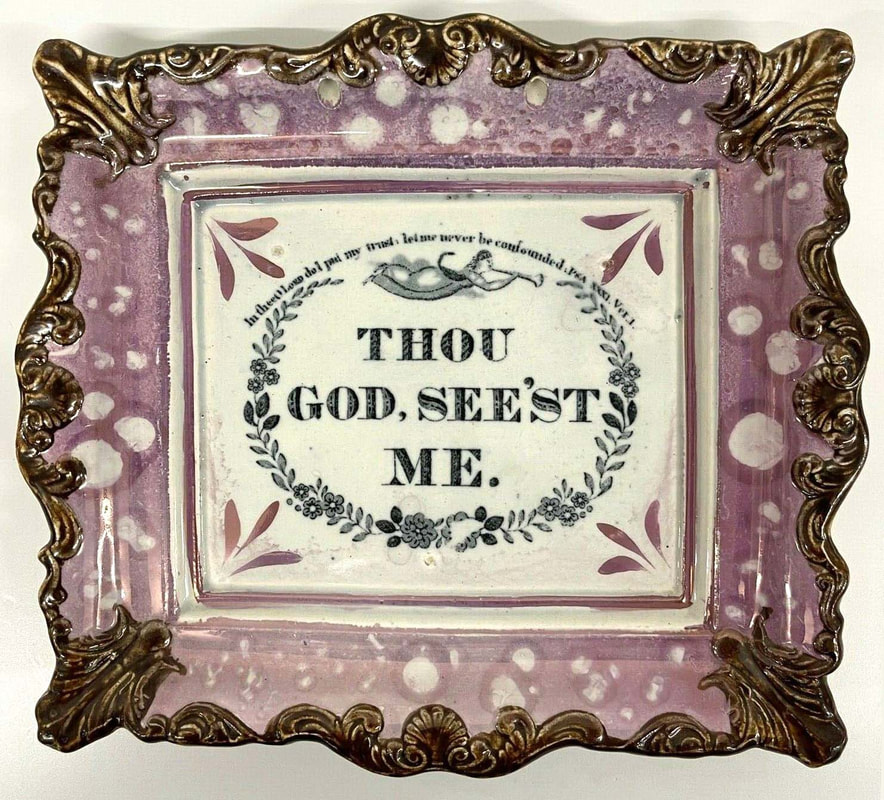
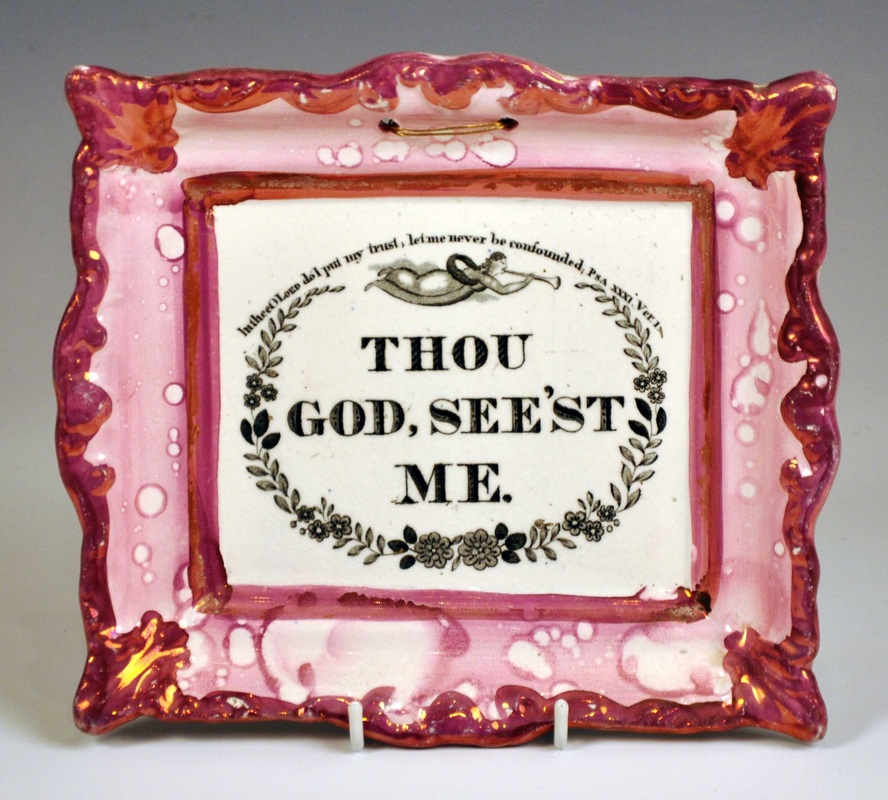
The Sunderland engraver who made five Prepare to meet thy god transfer plates (Sunderland plate 1-5) engraved counterpart 'Thou Gods' with the trumpeting angel and verse. He made plates for Scott (plate 1), Newbottle (plate 3) and Moore (plate 4), but does not appear to have engraved a pair to plates 2 or 5.
Click on the Maling plaques and Dixon plaques pages to see early examples from these ownerships, which are outside the scope of this page.
The earliest plaques tend to be circular (though Maling also made small rectangular versions), and often the text is hand painted. Cornfoot, Colville and Co, 1828–1832, made a transferred version with the verse in floral wreath. Unlike the corresponding 'Prepare', there is no trumpeting angel or verse at the top.
The Sunderland engraver who made five Prepare to meet thy god transfer plates (Sunderland plate 1-5) engraved counterpart 'Thou Gods' with the trumpeting angel and verse. He made plates for Scott (plate 1), Newbottle (plate 3) and Moore (plate 4), but does not appear to have engraved a pair to plates 2 or 5.
Cornfoot, Colville & Co, and Cornfoot, Carr & Co, North Shields Pottery
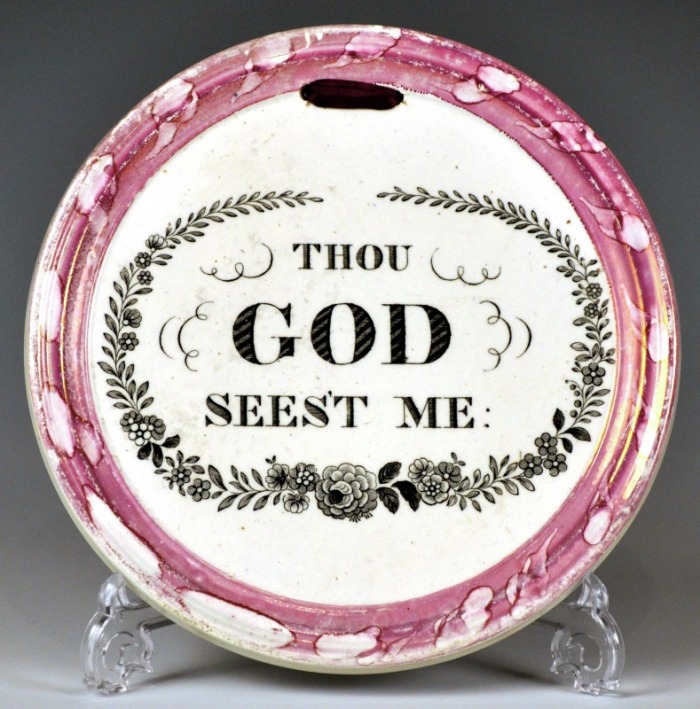

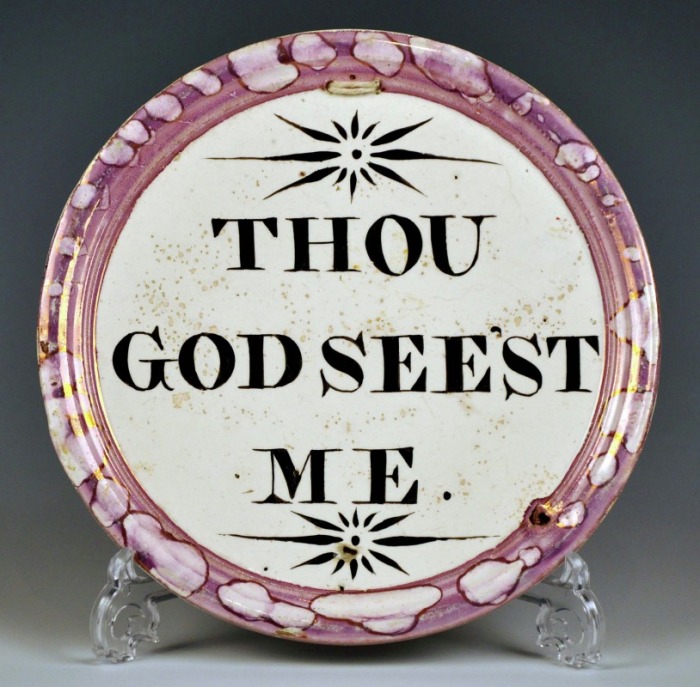
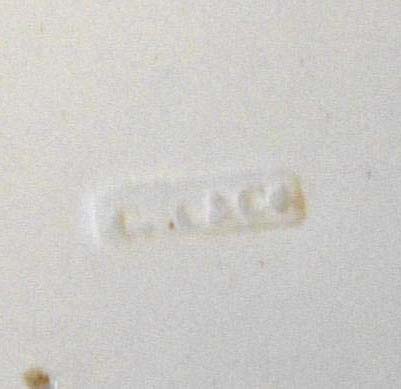
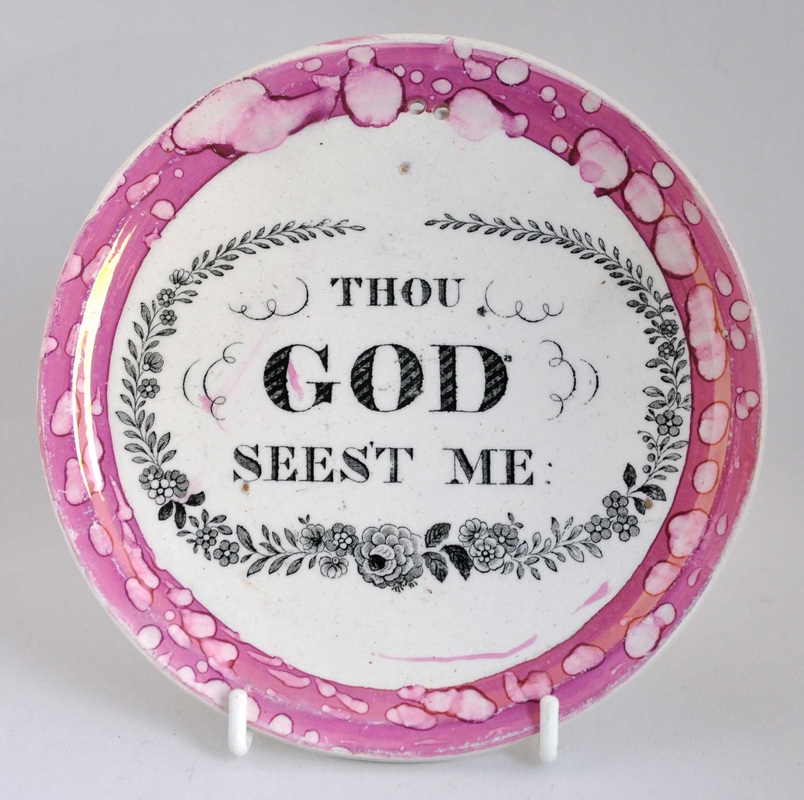
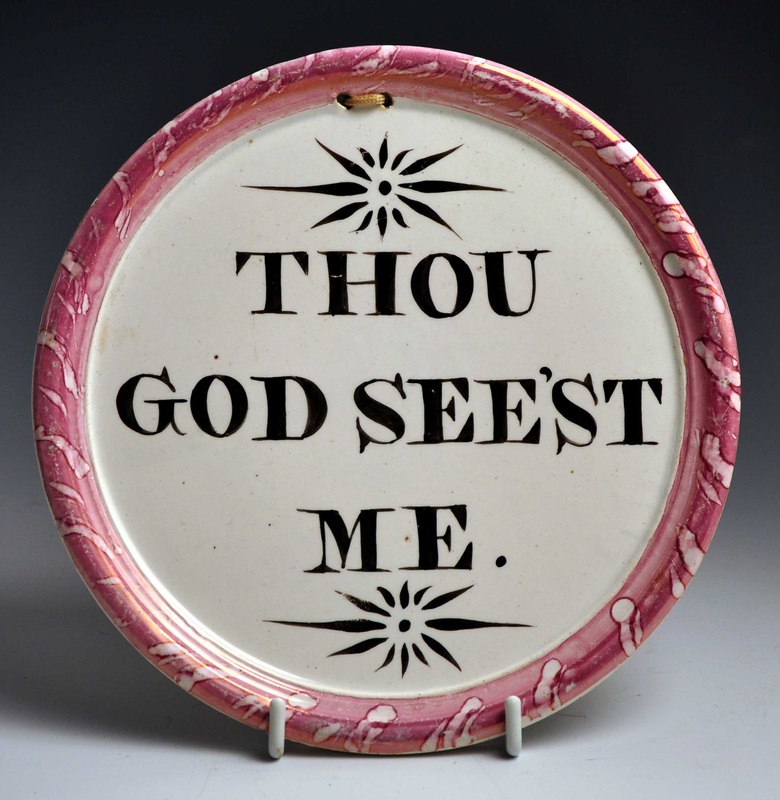
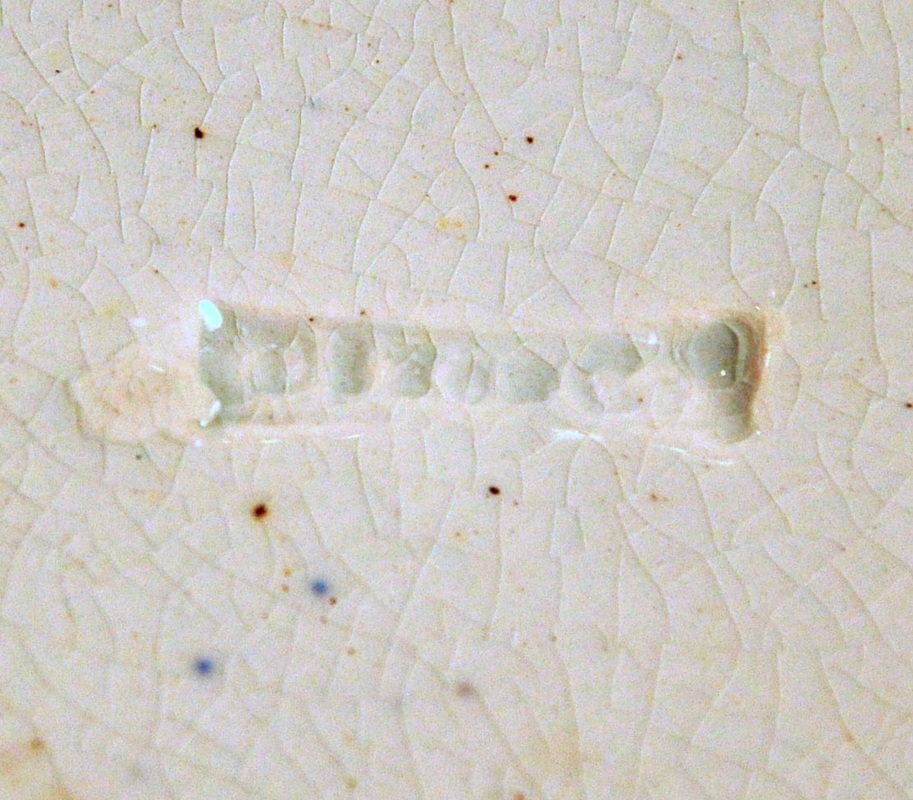
Cornfoot, Colville & Co, of the North Shields Pottery (Low Lights), produced transfer‐printed and hand-painted 'Thou God' plaques 1828–1832. Press anouncements show that the firm continued as Cornfoot, Carr & Co from 1832–1838. The plaques on the top row have the 'C. C&Co' impressed mark, which could have been used by either partnership. See other similar plaques on the C, C & Co page.
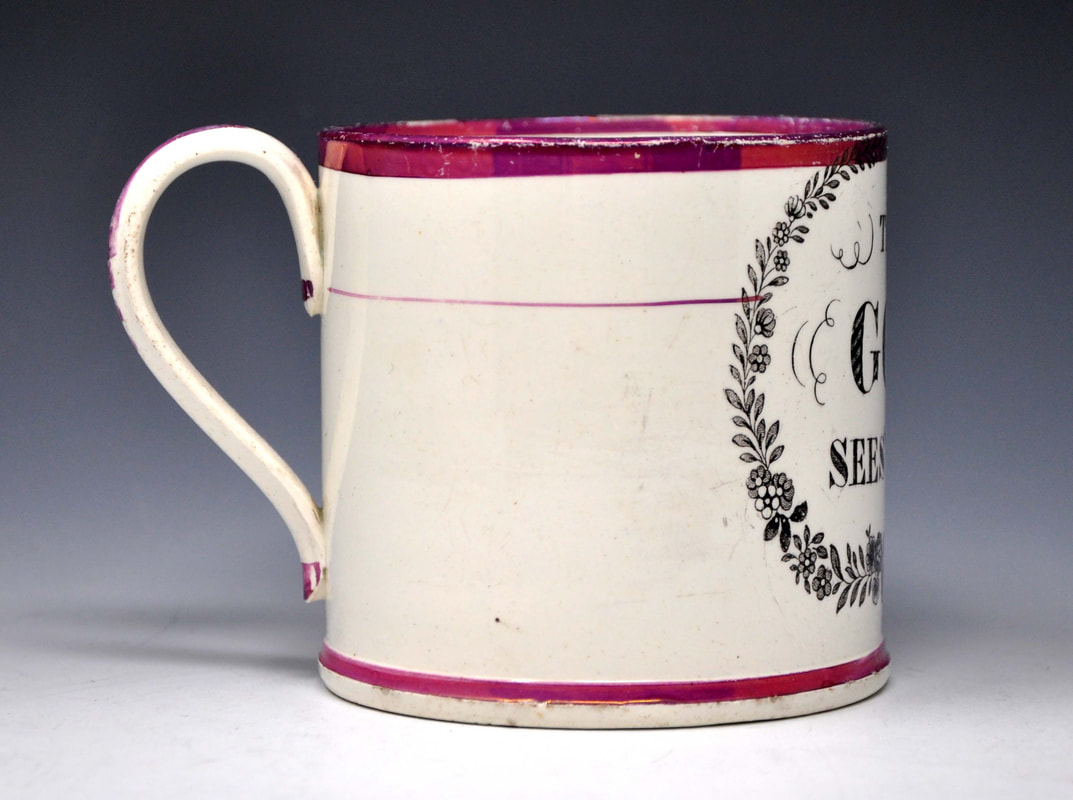
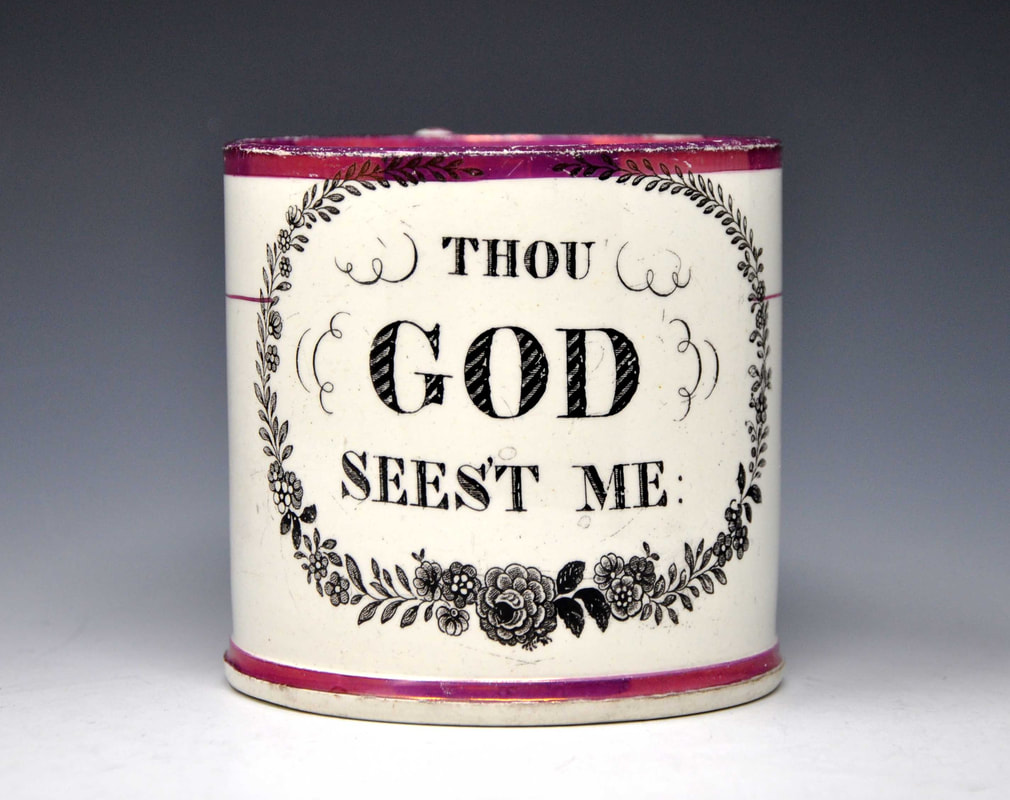
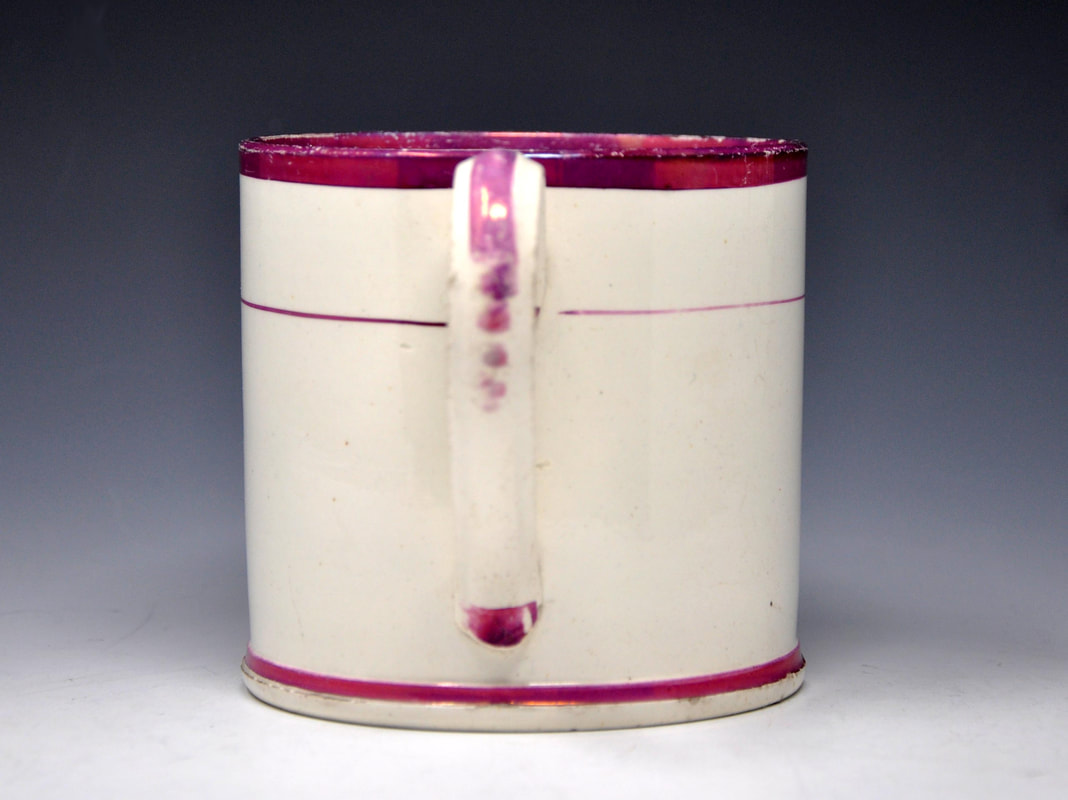
The mug below, with the transfer, has North Shields' signature lustre decoration to the handle, terminating in a series of horizontal strokes.
The mug below, with the transfer, has North Shields' signature lustre decoration to the handle, terminating in a series of horizontal strokes.
Attributed to Scott of Southwick, and Ball's Deptford Pottery (Sunderland plate 1)
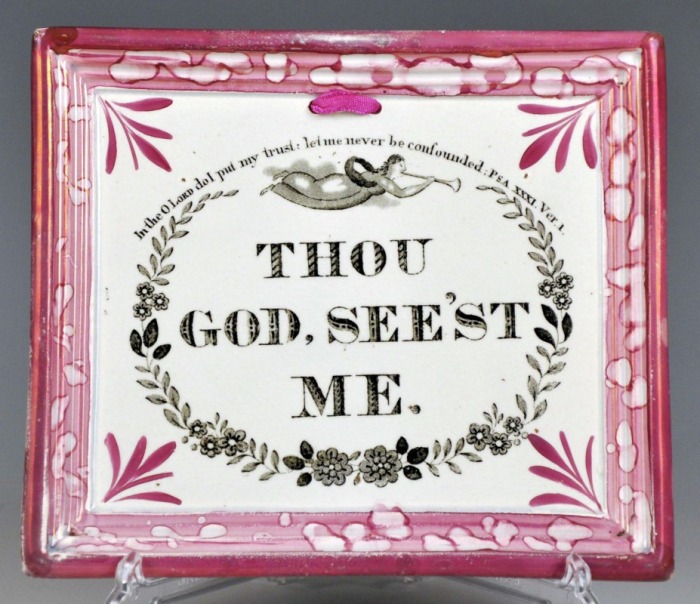
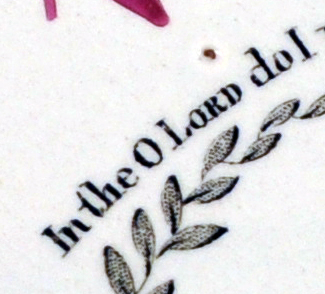
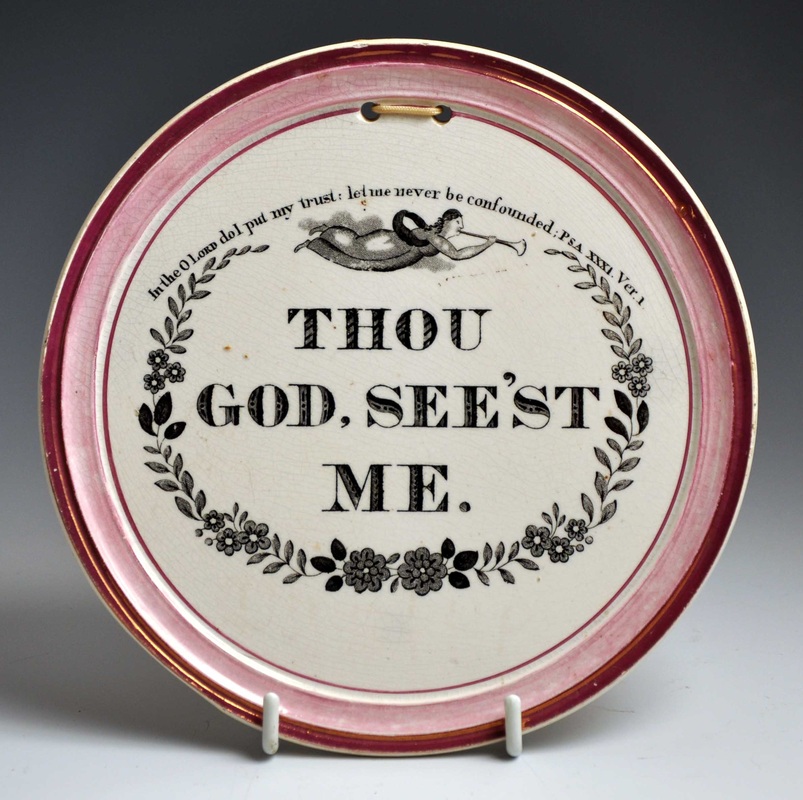


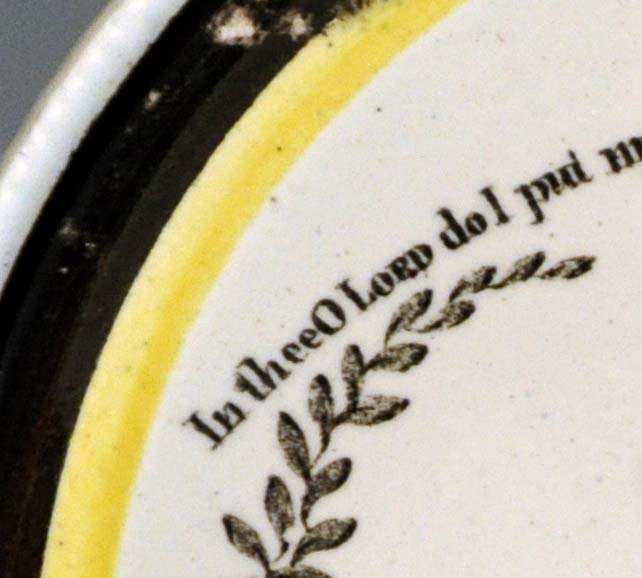
The above plaques are attributed to Scott of Southwick on the basis that the Wesley transfer associated with Scott appears on most of these plaque forms. The transfer has an easily distinguishable fault. Instead of the verse at the top reading 'In thee O Lord...', it begins 'In the O Lord...'.
Dimensions for the above plaques are as follows: top left, 172mm x 146mm; top right, 167mm diameter; bottom left, 220mm x 198mm; bottom centre, 210mm x 200mm; and bottom right, 222mm x 200mm.
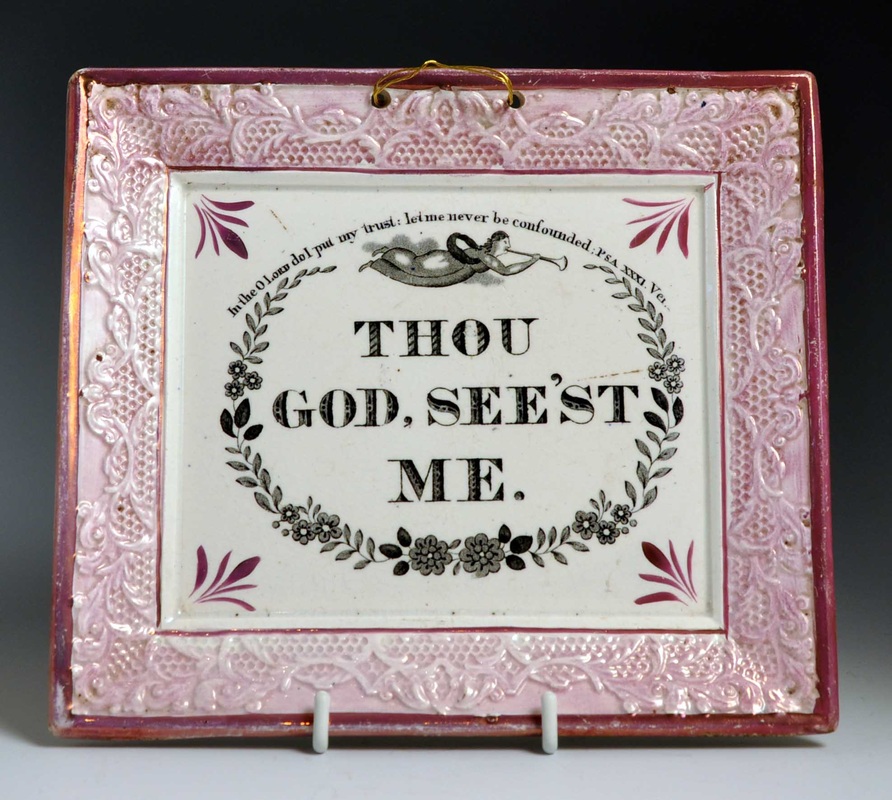
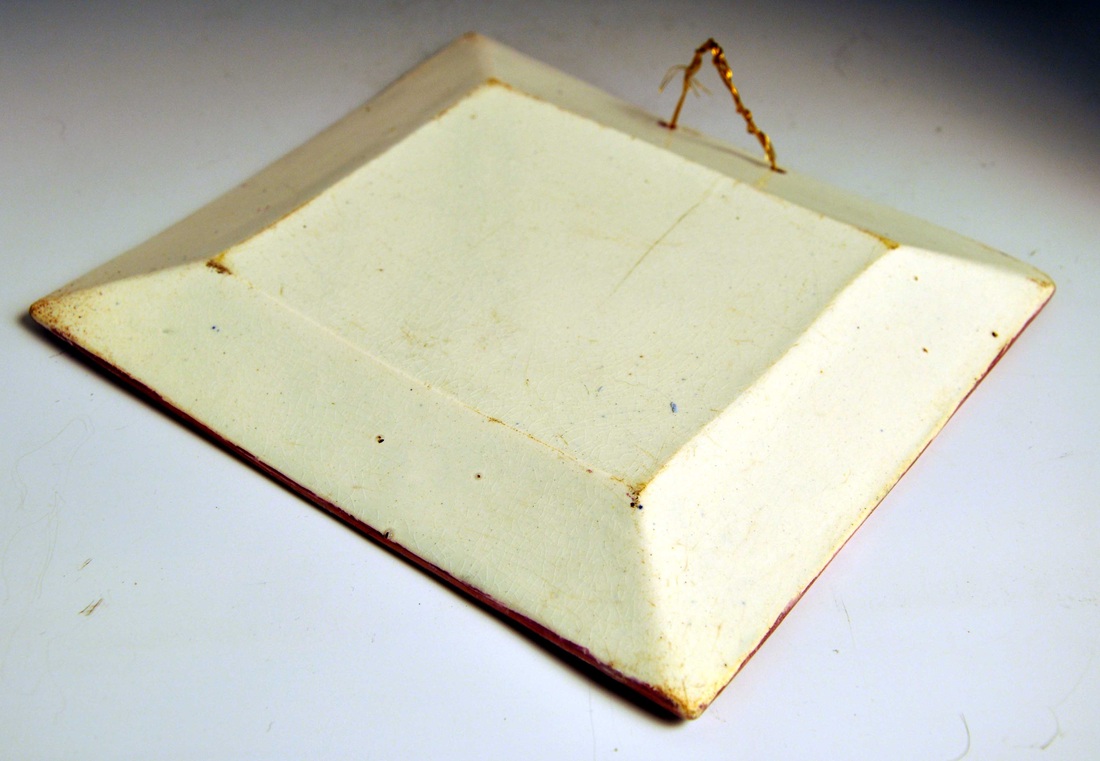
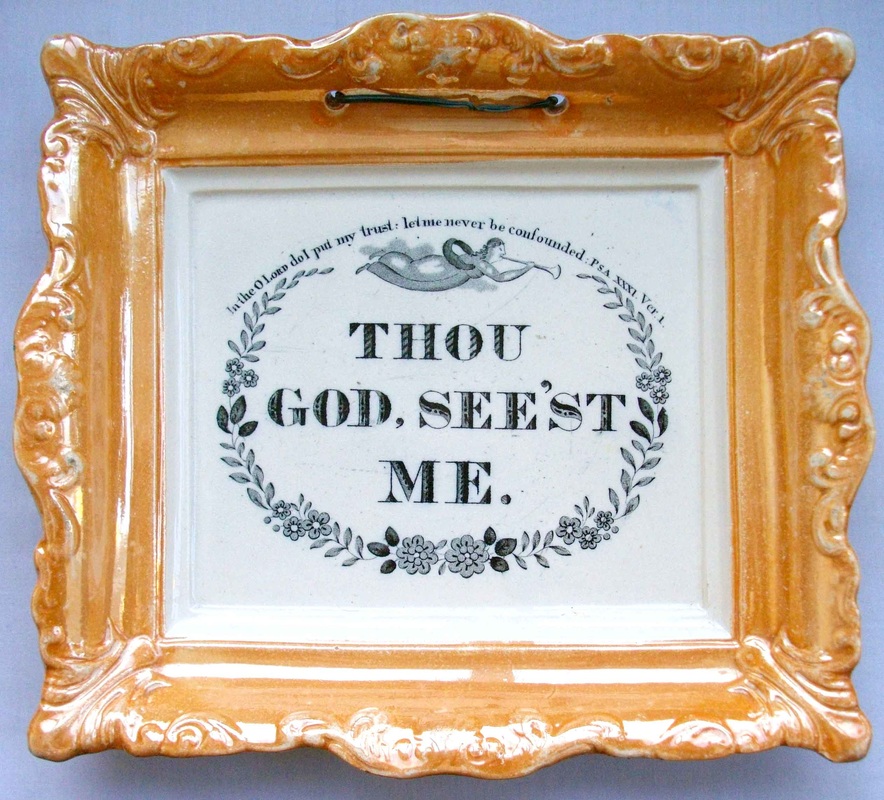
The plaque below (195mm x 173mm), with a decorative moulded border, is probably the rarest form this transfer appears on. Like the first three plaques above, it has a chamfered back – a feature of early plaques attributed to Scott. I have seen a circular 'Prepare to meet Thy God' plaque with a similar border.
Dimensions for the above plaques are as follows: top left, 172mm x 146mm; top right, 167mm diameter; bottom left, 220mm x 198mm; bottom centre, 210mm x 200mm; and bottom right, 222mm x 200mm.
The plaque below (195mm x 173mm), with a decorative moulded border, is probably the rarest form this transfer appears on. Like the first three plaques above, it has a chamfered back – a feature of early plaques attributed to Scott. I have seen a circular 'Prepare to meet Thy God' plaque with a similar border.
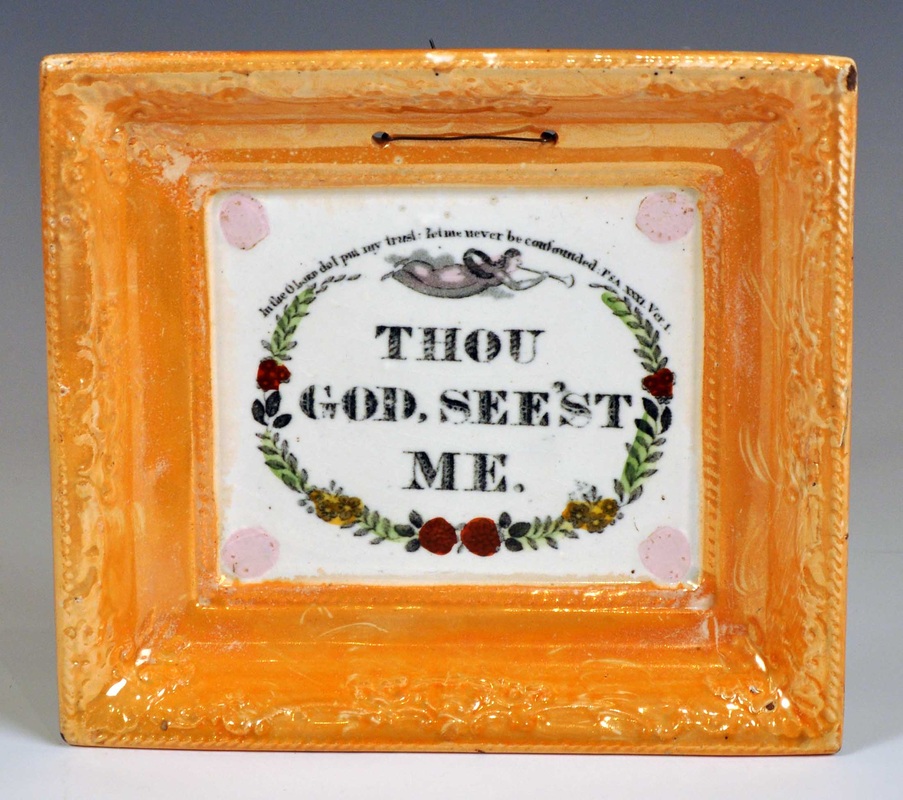
The orange plaques below are attributed to Scott's and Ball's, post 1860. These later plaques tend to be more heavily potted, and the quality of the transfer imprint poorer. The first three are about the same size as their pink equivalents above. The plaque moulds may have been acquired from Scott's by Ball's Deptford Pottery, along with the copper transfer plate. The last plaque form is associated with Ball's.


Attributed to Newbottle 'High' Pottery (Sunderland plate 3)

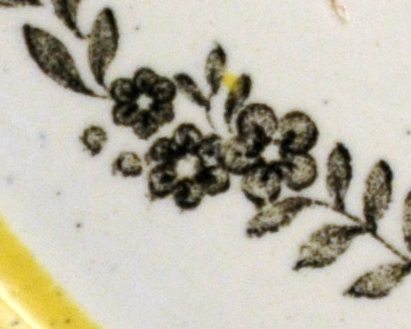
The c1840 plaque above is attributed to Newbottle on the basis of its similarity to a 'Praise Ye the Lord' plaque presented to the V&A by descendents of the owners of the Newbottle 'High' Pottery. NB: The circles to the left of the flowers (right detail) aren't connected to the sprig by stalks. The leaf under the letter 't' in 'thee' (centre detail) is shaded on the right side.
The plaques below pair with plate 2 and plate 3 'Prepare' plaques, and although unmarked are again attributed to Newbottle.
The plaques below pair with plate 2 and plate 3 'Prepare' plaques, and although unmarked are again attributed to Newbottle.
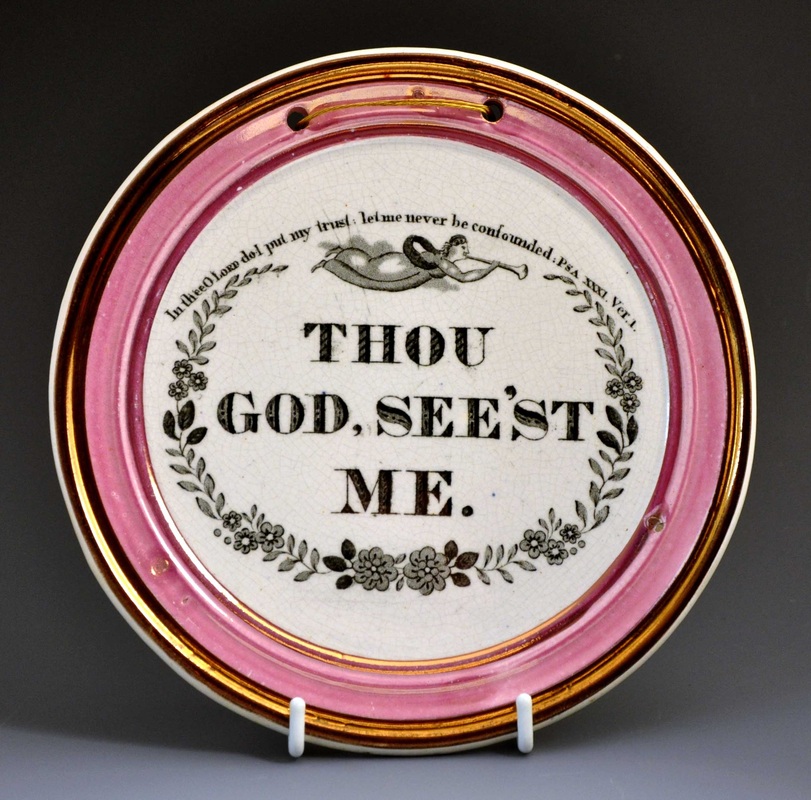
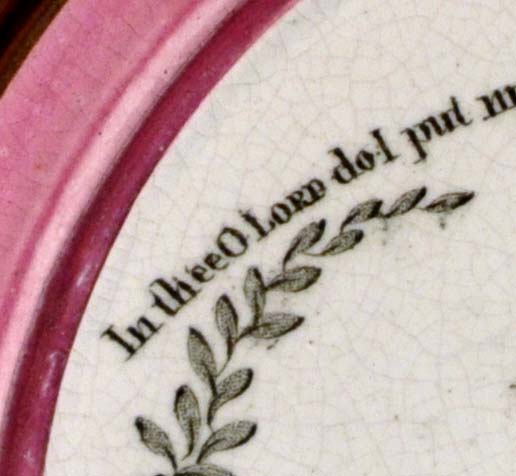
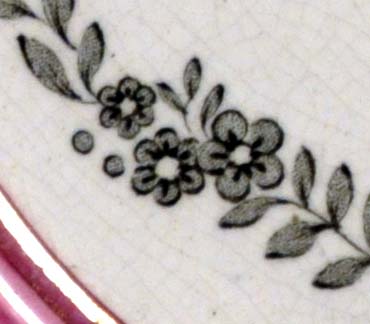
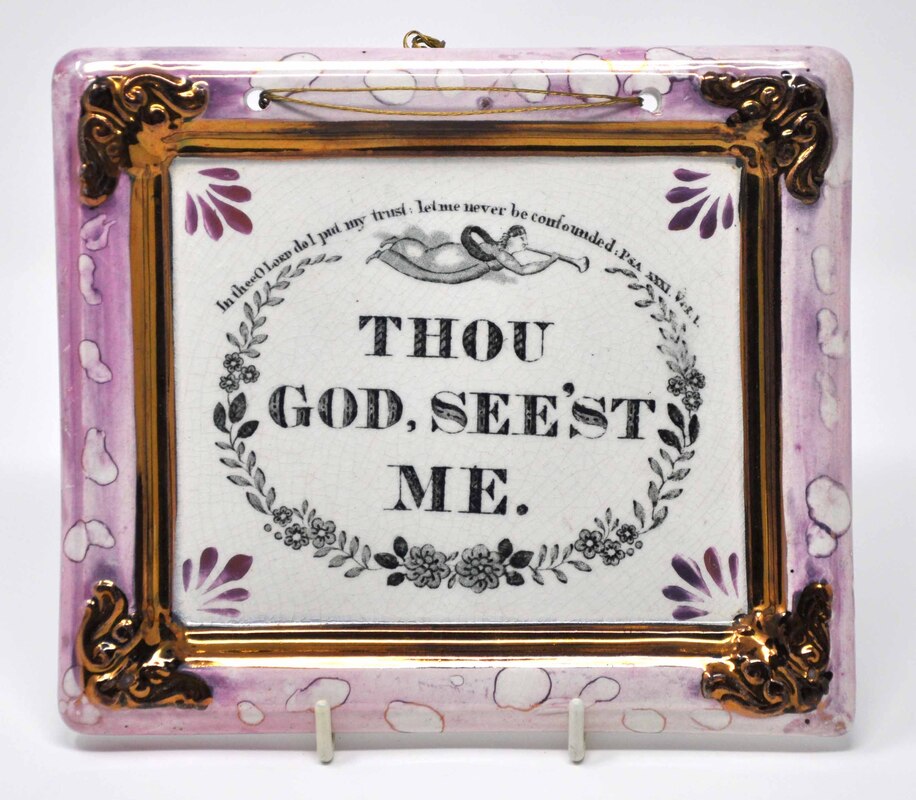
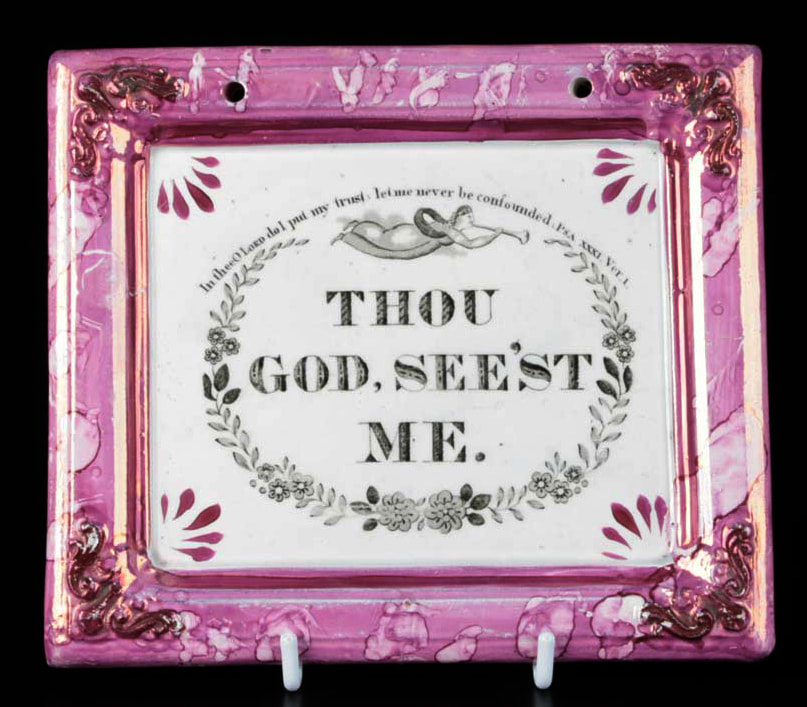
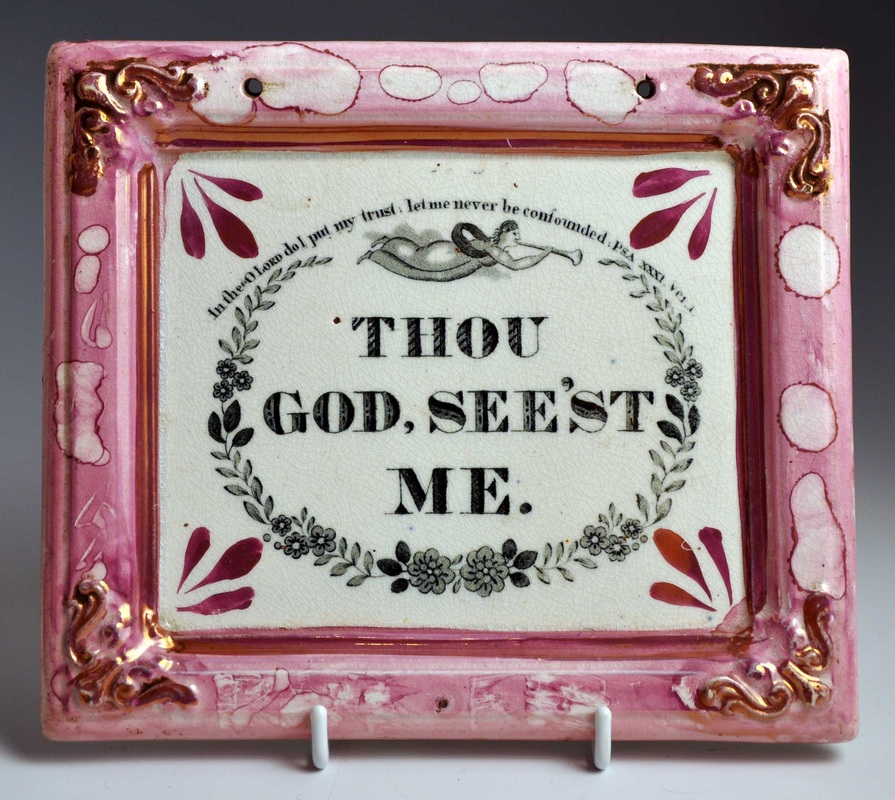
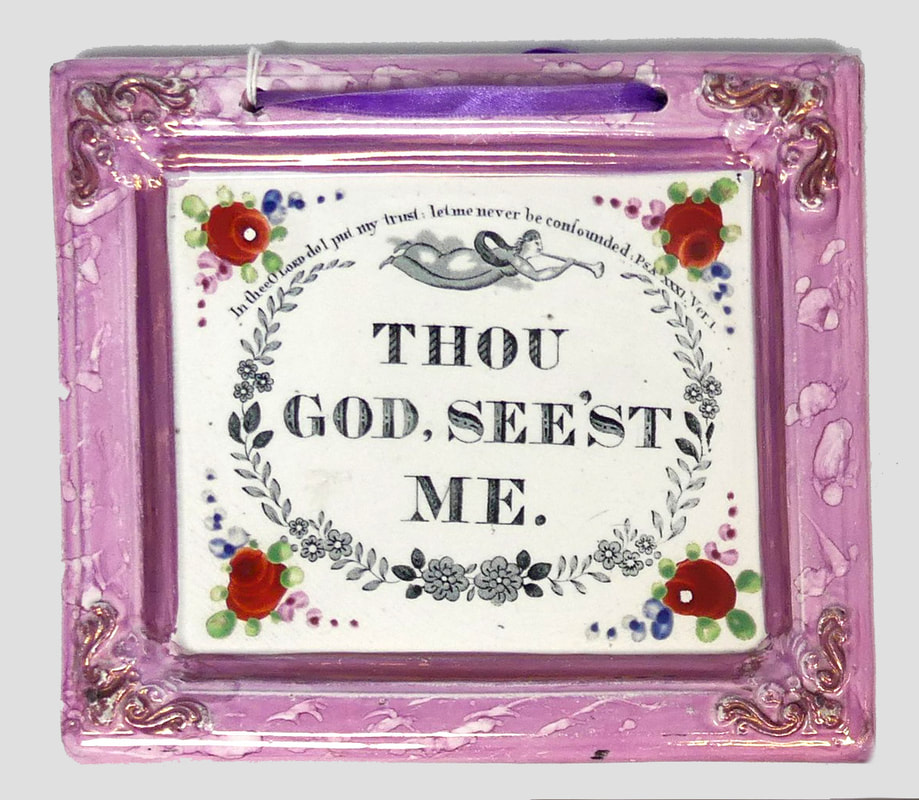
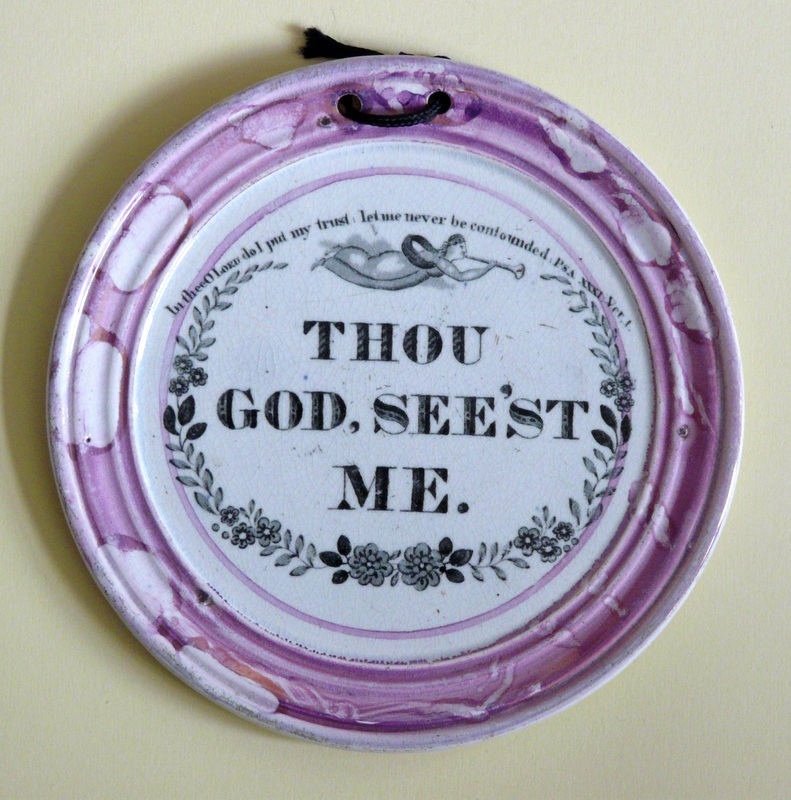
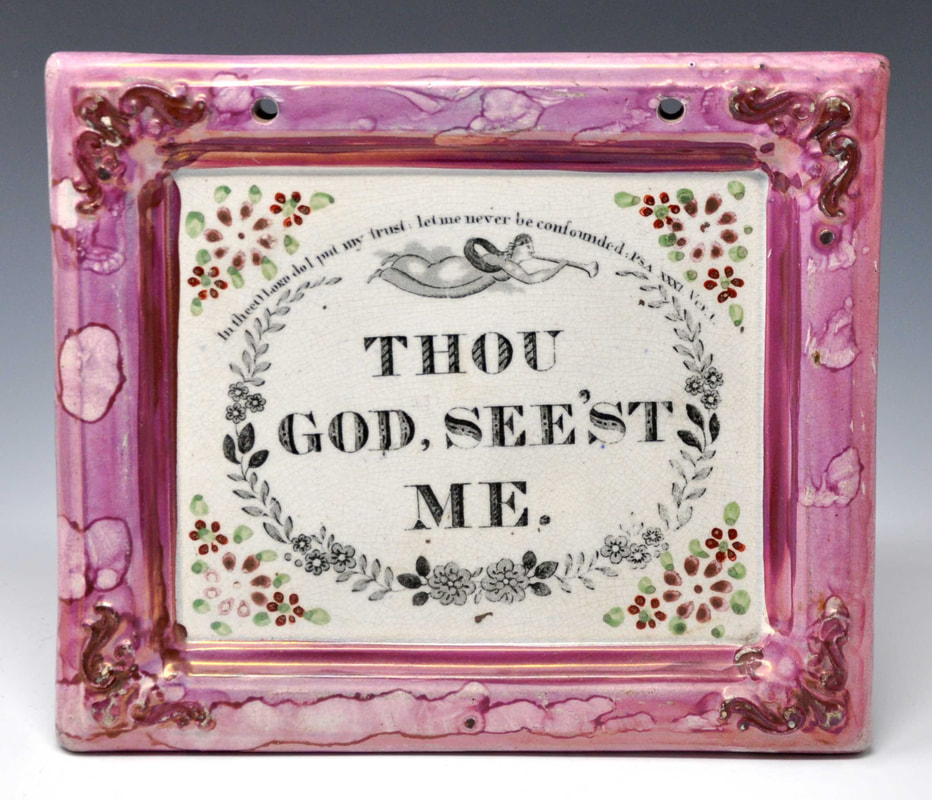
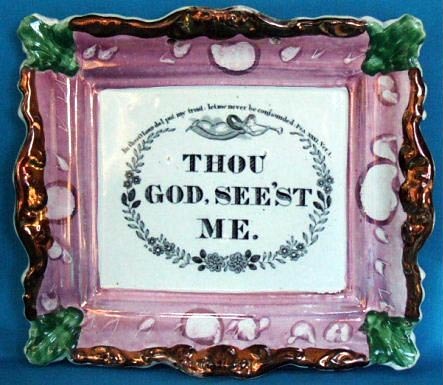
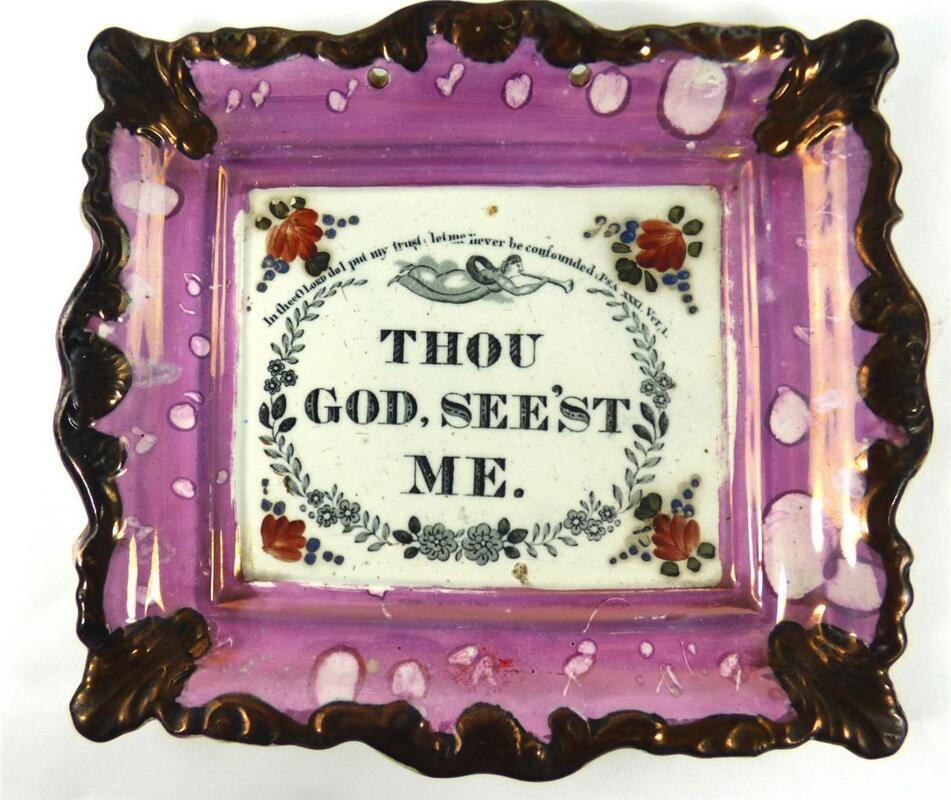
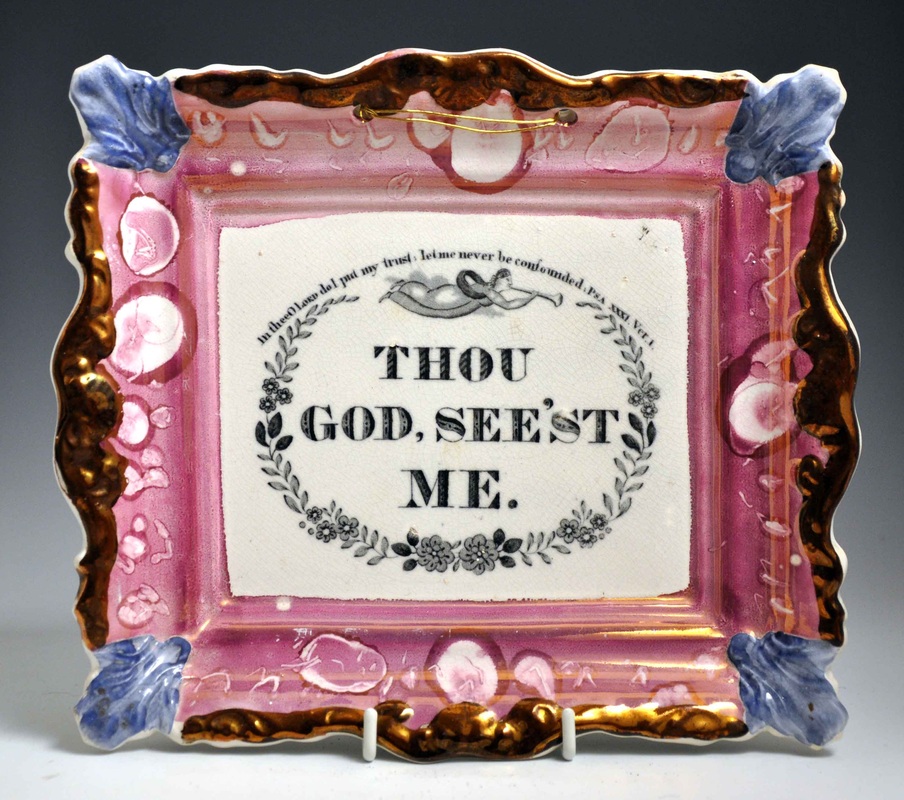
The last five plaques above are c1840–60. The verse at the top reads 'In thee O Lord...'. Unlike the corresponding 'Prepare' plaques, the spacing of the lettering is compressed on the 'Thou' plaques, so that 'thee' and 'O' run into one word. This might suggest that the plate was a copy of plate 1 with the heading 'In the O Lord...' (as in the section above) and that an extra 'e' was squeezed in.
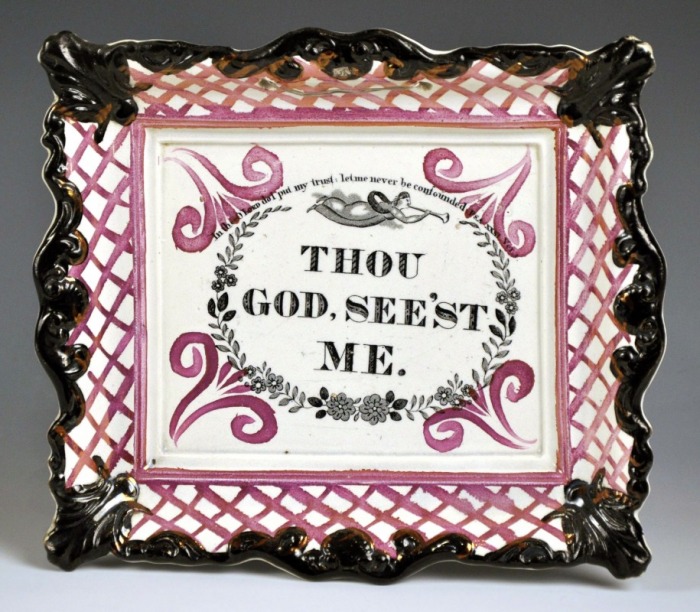
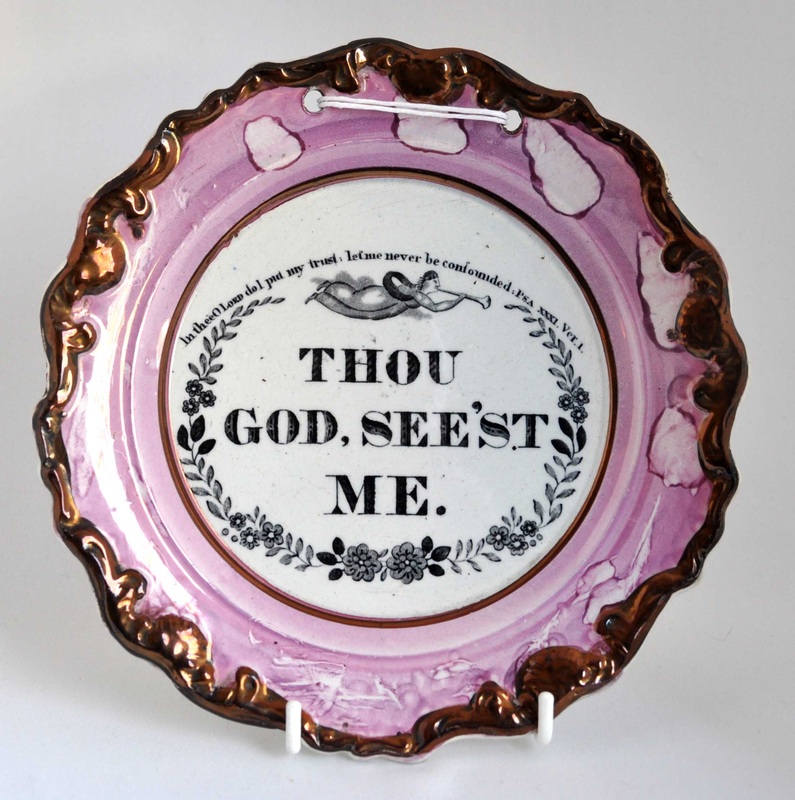
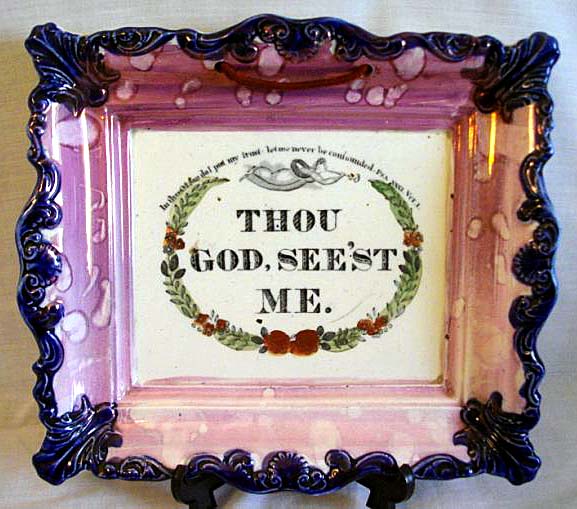
The plaques above are later, likely 1860s. The third plaque has rare blue borders. Anderson and Garland write of a similar bordered plaque: NB the blue border is in fact the under painting for the copper lustre. Copper lustre is just pink lustre but shows copper when applied to dark colours. Brown or green were the normal colours used, and blue is an unusual choice.
Moore & Co, Wear Pottery (Sunderland plate 4)



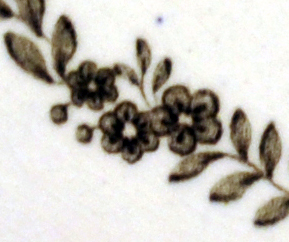
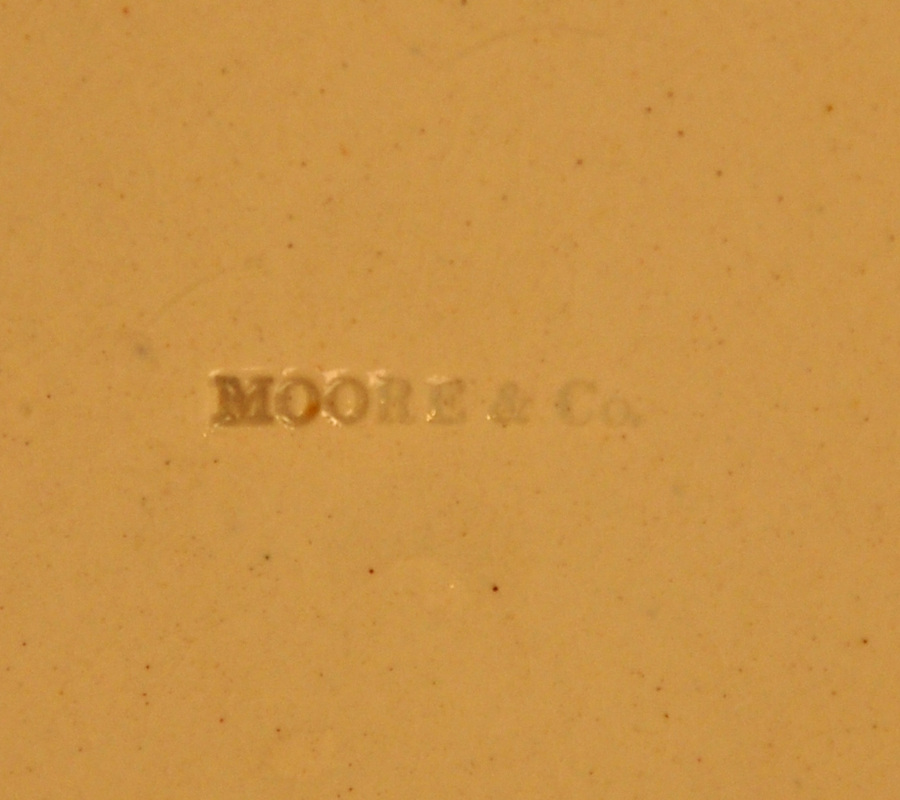
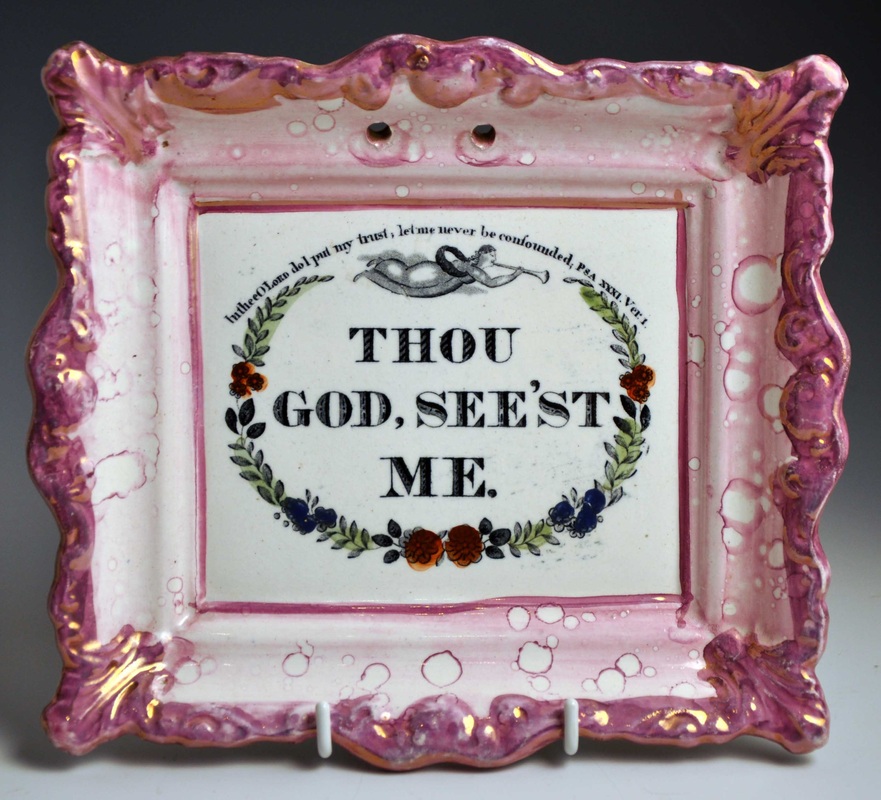
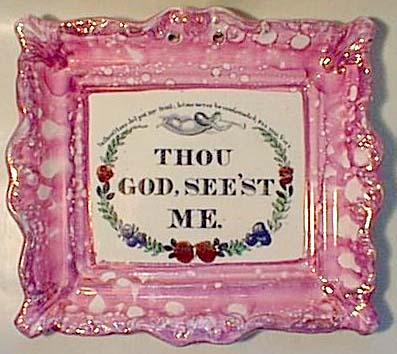
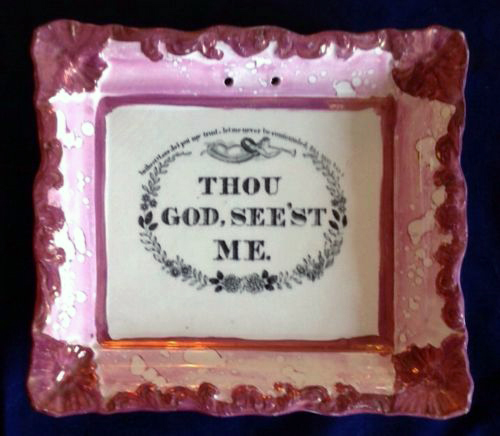
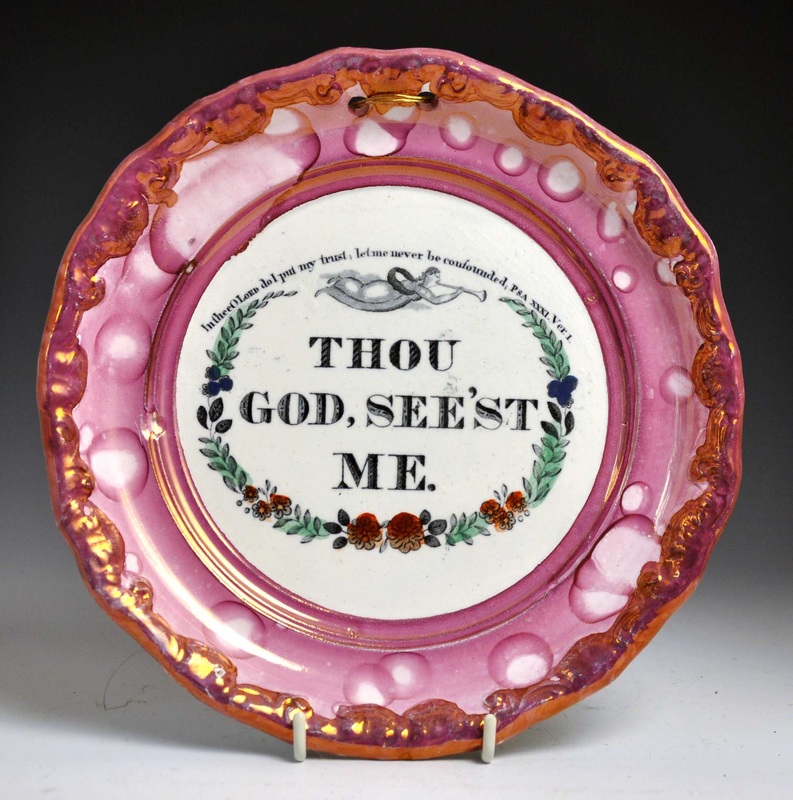
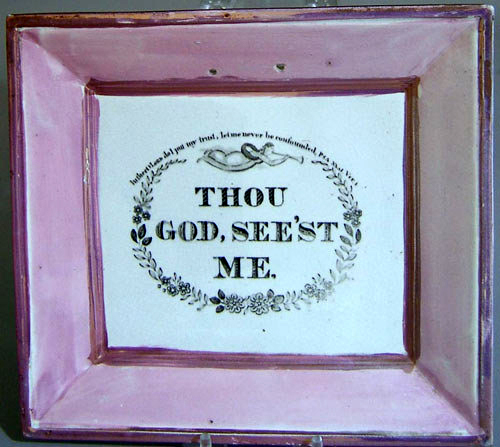
The first plaque is unmarked, c1840. The second plaque has a Moore & Co impressed mark (shown beneath it). The last plaque is of a rarer form used by Moore & Co, but this example isn't marked. See the Landscapes page for a similar plaque with the printed 'S. Moore & Co' mark and the pattern name 'Waverley'. All seven plaques have transfers from the same plate. Note that in the first detail the leaf under the letter 't' in 'thee' is shaded on the left side. In the second detail, note that the circles to the left of the flowers are connected with stalks.
The plate 4 transfer appears on brown-bordered plaques, also attributed to Moore's, like those below.
The plate 4 transfer appears on brown-bordered plaques, also attributed to Moore's, like those below.
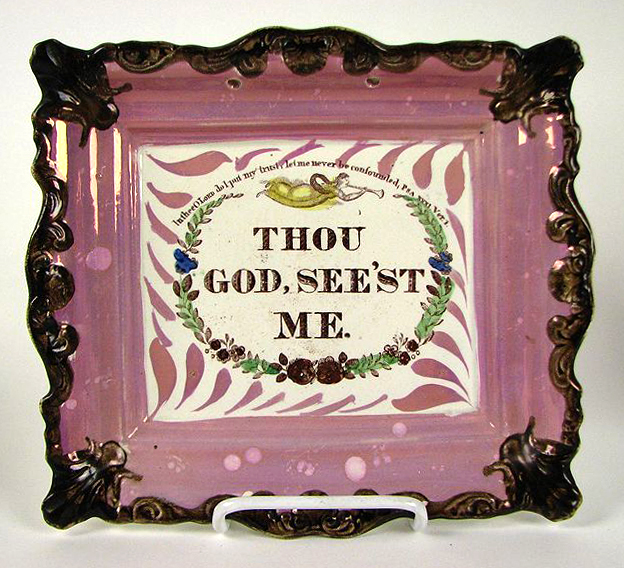
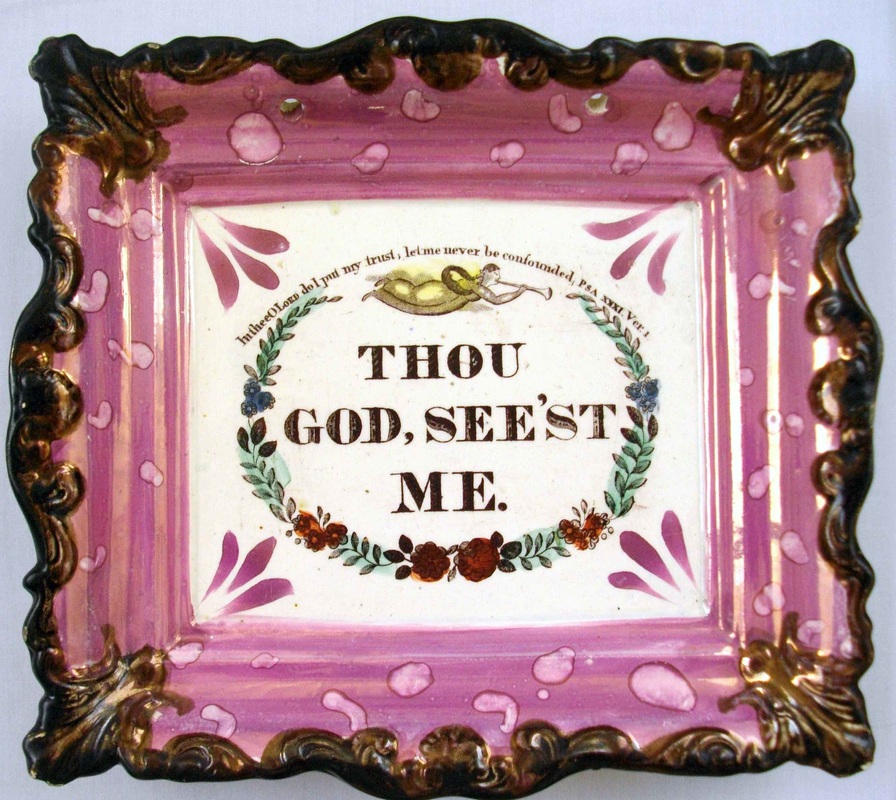

Attributed to Moore & Co's Wear Pottery and Scott of Southwick
The plaque form on the left is attributable to Moore's and the one on the right to Scott's.
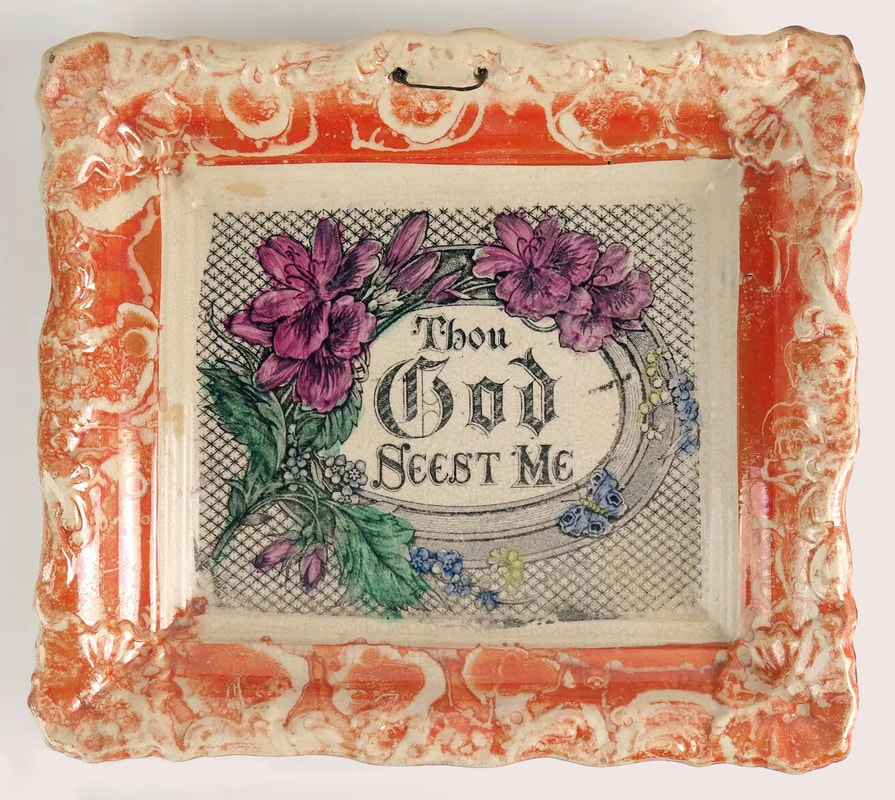
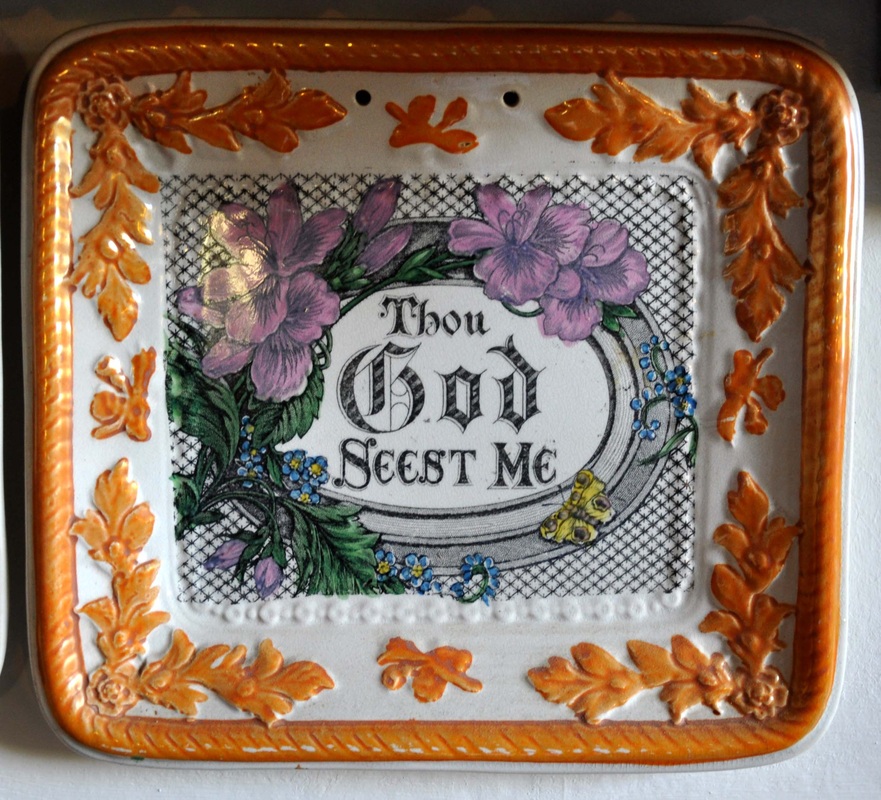
Dixon, Phillips & Co, Garrison Pottery, and attributed to Moore & Co, Wear Pottery, and Scott of Southwick, Sunderland
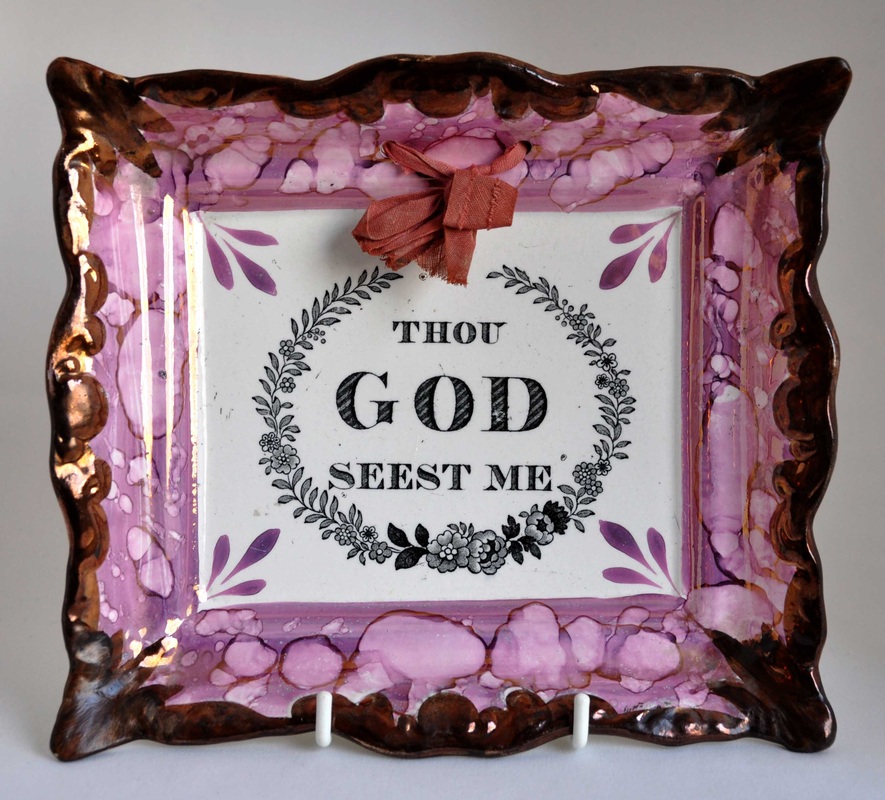
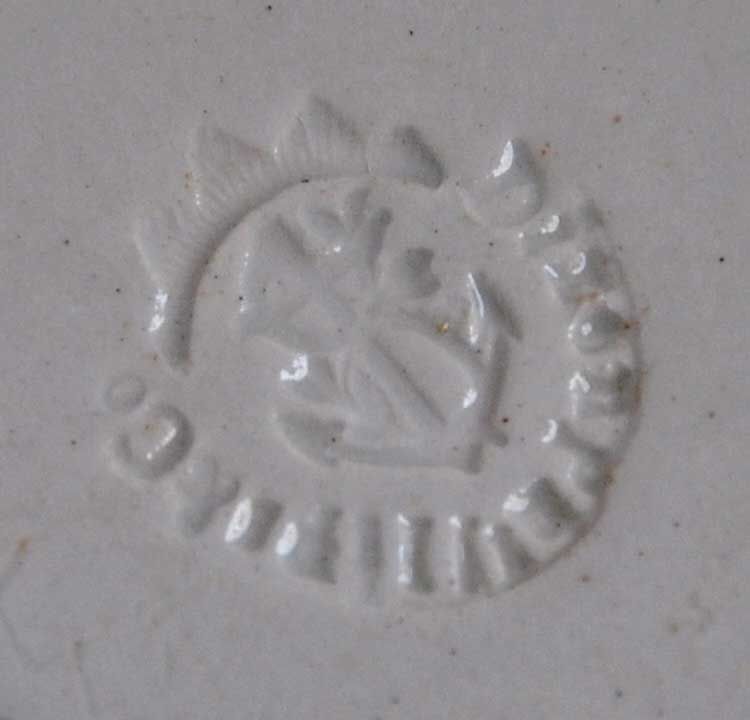
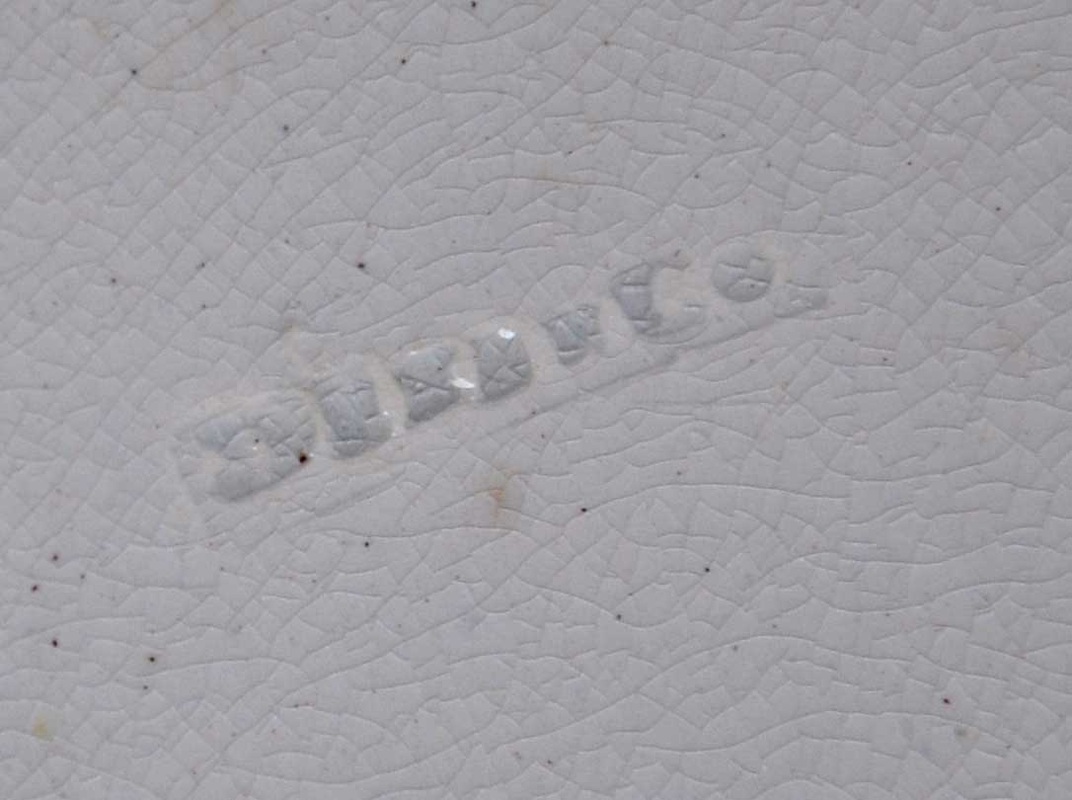
The first two plaques have the Dixon, Phillips & Co anchor impressed mark, which appears to have been used from 1839–c1850. The second four plaques have the Dixon Co impressed mark, which was likely used from c1851 until the Garrison Pottery closed in 1865. The final plaque is typical of the pottery's late production. It has pink, rather than copper, lustre edges, and the transfer imprint is weak.
It appears that Moore's purchased the transfer plates for Dixon's common religious verses, when the Garrison Pottery closed in 1865. The plaques below, although unmarked, are attributed to Moore's from the late 1860s.
It appears that Moore's purchased the transfer plates for Dixon's common religious verses, when the Garrison Pottery closed in 1865. The plaques below, although unmarked, are attributed to Moore's from the late 1860s.
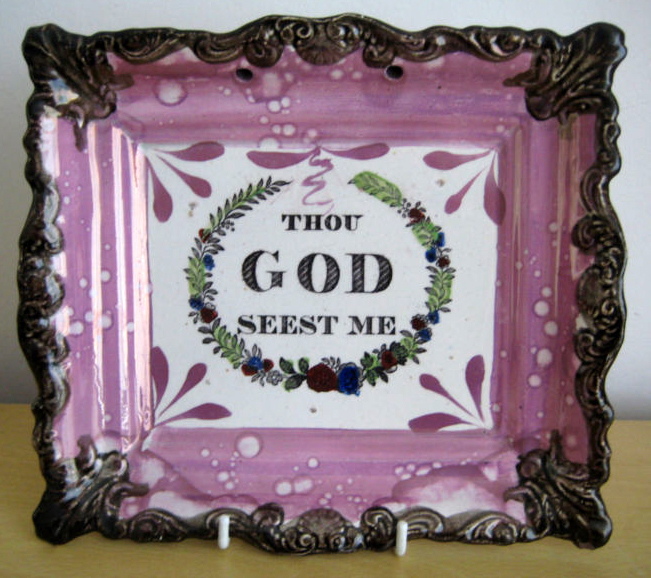
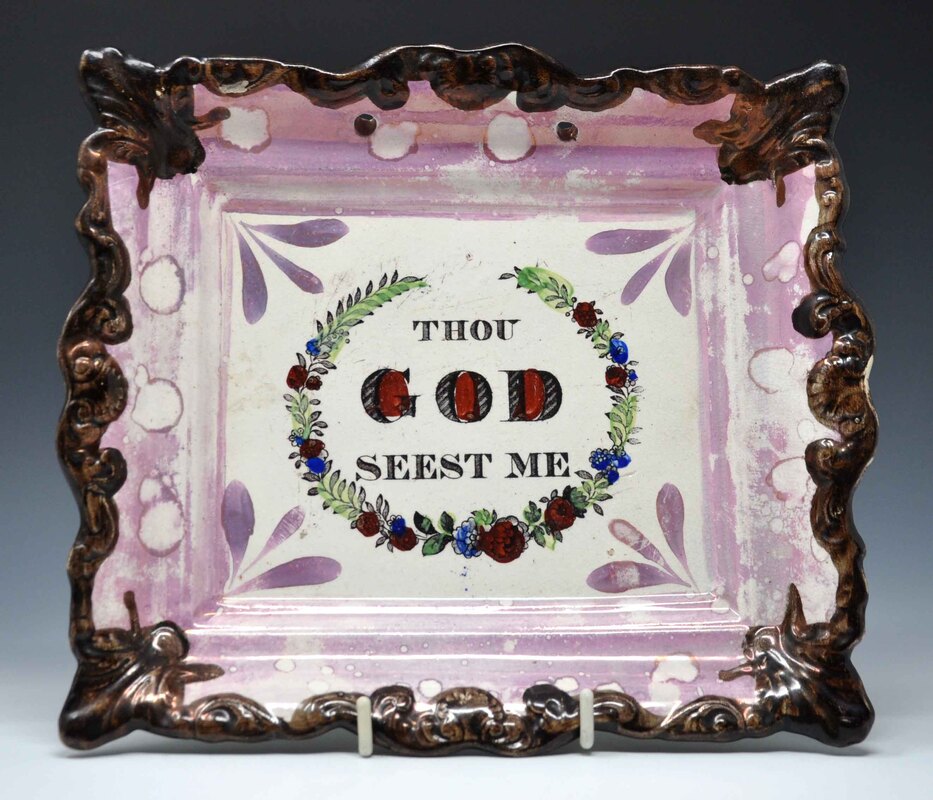
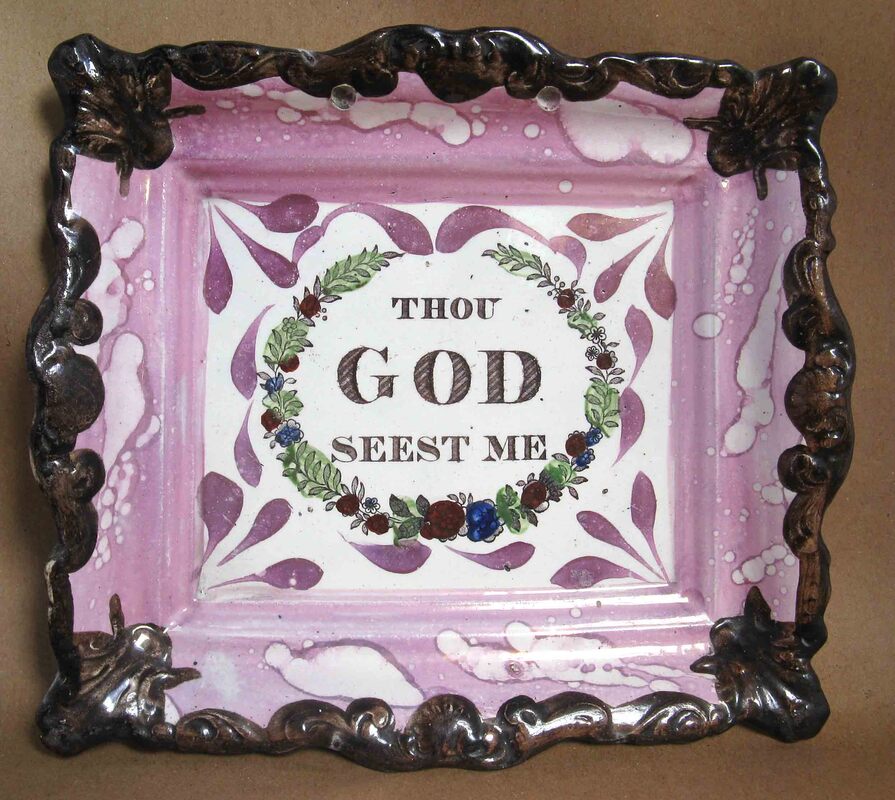
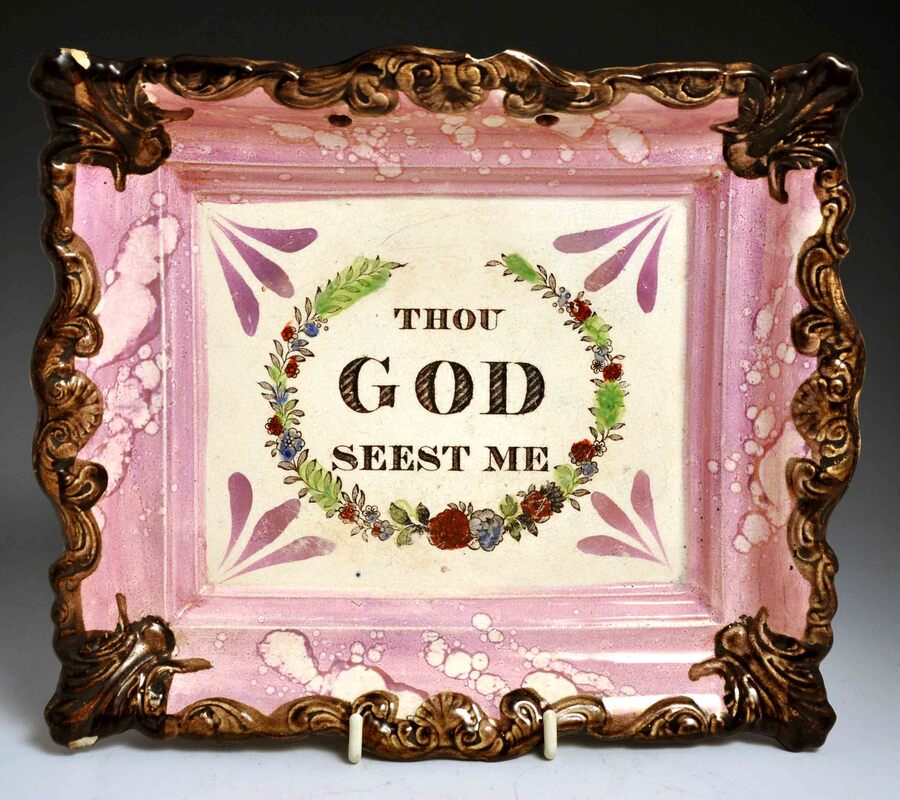
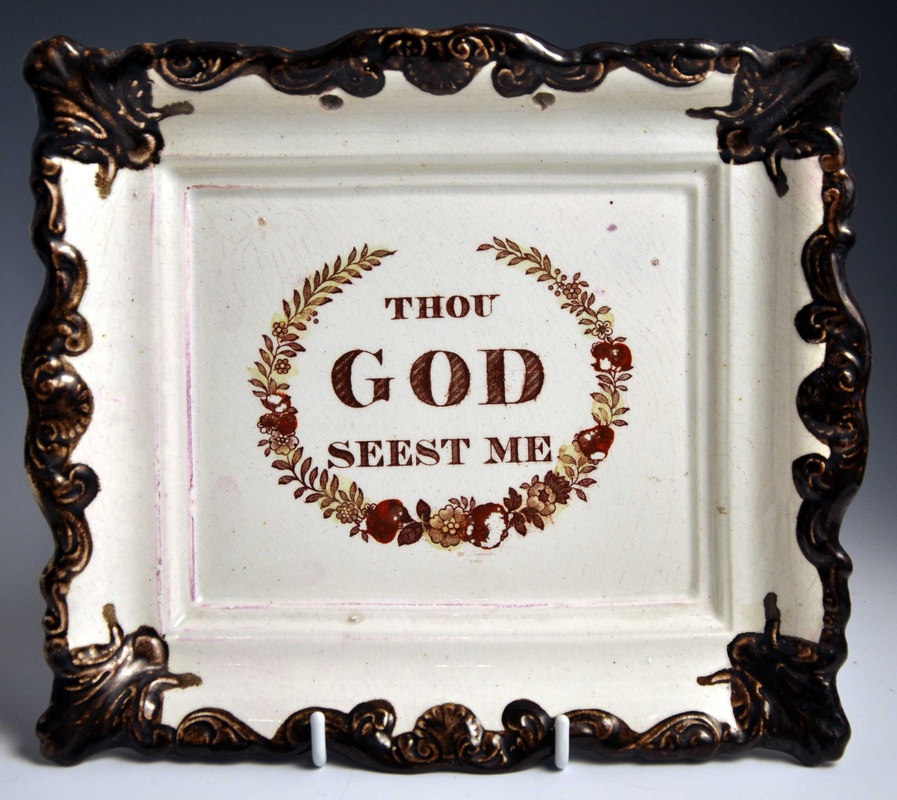
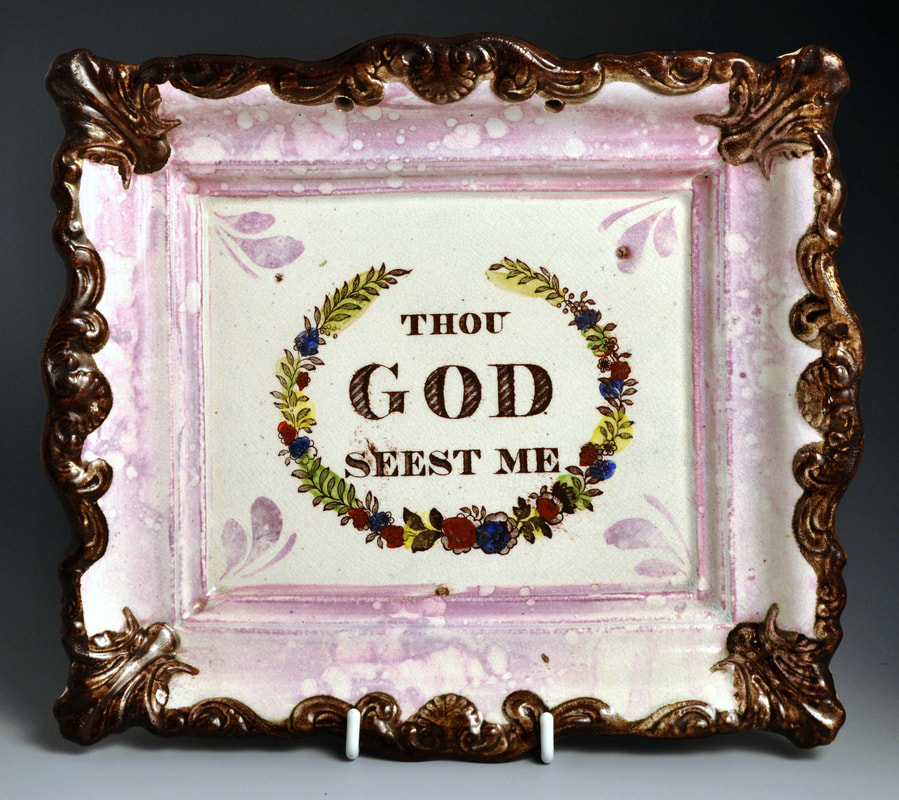
The three plaques below are of forms associated with Scott's Southwick Pottery. The orange lustre suggests a date of post 1870.
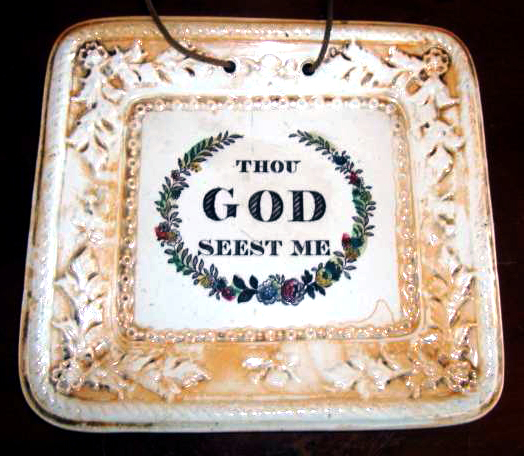
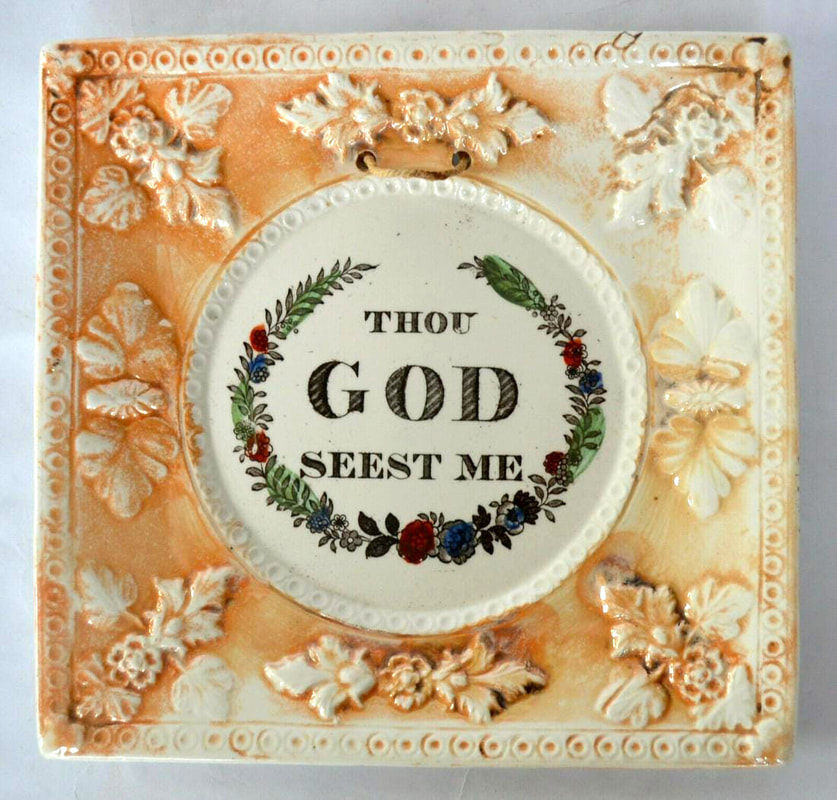
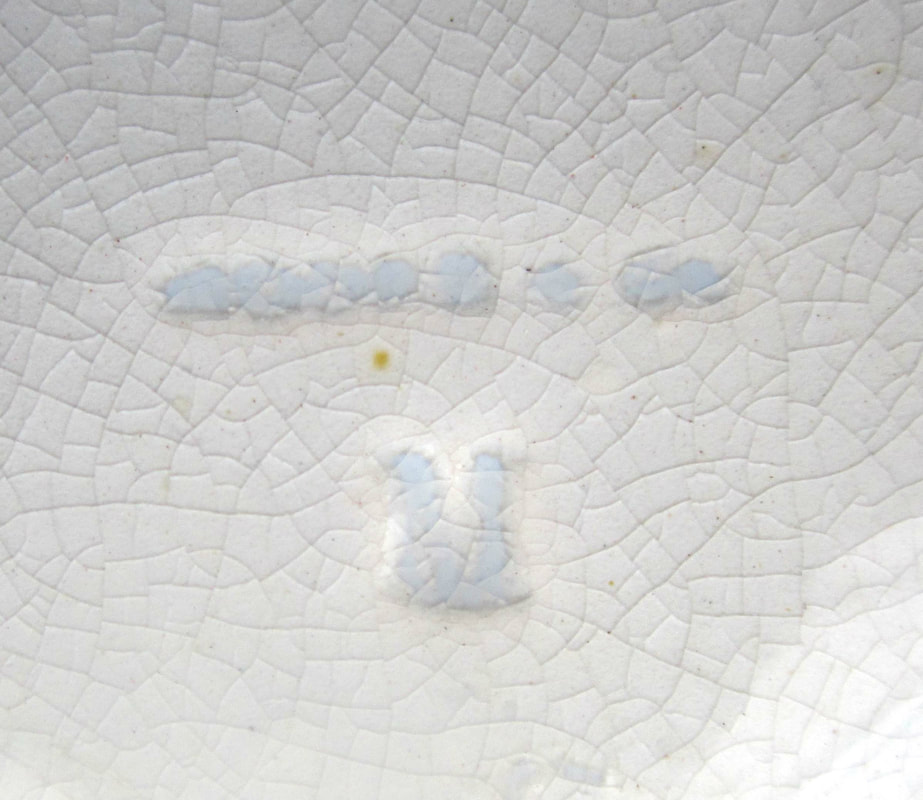
Below is a rare example of the same transfer on a plaque with the impress MOORE & CO over the letter M. Below right, a similar unmarked plaque. It is possible that Moore's and Scott's were both sending 'blank' plaques to be decorated at Sheepfolds Warehouse during this period.
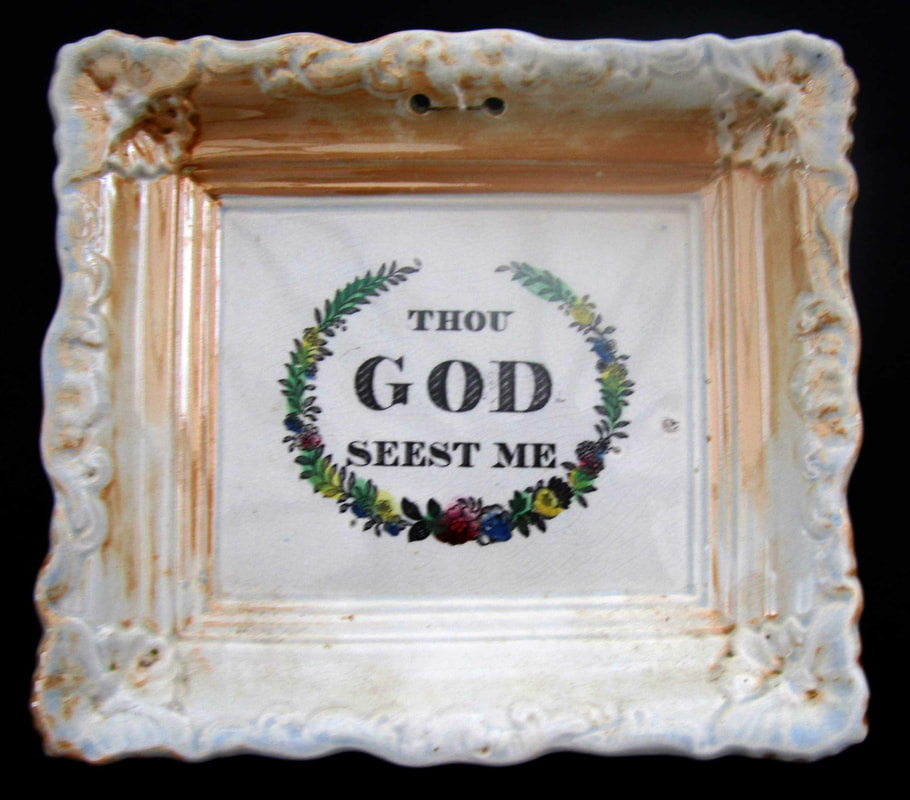
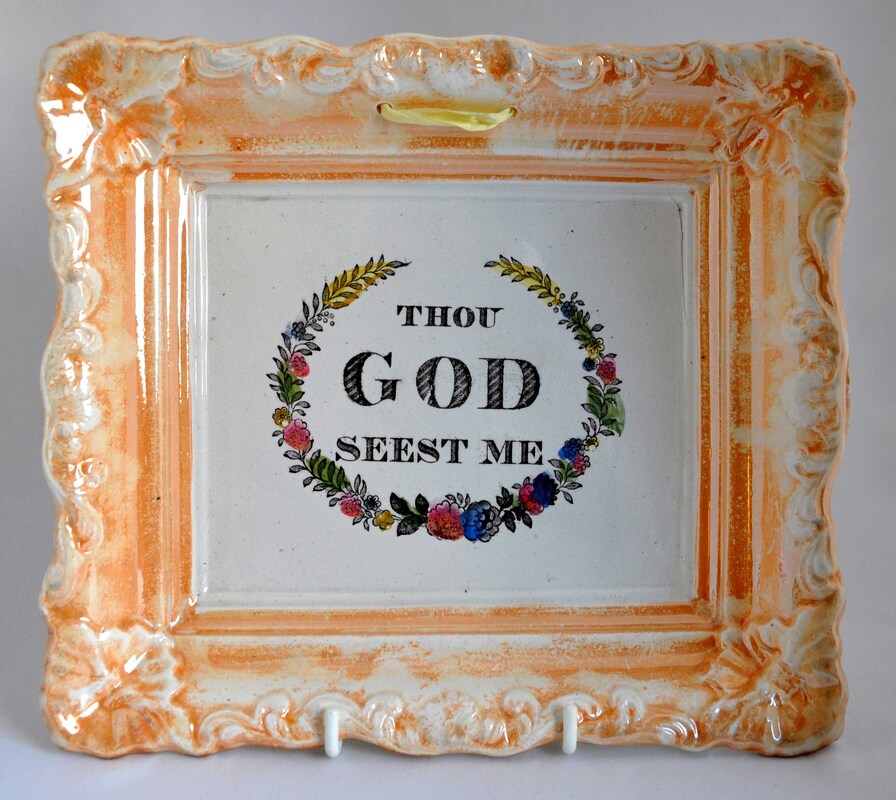
Attributed to Seaham Pottery, and attributed to John Carr, Low Lights Pottery, North Shields
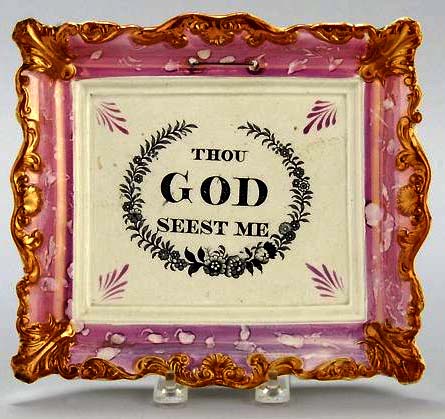
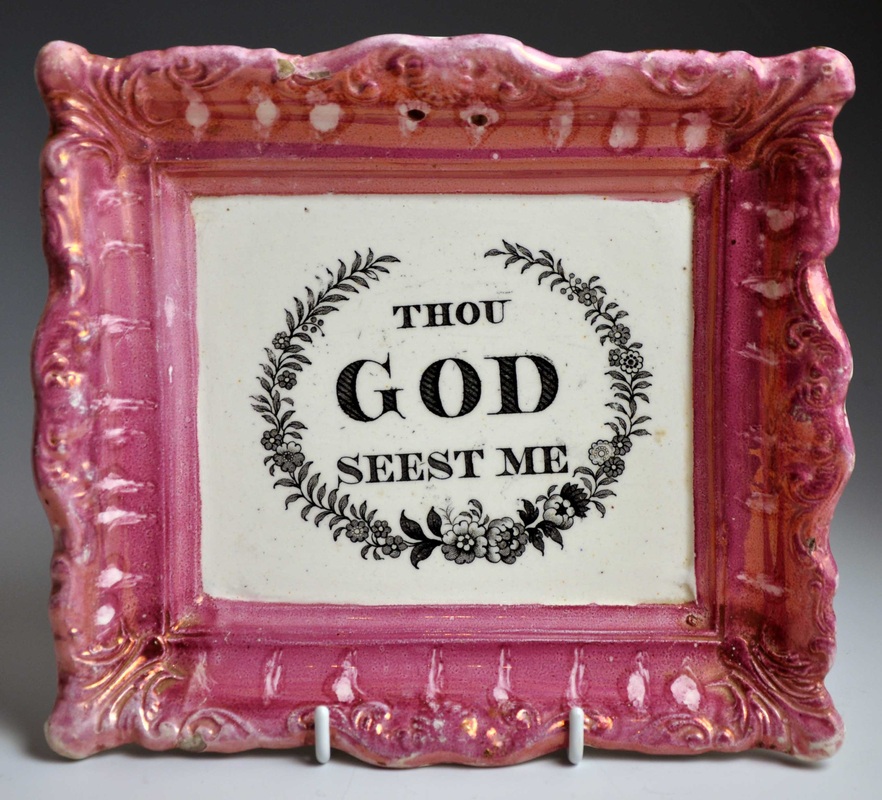
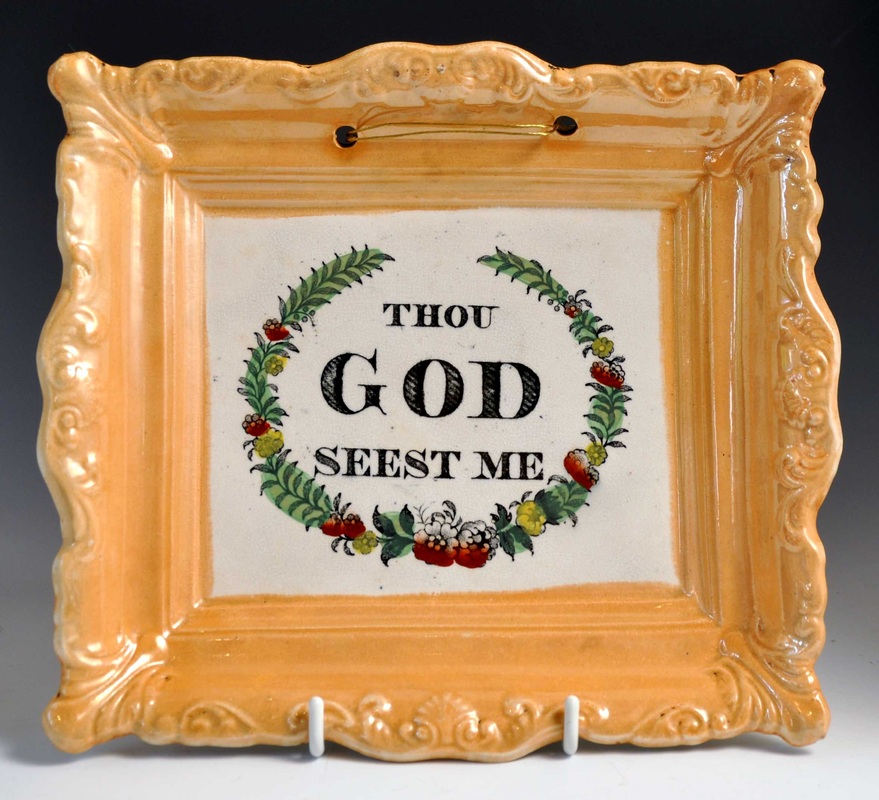
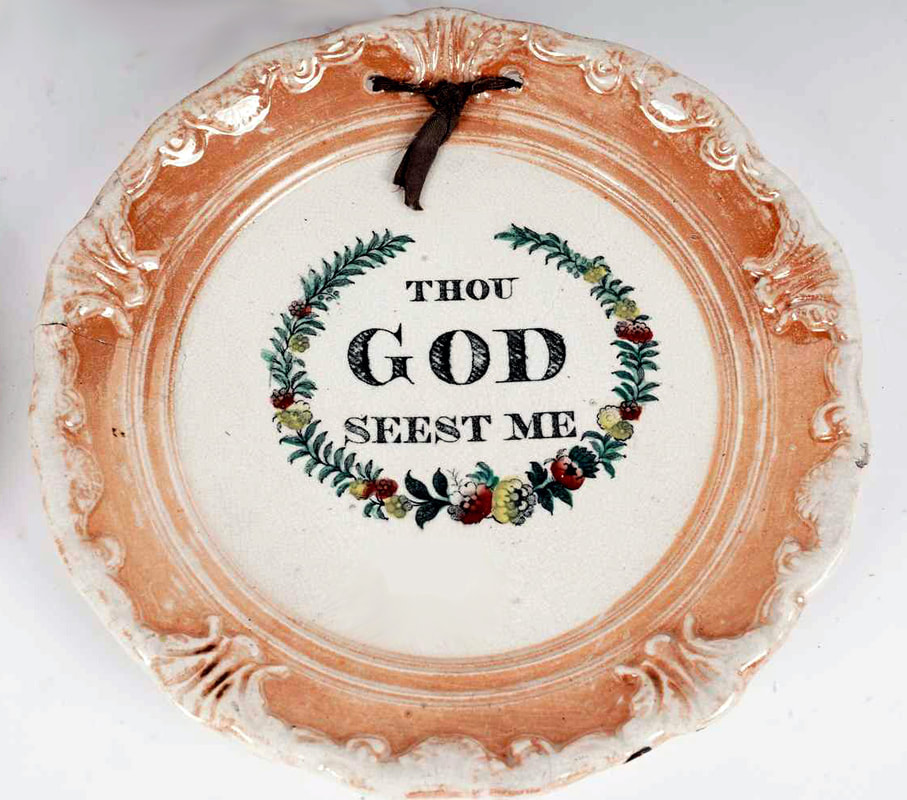
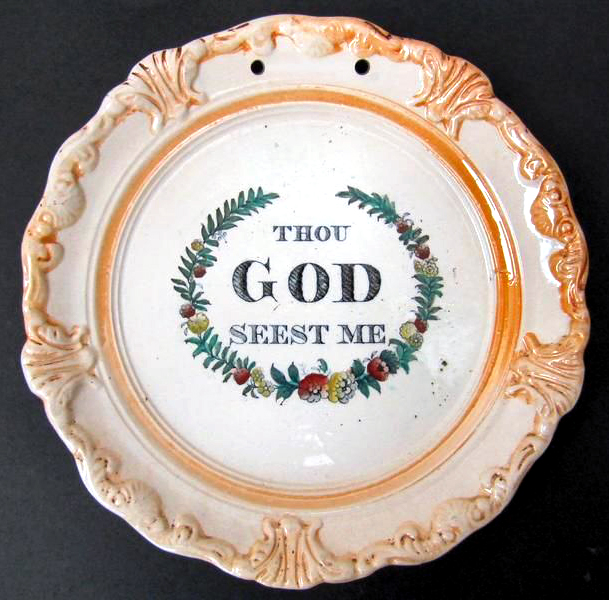
The first plaque is attributed to Seaham Pottery, c1847; the others to John Carr, North Shields. This transfer is very similar to the Dixon 'Thou God' above. However, the diagonal shading of the word 'GOD' slopes in the opposite direction (downwards to the right).
Attributed to John Carr, Low Lights Pottery, North Shields
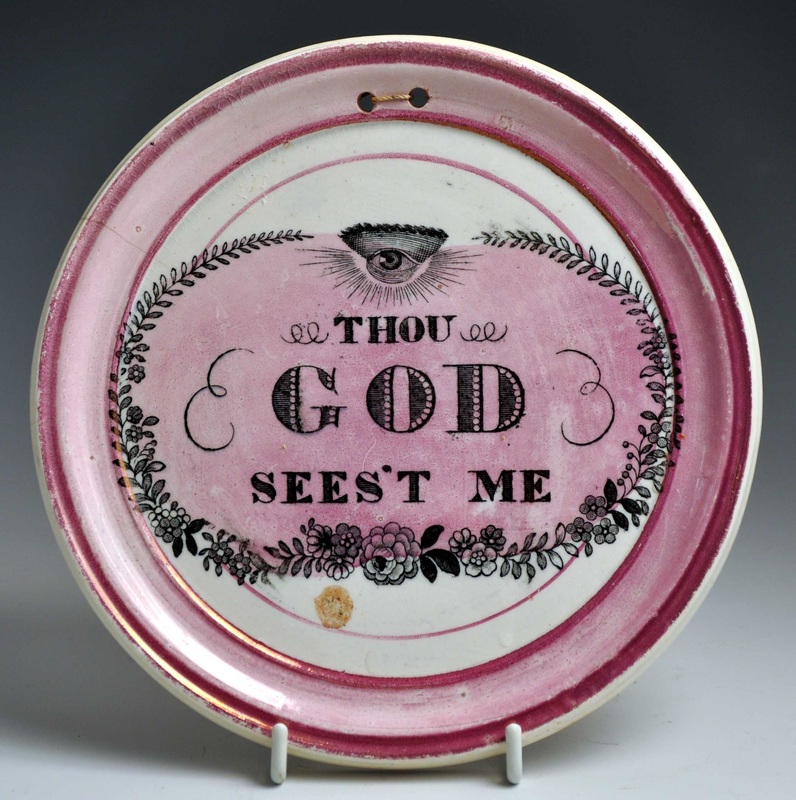
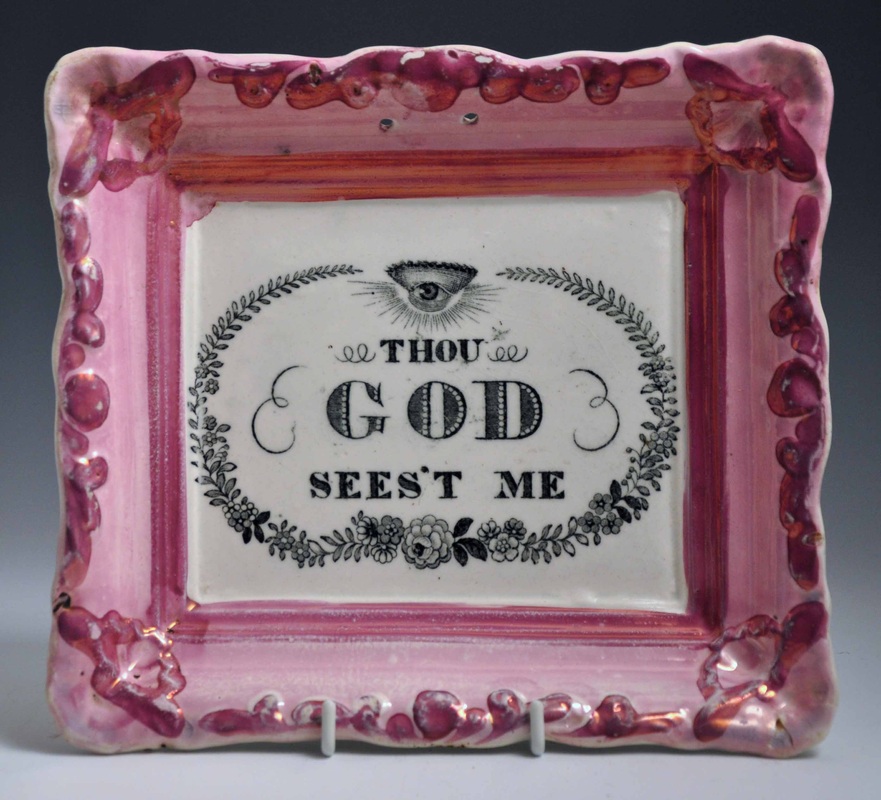
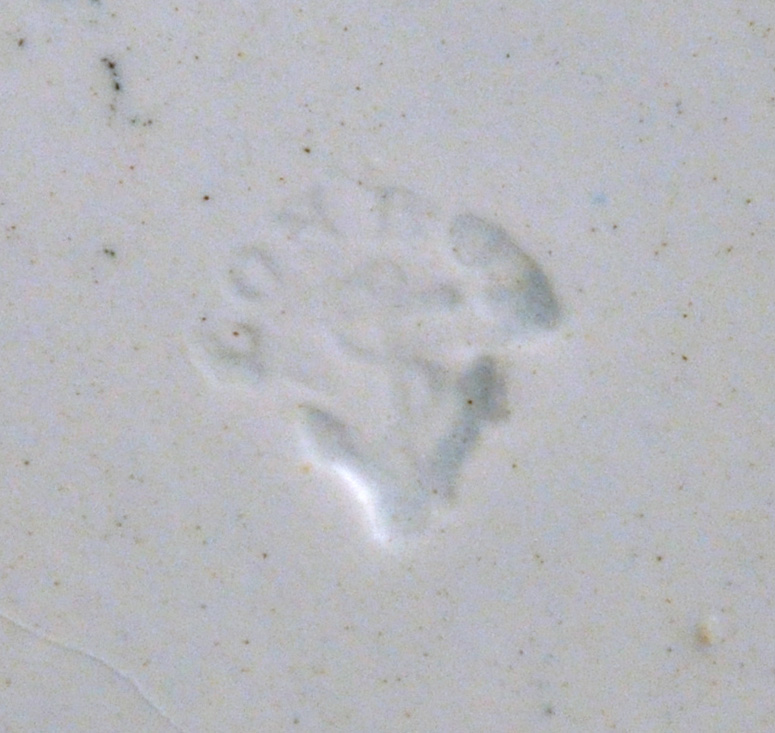
The plaques above come from the same transfer plate as the large plaques attributed to John Carr & Sons below. The circular plaque was likely made in the 1830s under the partnership of Cornfoot, Carr & Co, 1832–38. Click here to read more about the dates of the North Shields Pottery partnerships. The rectangular plaque above is perhaps later, c1850. It has an impressed London mark. The plaque below has unusual enamel decoration. See another similar on the Tyne Prepare to Meet Thy God page.
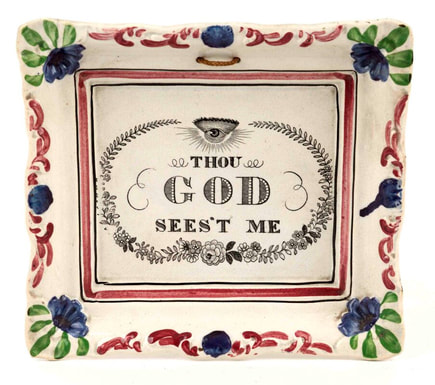
Photo Leski Auctions
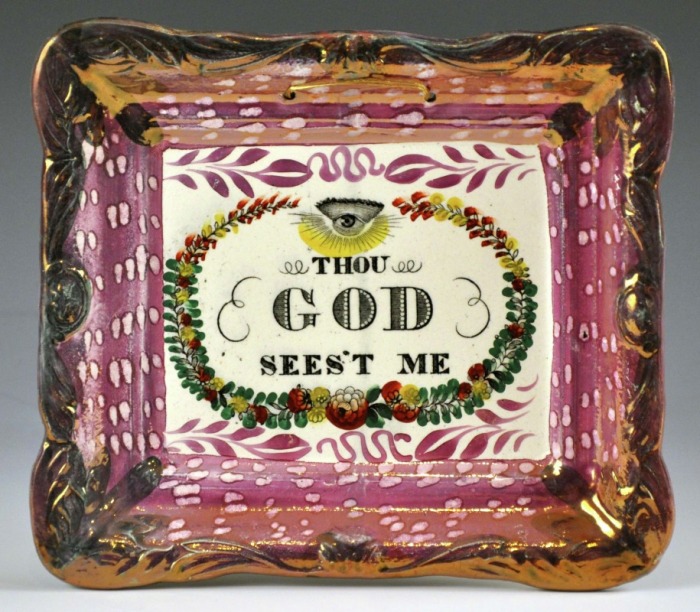
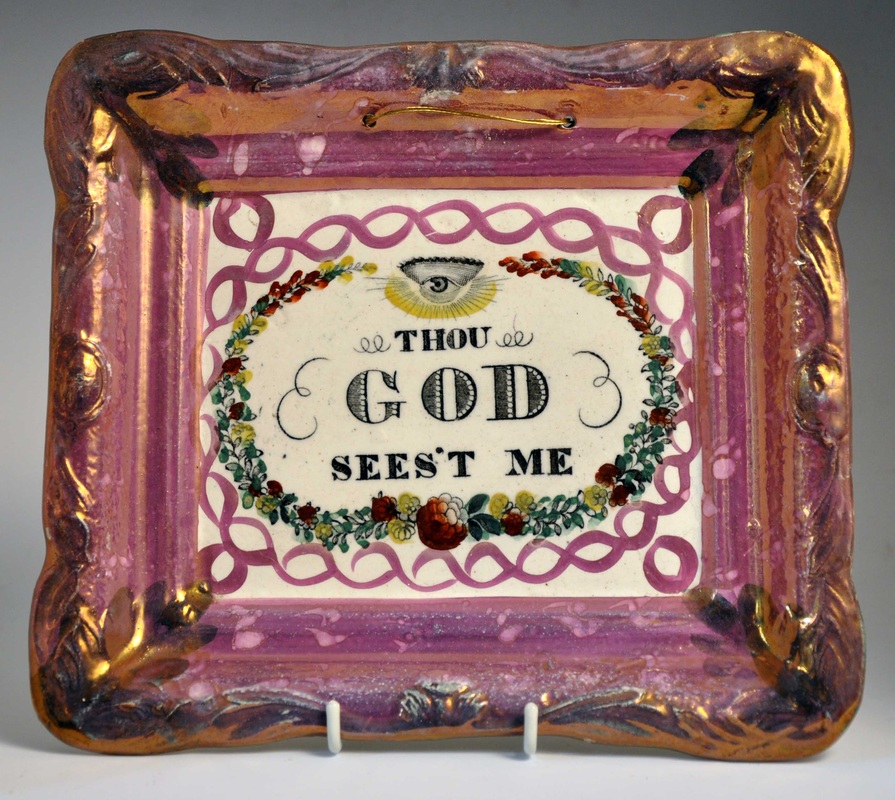
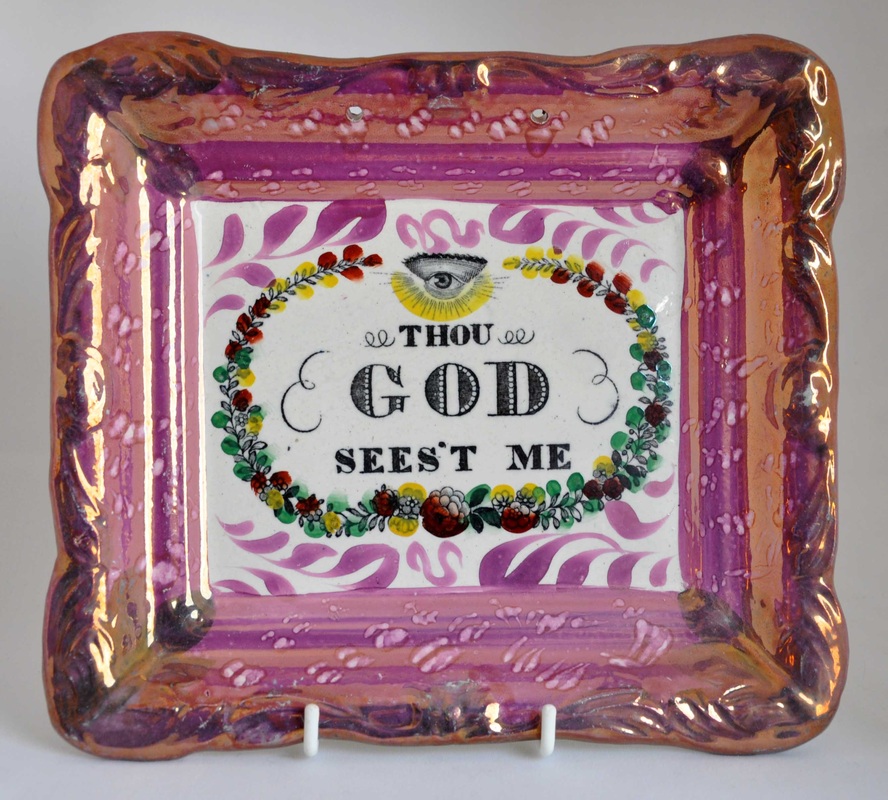
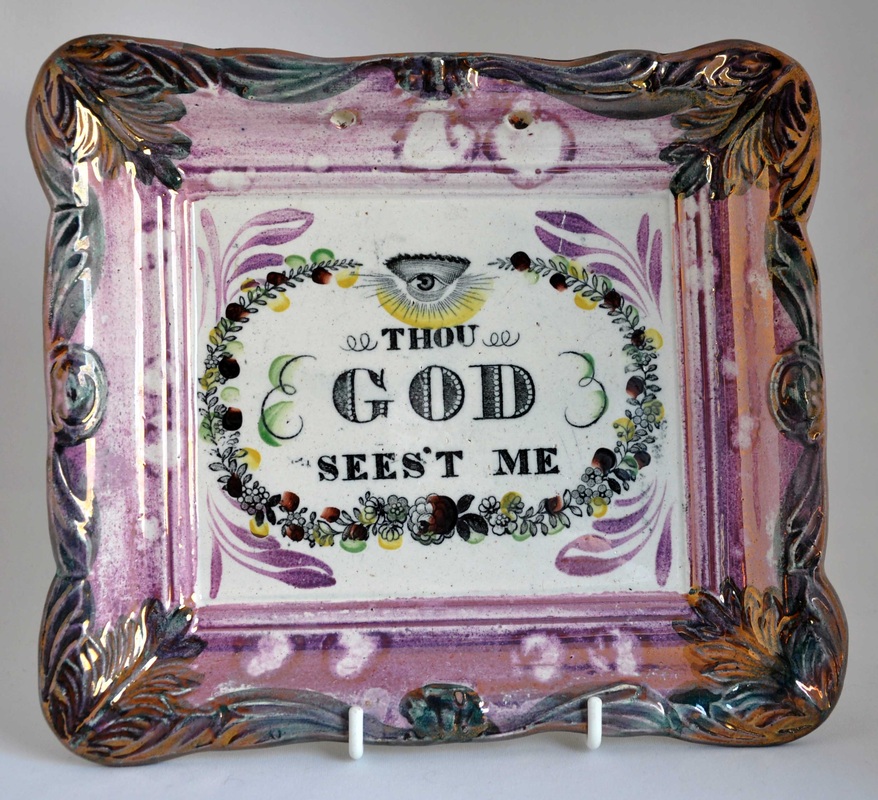
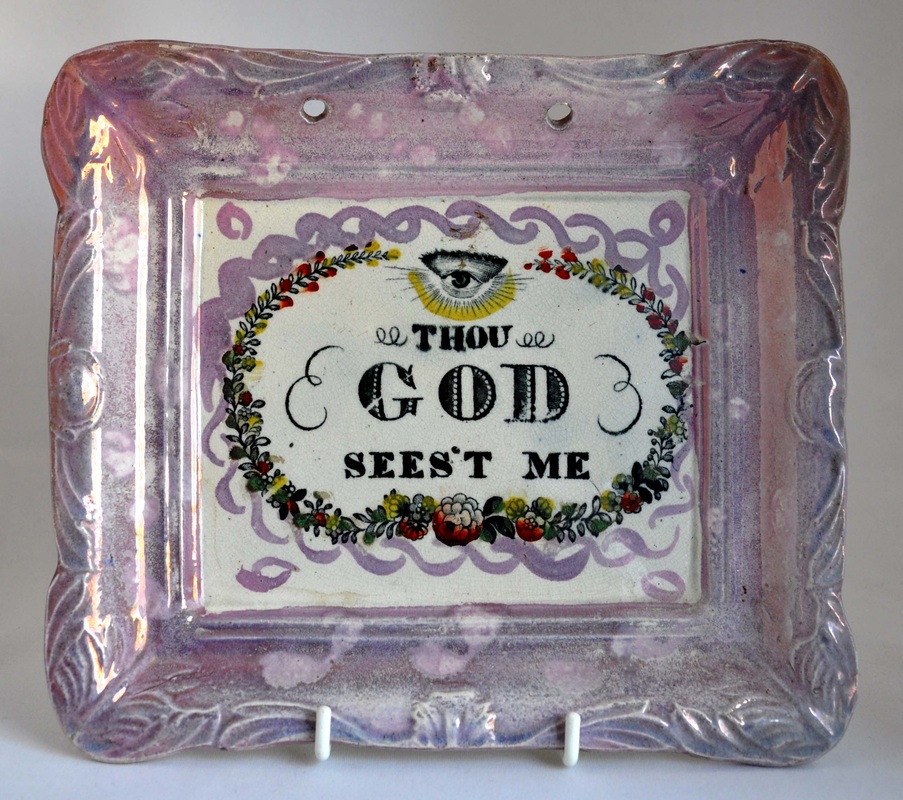
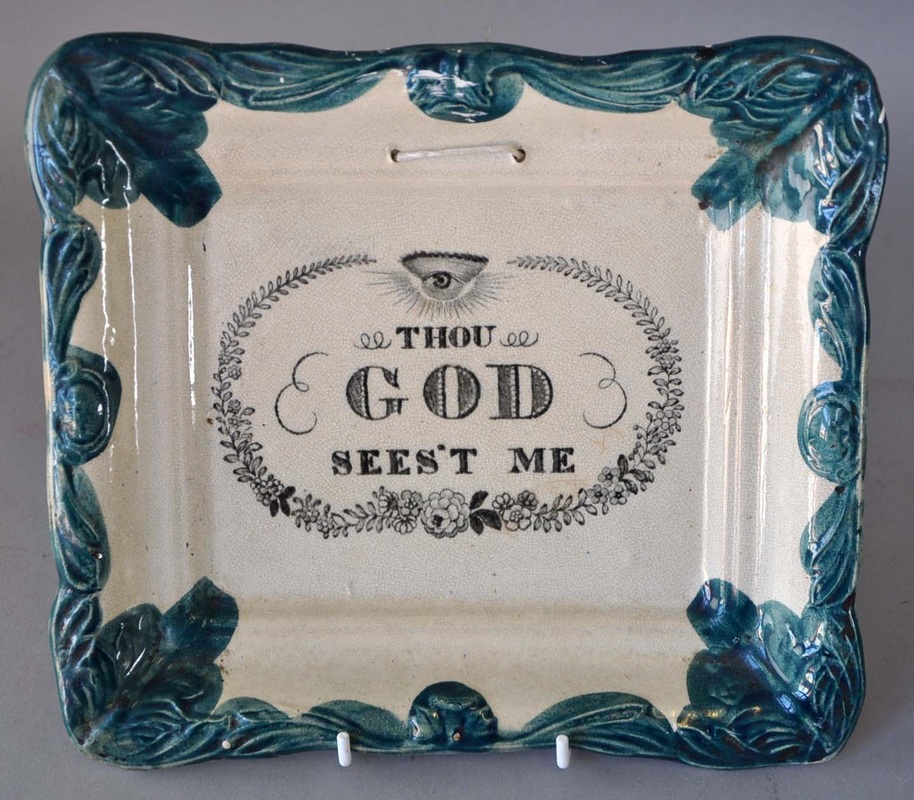
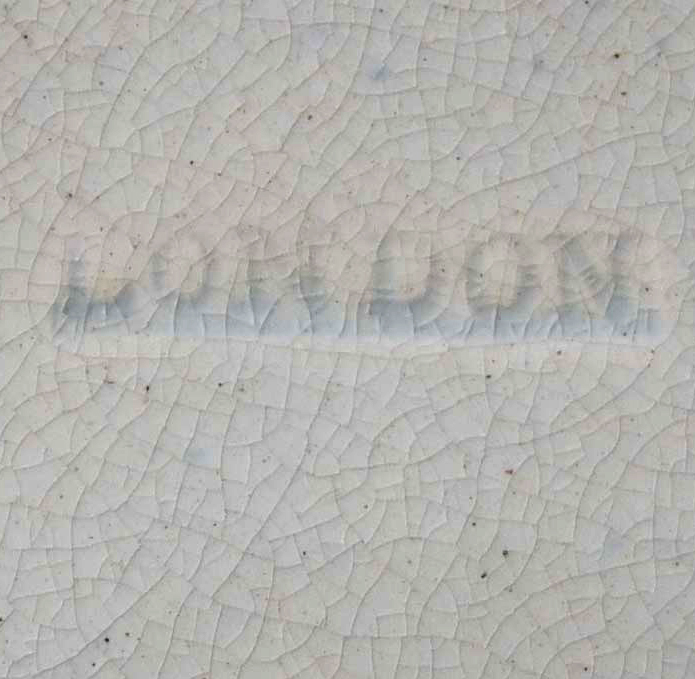
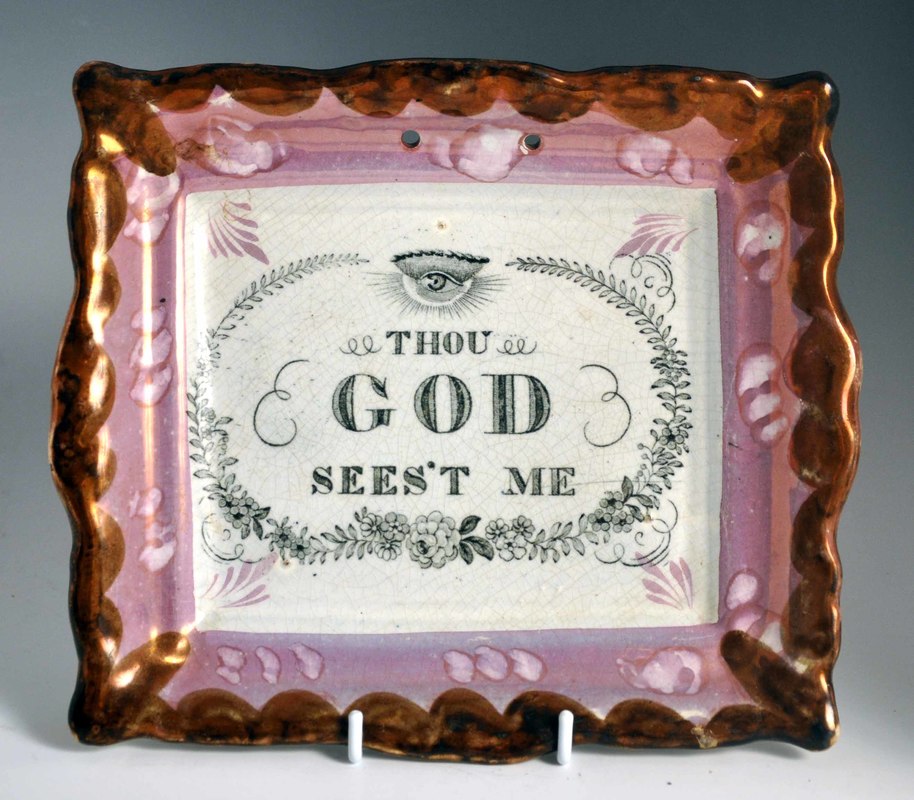
The first plaque below has a rare 'LONDON' impressed mark, known to have been used by John Carr. It was probably used on items destined for a London distributor. The plaque is certainly Tyneside (not Thames side!). Click here to read more about the London impressed mark.
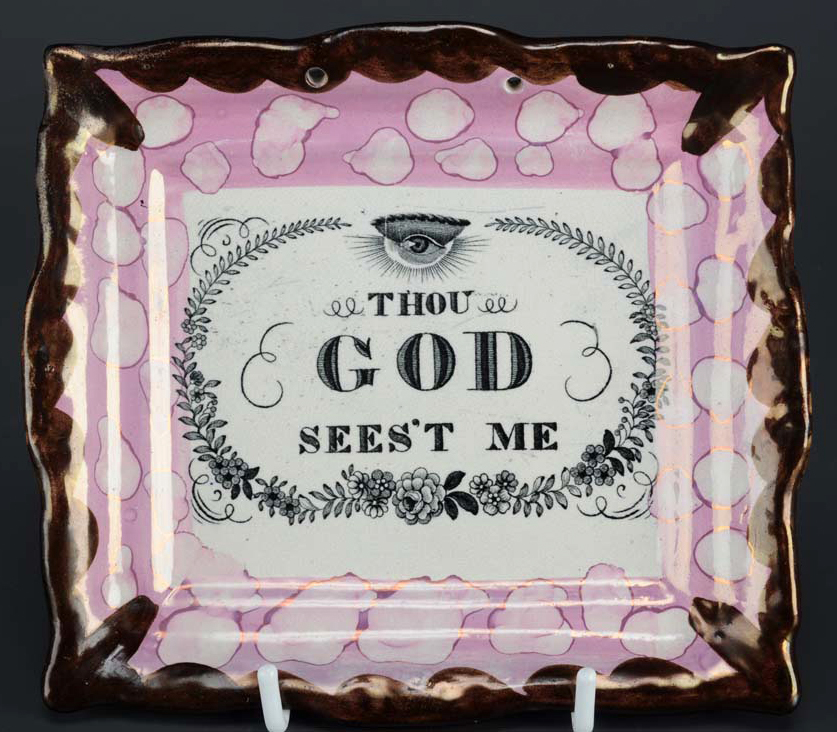
Albion Pottery, Newcastle
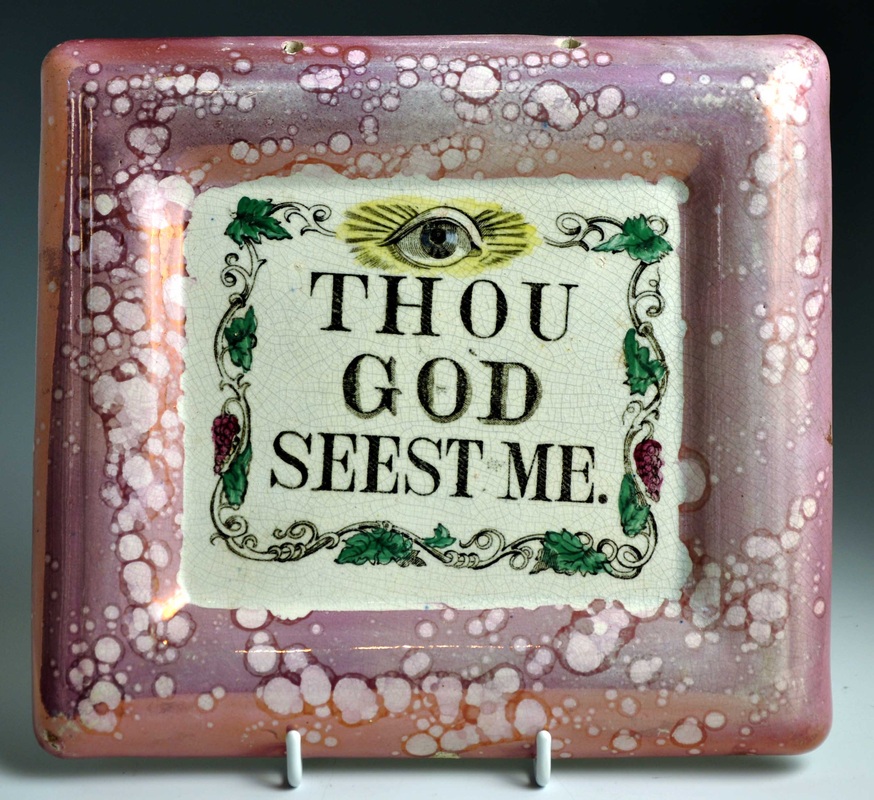

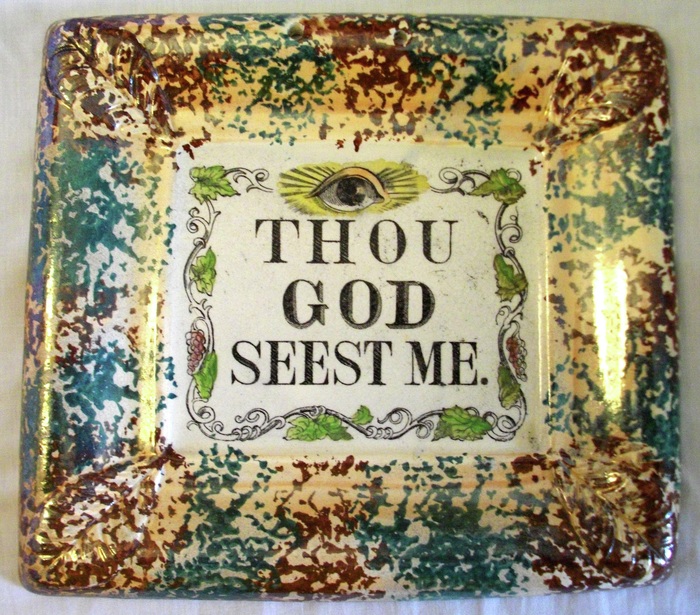
The second and third plaques have the Albion Pottery impressed mark, with G&A in the centre. Galloway and Atkinson used this mark from c1864. The plaque has the thick borders that became fashionable in the 1860s (see Plaque dates).
Thomas Fell & Co, Newcastle
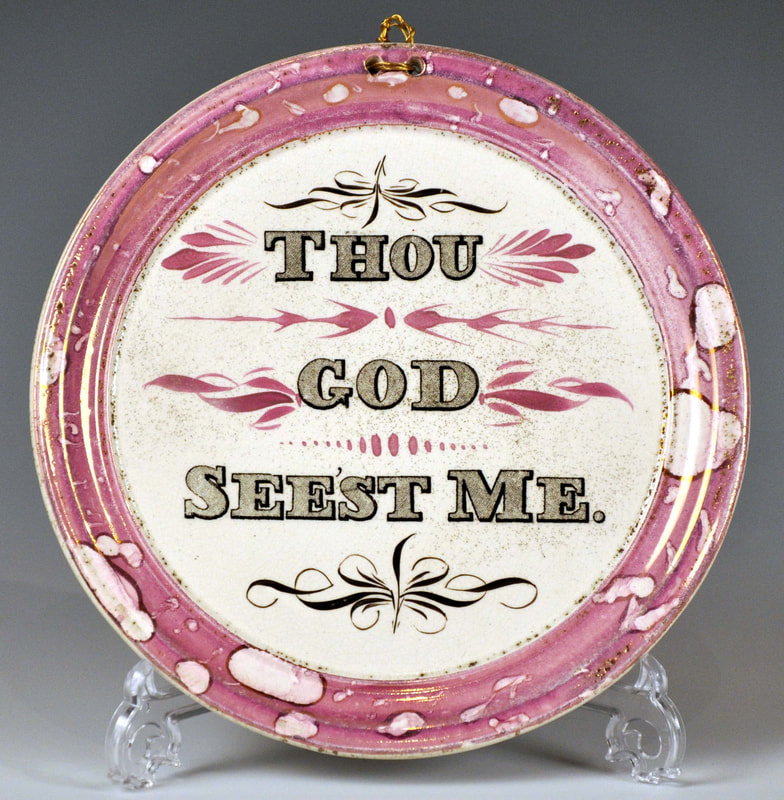
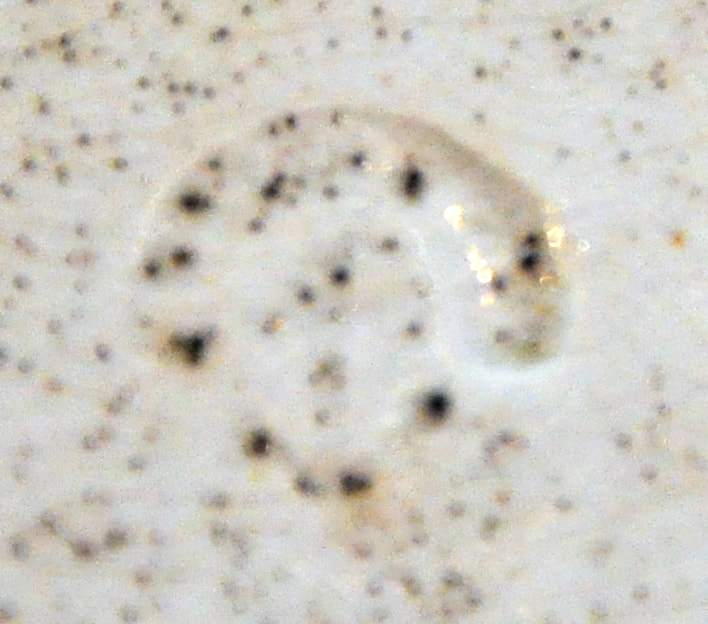
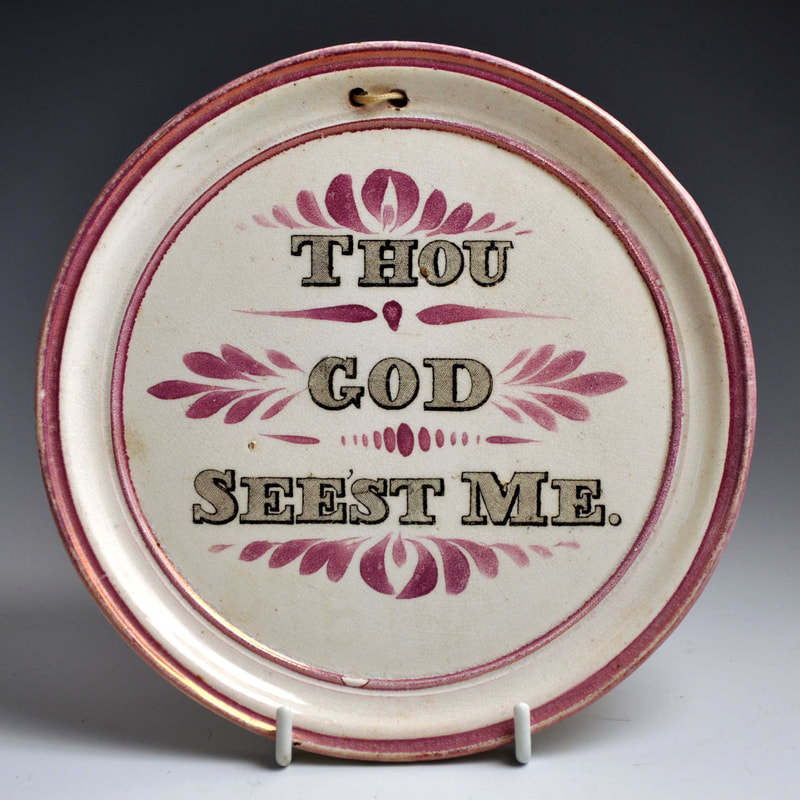
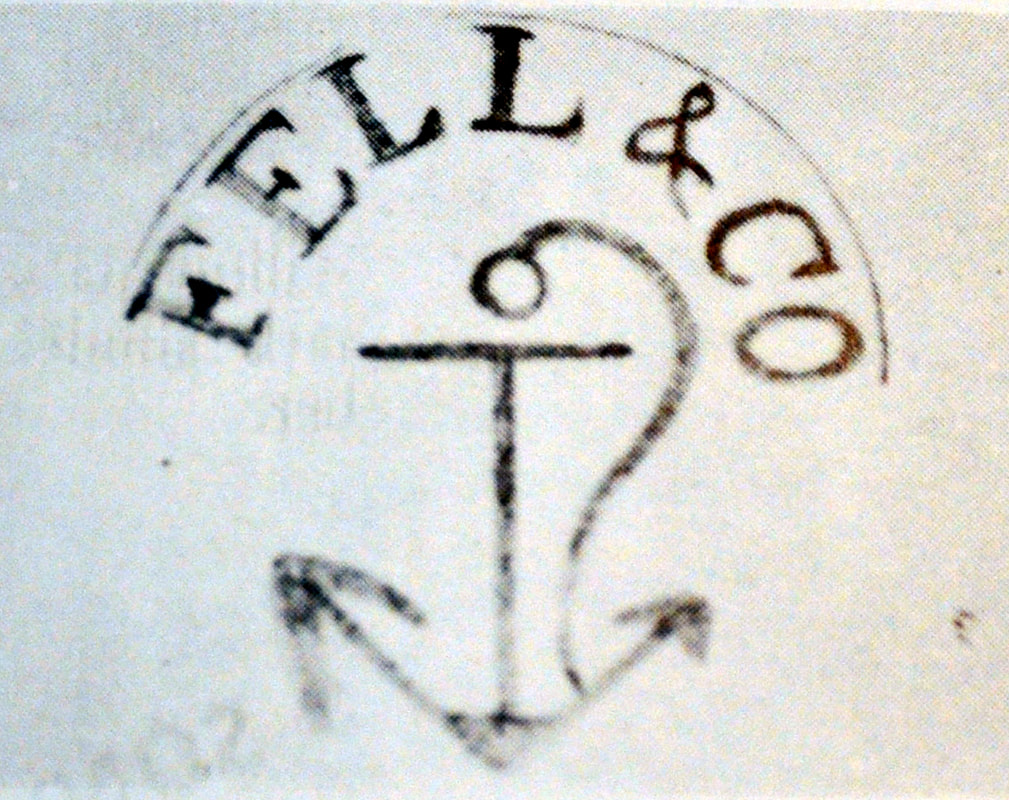
Above, two Fell plaques from around the 1830s. The first has an indistinct impressed mark. The final drawing, from R C Bell's 'Tyneside Pottery', shows how the mark should look.
Attributed to Turpin & Co, Ouseburn Pottery, and Thomas Fell & Co, Newcastle
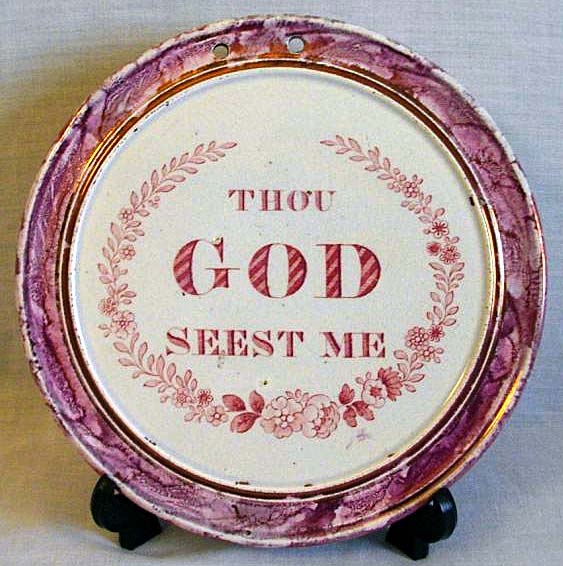
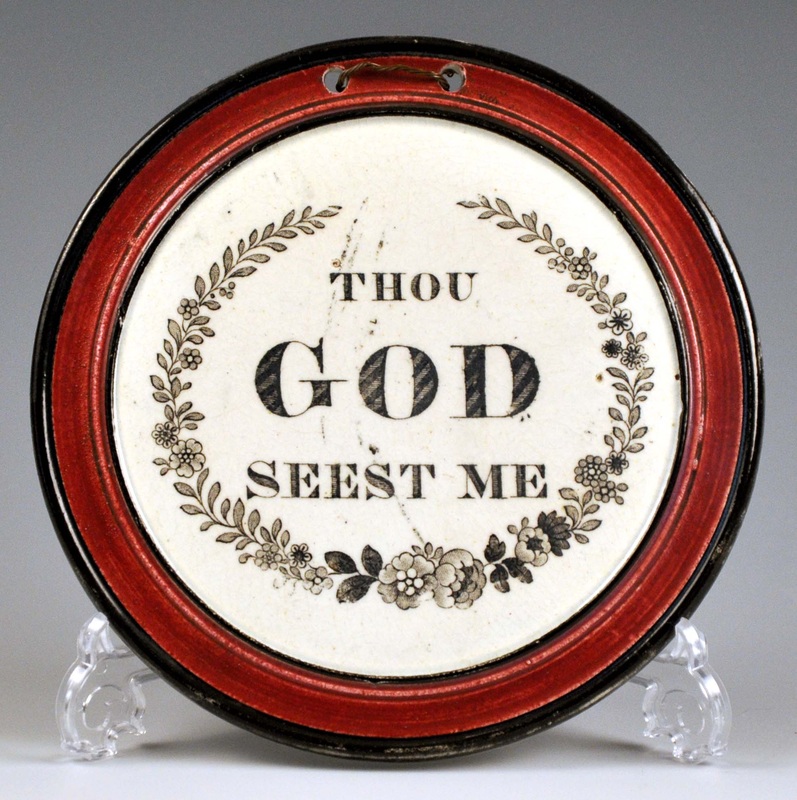

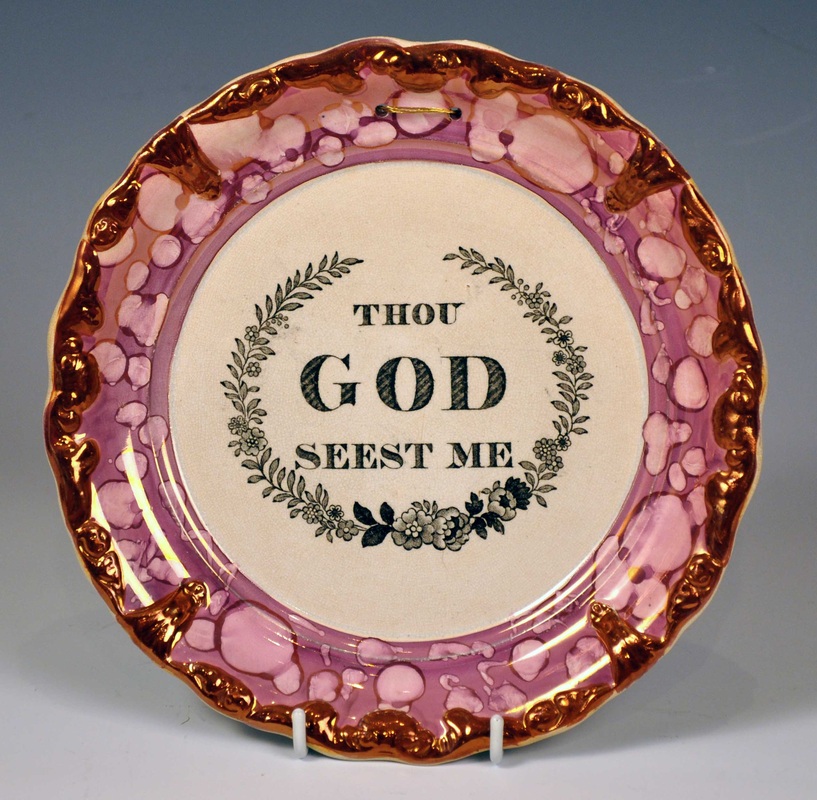
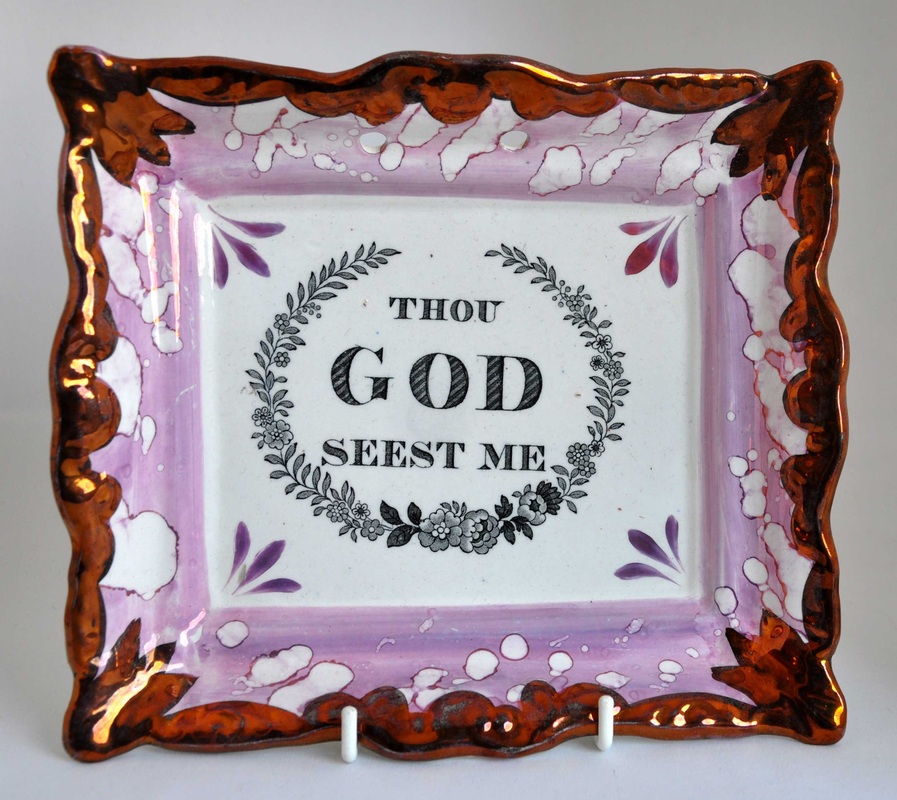
On the left is an unusual pink-transferred plaque. I've included a red-bordered plaque with an identical transfer, because it is easier to see. The wreath is rounder than that on the C. C. & Co transfer. In fact, it is very similar to the transfer in the Dixon section above, but there are many subtle differences, e.g. the 'D' in 'GOD' on the Dixon version has 7 diagonal stripes running through it, whereas on this transfer it has 4. Although unmarked, these plaques are attributed to the Ouseburn Pottery because they pair with a Prepare transfer that appears on a child's plate with the impressed mark, Turpin & Co (see here).
At some point in the 1840s the copper transfer plate moved to Fell, in Newcastle. An engraver added an all-seeing eye to the transfer. The eye looks squeezed in, and a little too small for the verse.
At some point in the 1840s the copper transfer plate moved to Fell, in Newcastle. An engraver added an all-seeing eye to the transfer. The eye looks squeezed in, and a little too small for the verse.
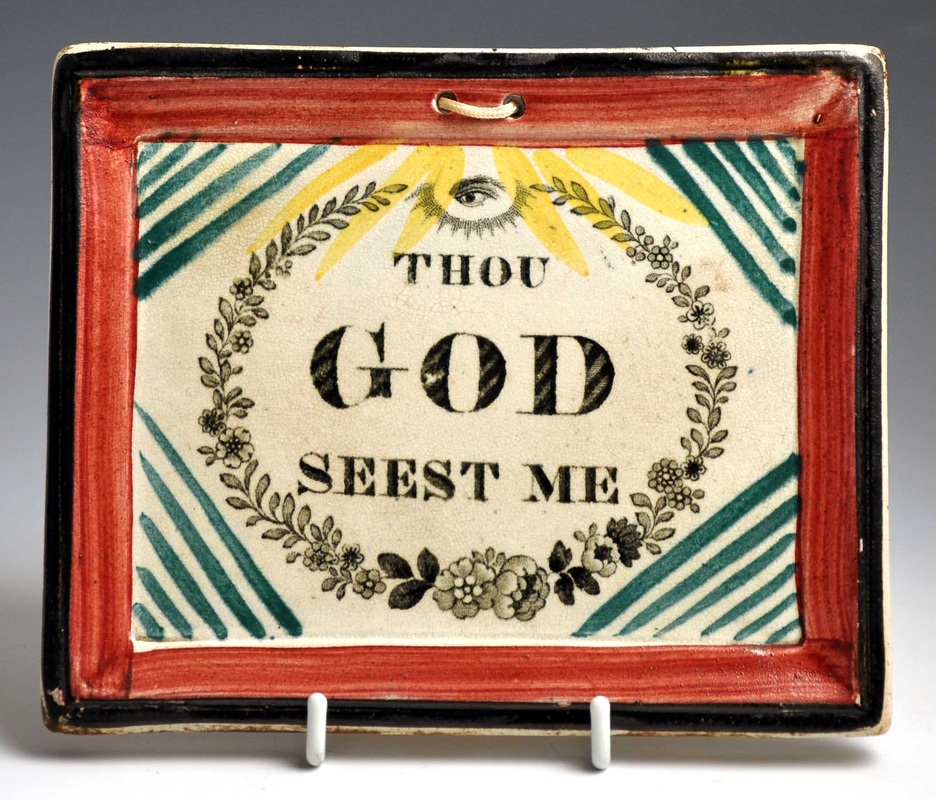

With the plaque above, Fell appears to copying its neighbour, Maling. The plaque is decorated with yellow enamel rays of light radiating from the eye, similar to those found on early Maling plaques.
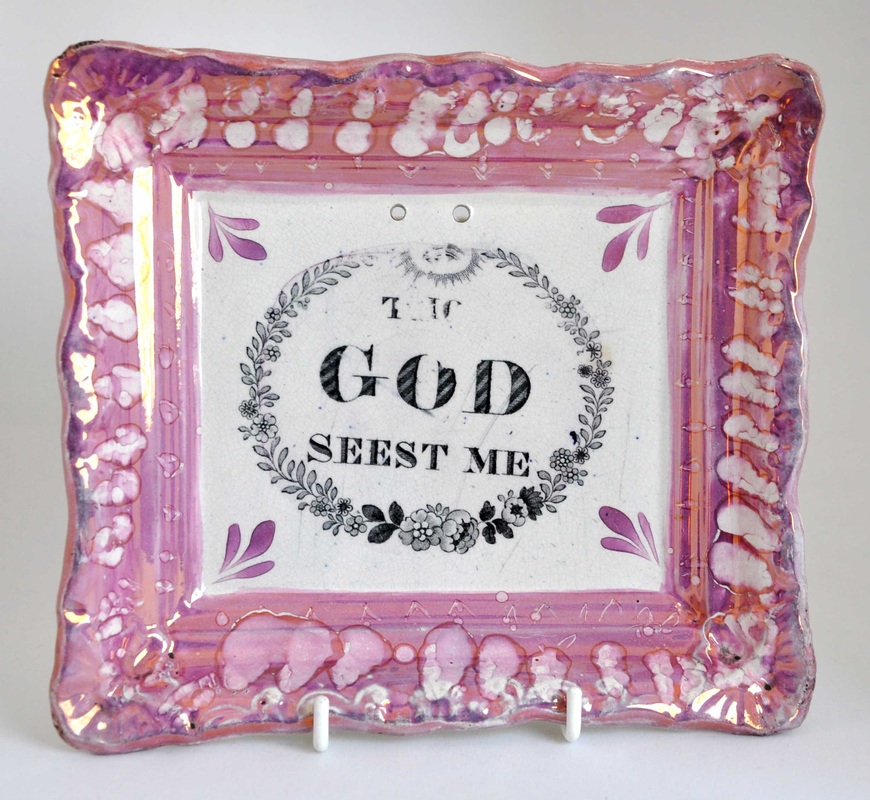
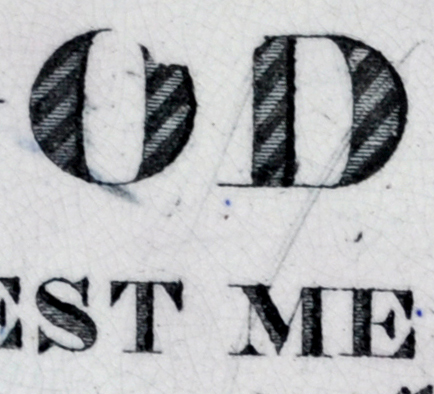
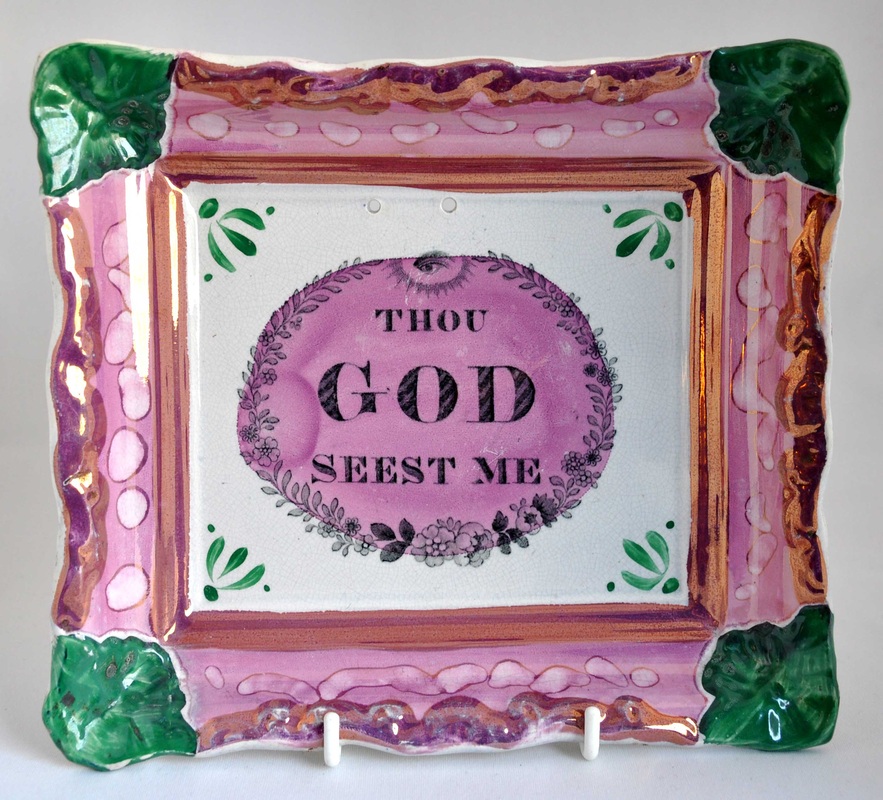
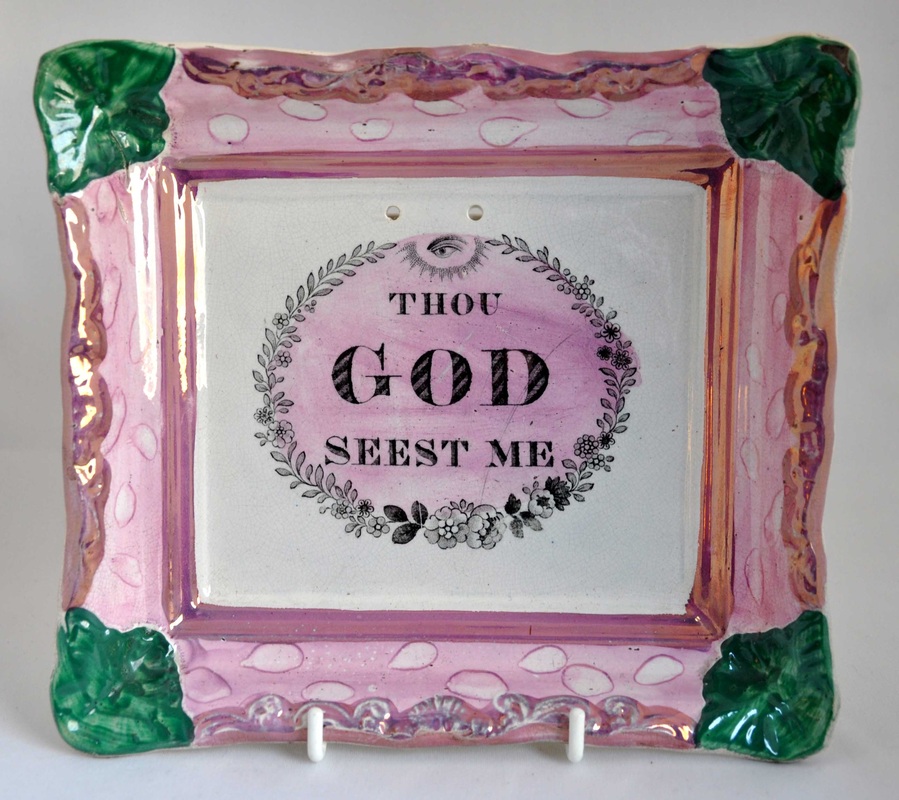
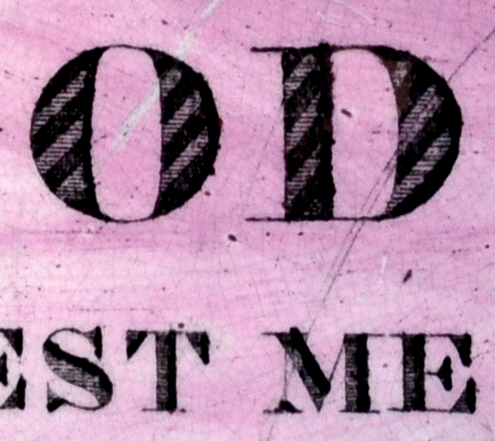

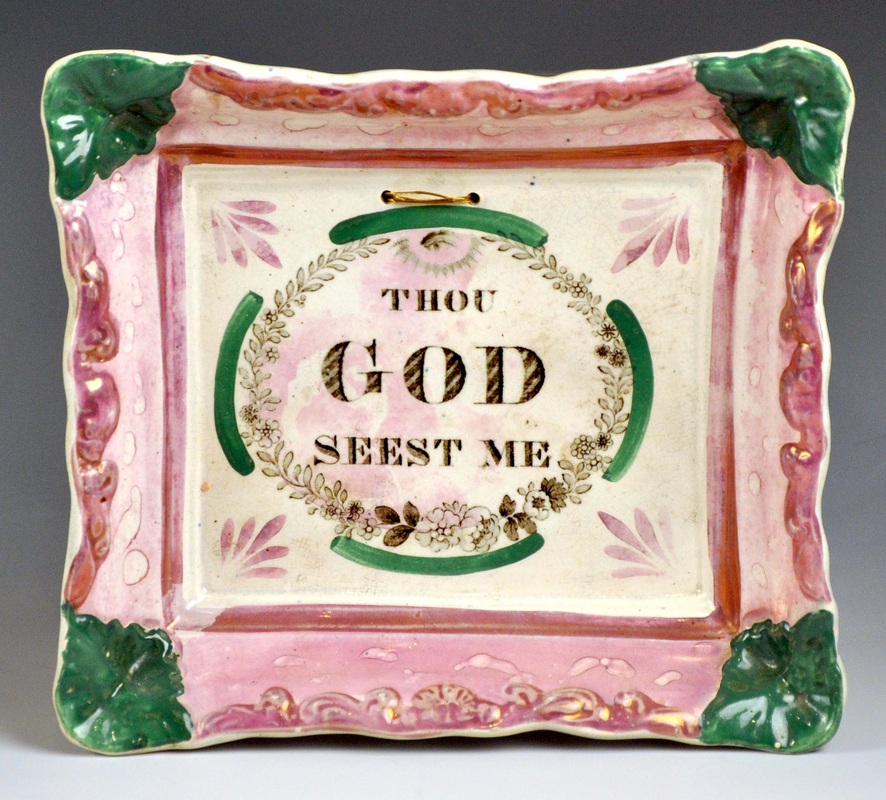
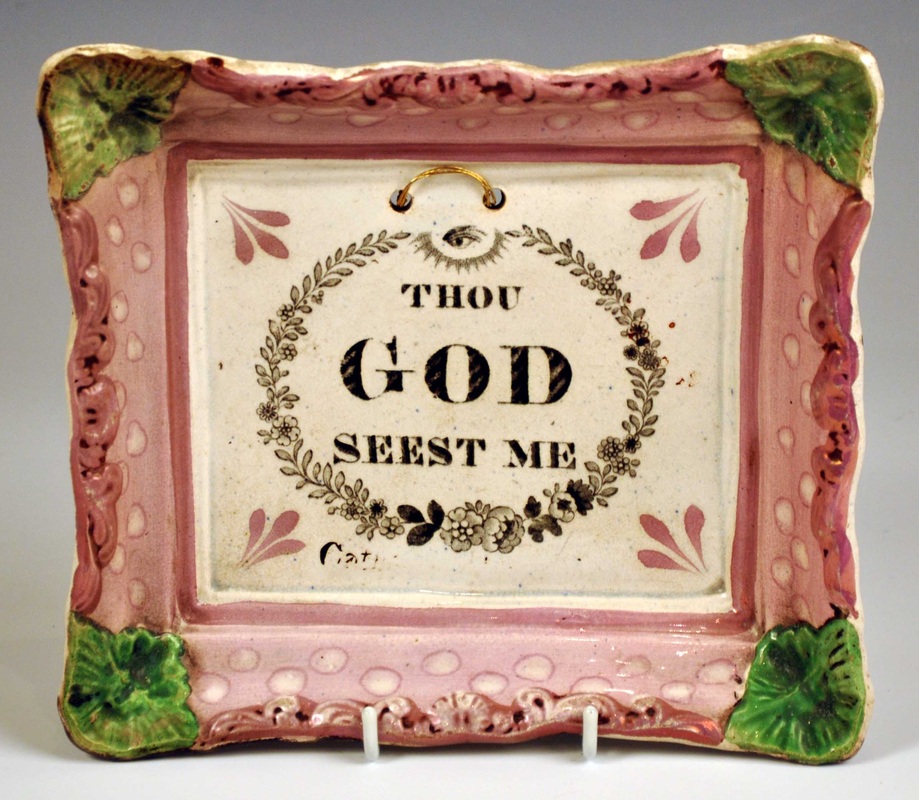
The same transfer appears on plaques with green corners. The moulds of the six plaques above are similar to plaques with Maling marks. However, the transfer appears on marked Fell items (see below), and unlike Maling, the hanging holes are pierced through the central rectangle of the plaque, rather than through the lustre border. This appears to be a feature peculiar to Fell. The final plaque had a hand-painted inscription of which traces of only the first three letters remain 'Cat...'. The six plaques above and the plaque below share the same fault: a double scratch that runs through the 'D' of 'GOD' and a small nick above the letter 'E' in 'ME'.
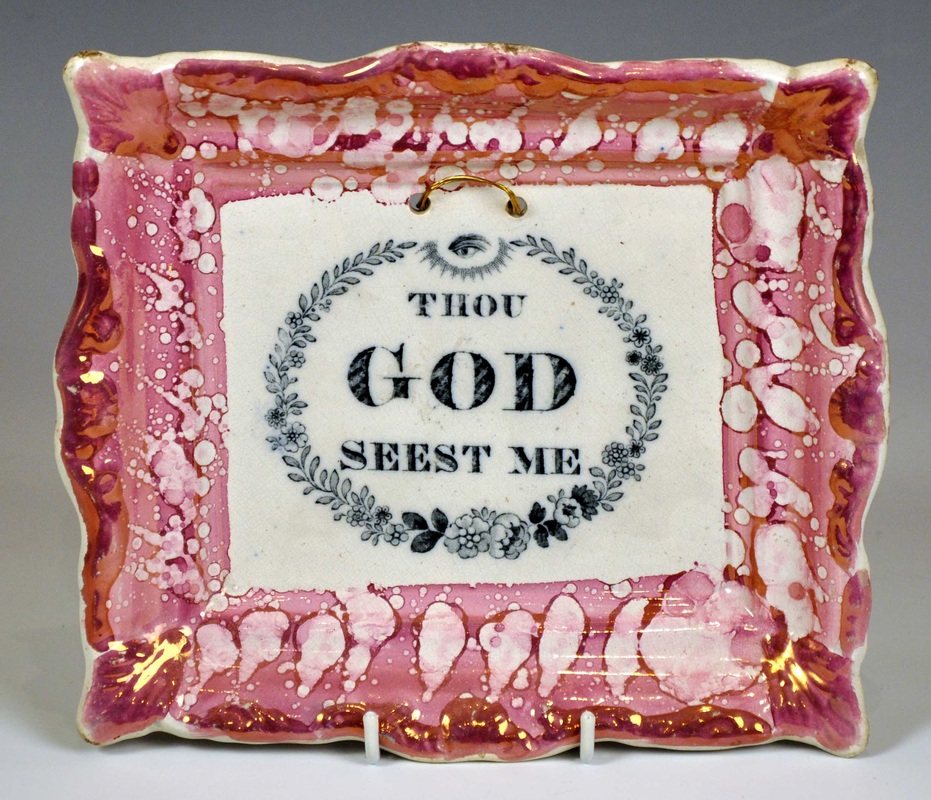
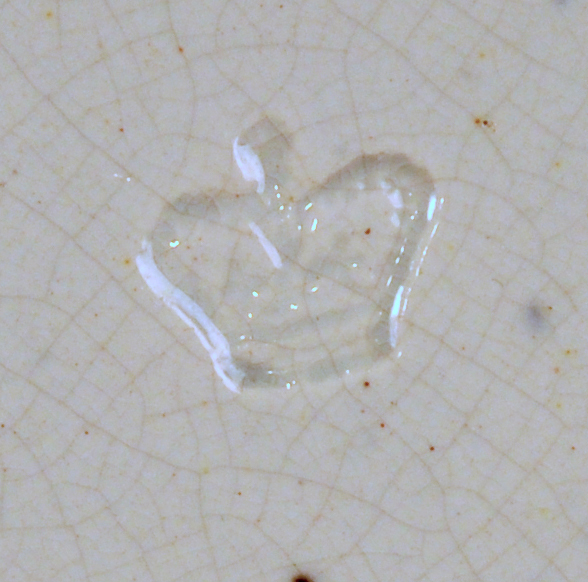
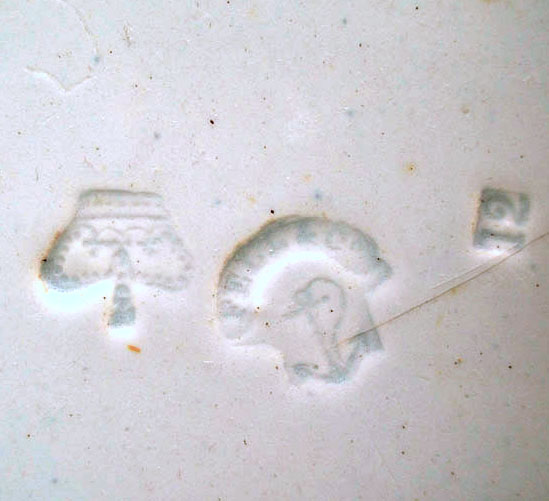
The plaque above (which also has the scratch through the letter 'D') has the crown impressed mark shown beside it. This mark appears on plates with the Fell & Co anchor impress. The right photo shows this combination of marks on the back of a willow pattern plate.
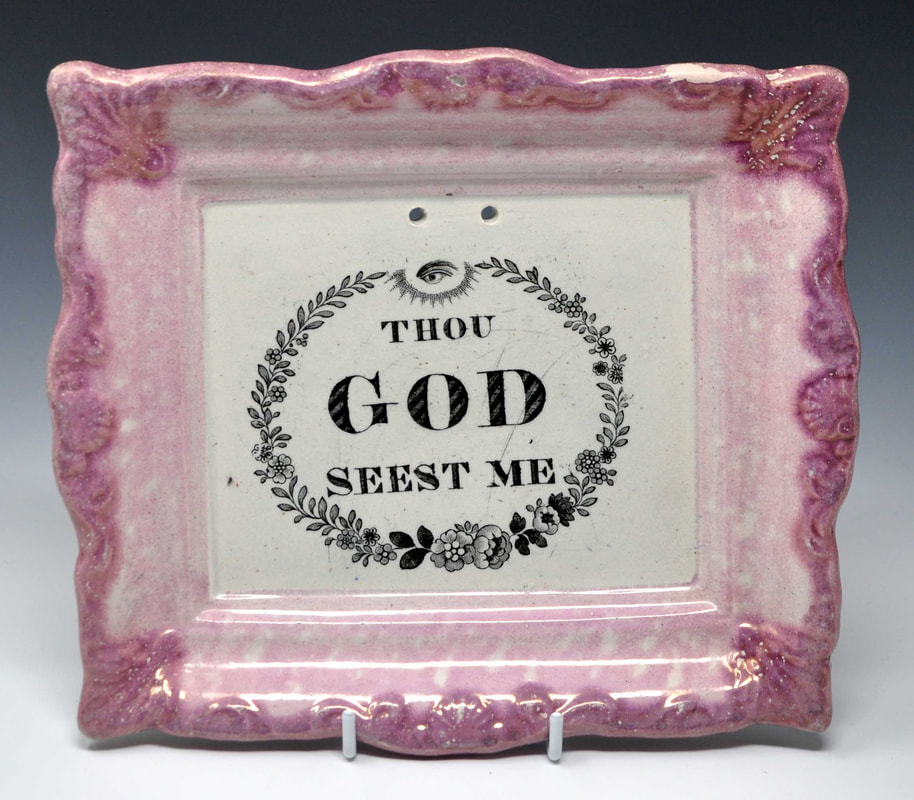
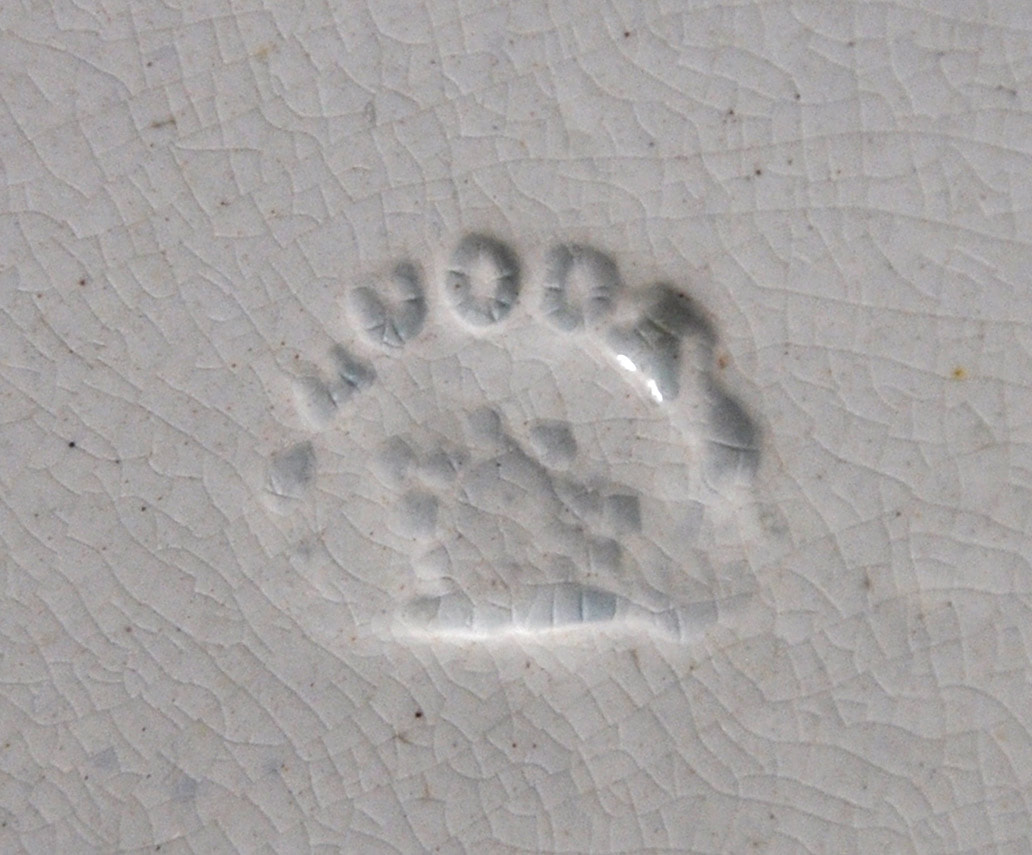
Interestingly, the copper plate (scratches and all) appears to have eventually made it to Staffordshire, where it appears on a plaque with a mark for Samuel Alcock & Co. The impressed mark shows a beehive (a common symbol for industry) around which bees are flying. To date, the information I've found suggests that Alcock & Co disbanded in 1859.
Attributed to Thomas Fell or Carr and Patton
Click here to read about the attribution of these plaques with very neat green-flecked enamel decoration.
Stockton Pottery of Thomas Ainsworth
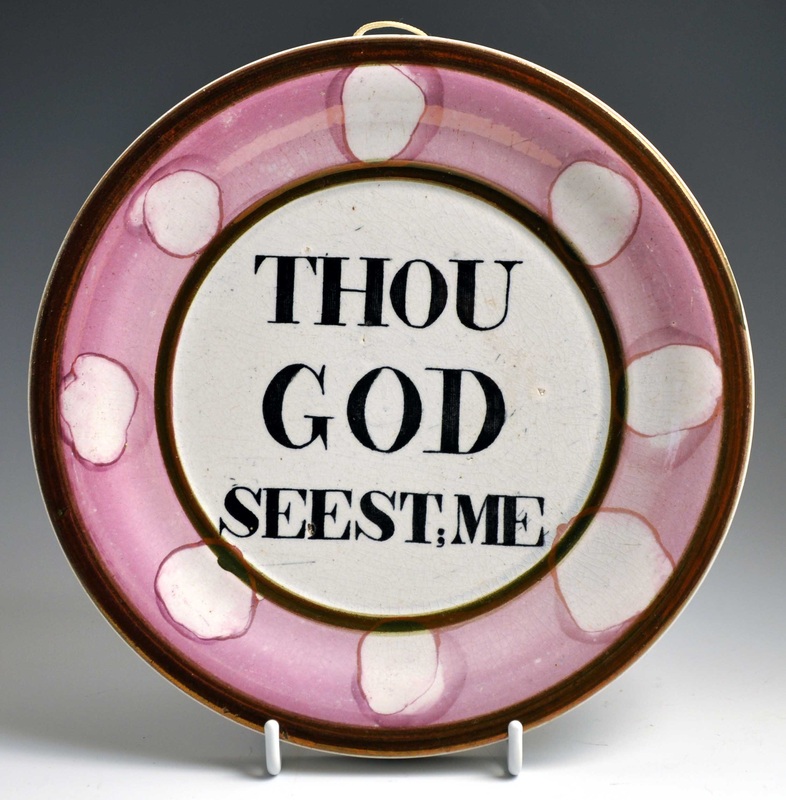
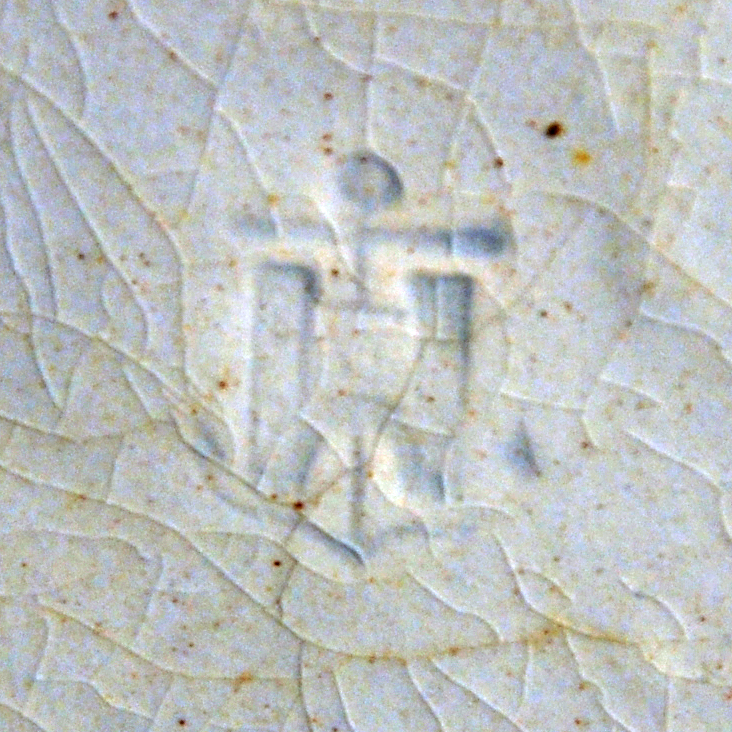

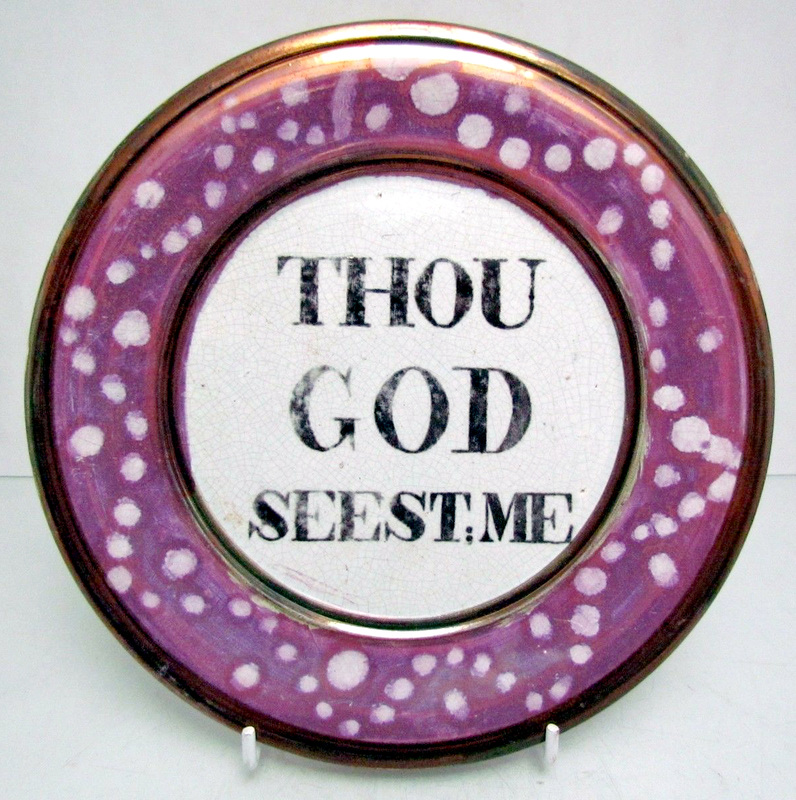
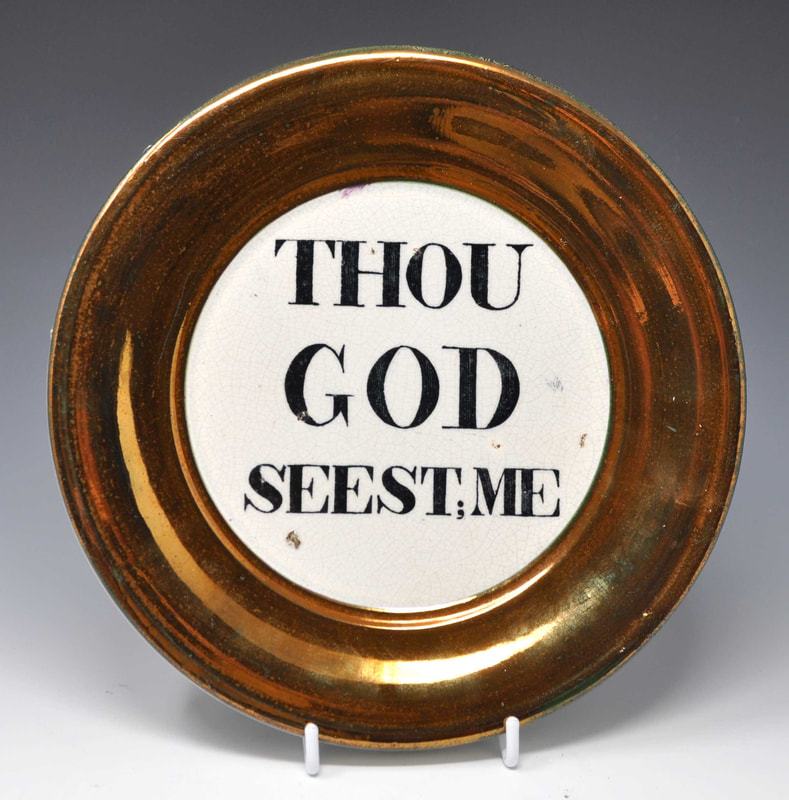
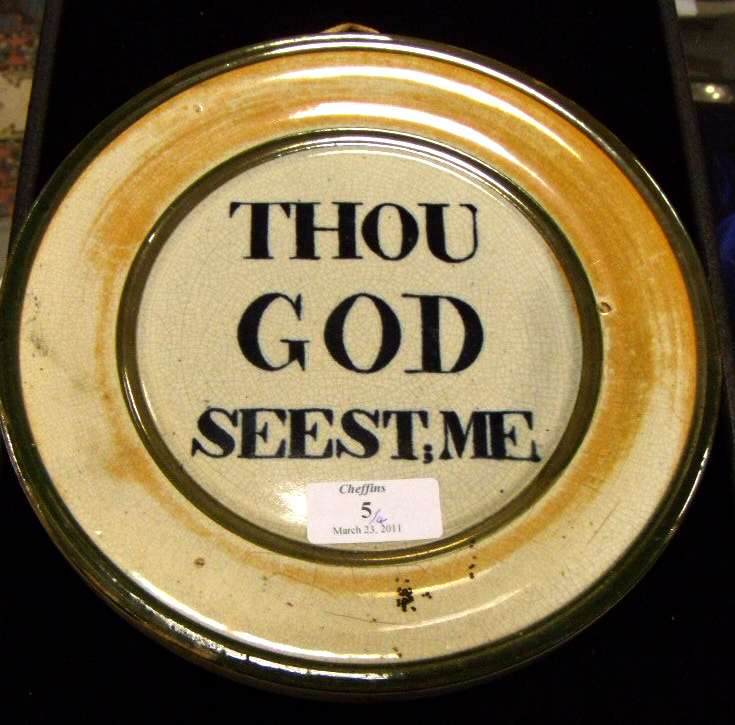
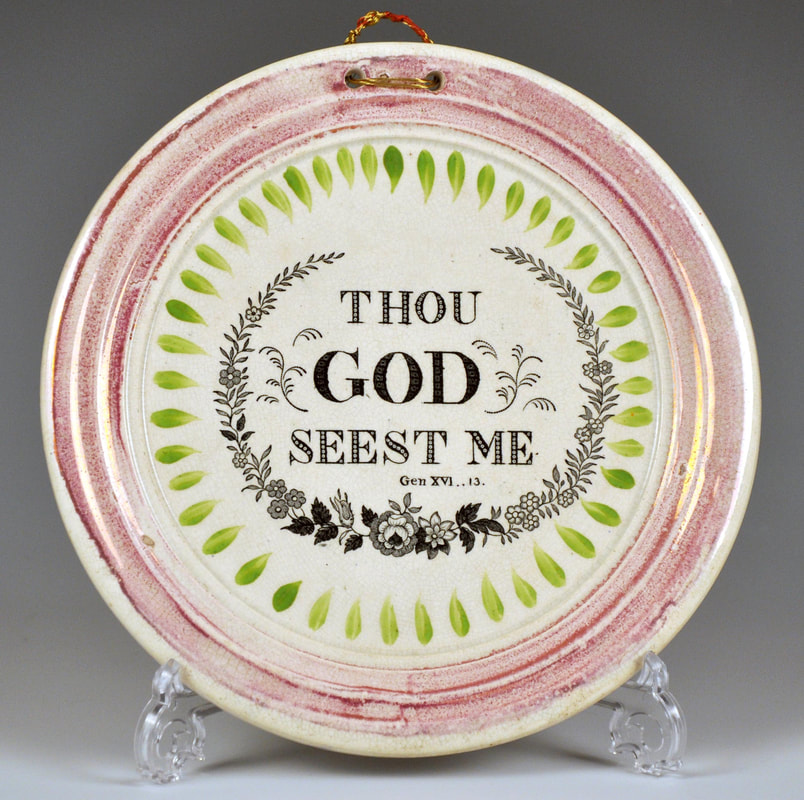
The first and last plaques with an impressed mark with the Stockton coat of arms – an anchor and cable impaling a castle - used by the Stockton Pottery of Thomas Ainsworth. The pottery was founded in the 1840s and closed in 1901. The second plaque has the 'slug trail' decoration found on other items, jugs etc, from the Stockton Pottery. The bottom centre plaque is unusual in that it has no pink lustre decoration - just a wide band of copper lustre. The bottom right orange plaque was made post 1860.