Mate Sound the Pump...
  • Home
    • Plaque dates
    • Dixon partnerships
    • North Shields Pottery partnerships
    • London impressed mark
  • Early plaques (pre-1845)
    • C, C & Co
    • Carr
    • Dixon
    • Fell
    • Maling (c1817-30)
    • Maling attr (c1830-45)
    • Moore & Co
    • Newbottle
    • Scott
    • Sheriff Hill
    • Staffordshire
    • Tyneside
    • Wallace
    • Unidentified
    • Relief plaques
  • Religious
    • Prepare to meet thy god – 1
    • Prepare to meet thy god – 2
    • Thou god seest me
    • Praise ye the lord
    • Behold god...
    • For/But man dieth...
    • Rejoice in the lord
    • God is love
    • Other scripture verses
    • John Wesley
    • Adam Clarke
    • Charles Wesley hymns
  • Maritime
    • May peace and plenty
    • Common ships
    • Less common ships
    • Rare ships
    • Maritime verses
    • Mariner's arms/compass
    • Other maritime
  • Miscellaneous
    • Plaques with hand-painted text
    • Poetic verses
    • Emblems and armorials
    • Portraits
    • Cast iron bridge of the Wear
    • Landscapes
    • The Bottle
    • Other pictorial plaques
  • Blog
    • Fake over-painted items
    • Reproductions
    • References
    • Links
  • Exchange

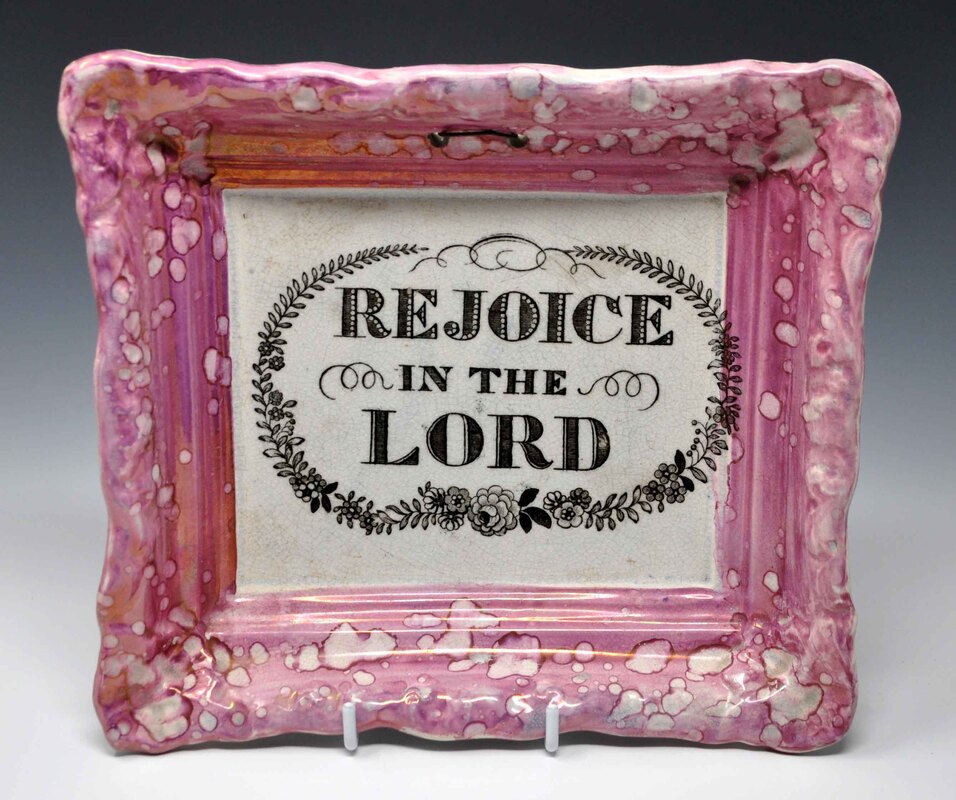
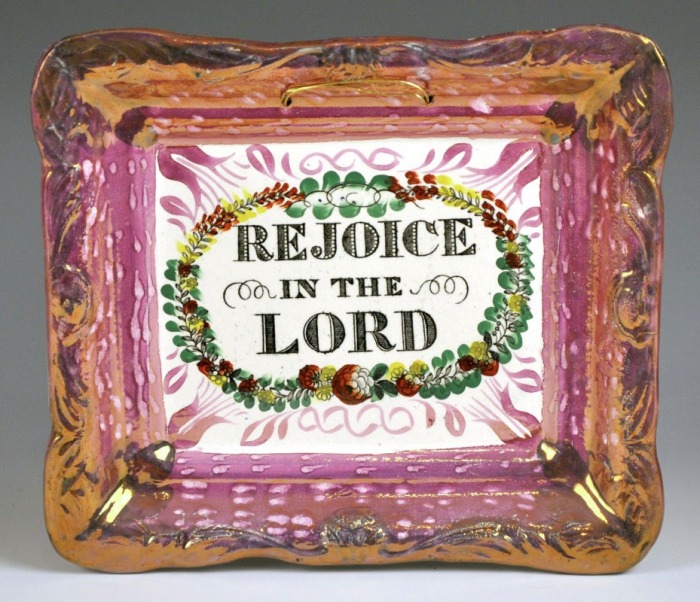
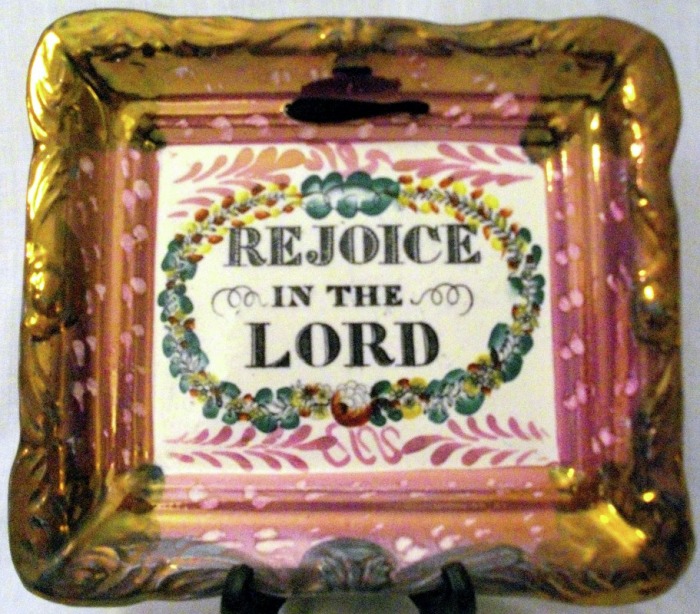
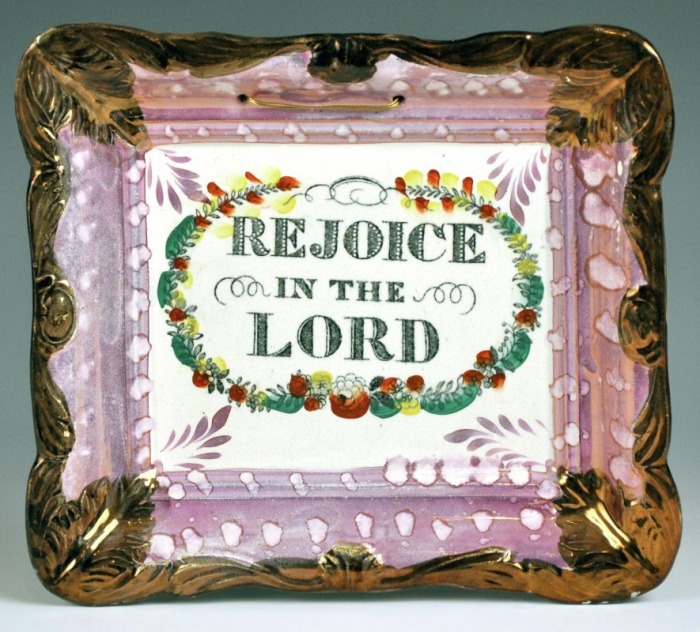
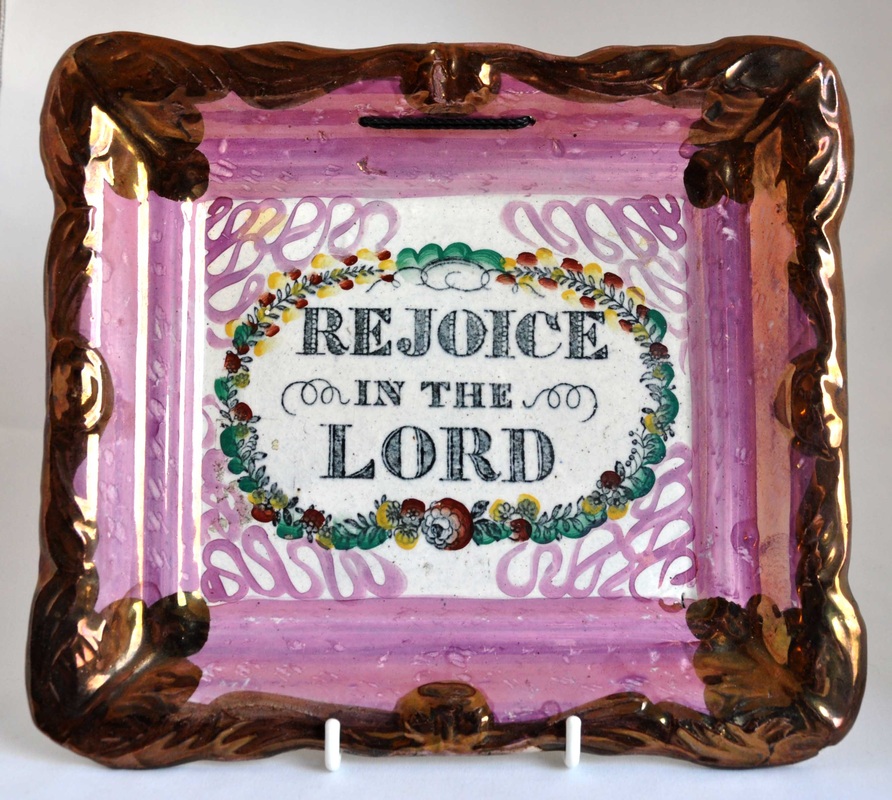
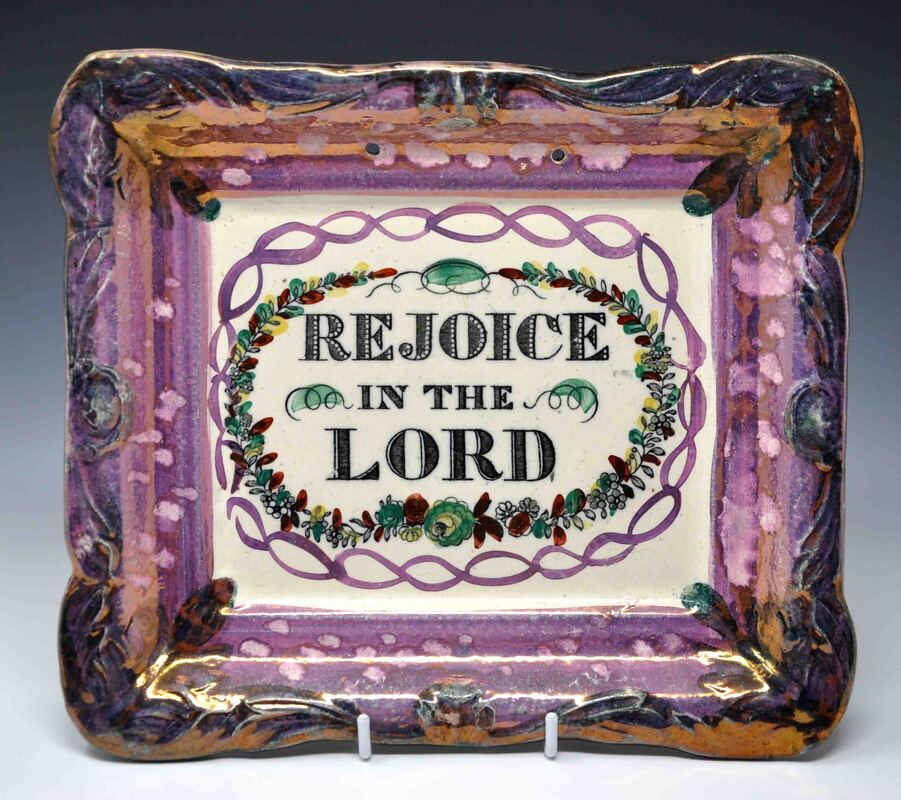
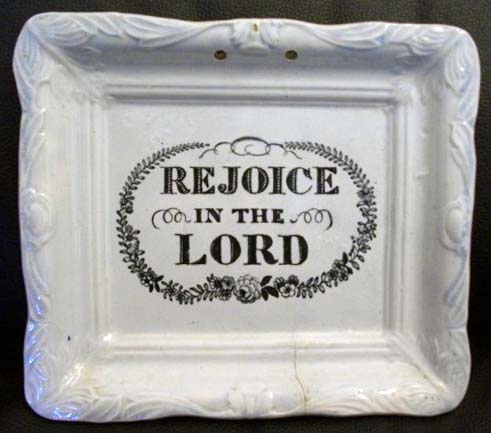
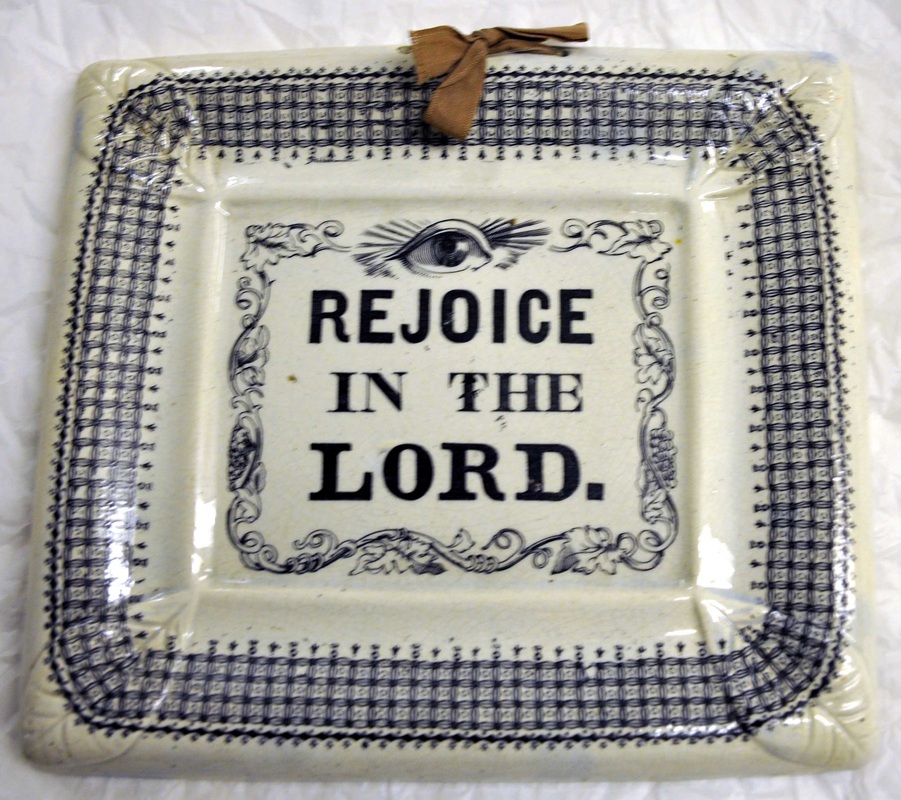
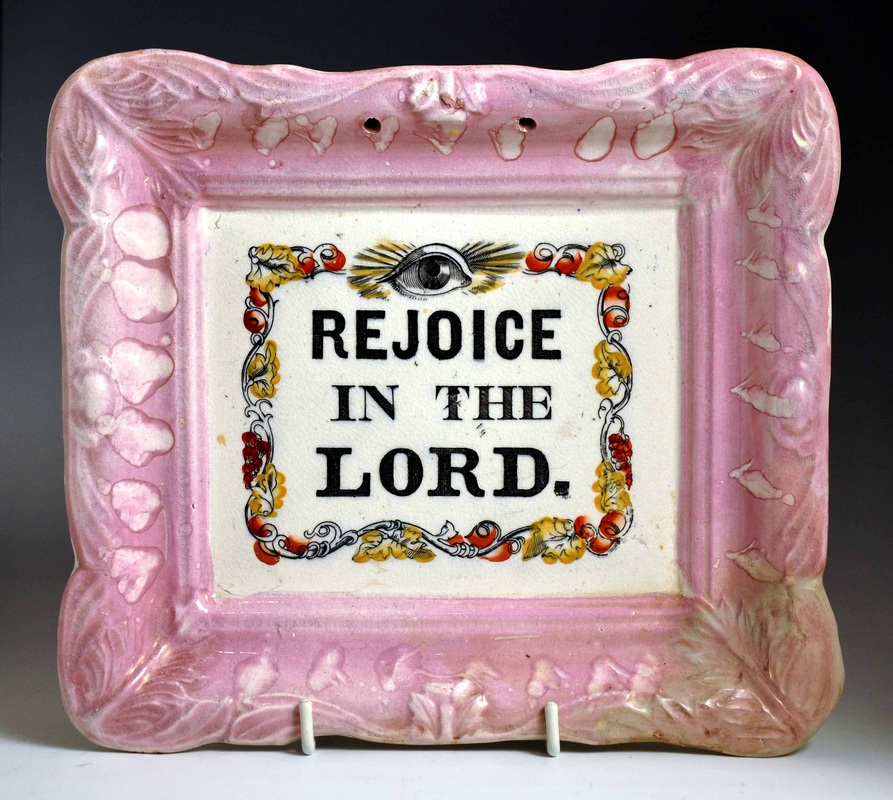
Rejoice in the lord

For an overview of pink lustre plaques with religious subjects, click on the religious heading above.

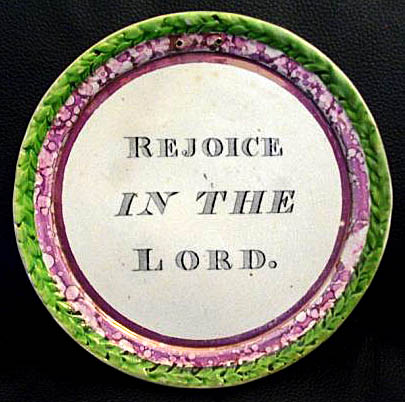
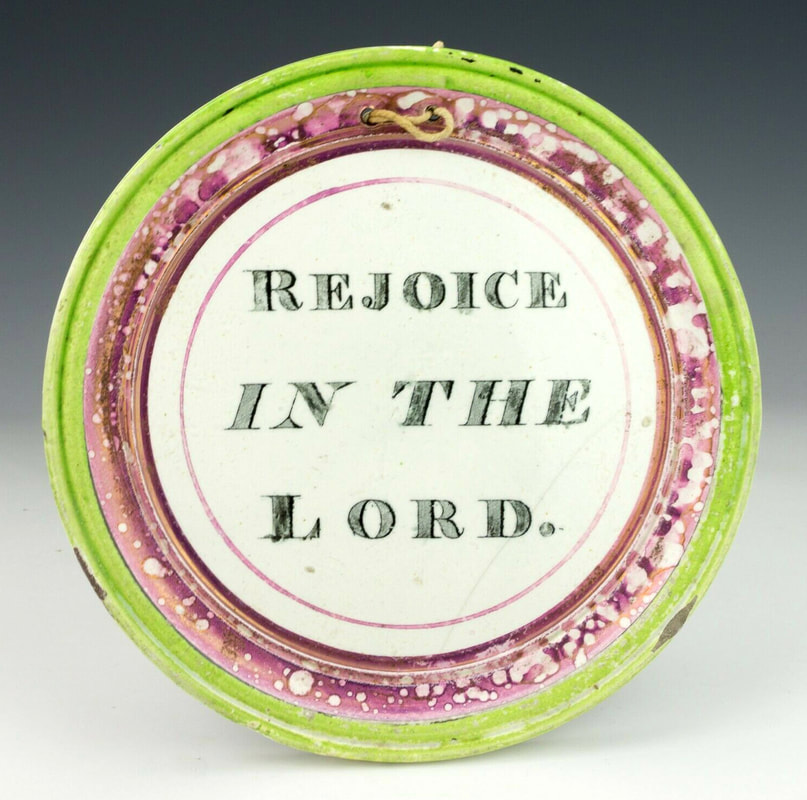
Attributed to Maling, Newcastle

These plaques, although unmarked, are of forms associated with Maling. See the Maling plaques page for other circular, leaf‐bordered plaques.
Back to top

Attributed to John Carr, Low Lights Pottery, North Shields
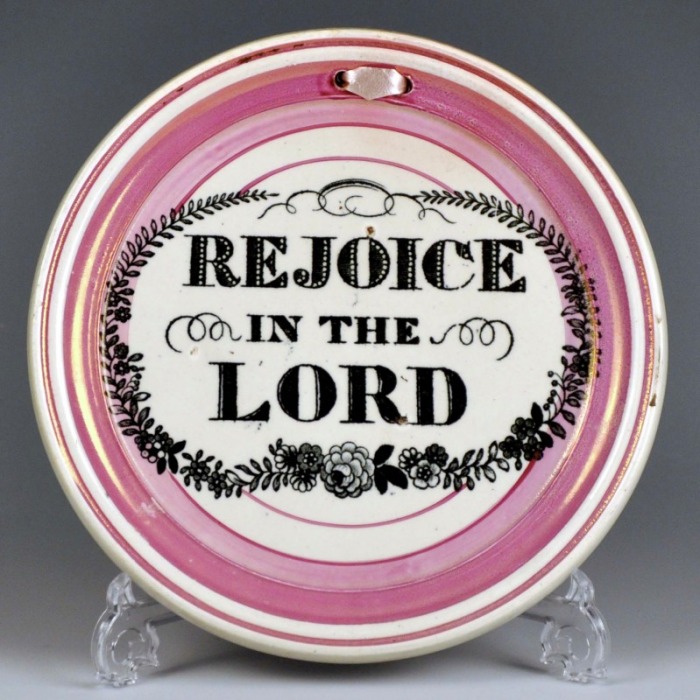
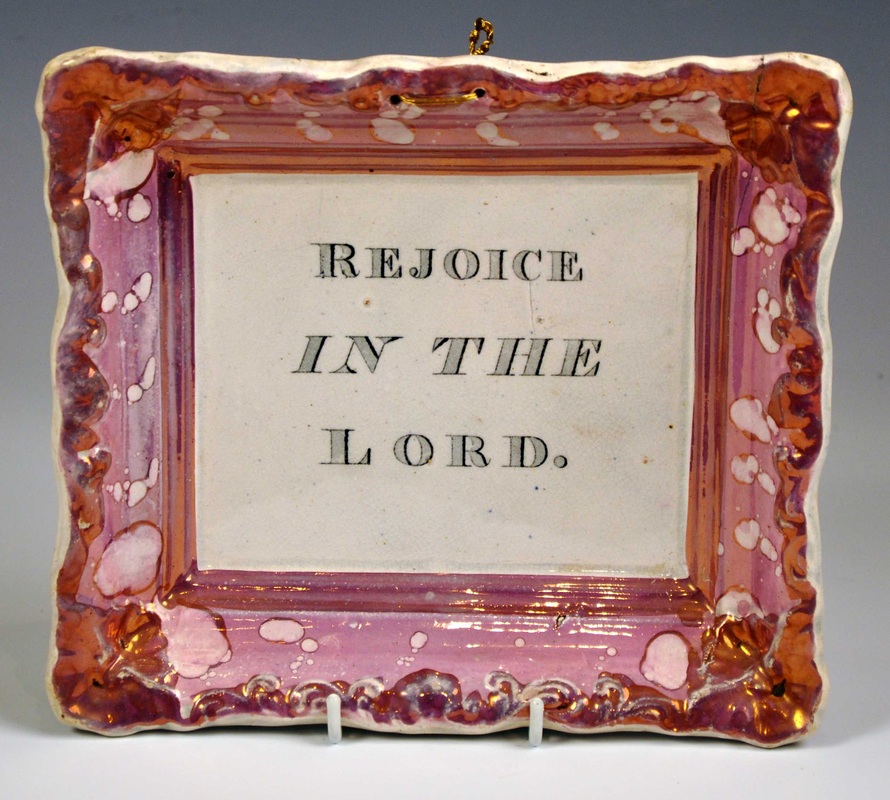
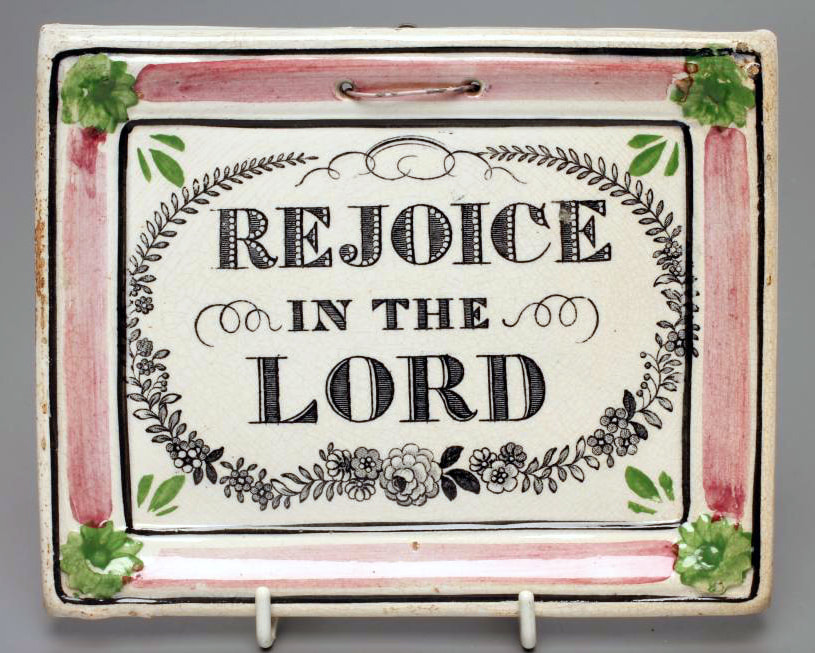
The first plaque comes from the same transfer plate as the large rectangular plaques attributed to John Carr & Sons, c1860. The circular plaque was likely made in the 1830s under the partnership of Cornfoot, Carr & Co, 1832–18. Click here to read more about the dates of the North Shields Pottery partnerships.
Back to top

Albion Pottery, Newcastle

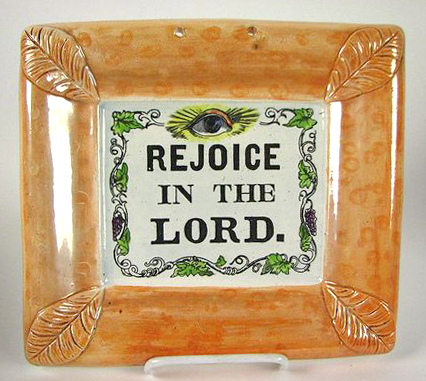
The orange plaque with impressed initials 'G & A' for Galloway and Atkinson, Albion Pottery, 1864.
Back to top
Proudly powered by Weebly