Tyneside plaques
Large thin circular plaques
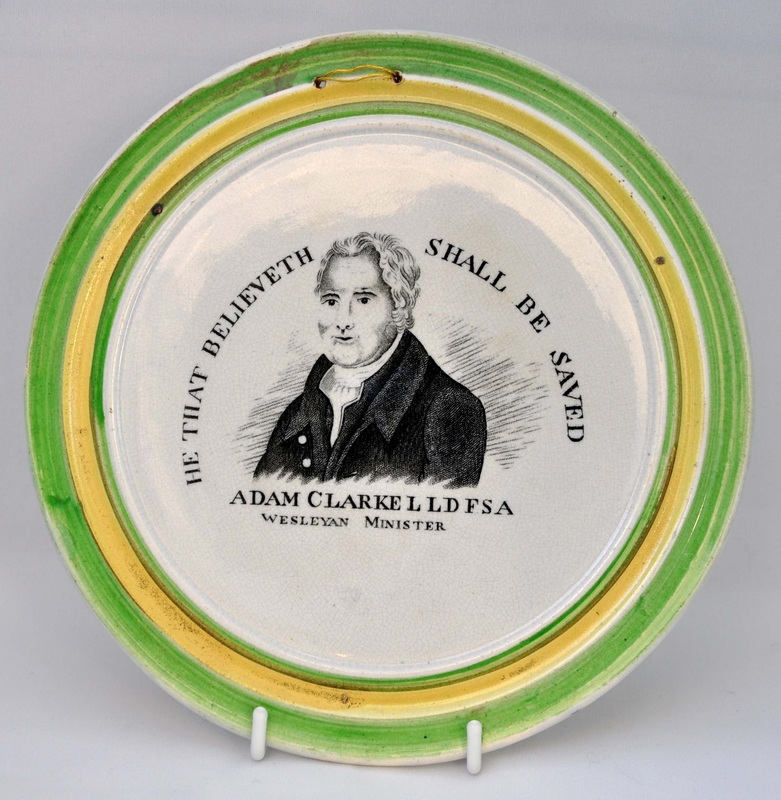
The plaque form below is very distinctive. It is larger than average – the Adam Clarke below is 190mm in diameter compared with 185mm for the 'Maling' leaf-bordered plaques. It is also very thin (5mm). The clay body is a creamy off-white with a speckled appearance.
Adam Clarke
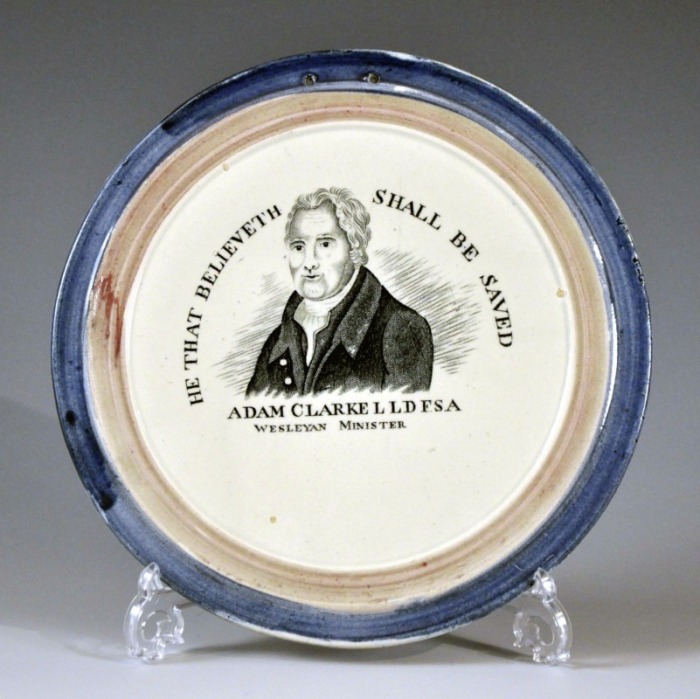
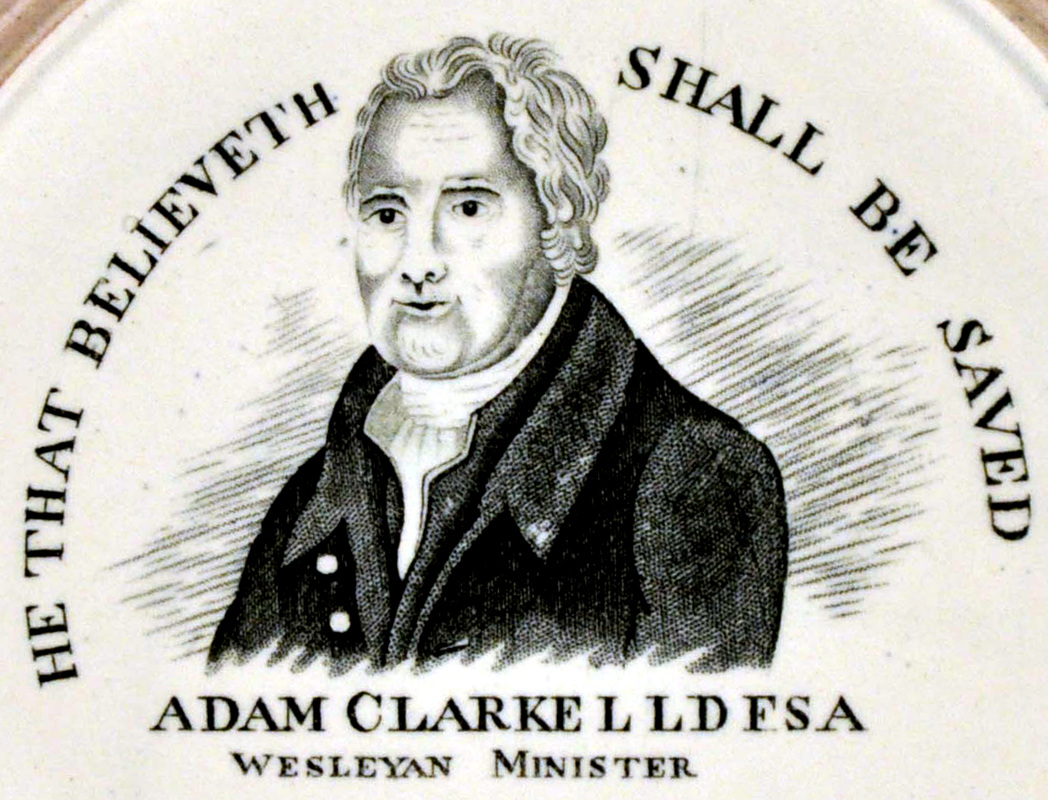
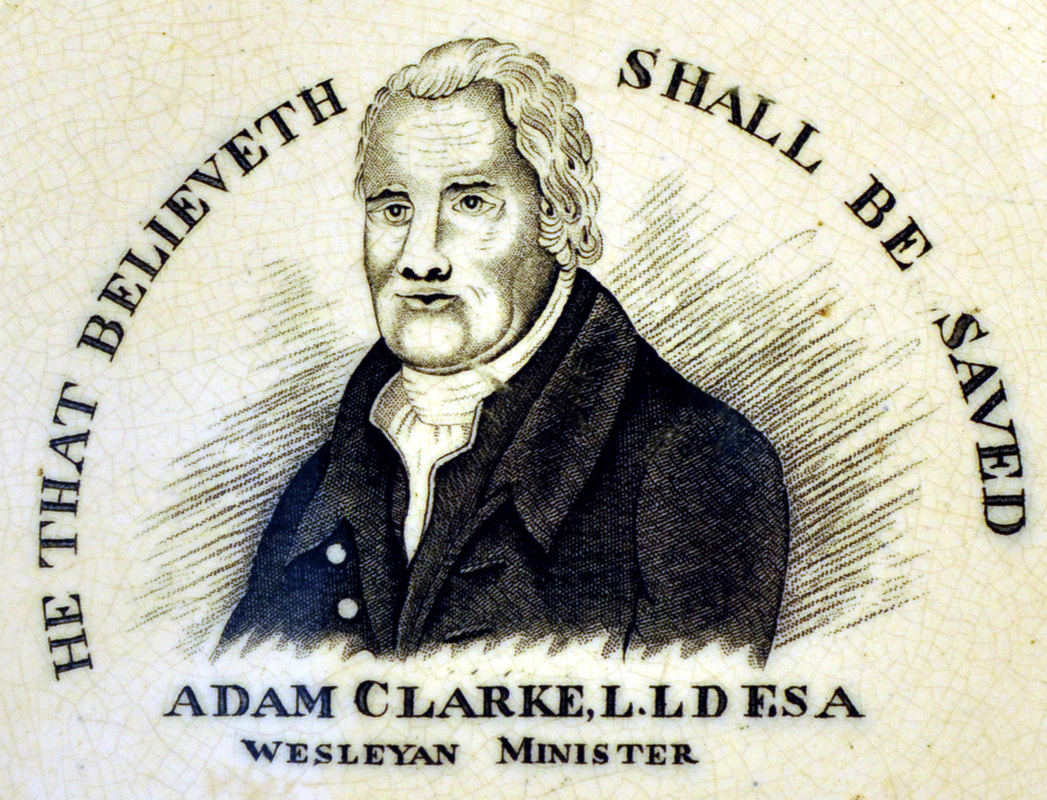
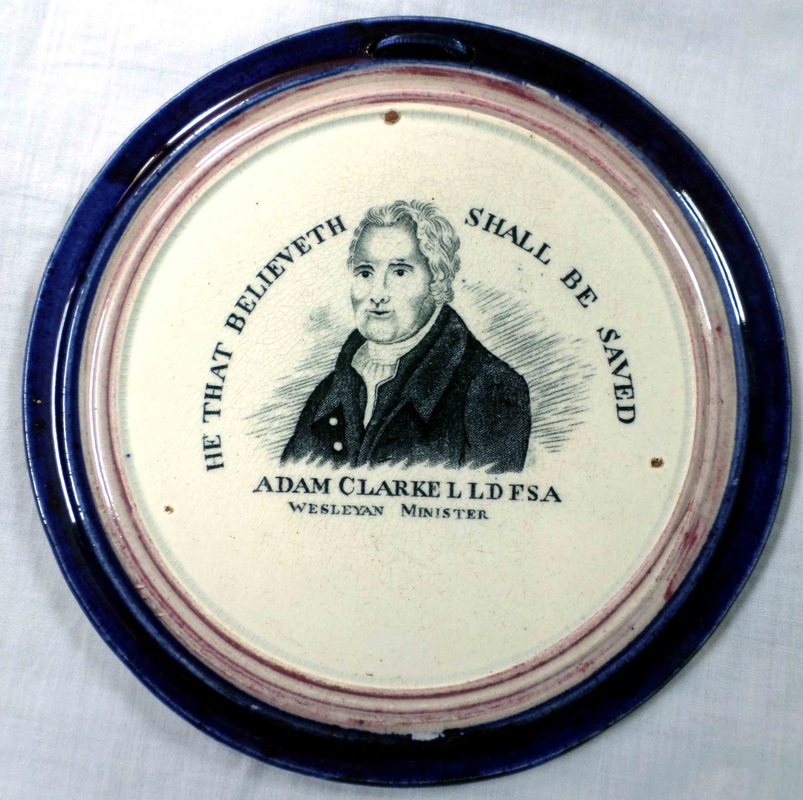
The transfers on these plaques appear to be copies of the transfers I've attributed to Maling. Compare the plaque above (centre detail) with the transfer from a Maling-attributed leaf-bordered plaque (right detail). The drawing of Clarke's head and hair is very different. In the Maling version (right), the heavy full stop after 'F' in 'FSA' almost makes it look like a letter 'E'. In contrast 'LLD' and 'FSA' on the 'non-Maling' plaque (centre) aren't punctuated. The diagonal hatching to Clarke's right, continues lower on the 'Maling' version. Compare, also, the jagged edge on the bottom of Clarke's jacket.

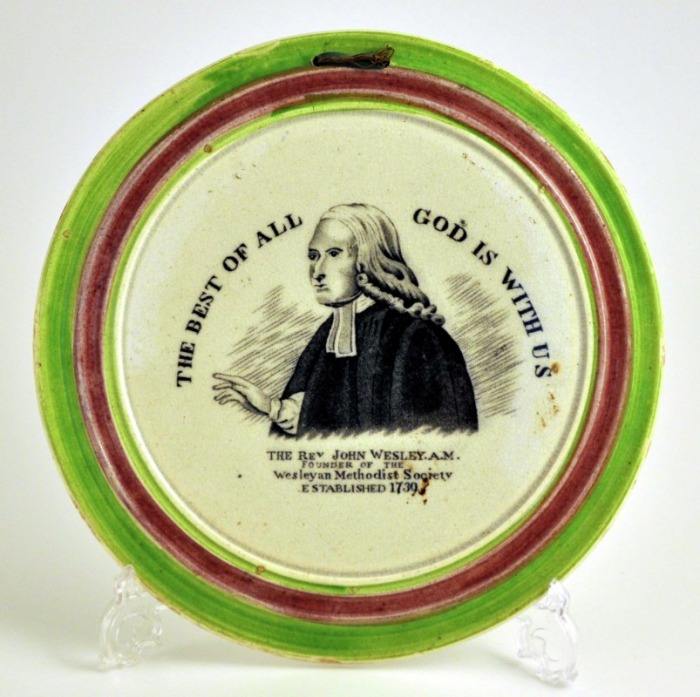
John Wesley
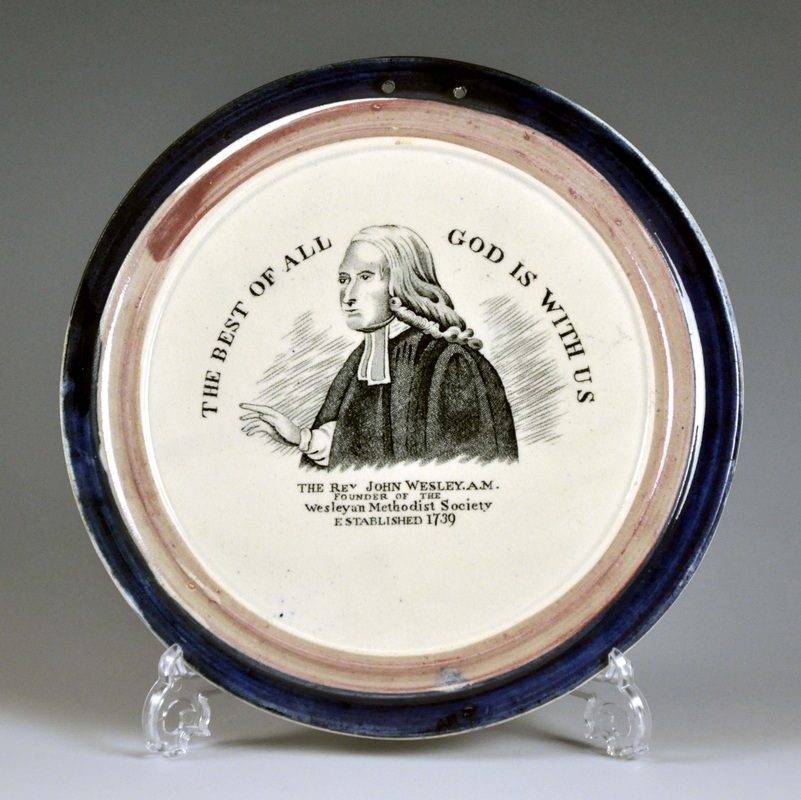
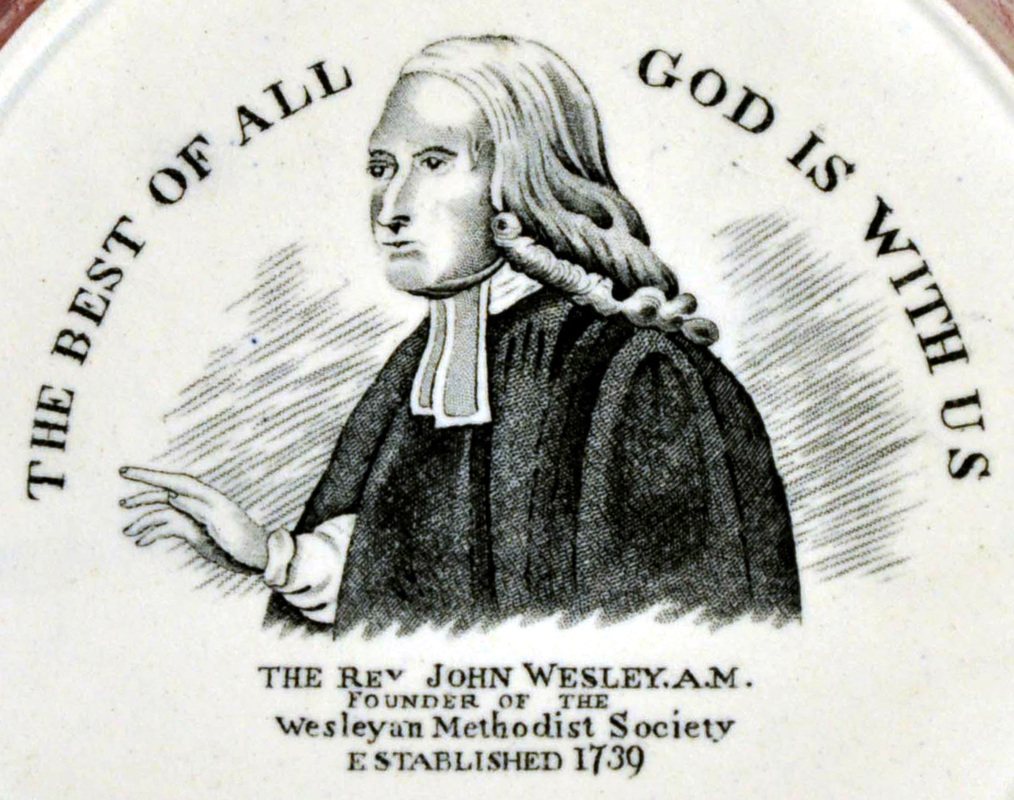

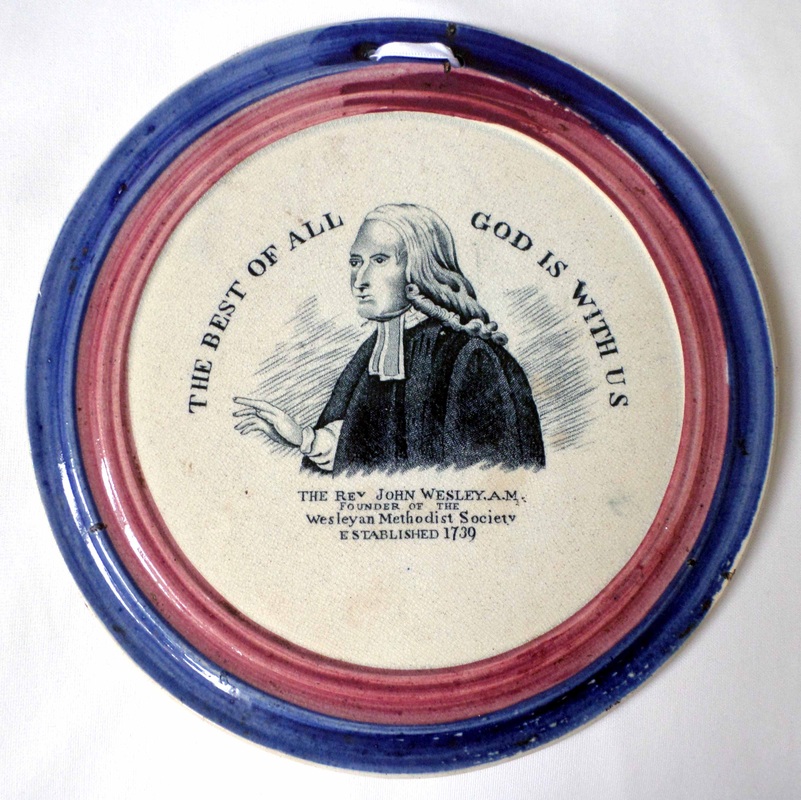
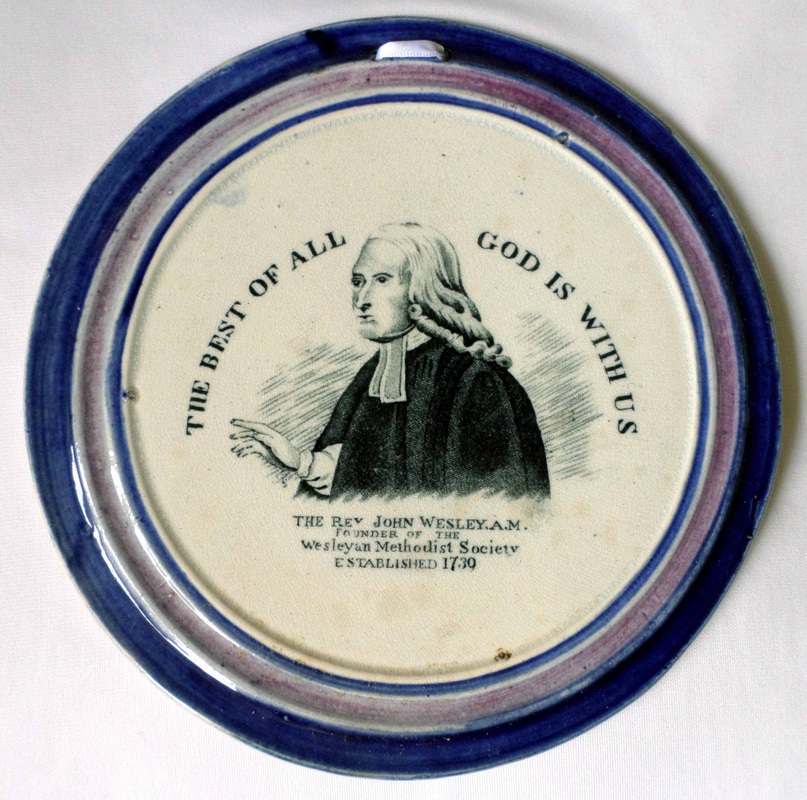
Note that unlike the 'Maling' Wesley (right detail), there is no full stop on these plaques after the date '1739'.

Verse plaques

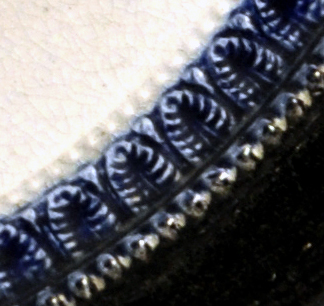

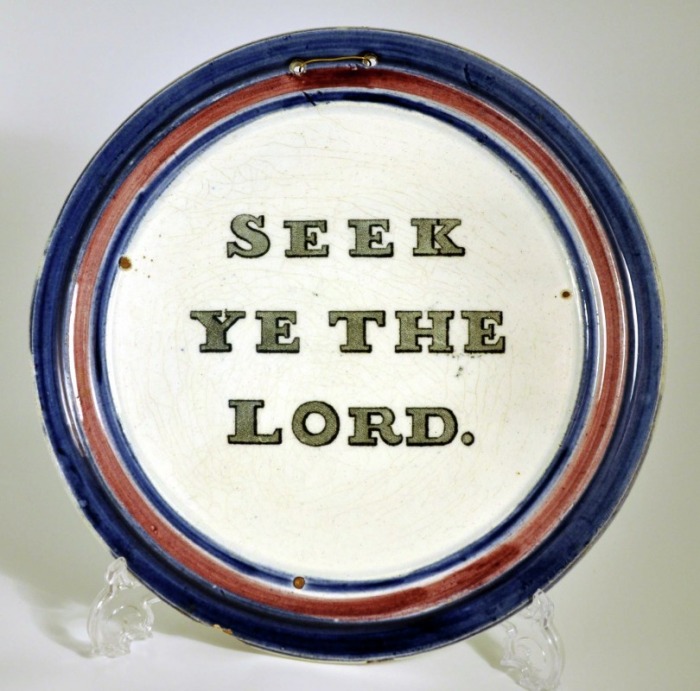
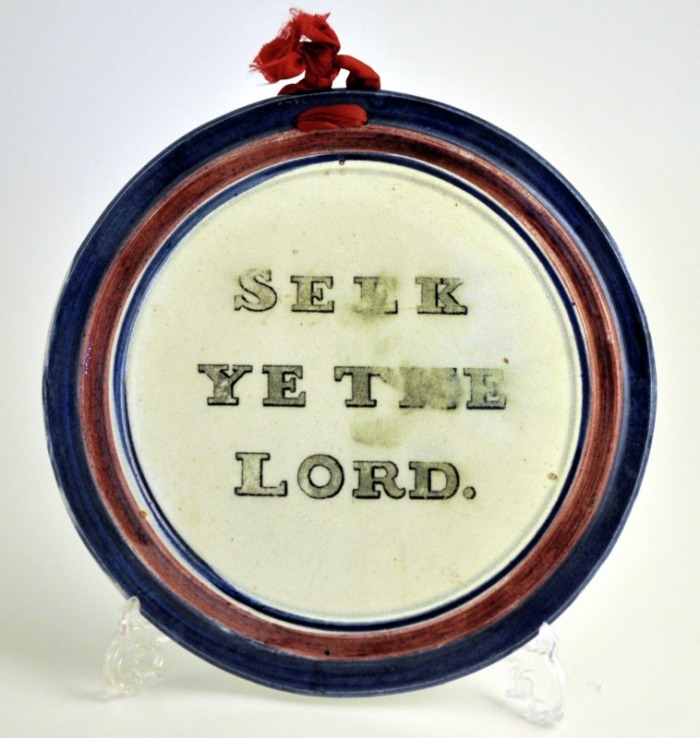
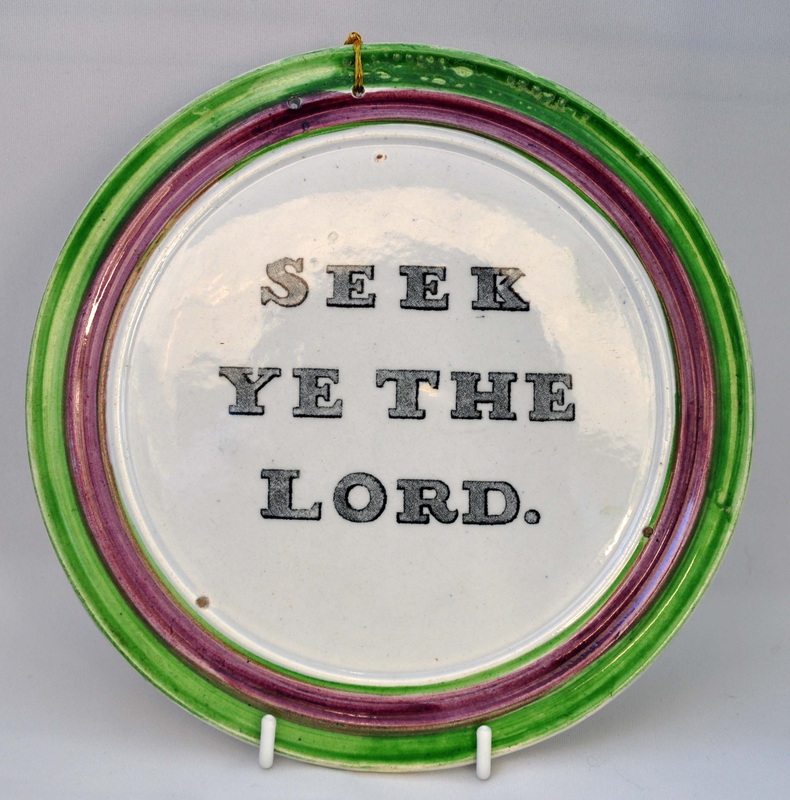
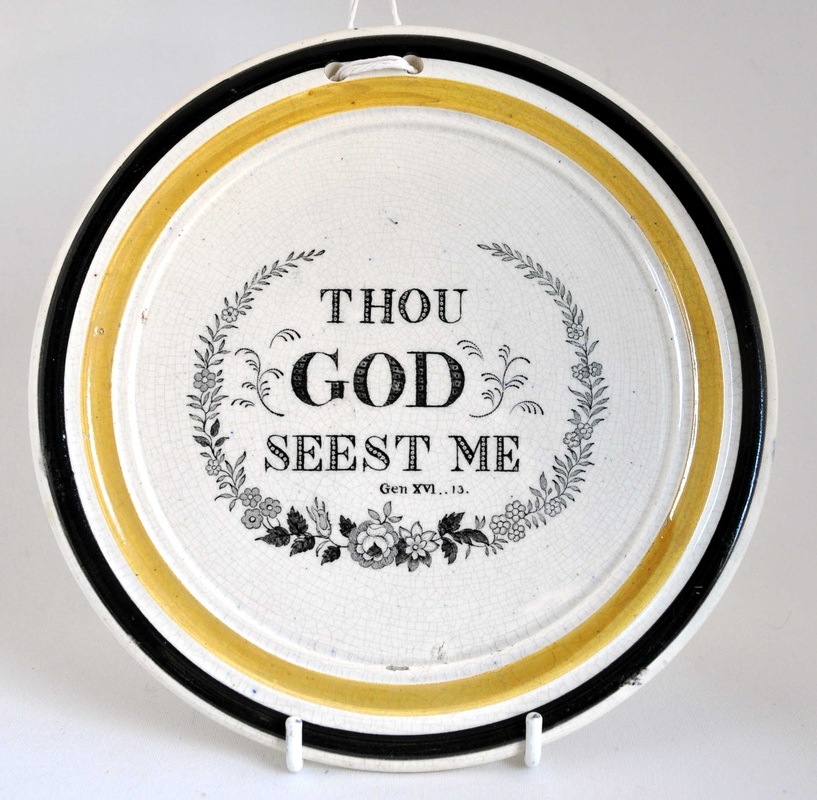
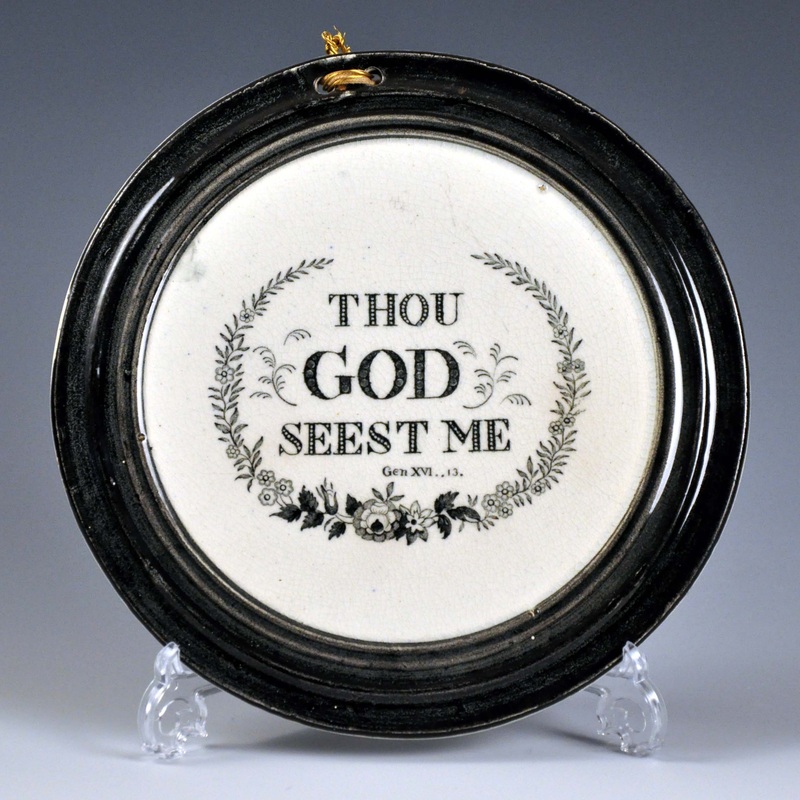
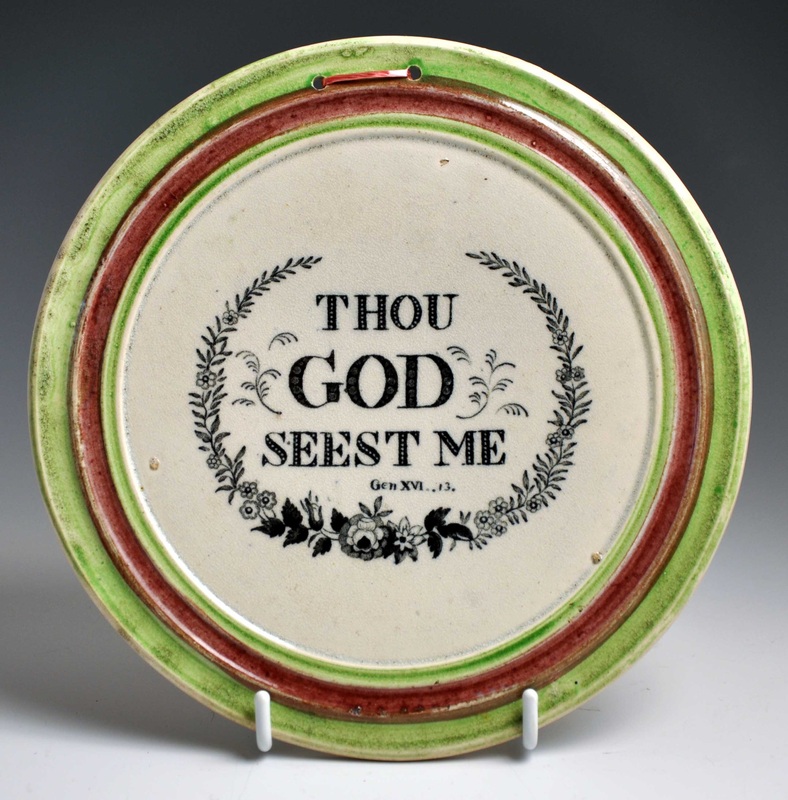
The first plaque above has a rare variation of the mould, finely decorated with a leaf and dart border. It has the same thinness as its more common counterparts.