For an overview of maritime plaques, click on the Maritime heading above. Click on images to enlarge.
Mate Sound the Pump, Morning Noon and Night
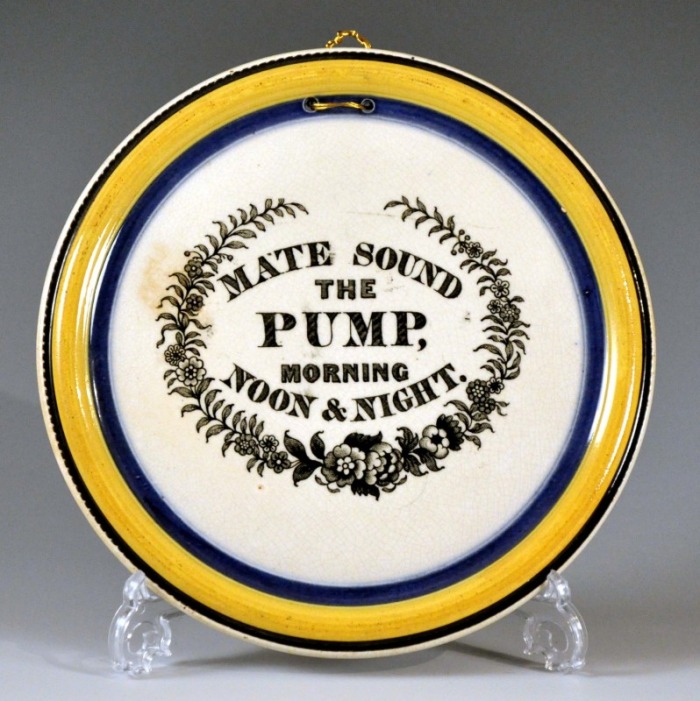
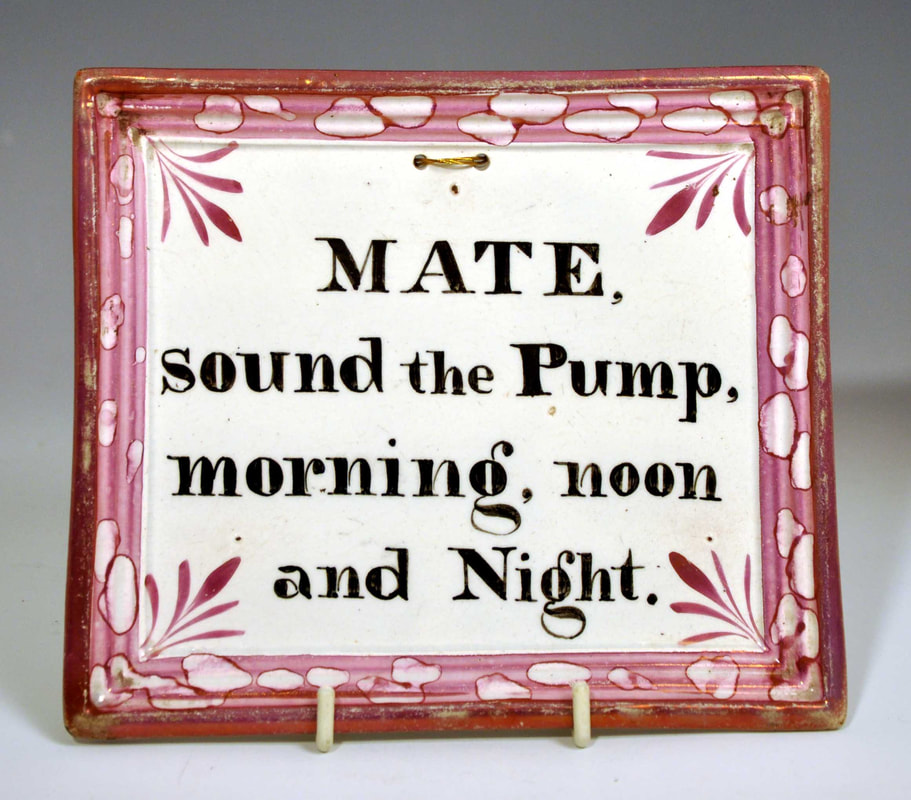
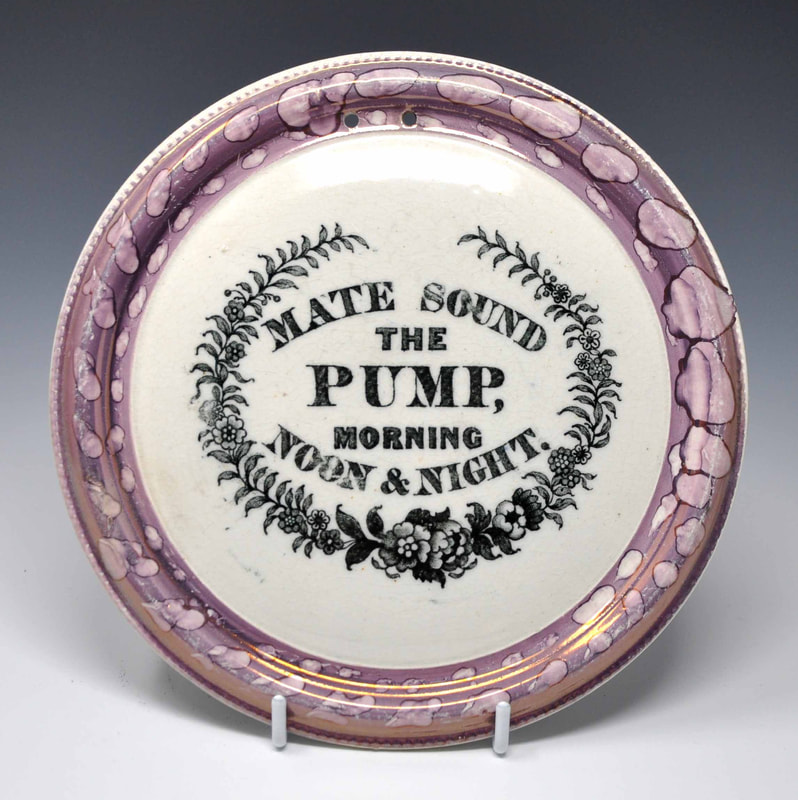
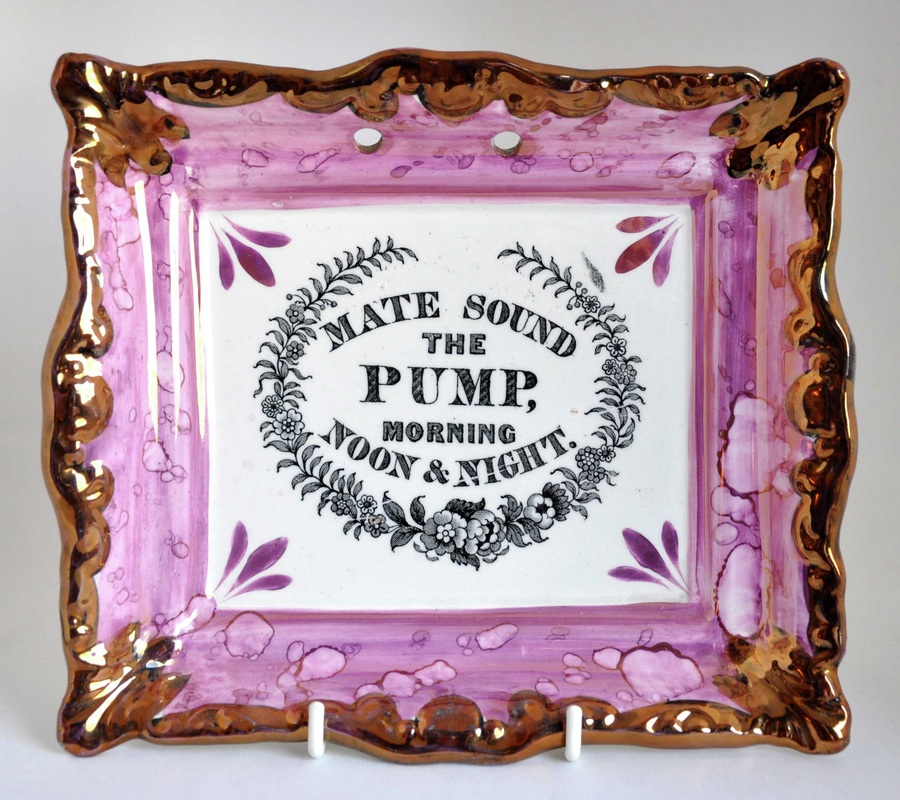
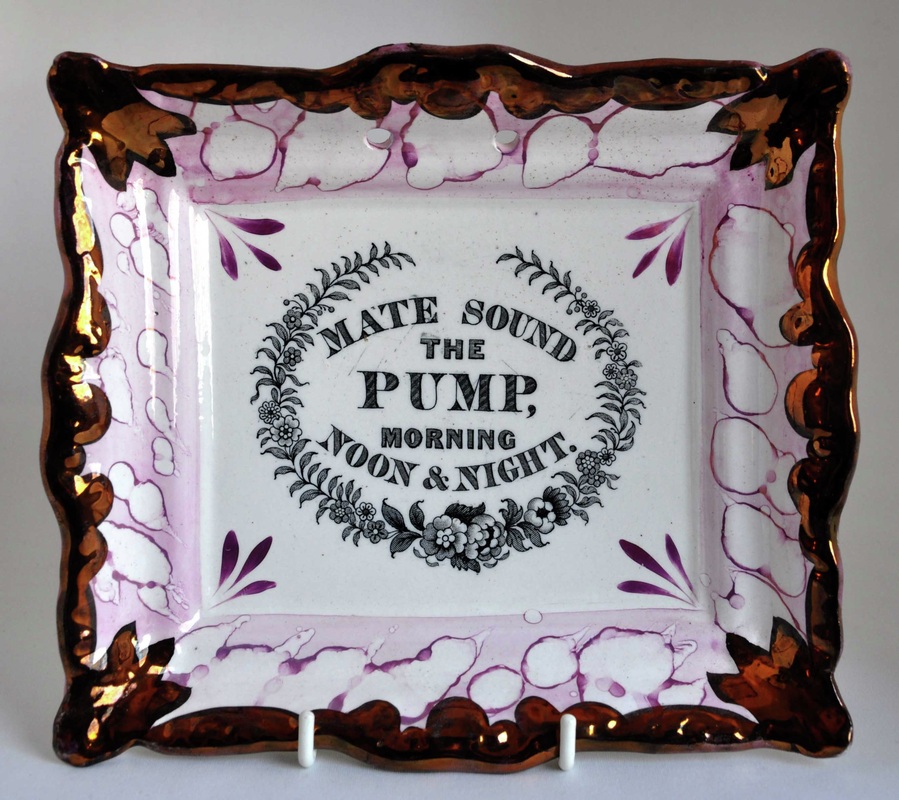
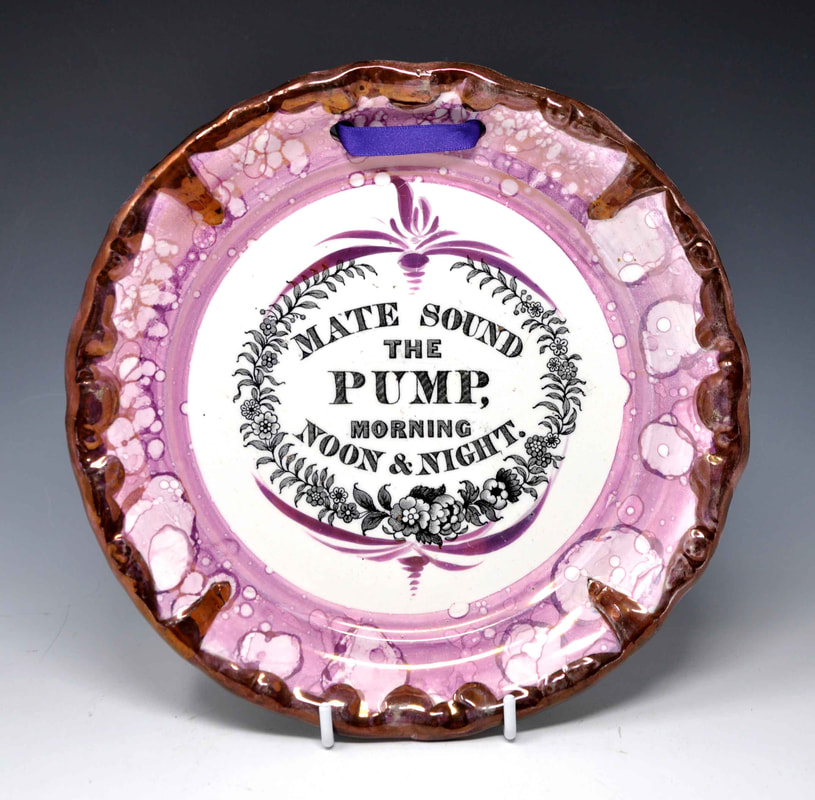
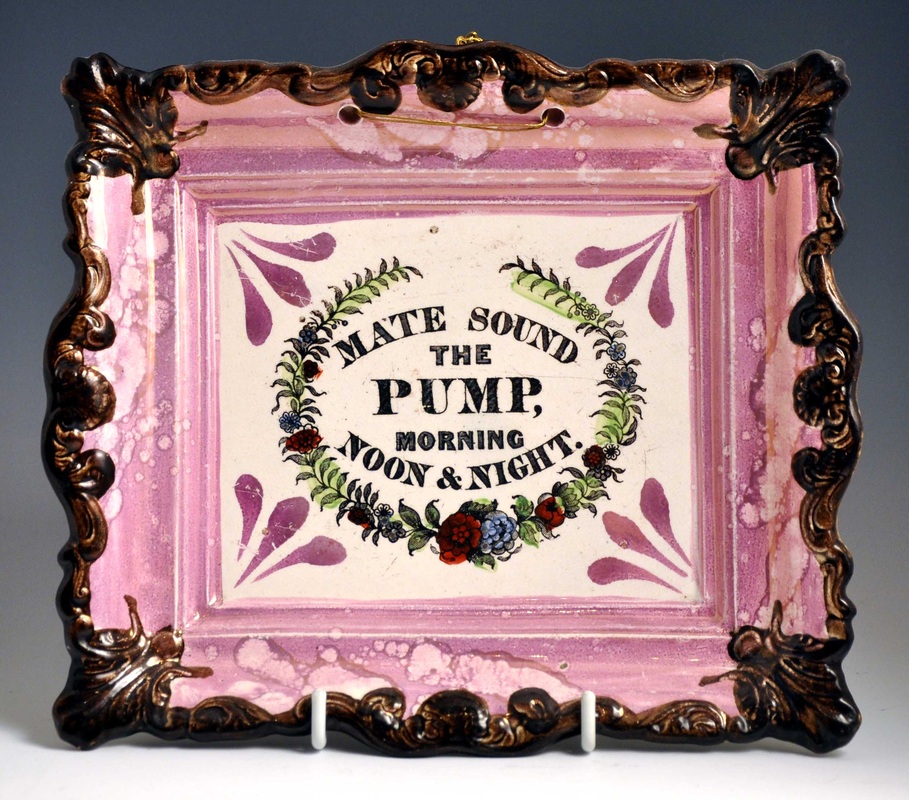
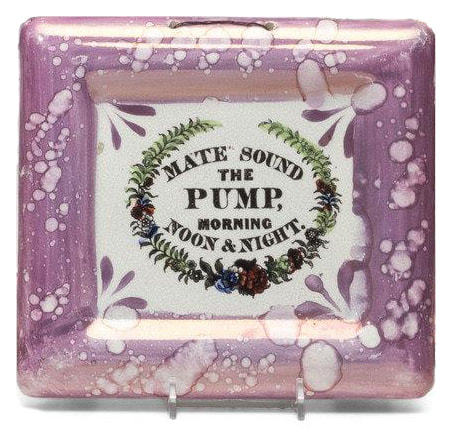
Henderson & Carlisle write in their book on marine antiques: 'The wording on the plaque was of critical importance to the survivability of the ship and those aboard her. It was imperative to know the depth of water in the well of the ship to determine if pumping was necessary. Here was a token of life at sea that could be an everyday reminder at home of the perils of the sea.'
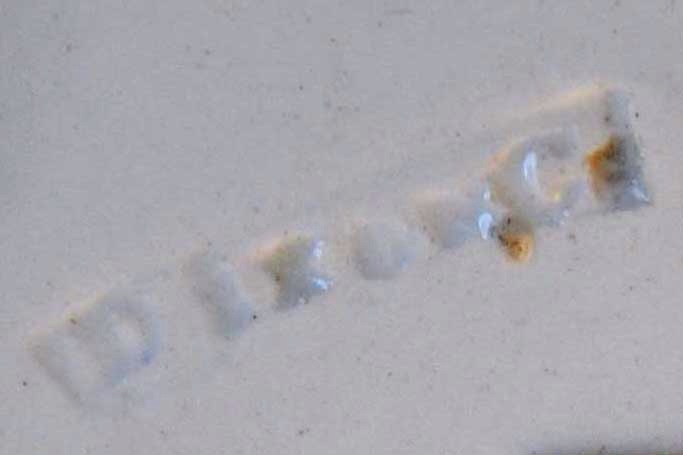
The top left photo shows a very rare yellow and blue bordered version, which although unmarked, is from the Garrison Pottery (Dixon and partners), as is the pink circular plaque, top right. The top centre plaque, which is hand painted, is attributed to Scott's Southwick Pottery. The top row were all likely made in the1830s or 40s. The plaques on the second row and bottom left and right have the impressed 'Dixon Co' mark, used from c1850–1865. The last two rectangular plaques are attributed to Moore's Wear Pottery, which appears to have acquired the transfer plate in 1865, when the Garrison Pottery closed. The last plaque is of a rarer mould that Moore's appears to have acquired from Galloway and Atkinson when the Albion Pottery closed c1864.
The top left photo shows a very rare yellow and blue bordered version, which although unmarked, is from the Garrison Pottery (Dixon and partners), as is the pink circular plaque, top right. The top centre plaque, which is hand painted, is attributed to Scott's Southwick Pottery. The top row were all likely made in the1830s or 40s. The plaques on the second row and bottom left and right have the impressed 'Dixon Co' mark, used from c1850–1865. The last two rectangular plaques are attributed to Moore's Wear Pottery, which appears to have acquired the transfer plate in 1865, when the Garrison Pottery closed. The last plaque is of a rarer mould that Moore's appears to have acquired from Galloway and Atkinson when the Albion Pottery closed c1864.
Maritime verses
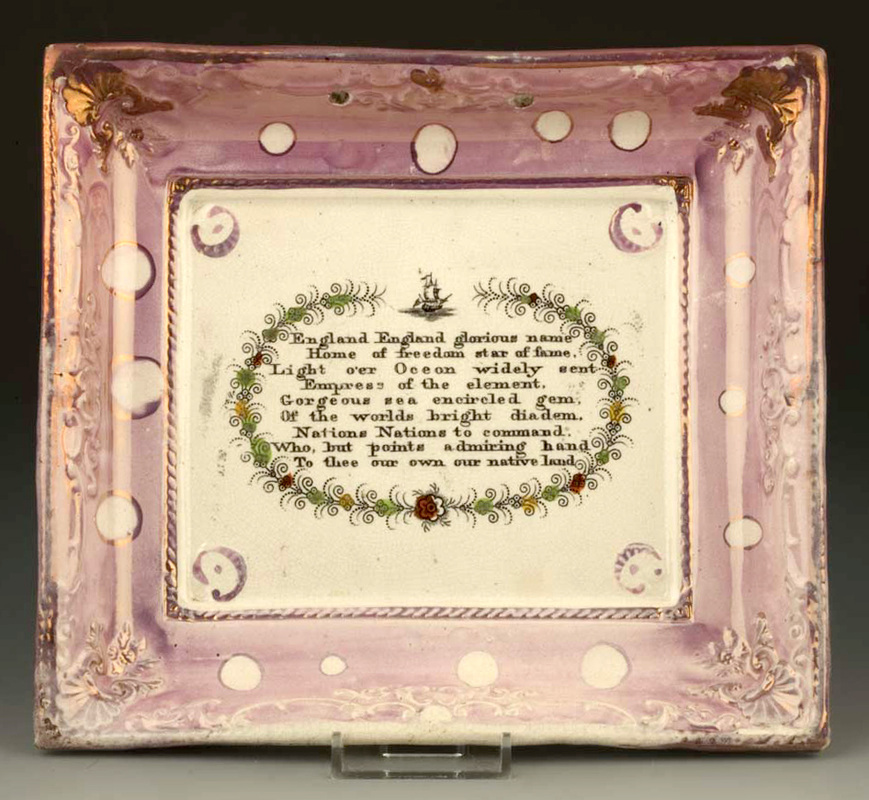
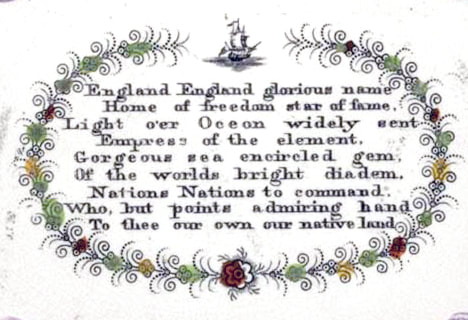
England England glorious name
Home of freedom star of fame,
Light o'er Oceon widely sent
Empress of the element,
Gorgeous sea encircled gem,
Of the worlds bright diadem,
Nations Nations to command,
Who, but points admiring hand
To thee our own native land
Home of freedom star of fame,
Light o'er Oceon widely sent
Empress of the element,
Gorgeous sea encircled gem,
Of the worlds bright diadem,
Nations Nations to command,
Who, but points admiring hand
To thee our own native land
Attributed to Scott's, c1860. Moore's also had a version of this transfer.
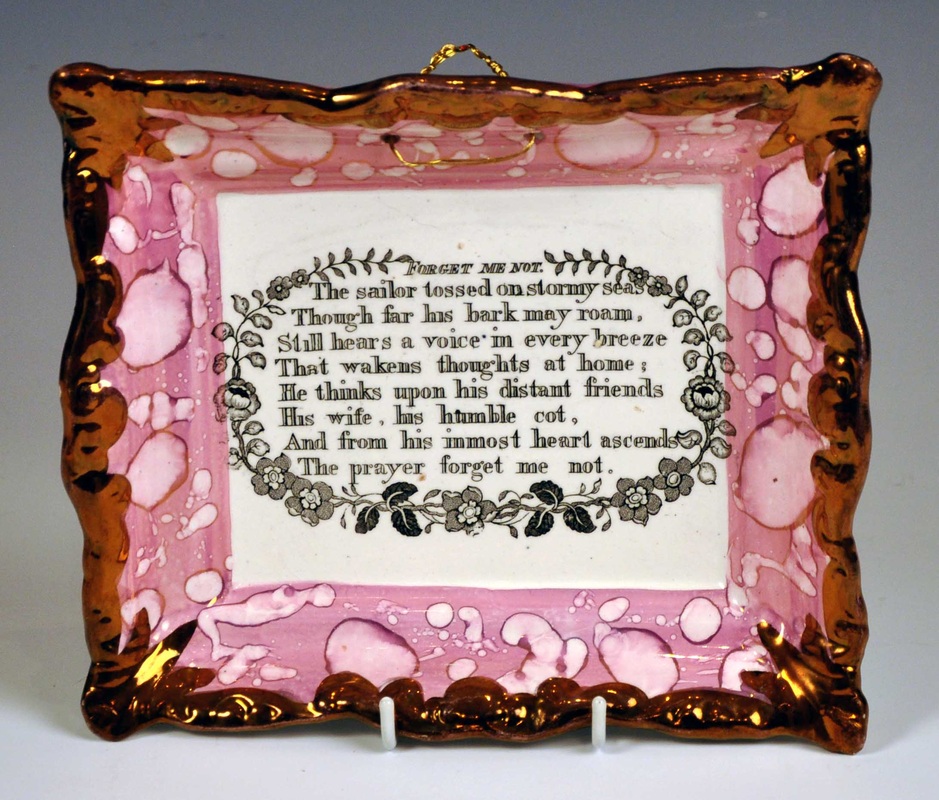
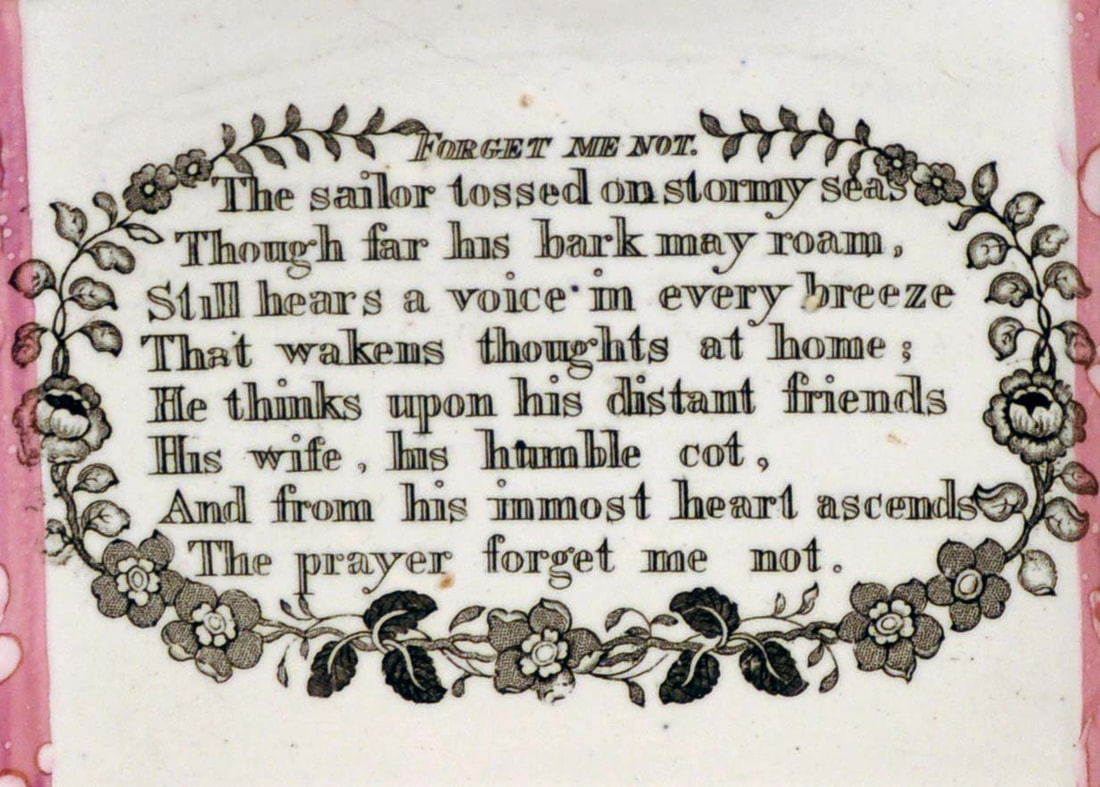
FORGET ME NOT.
The sailor tossed on stormy seas
Though far his bark may roam,
Still hears a voice in every breeze
That wakens thoughts at home ;
He thinks upon his distant friends
His wife , his humble cot ,
And from his inmost heart ascends
The prayer forget me not.
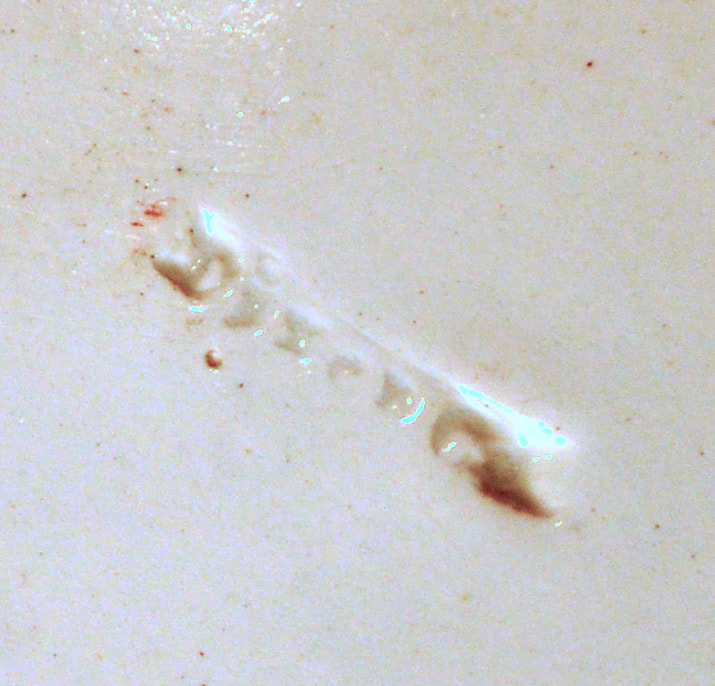
The verse is by Bernard Barton, 'the Quaker poet', 1784–1849. Click here for a jug with the verse, and a link to the full poem. This plaque has a 'Dixon Co' impressed mark, used c1851 to 1865.
The sailor tossed on stormy seas
Though far his bark may roam,
Still hears a voice in every breeze
That wakens thoughts at home ;
He thinks upon his distant friends
His wife , his humble cot ,
And from his inmost heart ascends
The prayer forget me not.
The verse is by Bernard Barton, 'the Quaker poet', 1784–1849. Click here for a jug with the verse, and a link to the full poem. This plaque has a 'Dixon Co' impressed mark, used c1851 to 1865.

|
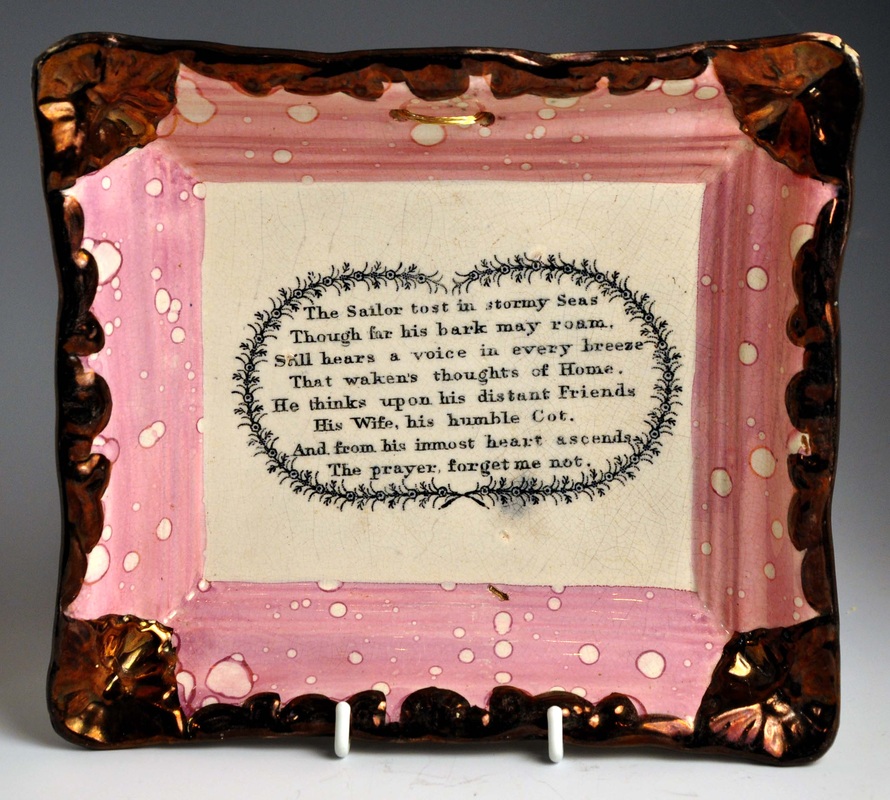
The Sailor tost in stormy Seas
Though far his bark may roam, Still hears a voice in every breeze That waken's thoughts of Home. He thinks upon his distant Friends His Wife, his humble Cot. And from his inmost heart ascends The prayer, forget me not. |
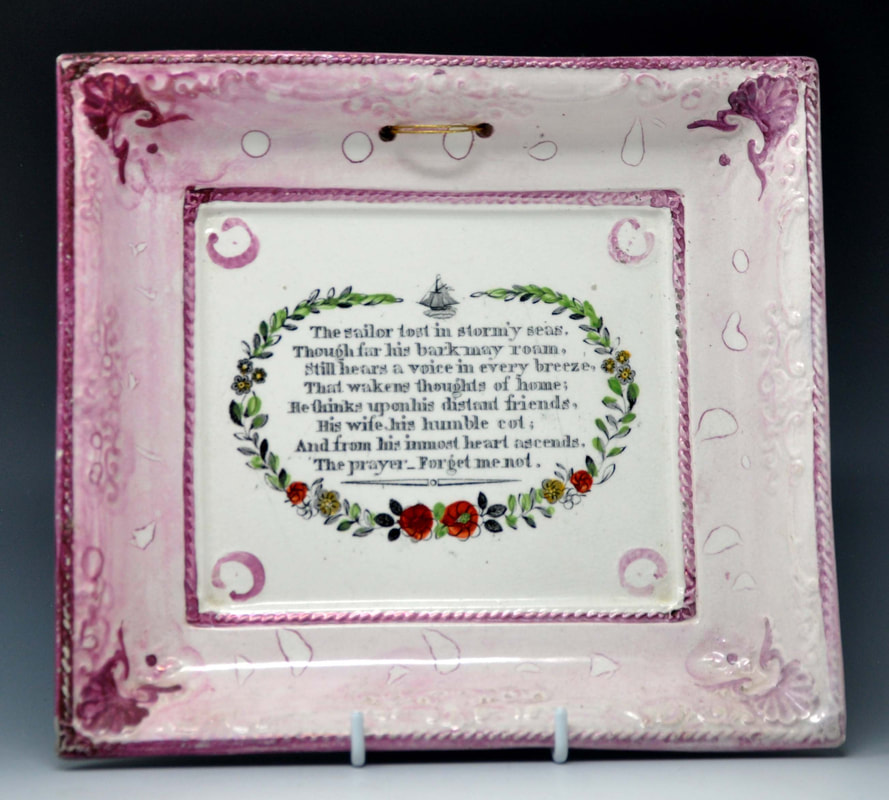
The sailor tost in storm'y seas,
Though far his bark may roam, Still hears a voice in every breeze, That wakens thoughts of home; He thinks upon his distant friends, His wife, his humble cot; And from his inmost heart ascends, The prayer_Forget me not. |
Left above, a rare verse plaque with the impressed mark 'ROBERT MALING' c1840. Right above, a later plaque, c1860, attributed to Scott's Southwick Pottery.
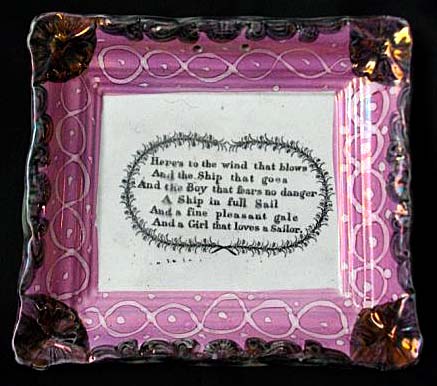
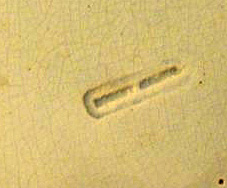
|
Here's to the wind that blows
And the Ship that goes And the Boy that fears no danger A Ship in full Sail And a fine pleasant gale And a girl that loves a Sailor. |
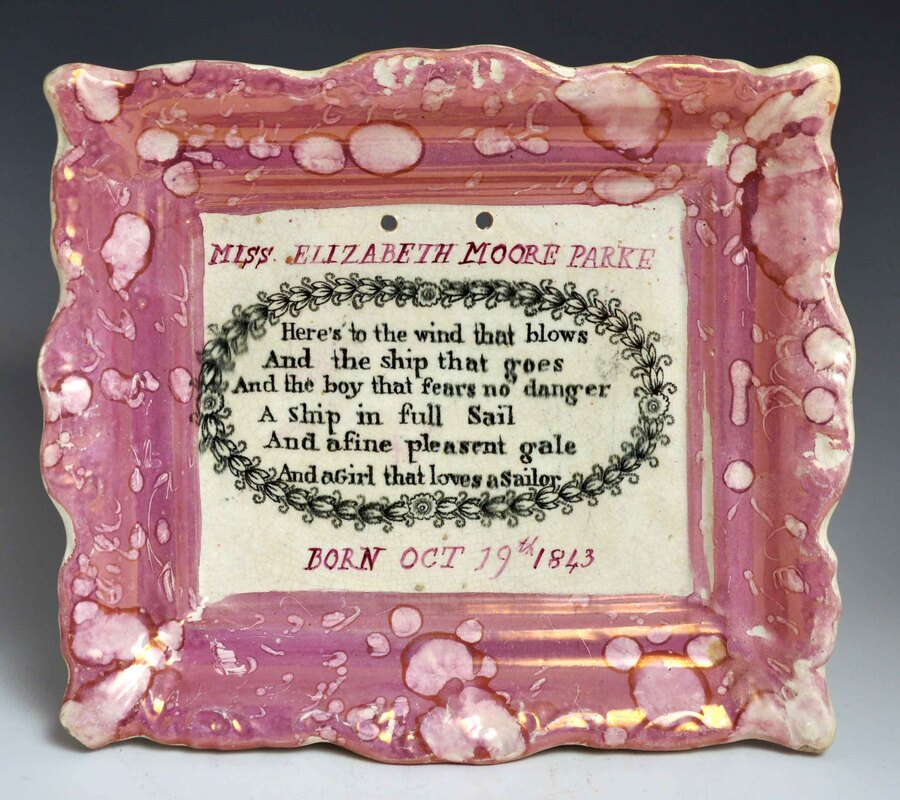
Here's to the wind that blows
And the ship that goes And the boy that fears no danger A Ship in full Sail And afine pleasant gale And aGirl that loves a Sailor |
Left above, another rare verse plaque with the impressed mark 'ROBERT MALING' (1830–1840). Right above, a different variation of the transfer with a hand-painted inscription for 1843.
Charles Dibdin wrote a song called 'The Standing Toast' for the comic opera 'The Round Robin' produced in 1811. The line in the song goes: 'But the standing toast that pleased me most was, "The wind that blows, the ship that goes, And the lass that loves a sailor!"
Charles Dibdin wrote a song called 'The Standing Toast' for the comic opera 'The Round Robin' produced in 1811. The line in the song goes: 'But the standing toast that pleased me most was, "The wind that blows, the ship that goes, And the lass that loves a sailor!"
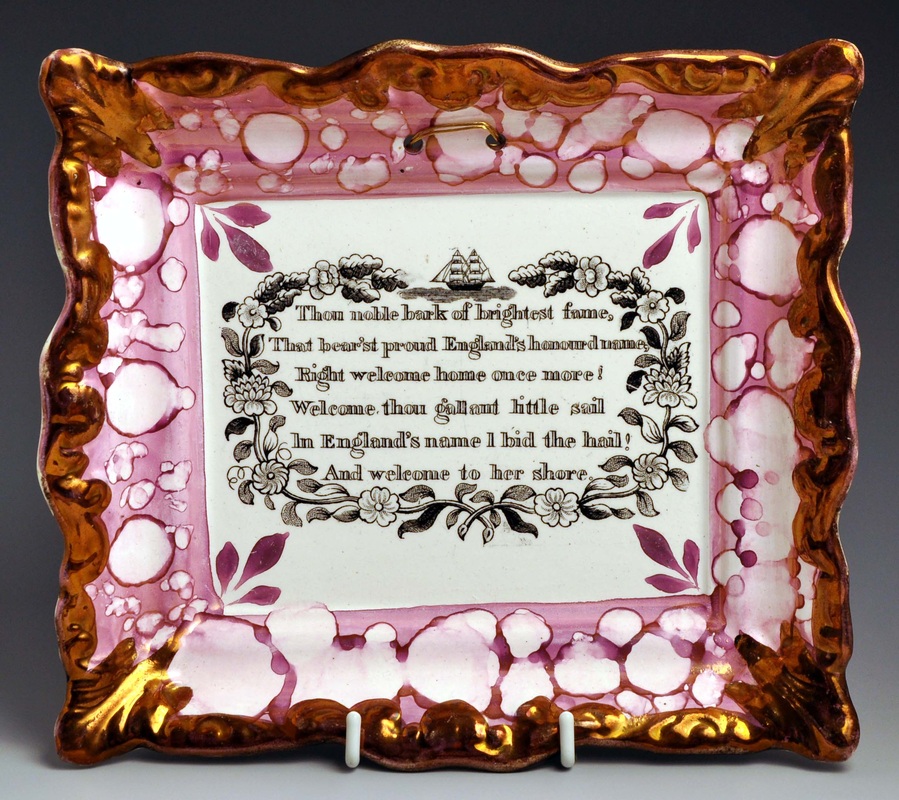
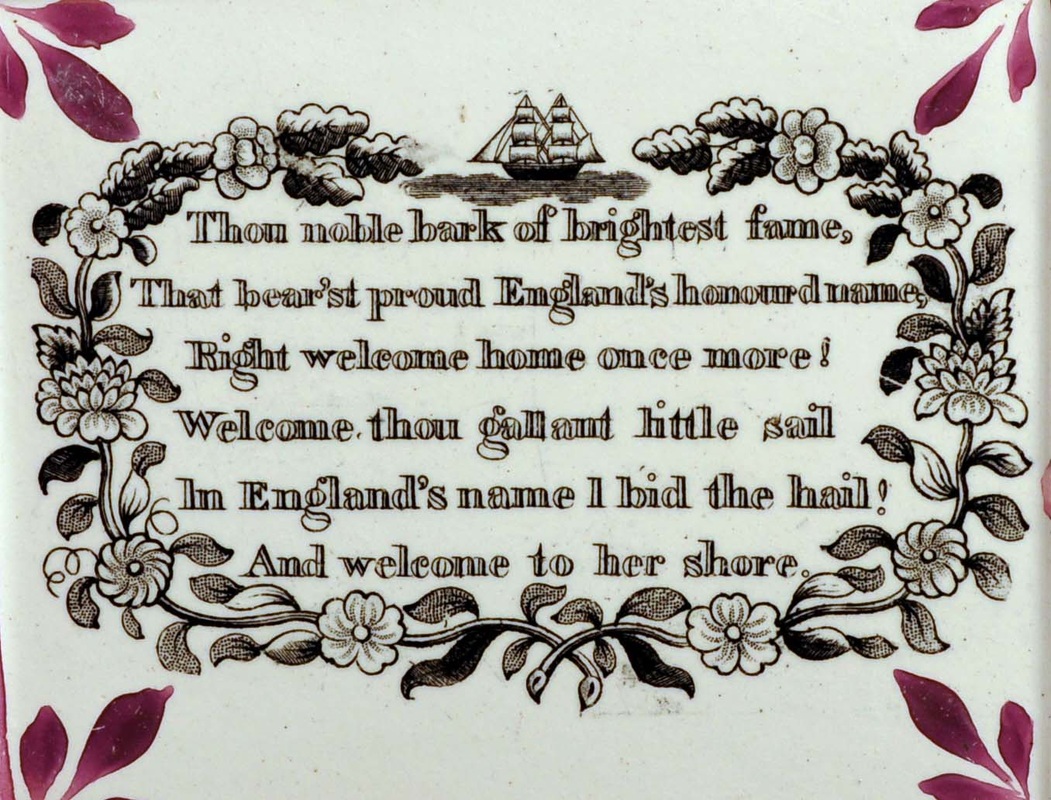

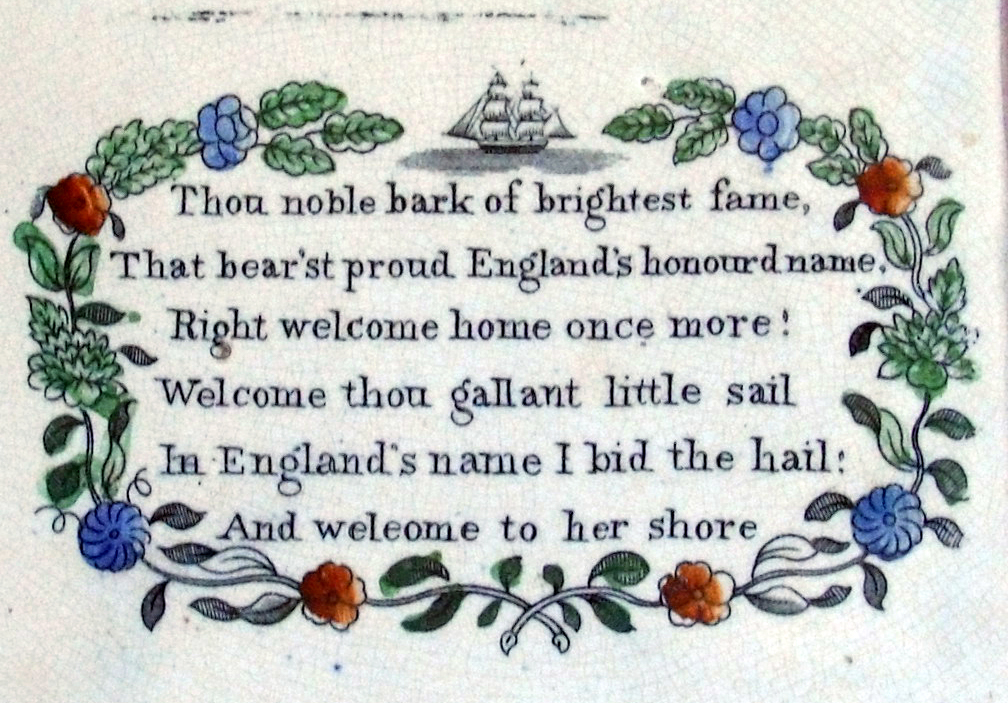

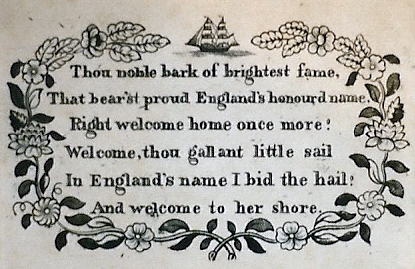
Thou noble bark of brightest fame,
That bear'st proud England's honourd name,
Right welcome home once more !
Welcome thou gallant little sail
In England's name I bid the hail !
And welcome to her shore.
Although the first plaque is unmarked, its shape and decoration are typical of the Garrison Pottery (Dixon, Phillips & Co). See above for a similar plaque with the Dixon impress. The second plaque is attributed to Newbottle High Pottery, c1845. The third plaque is later, possibly Ball's Deptford Pottery. The transfers are all different. Note that the last has a comma ofter the second 'Welcome'.
That bear'st proud England's honourd name,
Right welcome home once more !
Welcome thou gallant little sail
In England's name I bid the hail !
And welcome to her shore.
Although the first plaque is unmarked, its shape and decoration are typical of the Garrison Pottery (Dixon, Phillips & Co). See above for a similar plaque with the Dixon impress. The second plaque is attributed to Newbottle High Pottery, c1845. The third plaque is later, possibly Ball's Deptford Pottery. The transfers are all different. Note that the last has a comma ofter the second 'Welcome'.
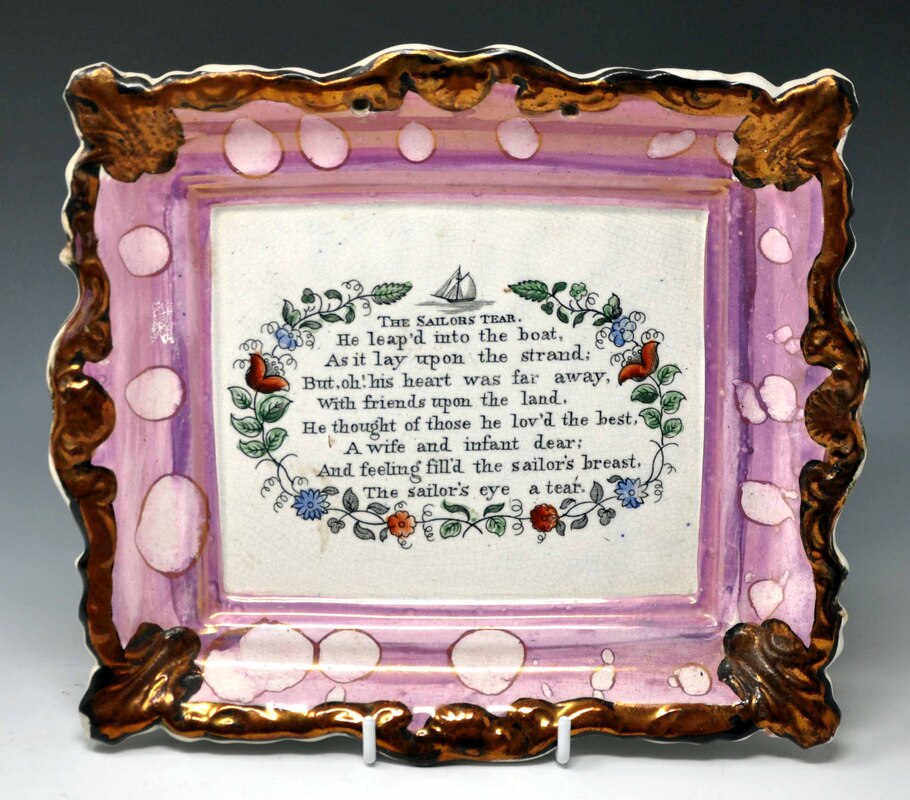
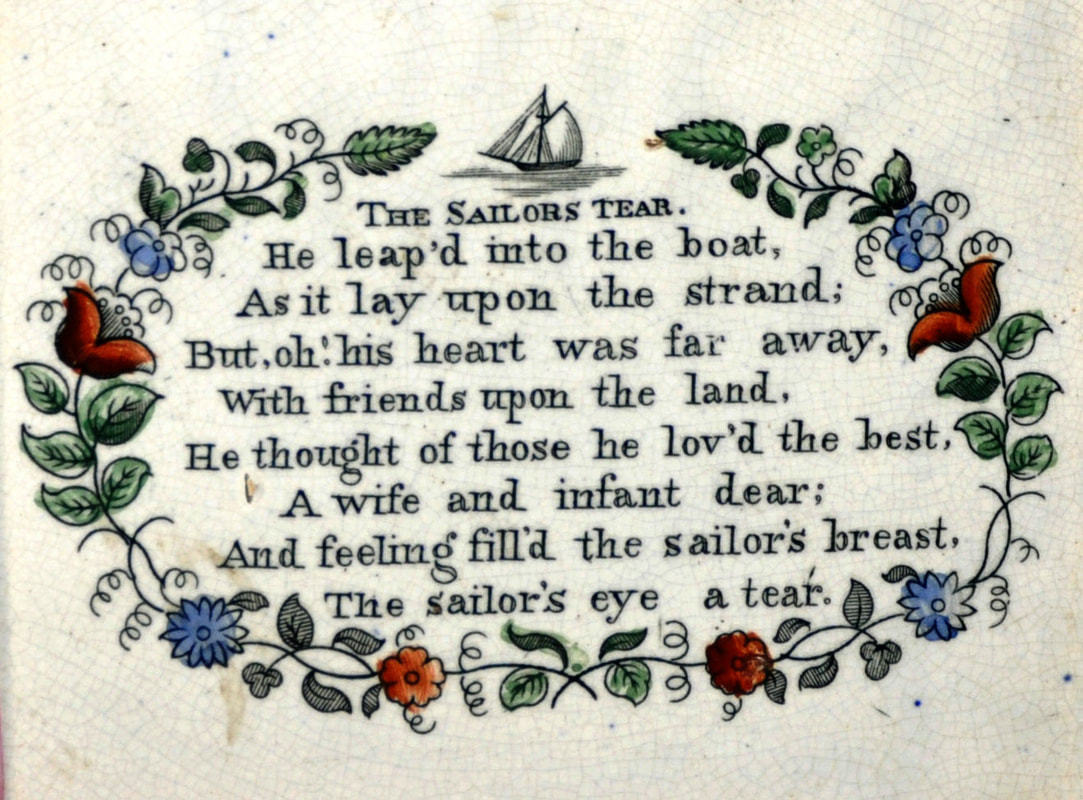
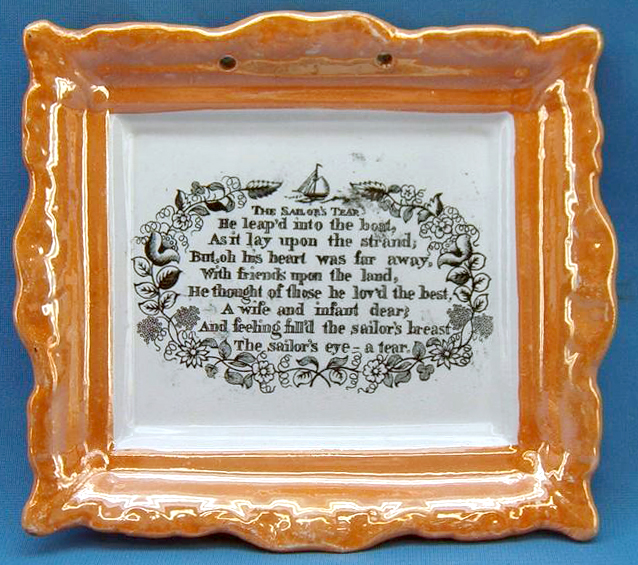
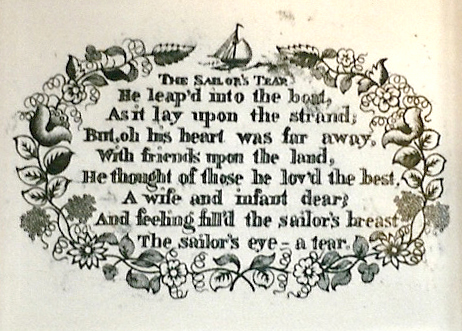
THE SAILOR'S TEAR
He leap'd into the boat,
As it lay upon the strand;
But,oh his heart was far away,
With friends upon the land,
He thought of those he lov'd the best,
A wife and infant dear;
And feeling fill'd the sailor's breast
The sailor's eye – a tear.
He leap'd into the boat,
As it lay upon the strand;
But,oh his heart was far away,
With friends upon the land,
He thought of those he lov'd the best,
A wife and infant dear;
And feeling fill'd the sailor's breast
The sailor's eye – a tear.
The first plaque is attributed to Newbottle High Pottery, c1845, and the second, orange, plaque to Ball's Deptford Pottery.
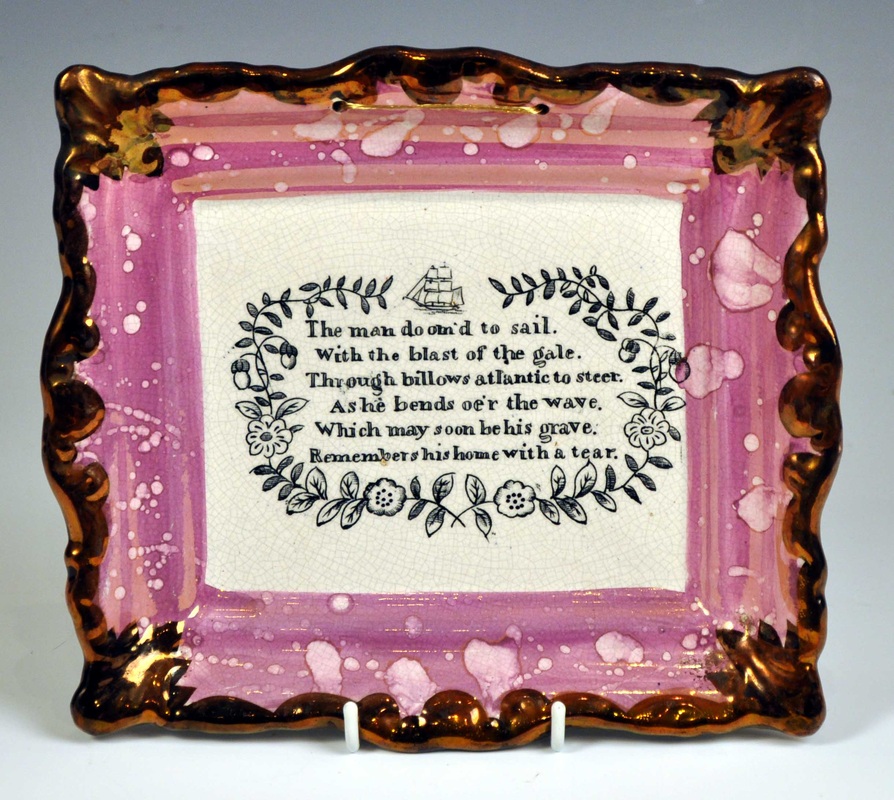
The man doom'd to sail.
With the blast of the gale.
Through billows atlantic to steer.
As he bends oe'r the wave.
Which may soon be his grave.
Remembers his home with a tear.
Verse 4 of 'The Tear' by Lord Byron, 1788–1824. Click here to read more about items of North East pottery related to Lord Byron.
With the blast of the gale.
Through billows atlantic to steer.
As he bends oe'r the wave.
Which may soon be his grave.
Remembers his home with a tear.
Verse 4 of 'The Tear' by Lord Byron, 1788–1824. Click here to read more about items of North East pottery related to Lord Byron.
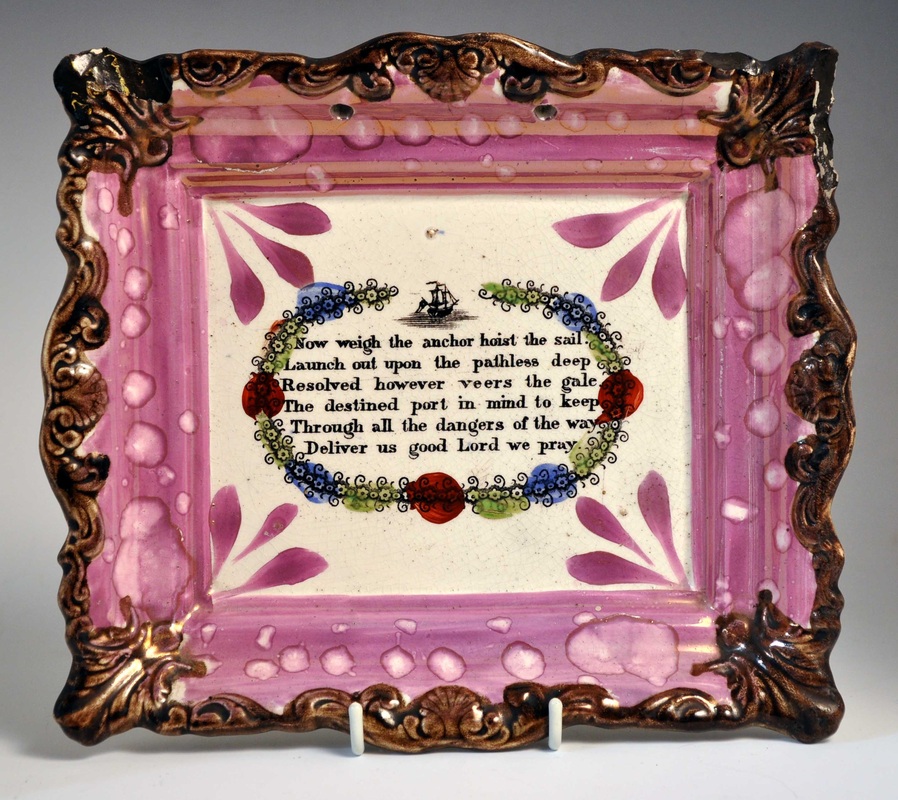
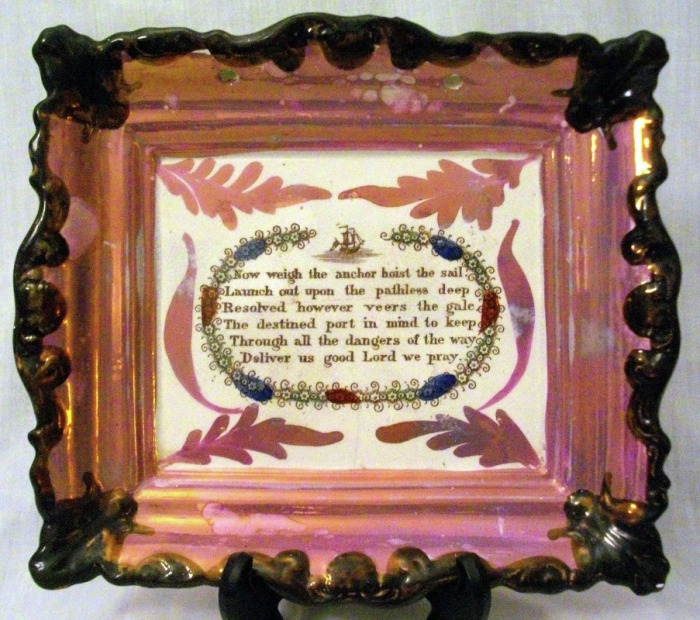
Now weigh the anchor hoist the sail.
Launch out upon the pathless deep
Resolved however veers the gale
The destined port in mind to keep
Through all the dangers of the way
Deliver us good Lord we pray.
This plaque pairs with the one below; the verses finishing with the same line. Attributed to Moore's, c1860s. Scott's also has a version of this verse, not yet recorded on plaques.
Launch out upon the pathless deep
Resolved however veers the gale
The destined port in mind to keep
Through all the dangers of the way
Deliver us good Lord we pray.
This plaque pairs with the one below; the verses finishing with the same line. Attributed to Moore's, c1860s. Scott's also has a version of this verse, not yet recorded on plaques.

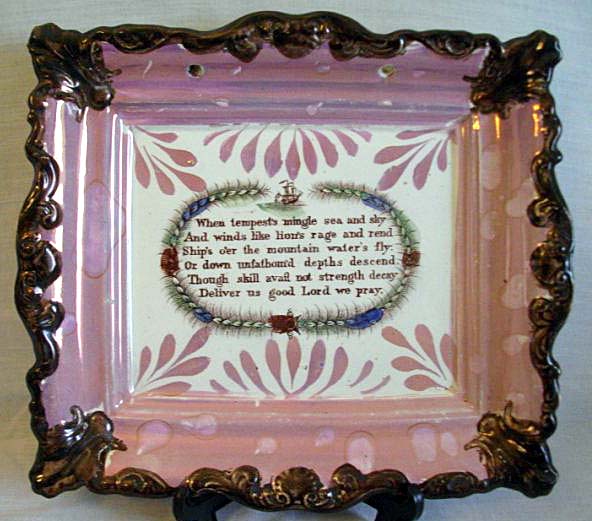
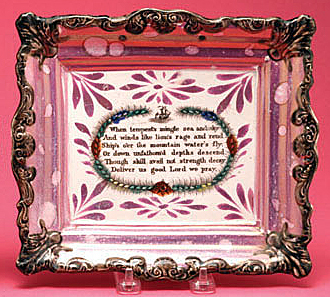
When tempest's mingle sea and sky
And winds like lion's rage and rend
Ship's o'er the mountain water's fly:
Or down unfathom'd depths descend.
Though skill avail not strength decay
Deliver us good Lord we pray.
Attributed to Moore's c1860s. Scott's also has a version of this verse, not yet recorded on plaques.
And winds like lion's rage and rend
Ship's o'er the mountain water's fly:
Or down unfathom'd depths descend.
Though skill avail not strength decay
Deliver us good Lord we pray.
Attributed to Moore's c1860s. Scott's also has a version of this verse, not yet recorded on plaques.
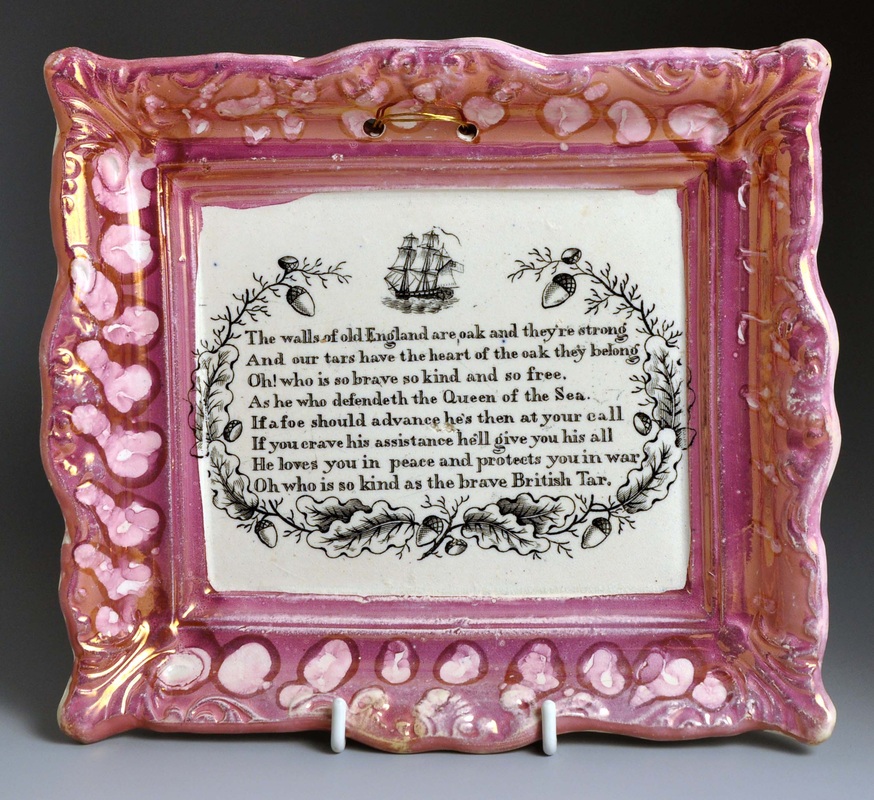
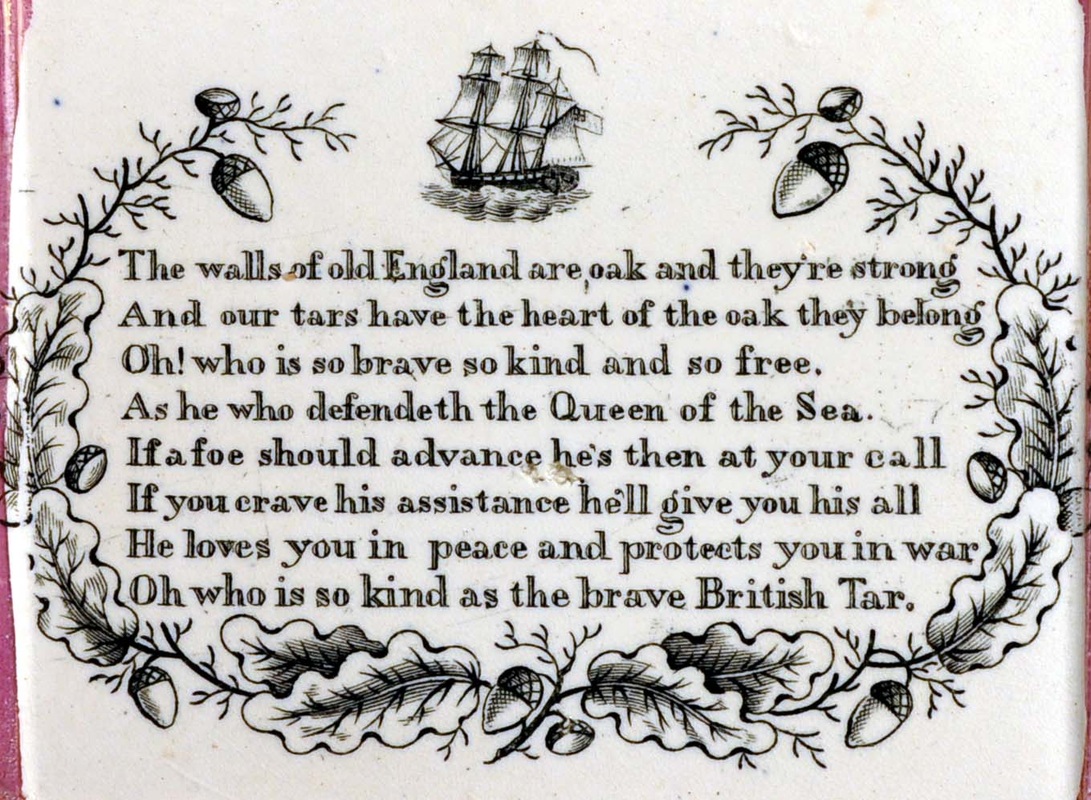
The walls of England are oak and they're strong
And our tars have the heart of the oak they belong
Oh! who is so brave and so kind and so free.
As he who defendeth the Queen of the Sea.
If a foe should advance he's then at your call
If you crave his assistance he'll give you his all
He loves you in peace and protects you in war
Oh who is so kind as the brave British Tar.
Attributed to John Carr, North Shields (see here for more information).
And our tars have the heart of the oak they belong
Oh! who is so brave and so kind and so free.
As he who defendeth the Queen of the Sea.
If a foe should advance he's then at your call
If you crave his assistance he'll give you his all
He loves you in peace and protects you in war
Oh who is so kind as the brave British Tar.
Attributed to John Carr, North Shields (see here for more information).
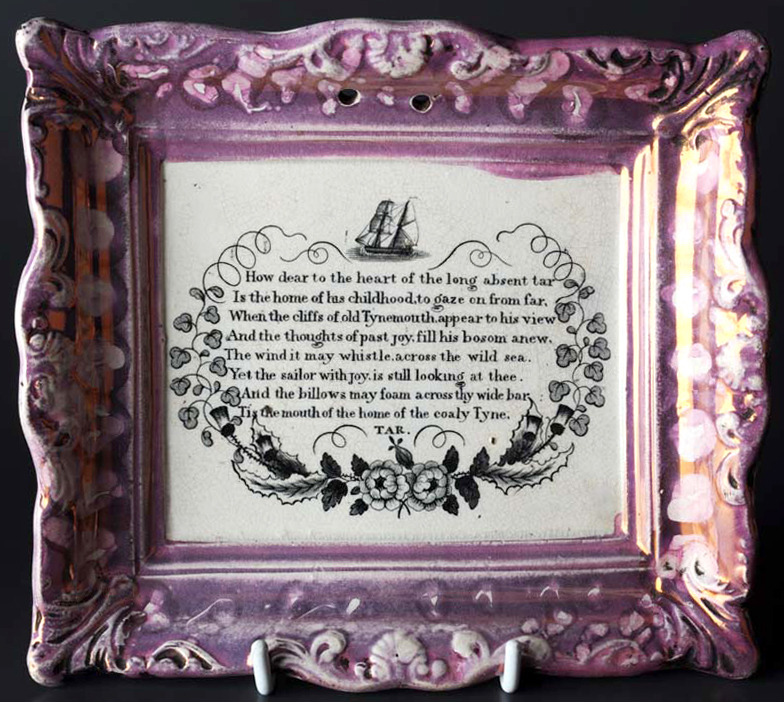

How dear to the heart of the long absent tar
Is the home of his childhood, to gaze on from far.
When the cliffs of old Tynemouth, appear to his view
And the thoughts of past joy, fill his bosom anew.
The wind it may whistle, across the wild sea.
Yet the sailor with joy, is still looking at thee.
And the billows may foam across thy wide bar
Tis the mouth of the home of the coaly Tyne,
TAR.
Attributed to John Carr, North Shields.
Is the home of his childhood, to gaze on from far.
When the cliffs of old Tynemouth, appear to his view
And the thoughts of past joy, fill his bosom anew.
The wind it may whistle, across the wild sea.
Yet the sailor with joy, is still looking at thee.
And the billows may foam across thy wide bar
Tis the mouth of the home of the coaly Tyne,
TAR.
Attributed to John Carr, North Shields.