For an overview of maritime plaques, click on the Maritime heading above. Click on images to enlarge.
May Peace & Plenty
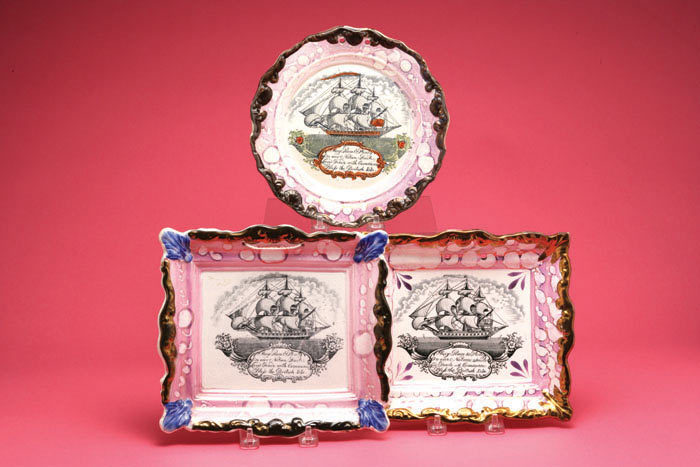

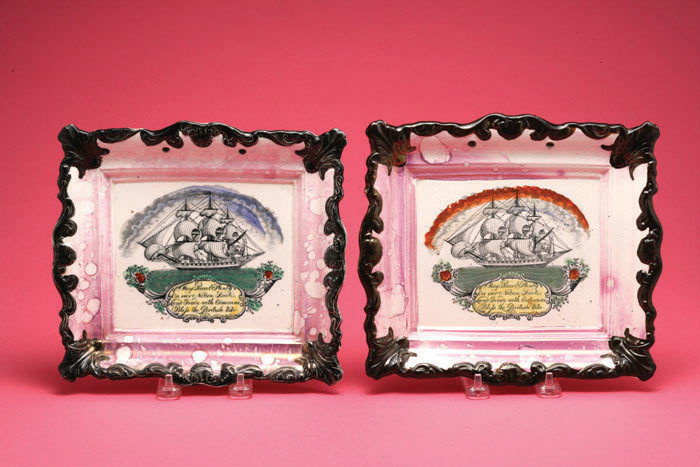
The transfer first appears on circular and rectangular plaques from Dixon's (Garrison Pottery) c1839, and also on distinctive rectangular plaques, sometimes with coloured corners, attributed to Newbottle High Pottery, c1845. The 'Newbottle' transfer plate appears to have moved to Moore's, c1855. John Carr's Low Lights Pottery produced larger rectangular plaques, using what could be a re-engraved version of the Dixon transfer, c1865. Two rarer variations of the transfer were produced by the Albion pottery, Newcastle. The Albion transfers also appear on plaques associated with John Carr's Pottery. The verse is as follows:
May Peace & Plenty
On our Nation Smile.
and Trade with Commerce
Bless the British Isle.
May Peace & Plenty
On our Nation Smile.
and Trade with Commerce
Bless the British Isle.
Verse plaques
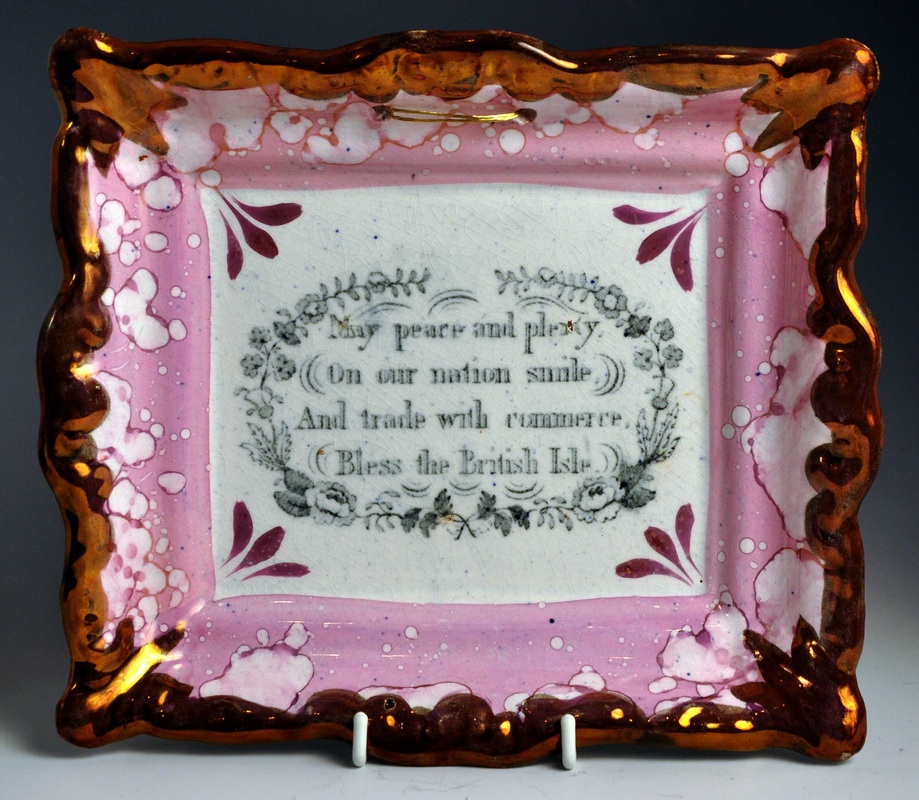
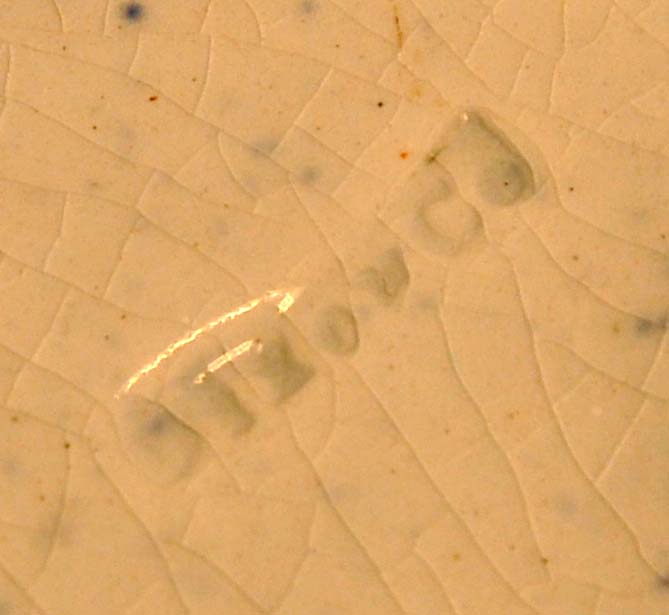

The verse, without the ship, appears on plaques with the 'Dixon Co' impress, transcribed as follows:
May peace and plenty,
On our nation smile.
And trade with commerce,
Bless the British Isle.
May peace and plenty,
On our nation smile.
And trade with commerce,
Bless the British Isle.
Differences between the Dixon and 'Newbottle/Moore' transfers
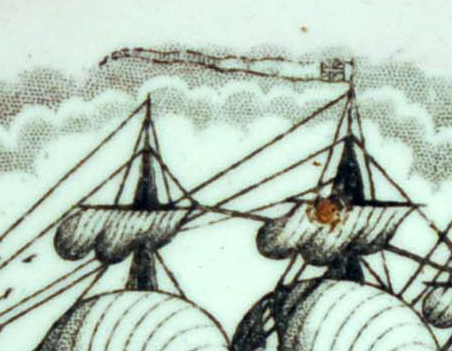
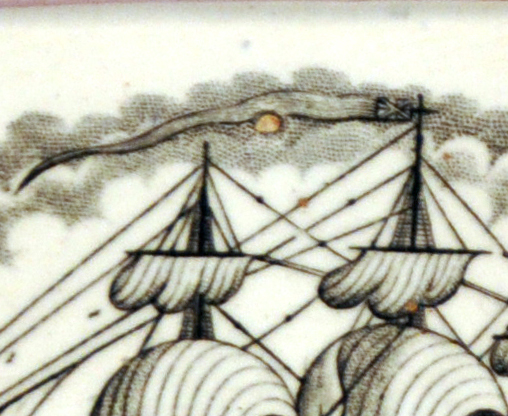
The Dixon transfer (above left) has a shorter pennant flag flying from the centre mast. The transfer attributed to Newbottle/Moore (above right - detail from a Moore-attributed plaque) has a long pennant that extends way beyond the first mast, and points downwards.
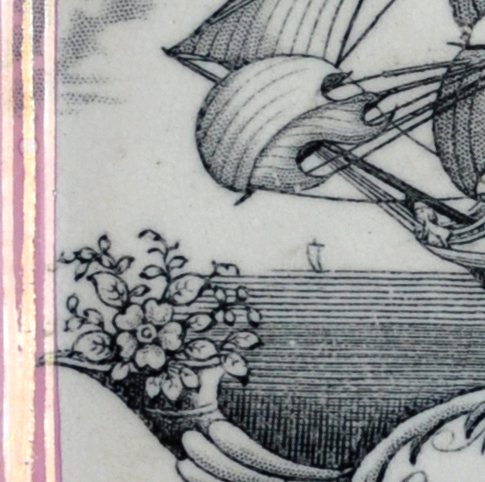
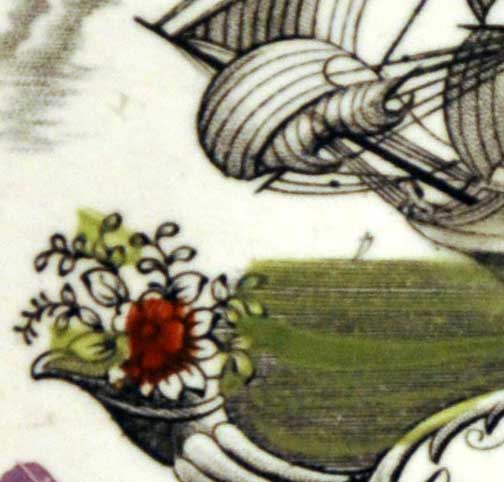
Again, the Dixon detail is shown on the left, and the Newbottle/Moore on the right. Note the positioning of the small ship on the horizon. Also, note the difference in the rigging hanging above it.
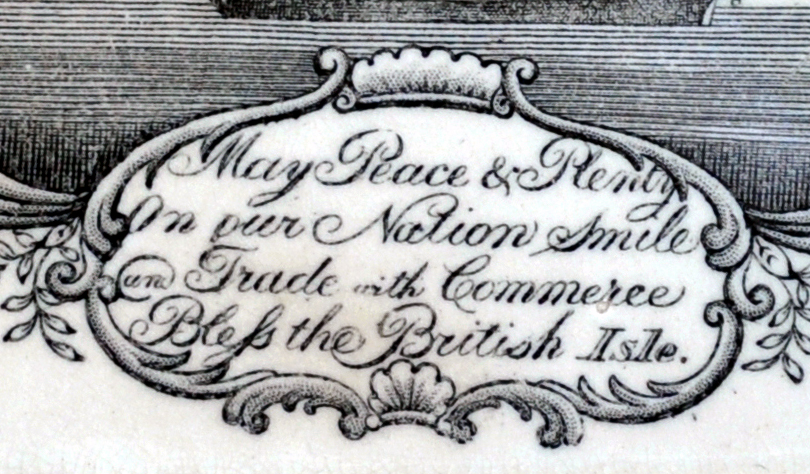
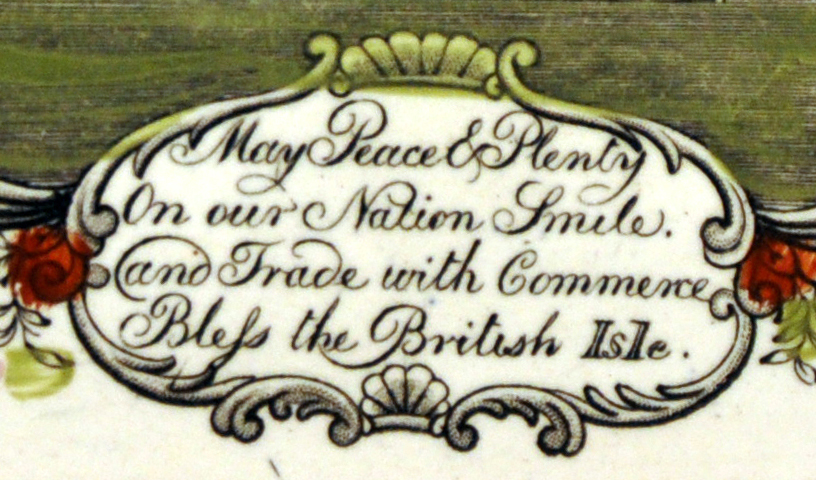
The verses are very similar, except note the 'S' in the word 'Smile'. (Again, Dixon left, Newbottle/Moore right.)
Dixon, Phillips & Co, Garrison Pottery, Sunderland
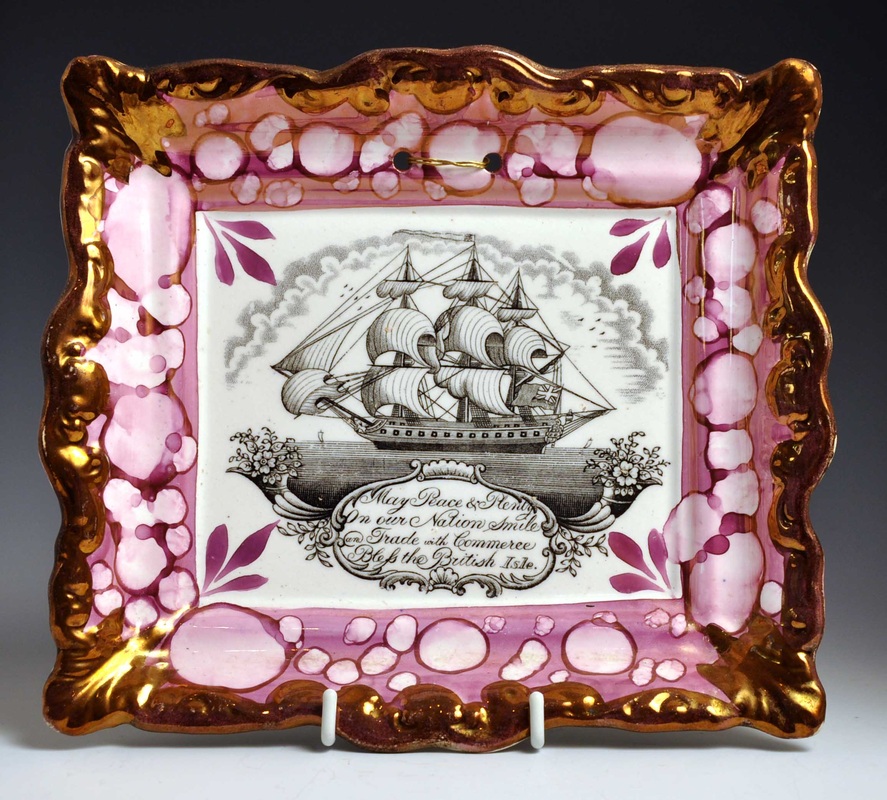

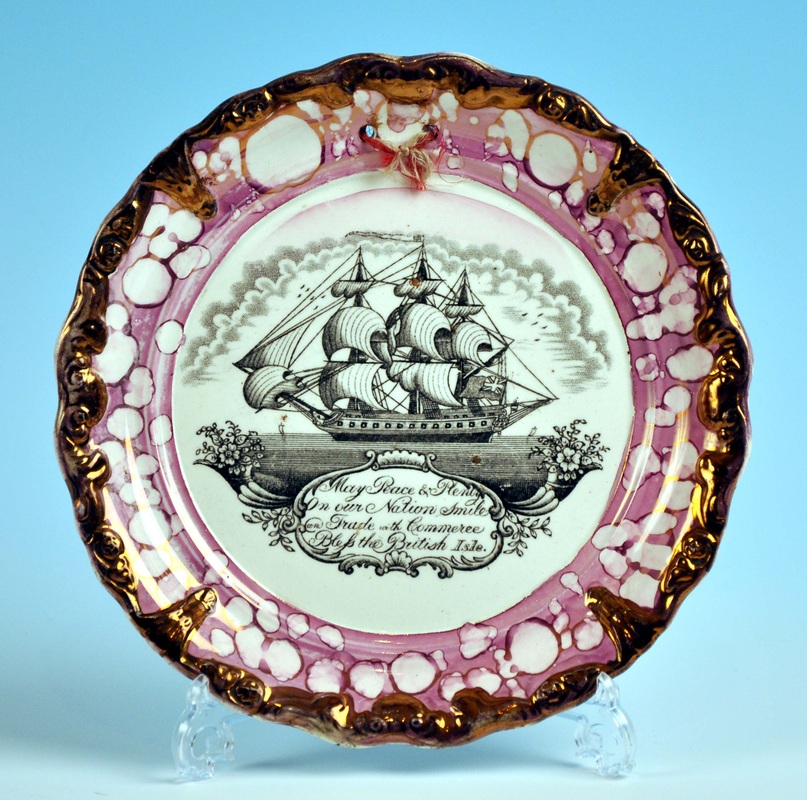
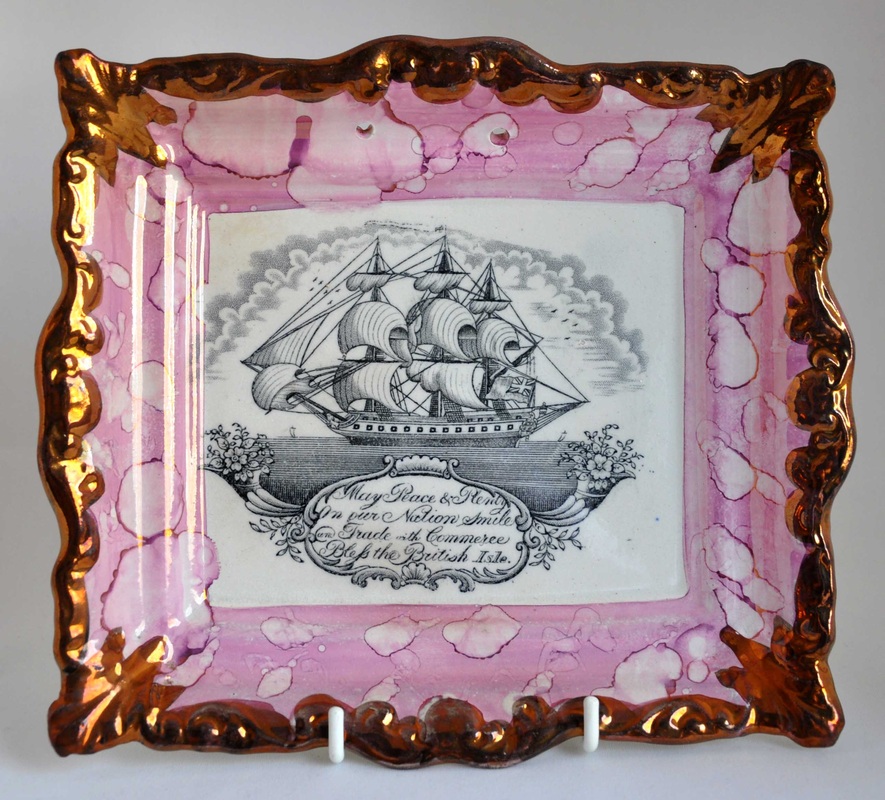

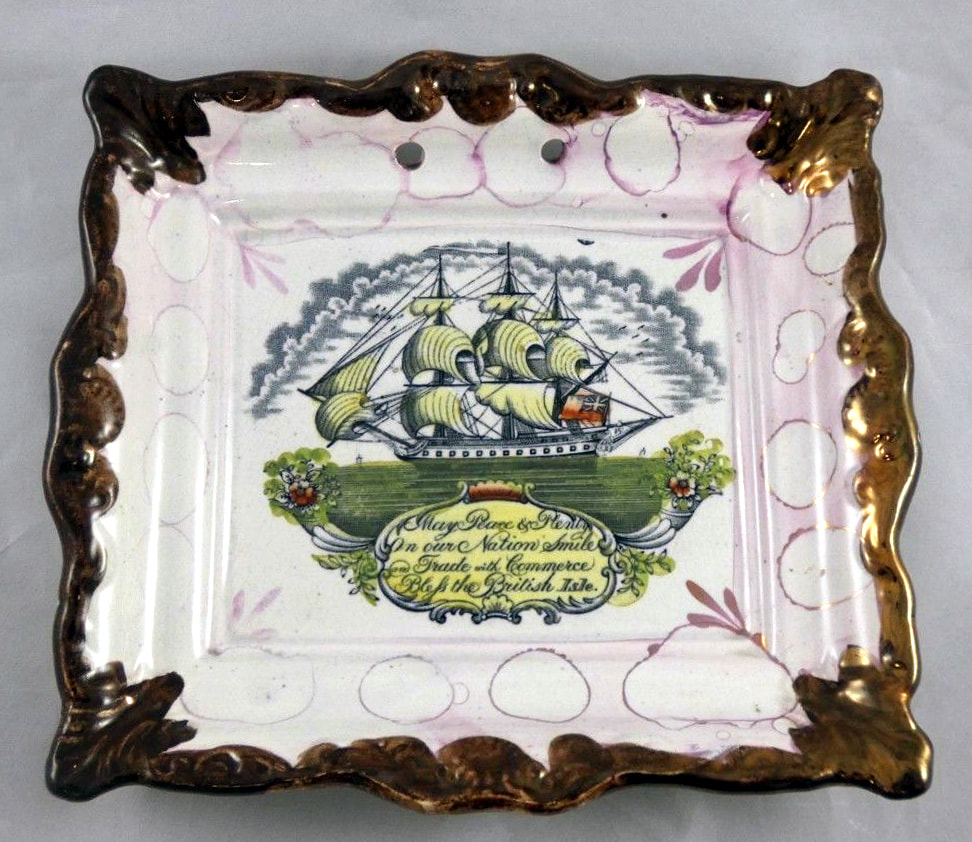
Rectangular versions exist with the Dixon, Phillips & Co anchor impressed mark (1839–c1850) and the Dixon Co impressed mark, as shown above (c1851–1865). The marks relate to the plaques to their left. The last three plaques all have the 'Dixon Co' impressed mark. The rectangular plaques measure 210mm x 185mm. It is rare to find these Dixon plaques with coloured enamels (see last photo).
Attributed to Newbottle High Pottery, Sunderland
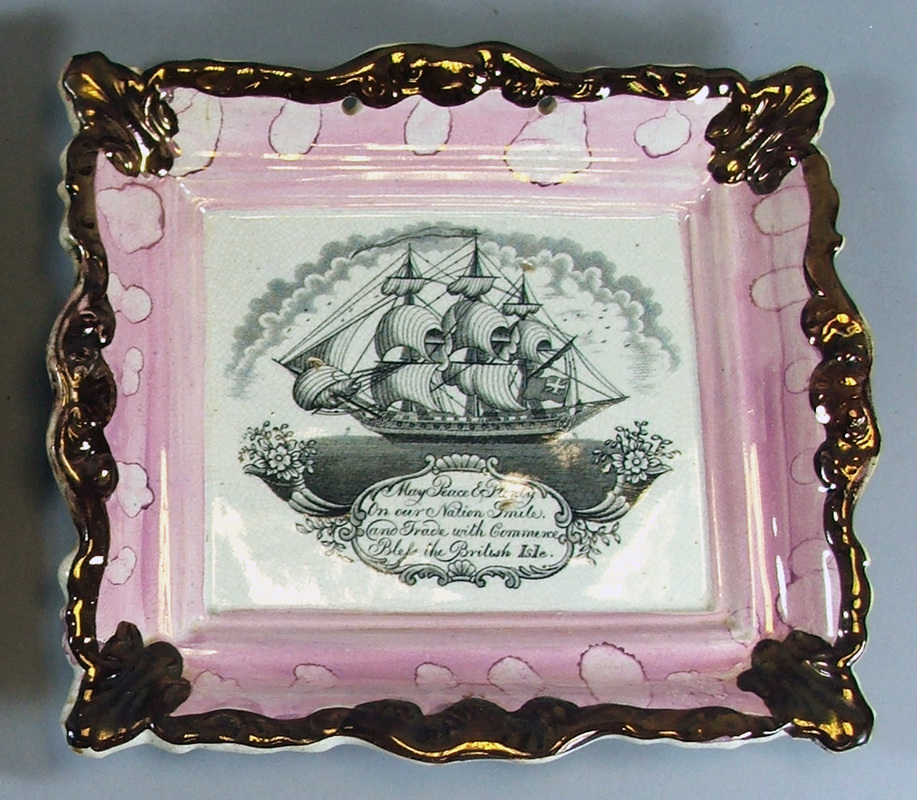
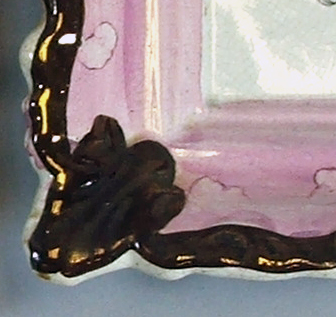
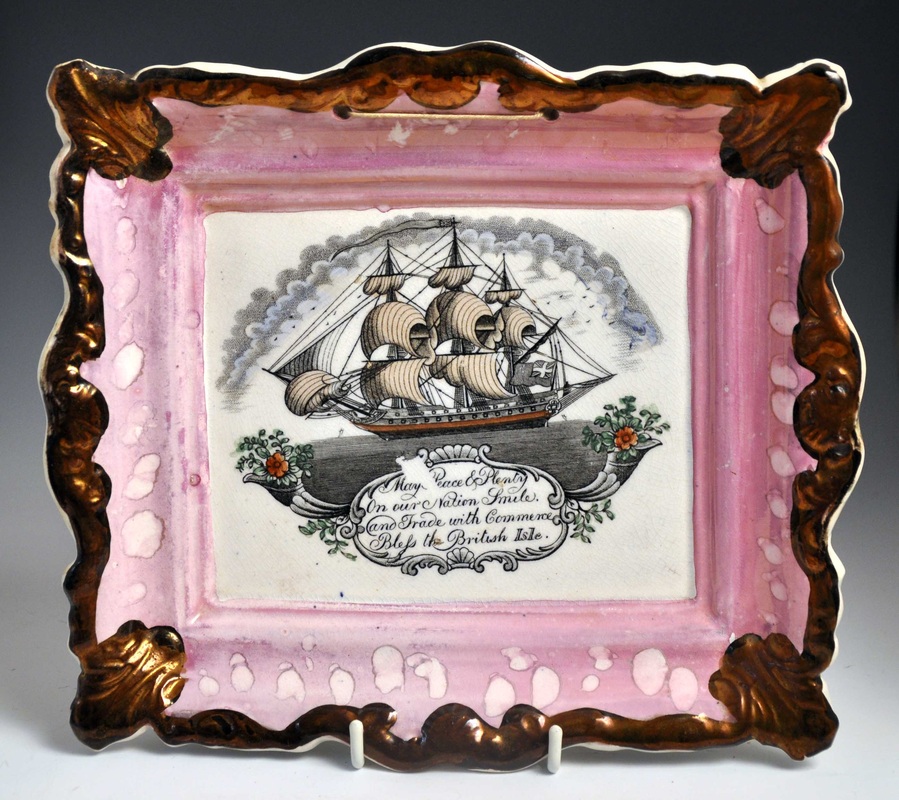
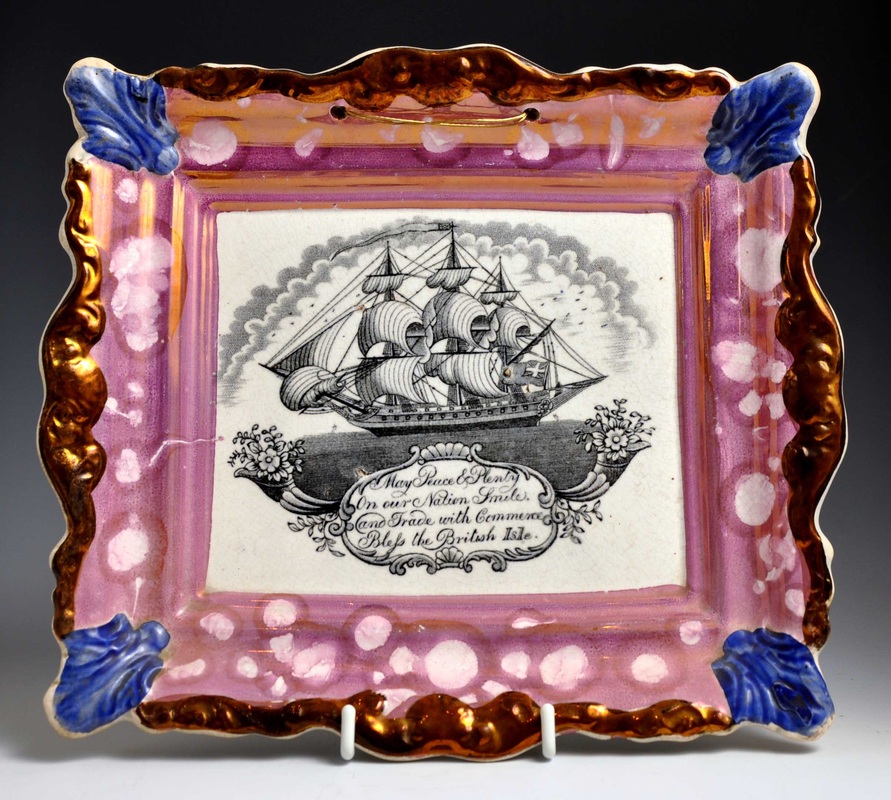

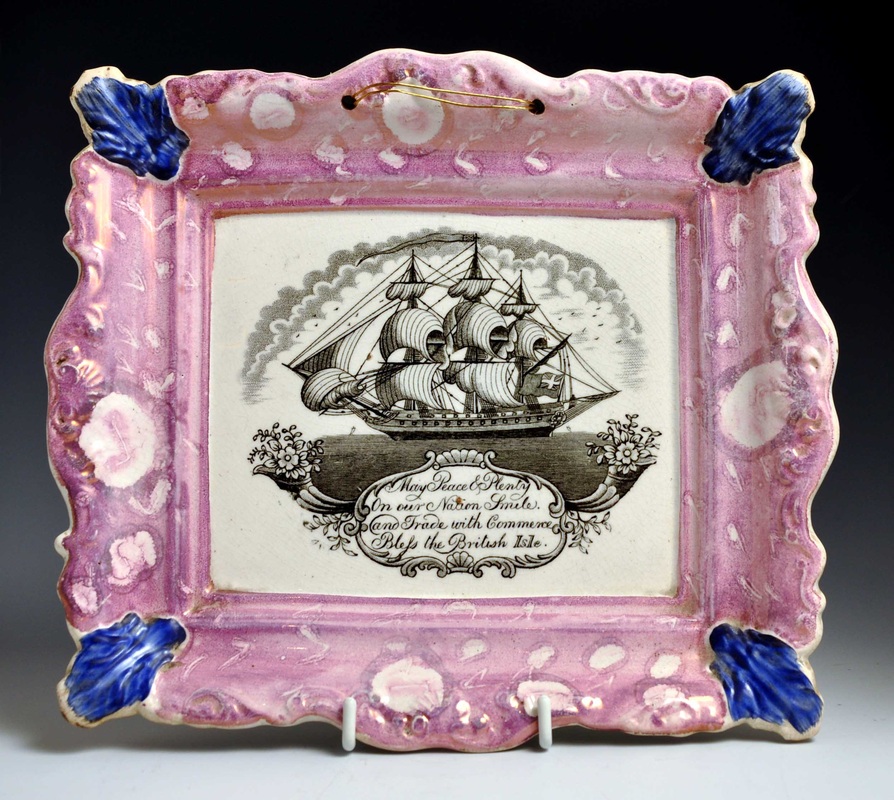
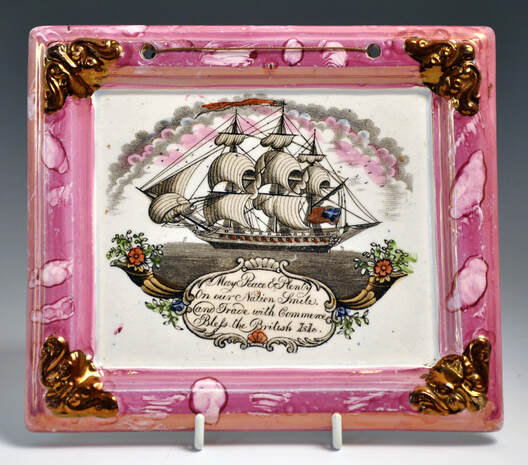
The plaques above are attributed to Newbottle, c1845. The first four are finely potted and the copper lustre is painted neatly up to a line, so that the white of the edges can be seen from the front (see detail). The bottom row have unusual blue or green corners. The plaques are 230mm x 200mm. The plaque below is smaller: 195mm x 167mm.
Attributed to Moore & Co, Wear Pottery, Sunderland
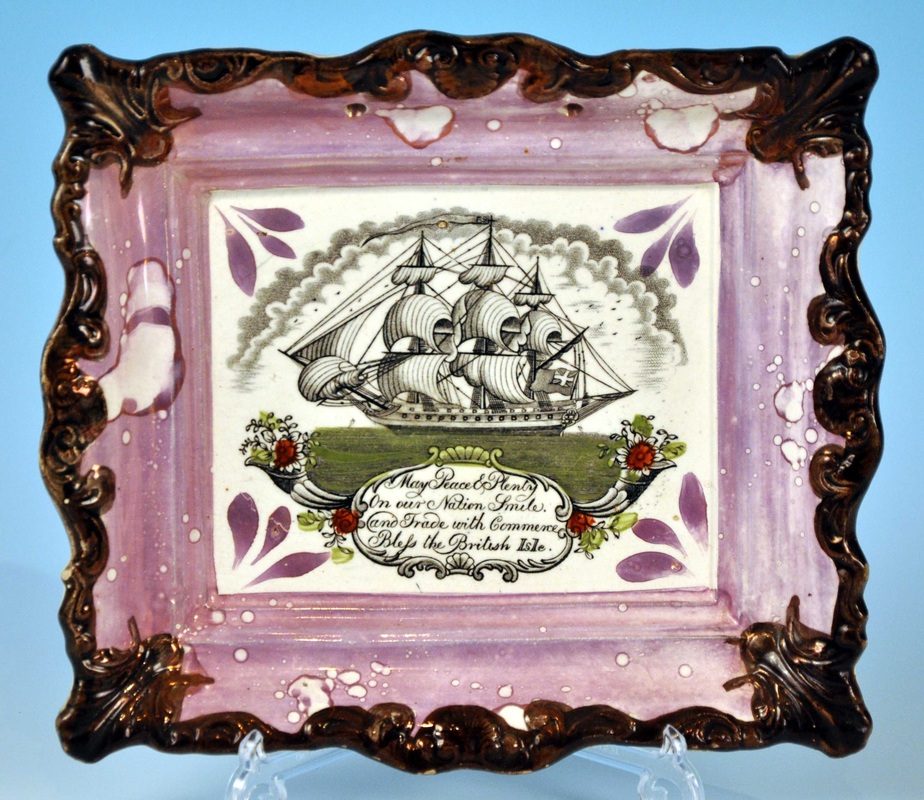
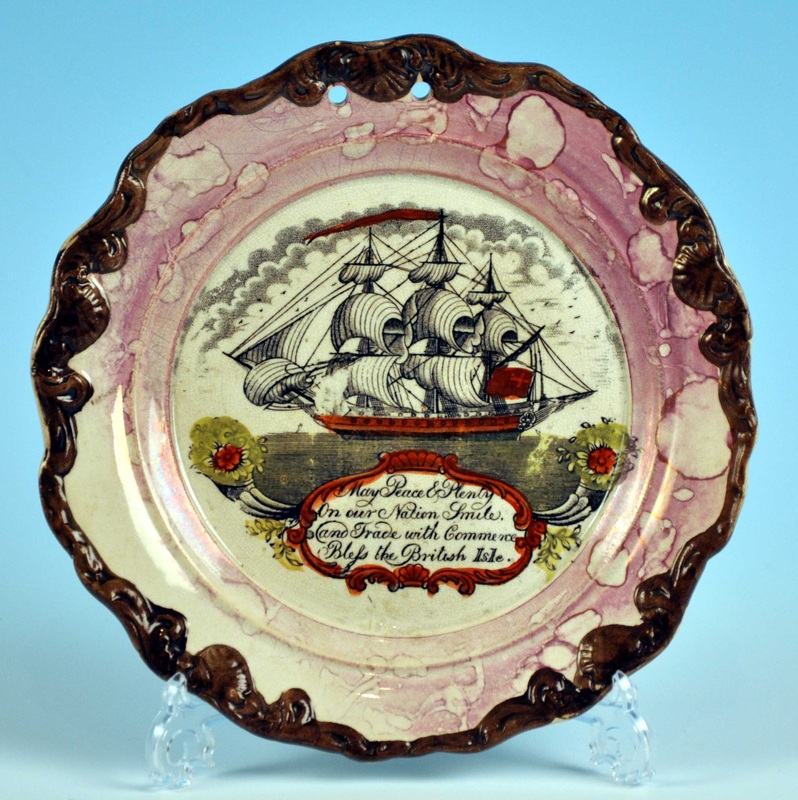
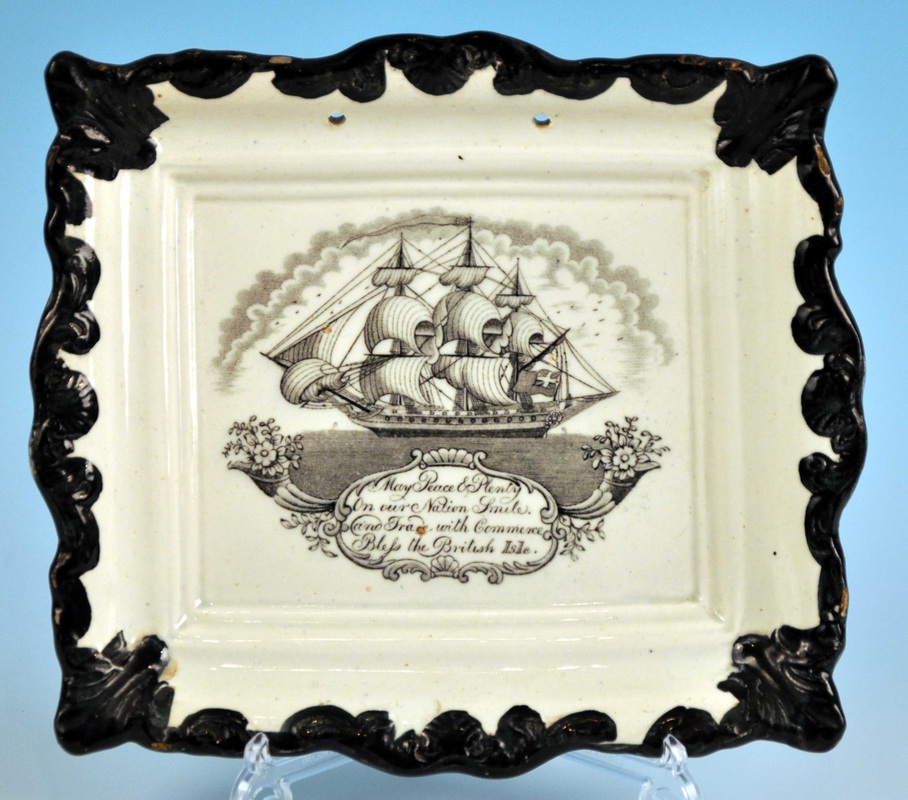
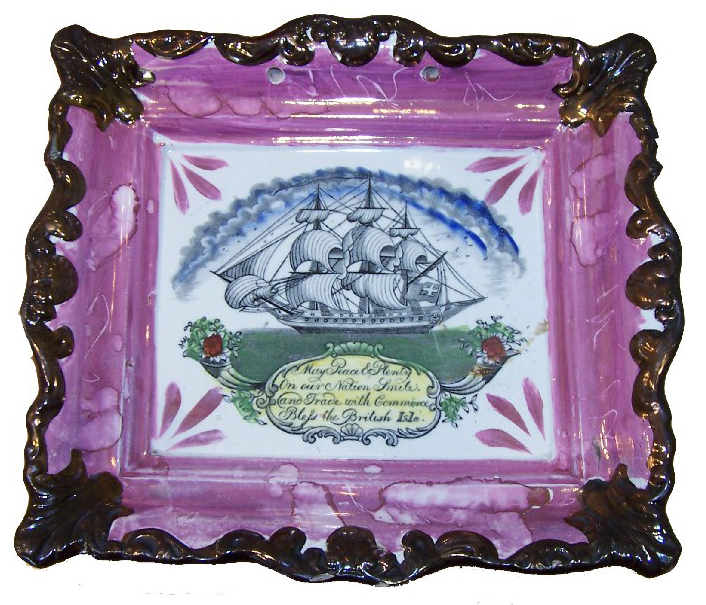
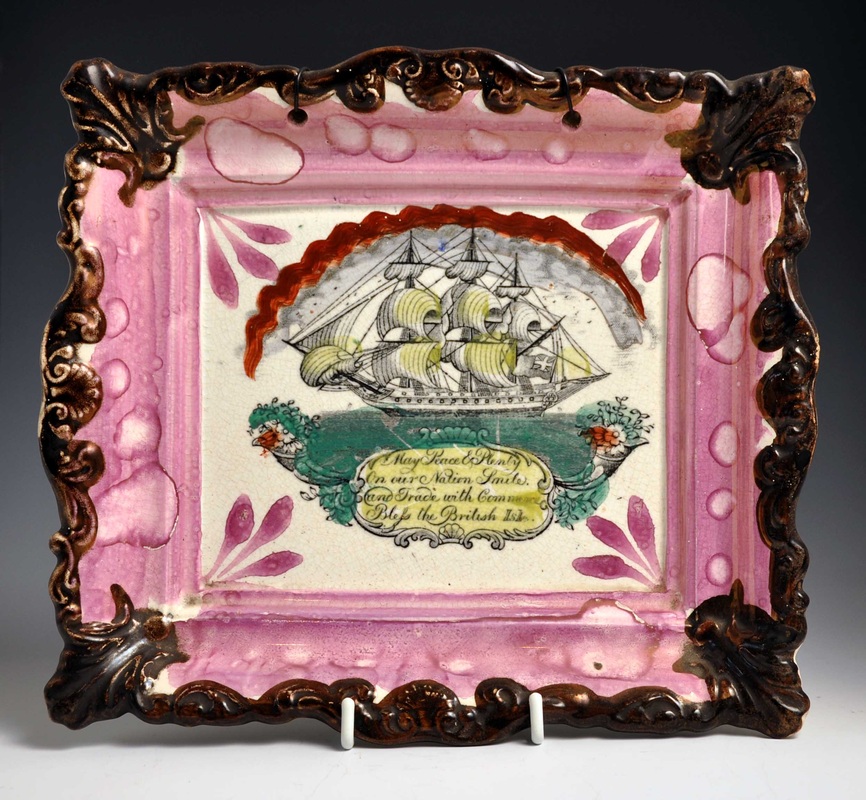
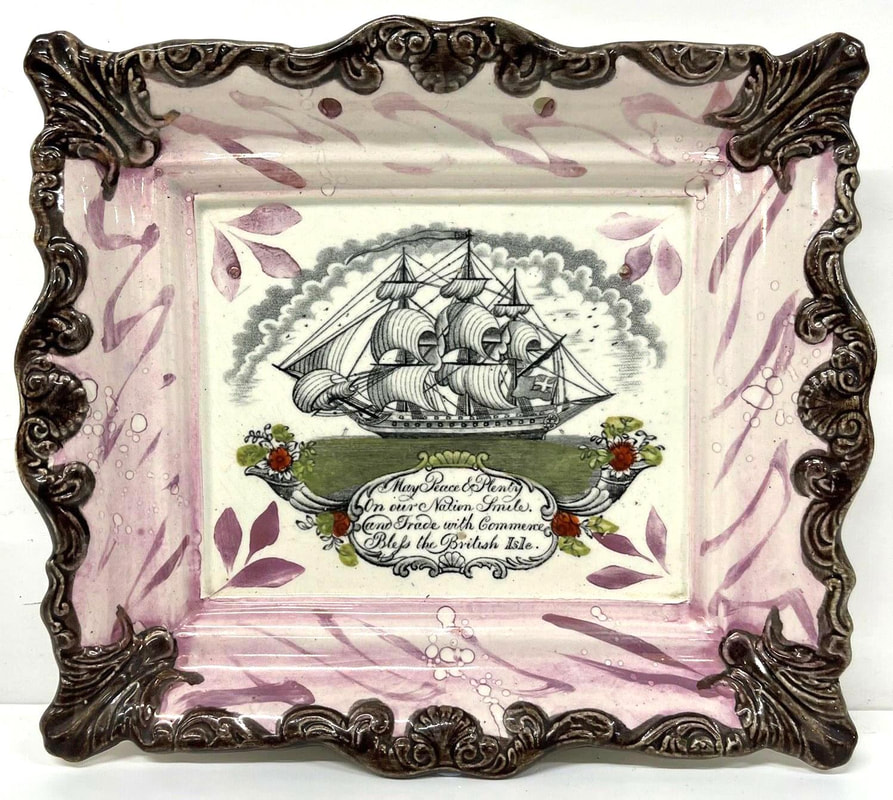
There are many variations of enamelling on the more common brown-bordered plaques (attributed to Moore), using combinations of iron red, yellow, green and blue. These plaques were likely made in the 1860s. However, the undecorated version (top right) might perhaps be as late as the 1870s. The rectangular plaques are 230mm x 205mm. Interestingly, this transfer has never yet been recorded on orange-lustre plaques.
Attributed to John Carr, Low Lights Pottery, North Shields
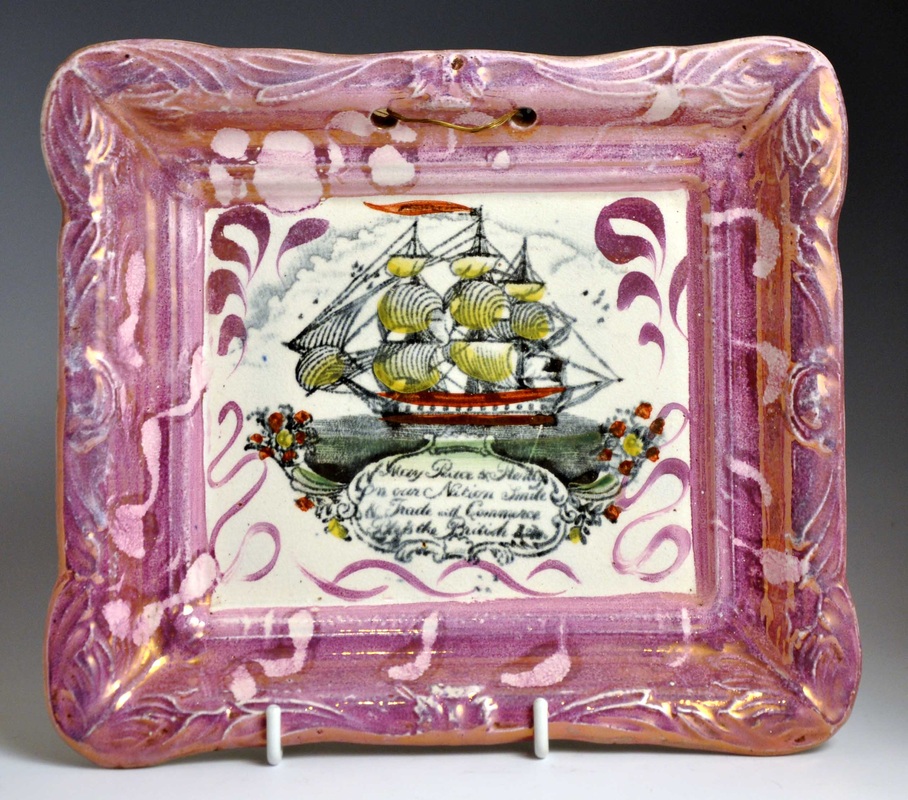
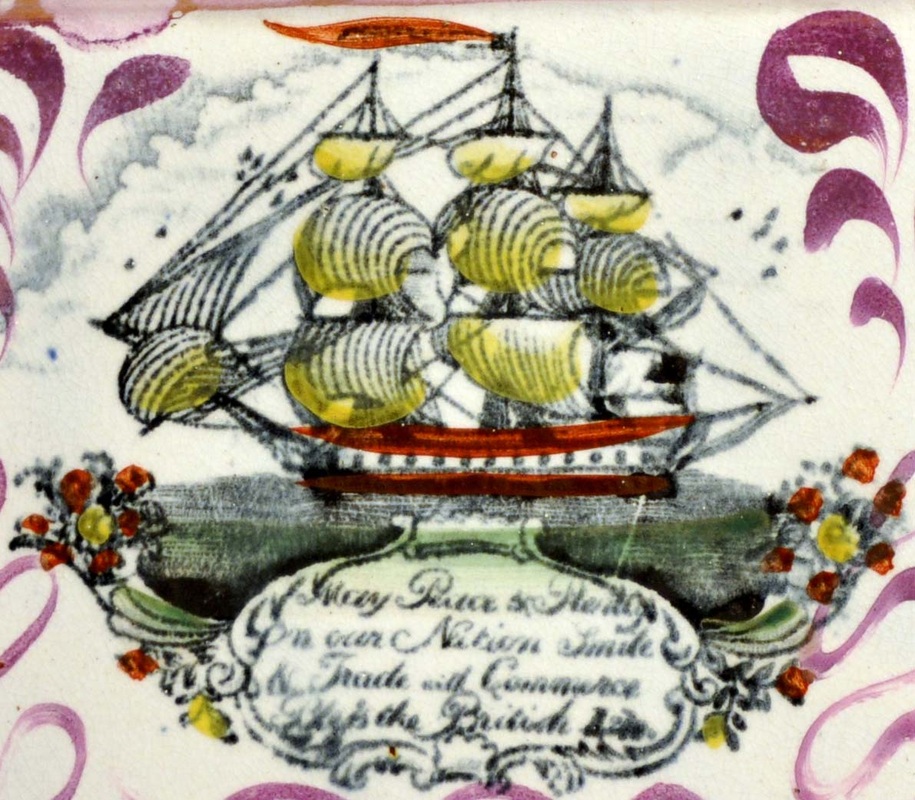
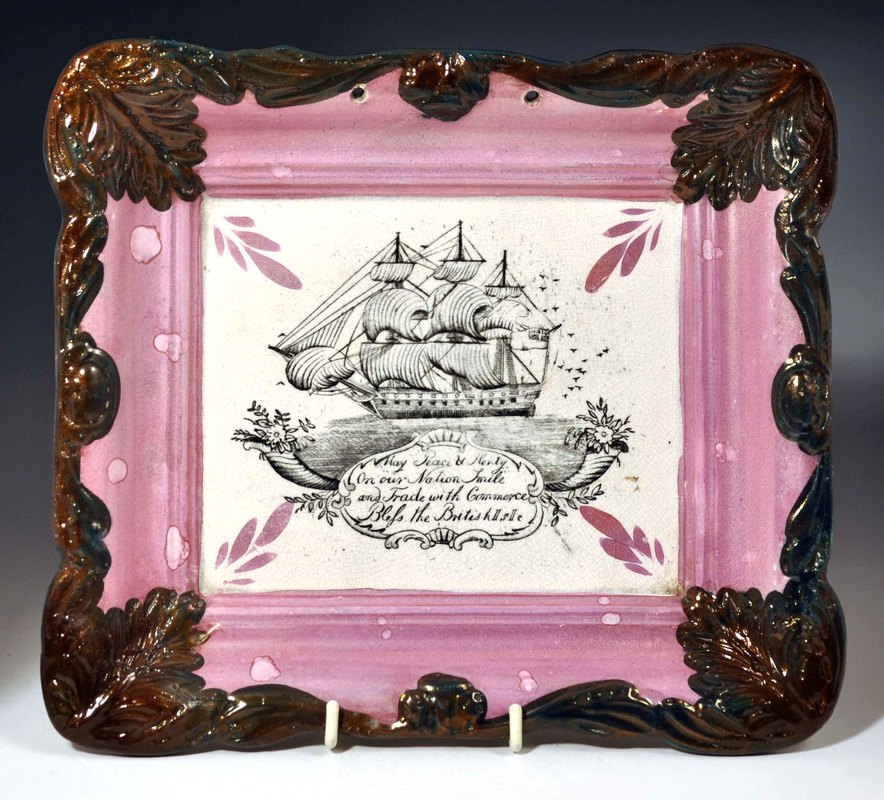
The transfer appears similar to the Dixon version, except for the 'S' in 'Smile'. However, that could have been re-engraved. We know that John Carr purchased Dixon transfer plates when the Garrison pottery closed in 1865.
Small plaques from an unidentified Tyneside pottery
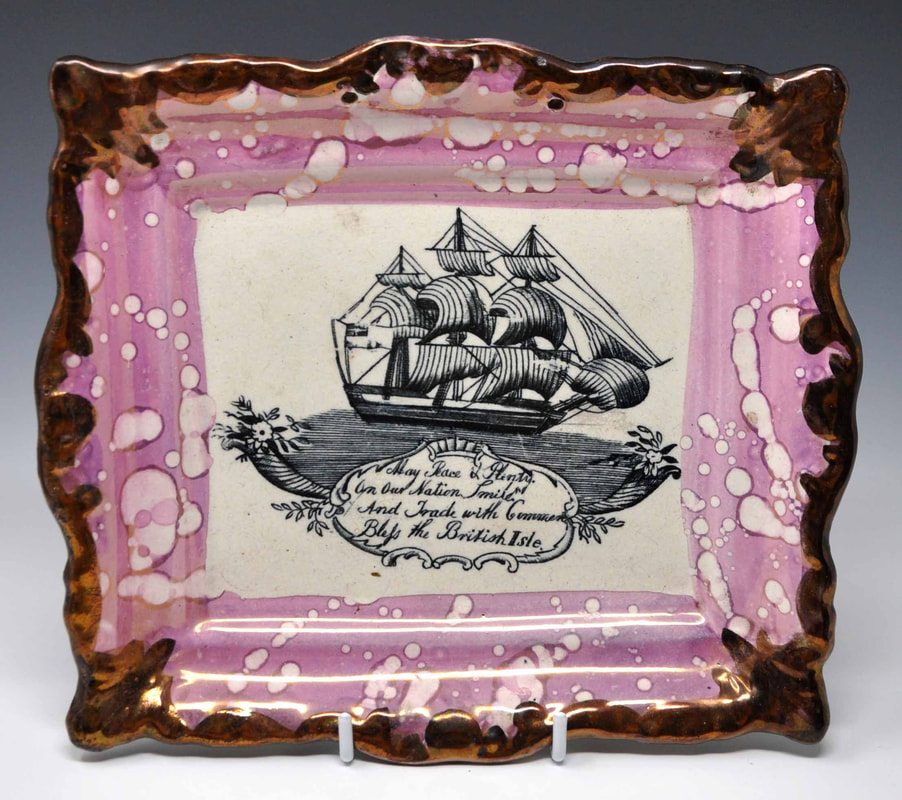
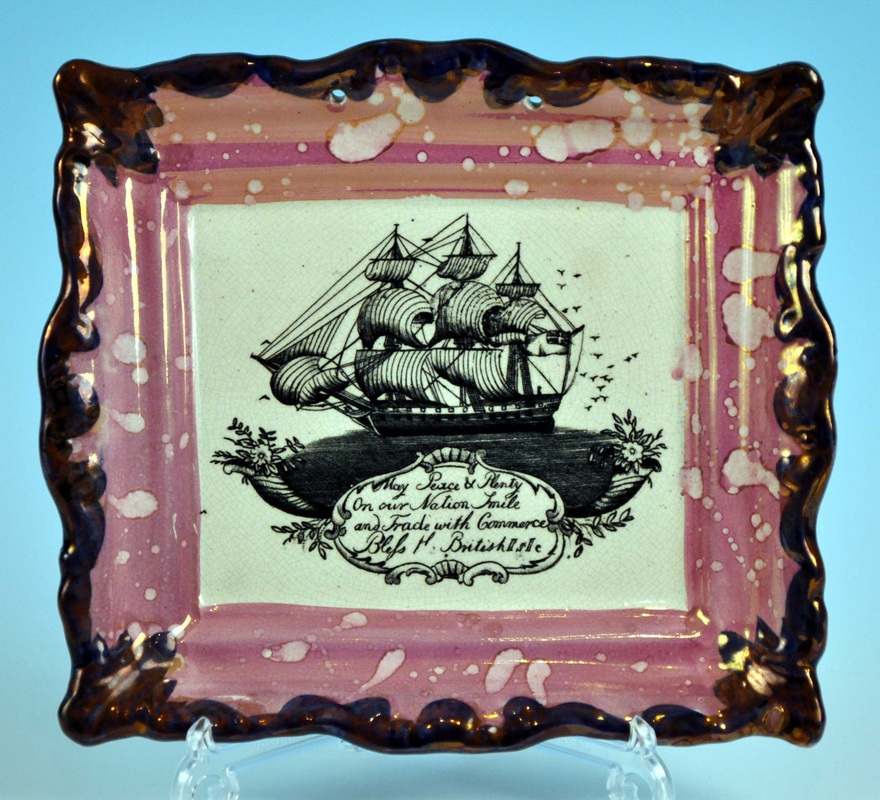
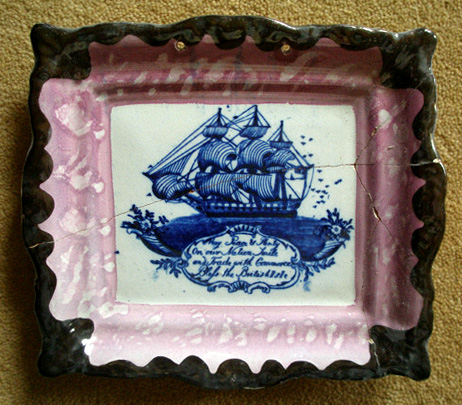
The top left plaque shows the ship facing in the opposite direction. The plaque on the right has a rare blue-printed transfer. These smaller plaques often have subjects associated with John Carr's pottery, but this transfers is different to those on the Carr plaques in the section above. Wallace & Co are known to have printed transfers in blue at their Forth Banks Pottery in Newcastle.
Albion Pottery, Newcastle, and attributed to John Carr, Low Lights Pottery, North Shields
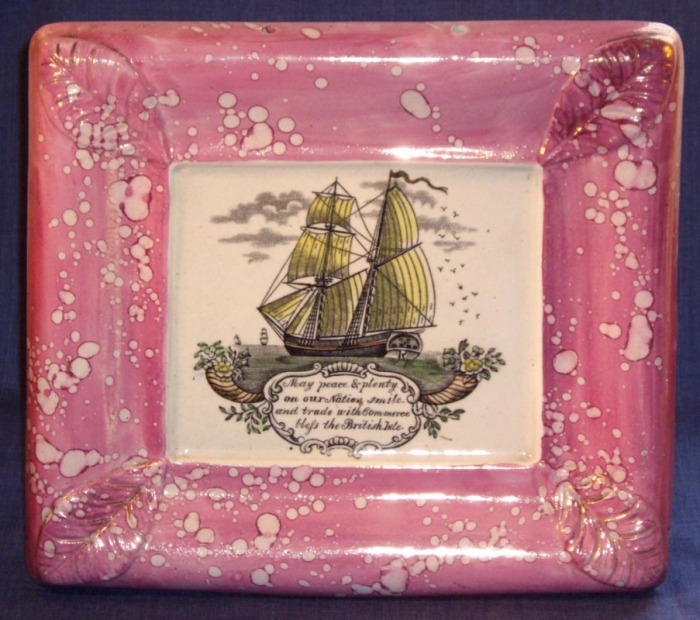
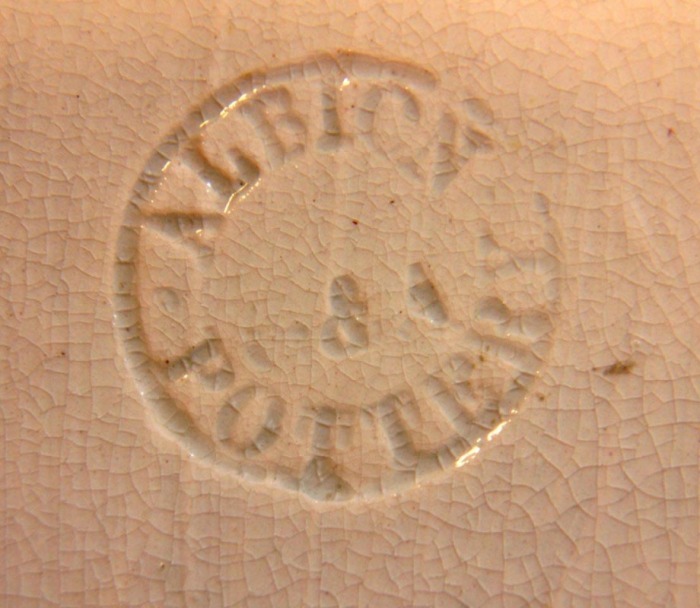

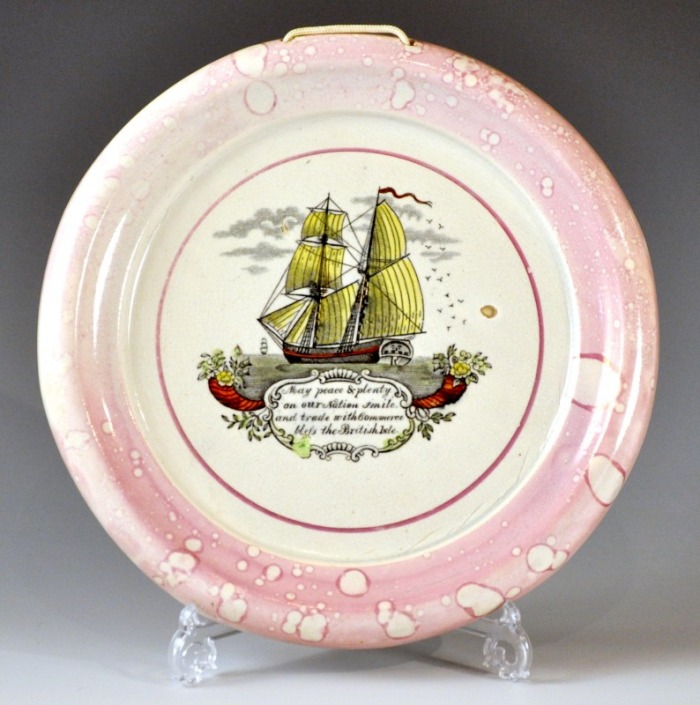
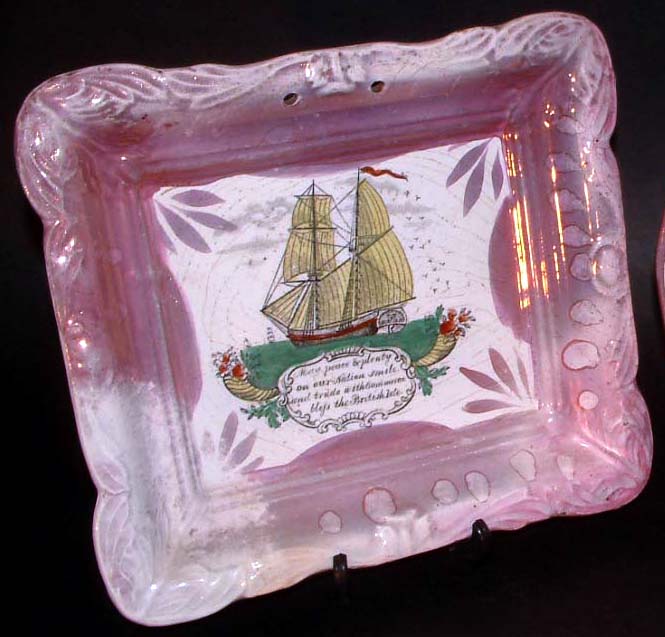
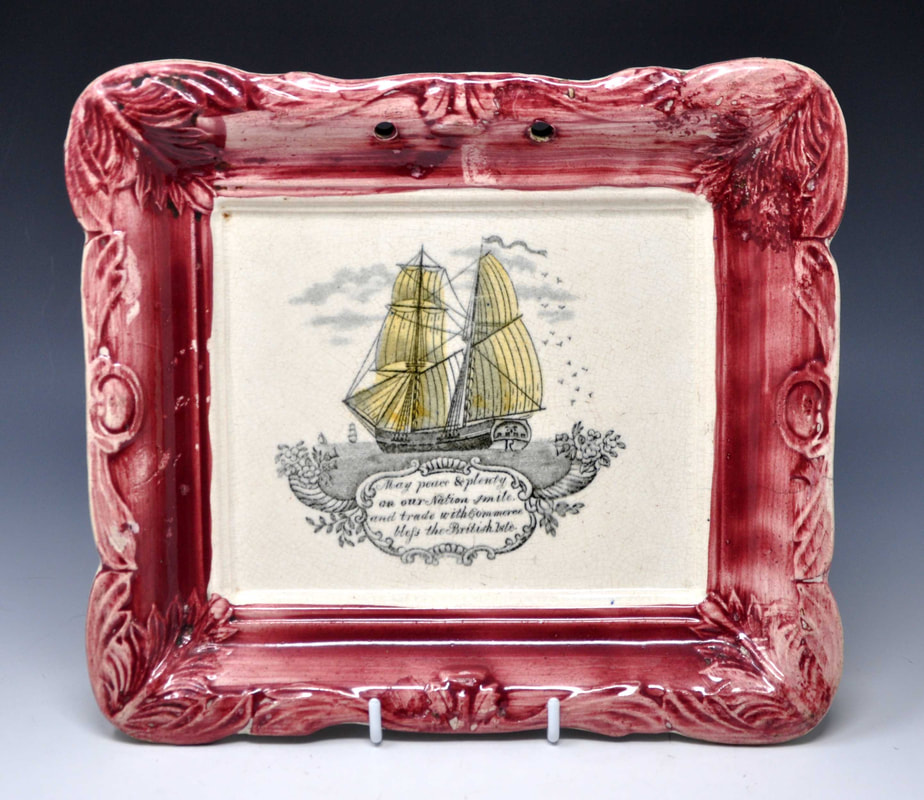
The two plaques on the left are from the Albion Pottery, Newcastle. The transfer detail and impressed mark relate to the first plaque. The last two plaques are attributed to John Carr, who apparently bought the transfer plates, c1864, after the Galloway and Atkinson partnership at the Albion Pottery dissolved.
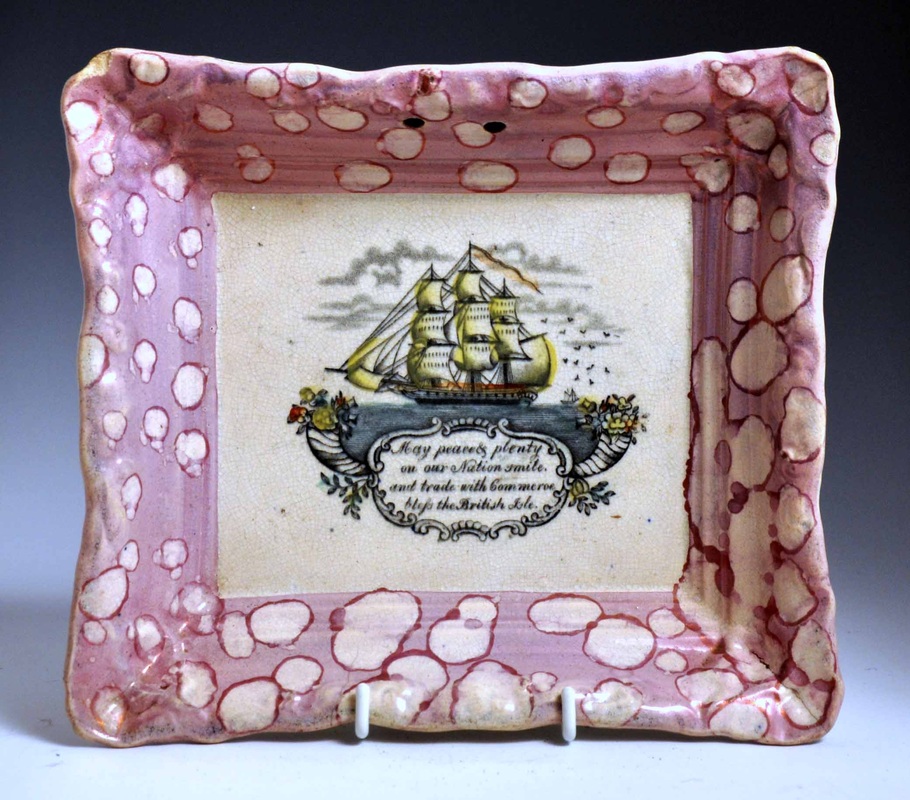

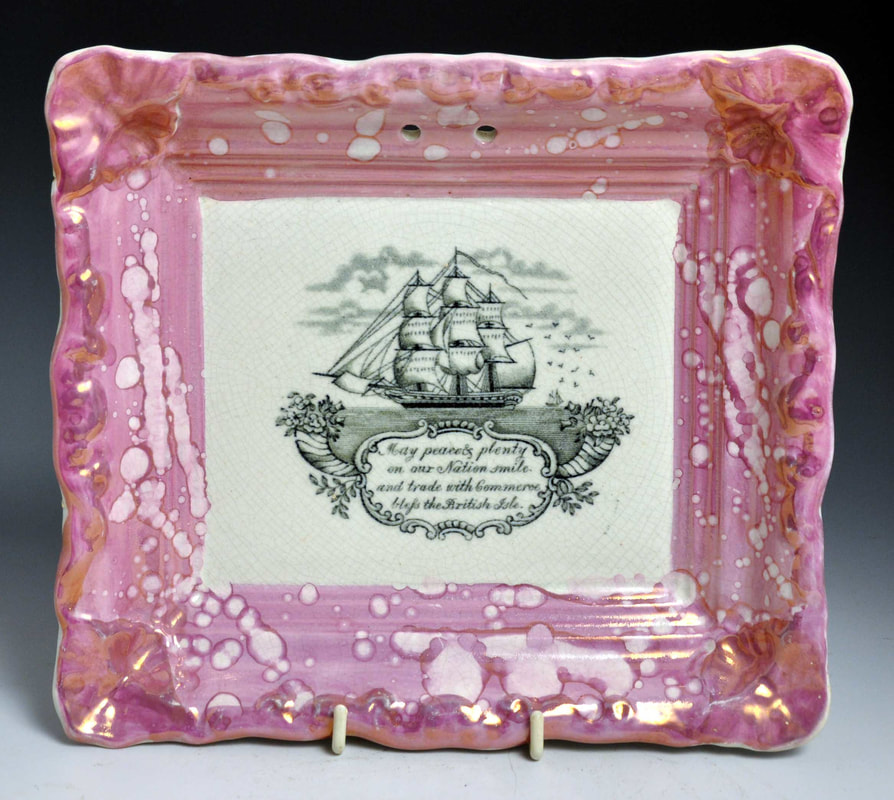
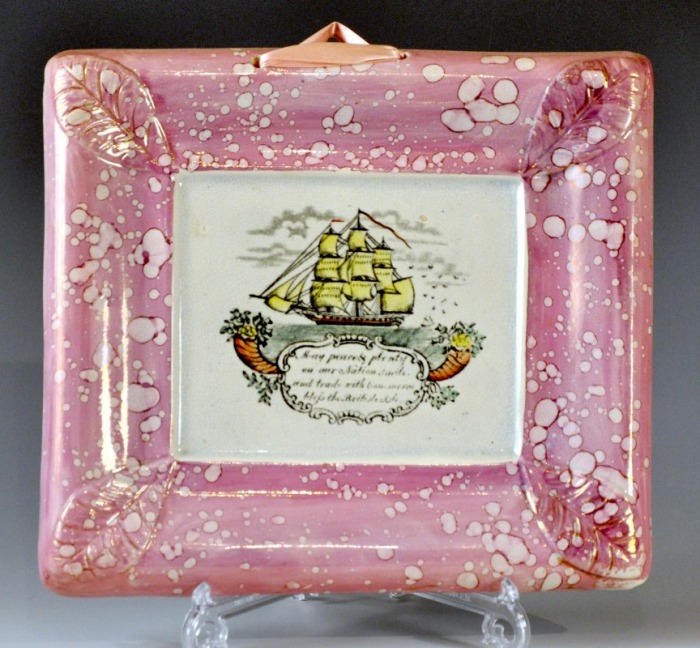

Above is another variation of the May Peace & Plenty transfer. Again, the first four plaques are from the Albion Pottery. The last is Attributed to Carr.
Attributed to Adams' Pottery, Staffordshire
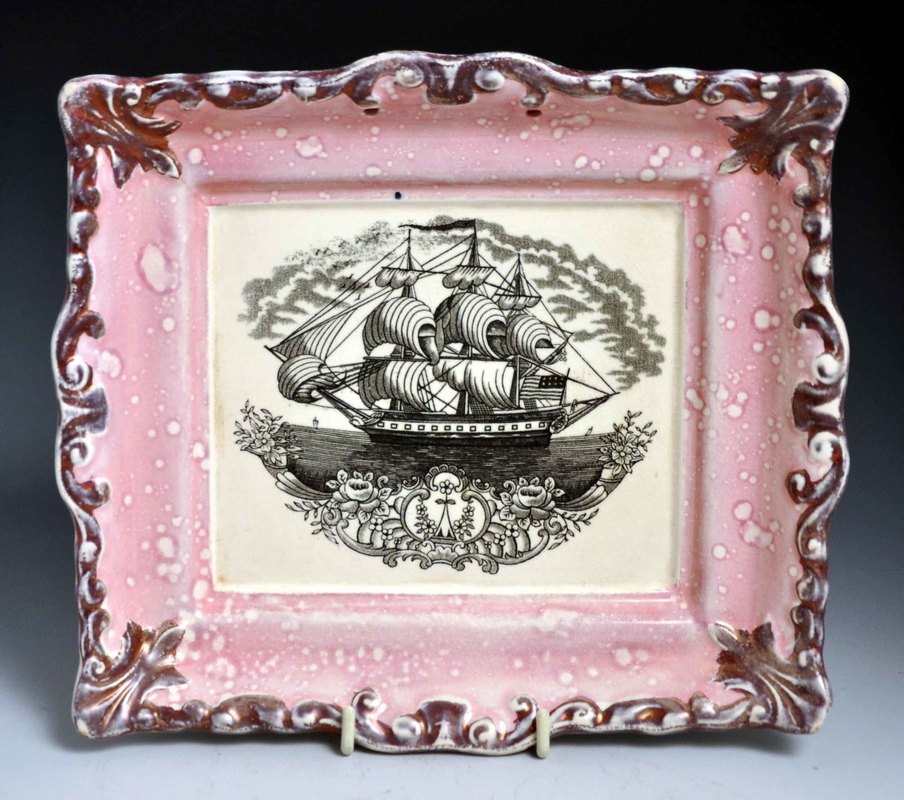

This rare version of the transfer has no verse, and shows a ship flying an American flag. The mould has a distinctive border used exclusively by Adams' Pottery. Although the plaque is unmarked, it is likely that it was made by that pottery for the US market in the first half of the 20th century.
Later 20th century reproductions
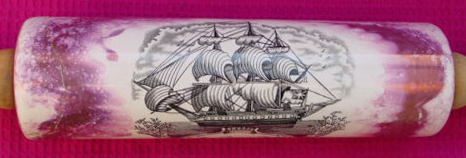
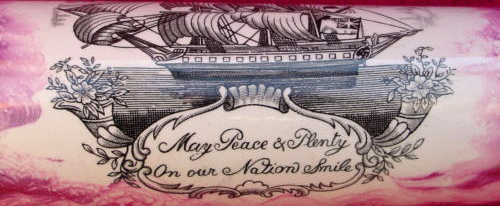
Above are two photos of a rolling pin. Although unmarked, the lustre decoration is typical of Gray's Pottery in the 1950s. Despite being relatively modern, these items are very collectible (see the Reproductions page for more Gray's items). Note that on this transfer there is only half of the verse.