Landscapes
Contents of this page:
California (Moore & Co)
Circular landscape plaques (Stockton)
Cottage ware landscapes (Moore & Co, Staffordshire)
Cows and ruin
Cuyp (Moore & Co)
Eddystone lighthouse (Garrison)
Express – landscape with a train
Gothic folly
Hunting scenes (Moore & Co)
Landscapes that appear on John Carr & Co plates
Oriental landscapes
Punting and fishing
Romantic landscapes (Garrison)
Staffordshire plaques with landscapes
Unidentified Moore & Co landscapes with large houses
Venice with gondola (Tyneside)
Waverley, and Chantry (Moore & Co)
Wellcombe (Staffordshire)
Other landscapes
California (Moore & Co)
Circular landscape plaques (Stockton)
Cottage ware landscapes (Moore & Co, Staffordshire)
Cows and ruin
Cuyp (Moore & Co)
Eddystone lighthouse (Garrison)
Express – landscape with a train
Gothic folly
Hunting scenes (Moore & Co)
Landscapes that appear on John Carr & Co plates
Oriental landscapes
Punting and fishing
Romantic landscapes (Garrison)
Staffordshire plaques with landscapes
Unidentified Moore & Co landscapes with large houses
Venice with gondola (Tyneside)
Waverley, and Chantry (Moore & Co)
Wellcombe (Staffordshire)
Other landscapes
California
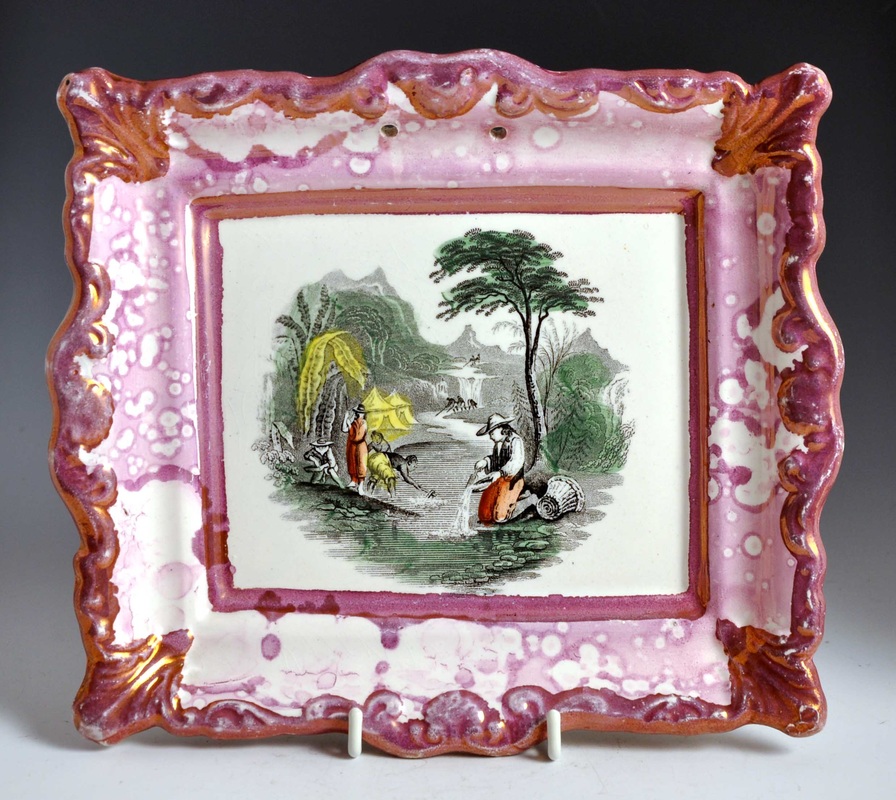
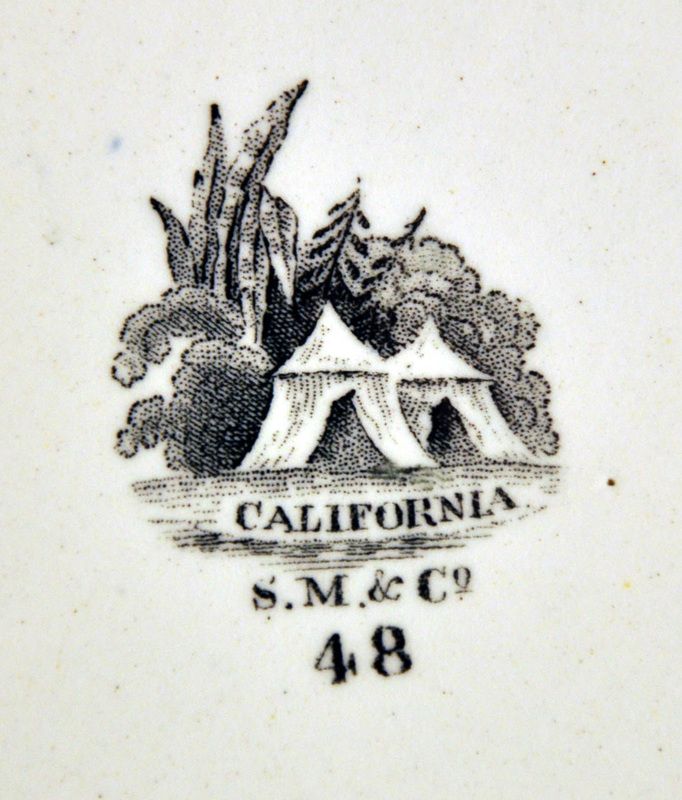

Left: a Samuel Moore & Co plaque showing a man prospecting for gold. Centre: the printed mark on the reverse. Right: a similar plaque with the same mark from the Sunderland Museum & Winter Gardens, Tyne & Wear Archives & Museums collection. The California gold rush began on 24 January 1848, supporting the theory that the numbers on these Moore & Co plaques, in this case 'California 48', correspond to the year and not a pattern number (see 'Waverley 49' and 'Hunting 50' below).
Circular landscape plaques

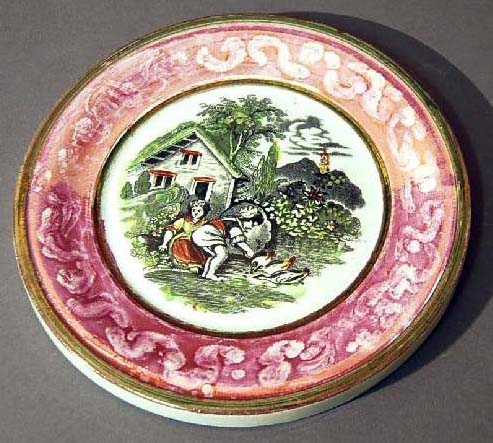
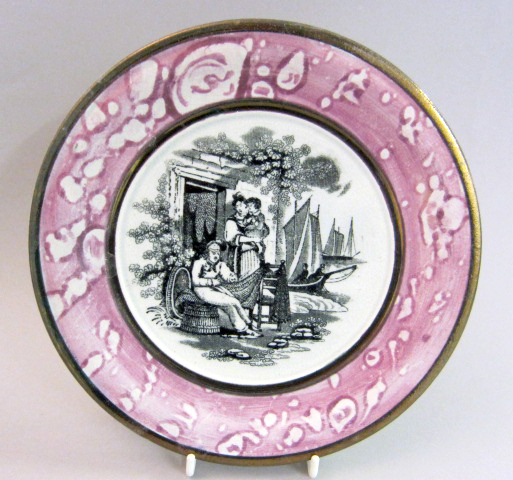
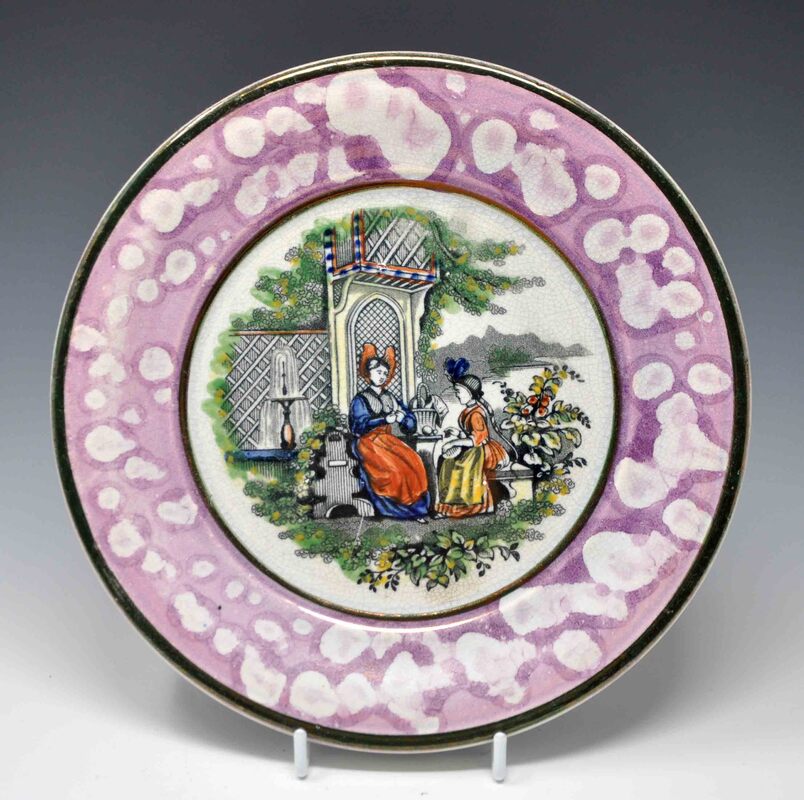
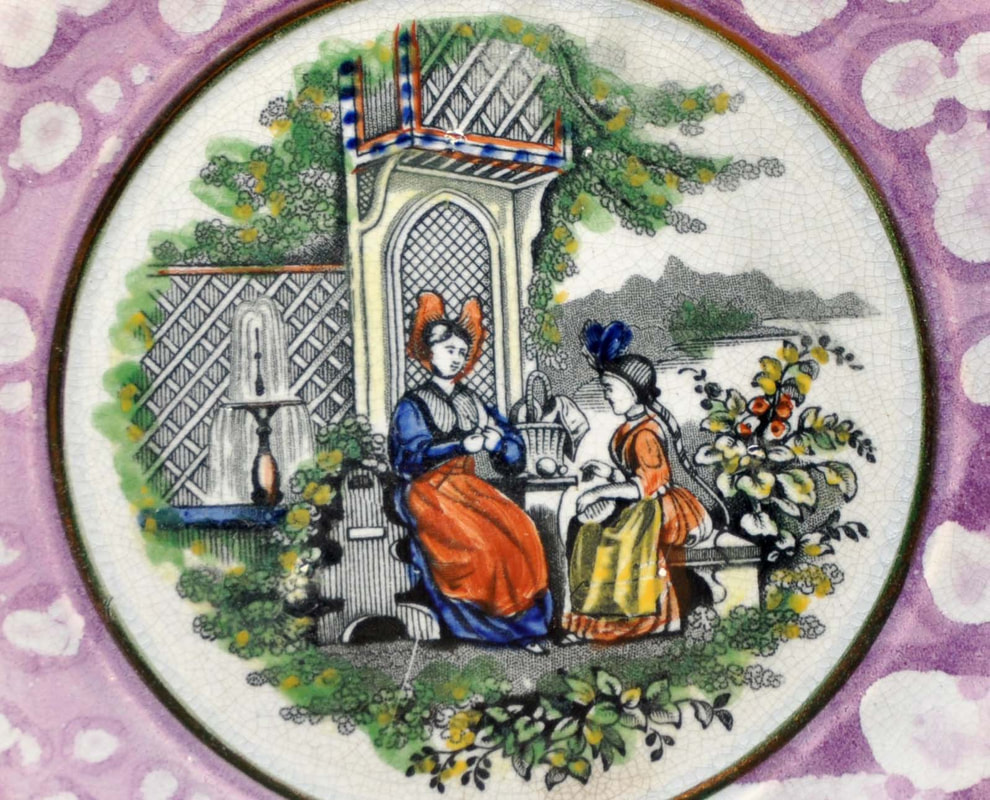
The top left plaque shows a boy with goats; the centre a girl with chickens; and the right plaque, a fisherman mending his net. Below them is what appears to be two women knitting in historical or traditional dress of some kind. See the Prepare to meet thy god page for a similar shaped plaque with an impressed mark with the Stockton coat of arms – an anchor and cable impaling a castle - used by the Stockton Pottery of Thomas Ainsworth. The pottery was founded in the 1840s and closed in 1901.
'Cottage ware' landscapes
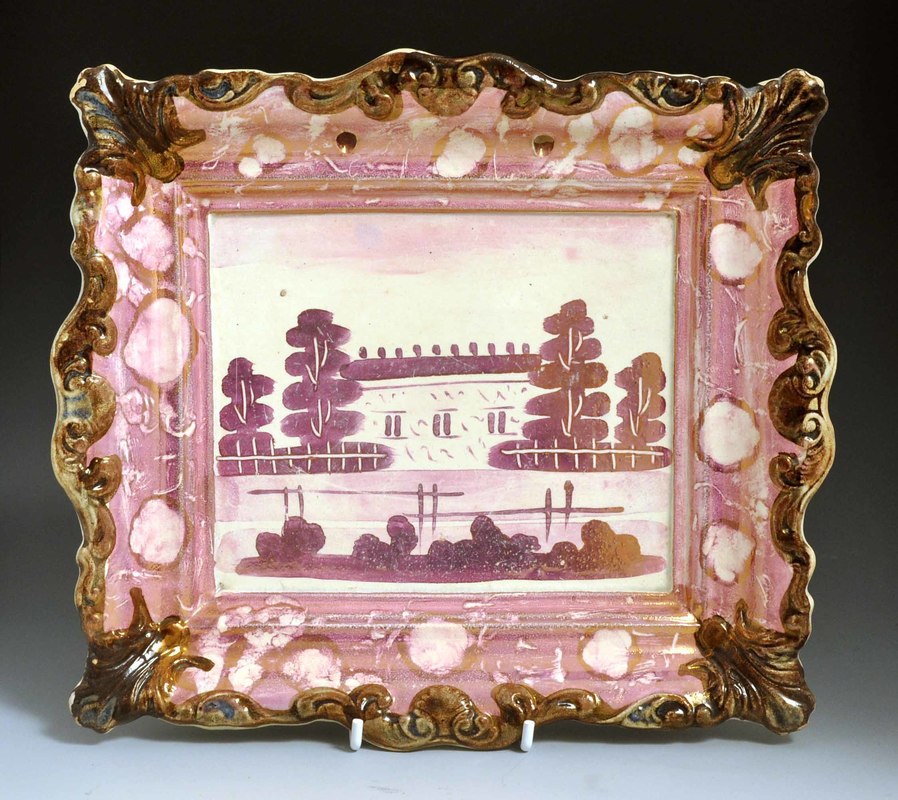
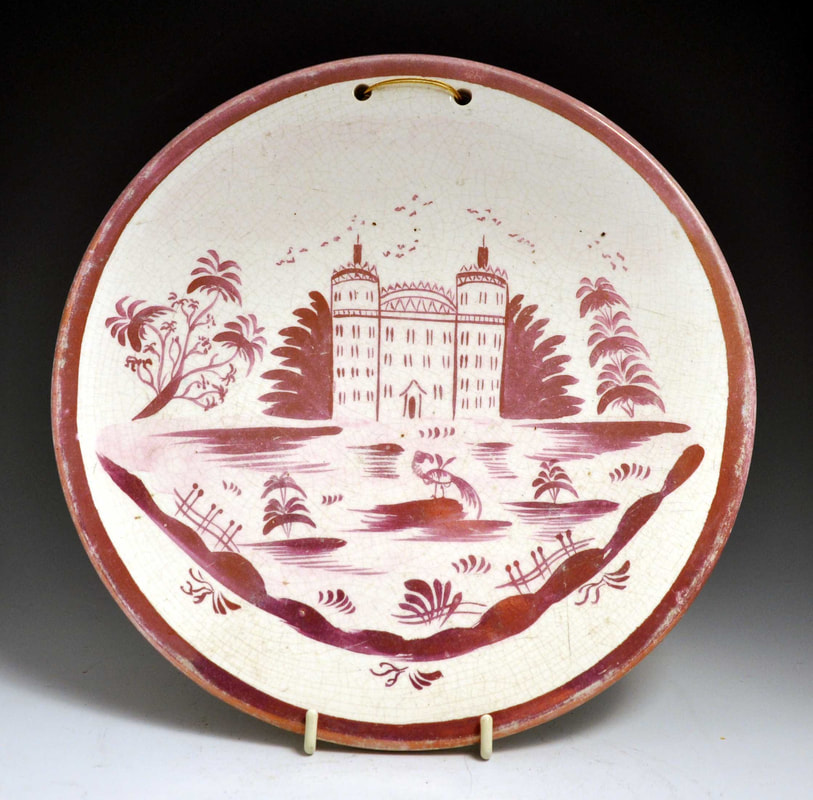
Although 'cottage ware' (usually tea sets with hand-painted decoration of cottages and churches sketched in fluid brushstrokes of lustre) is relatively common, it is unusual to find this decoration on plaques. The first plaque is of a form associated with Moore's pottery, after about 1860. The second plaque is of a large circular form, and was likely made in Staffordshire.
Cows and ruin
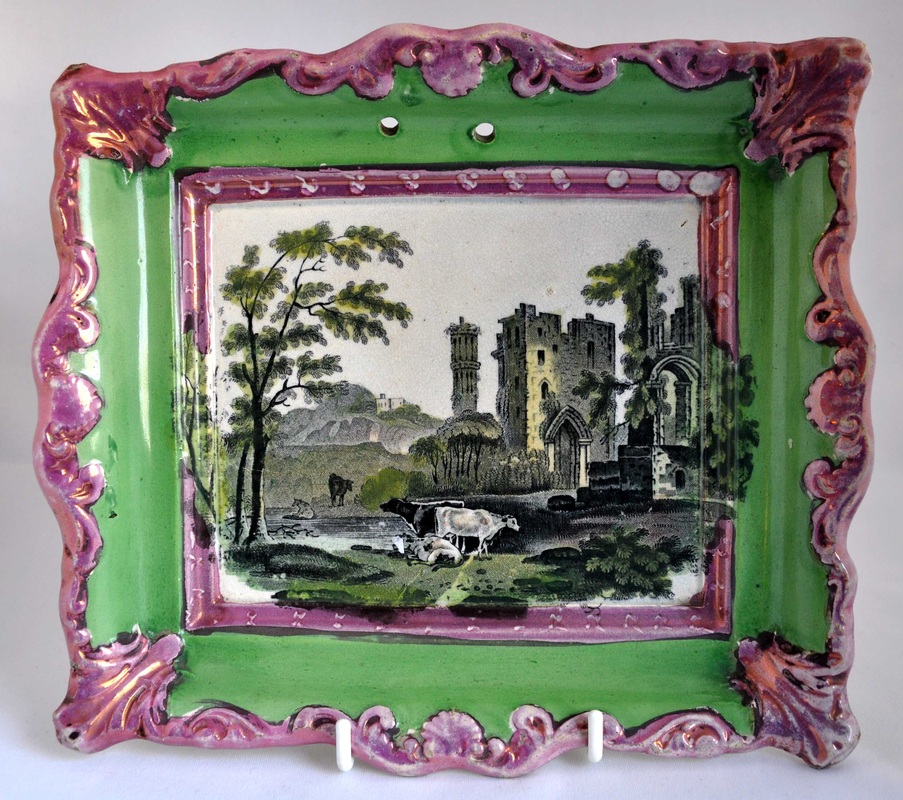
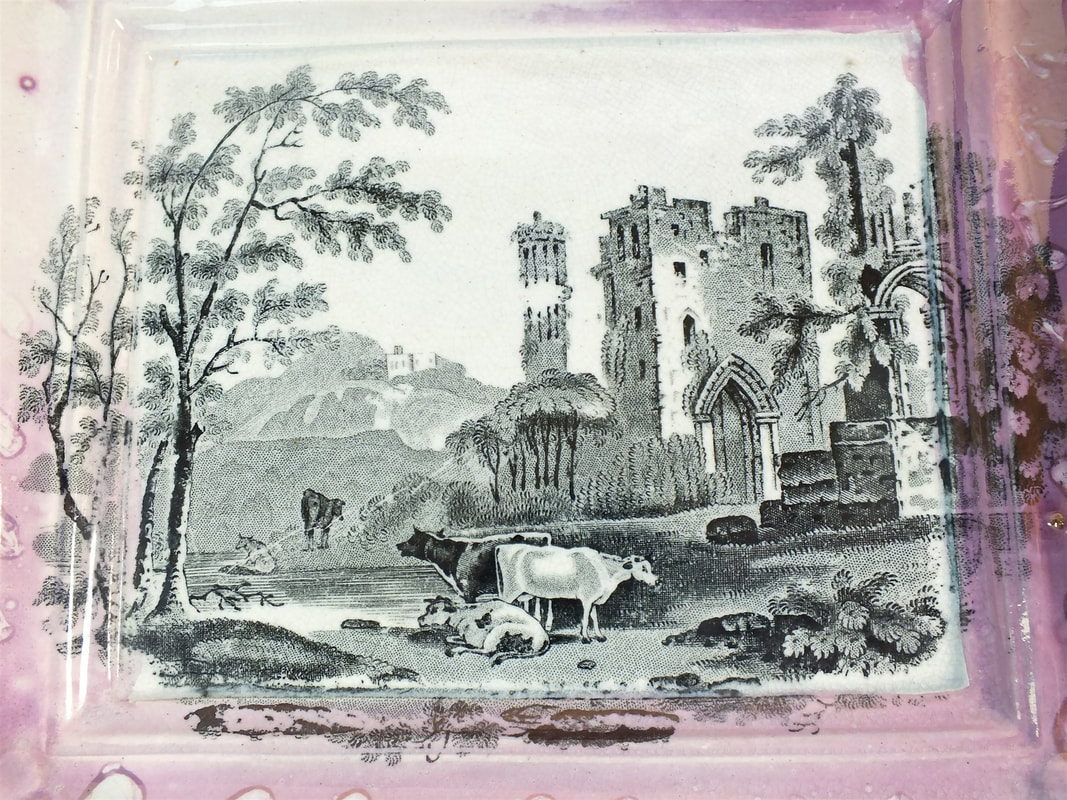
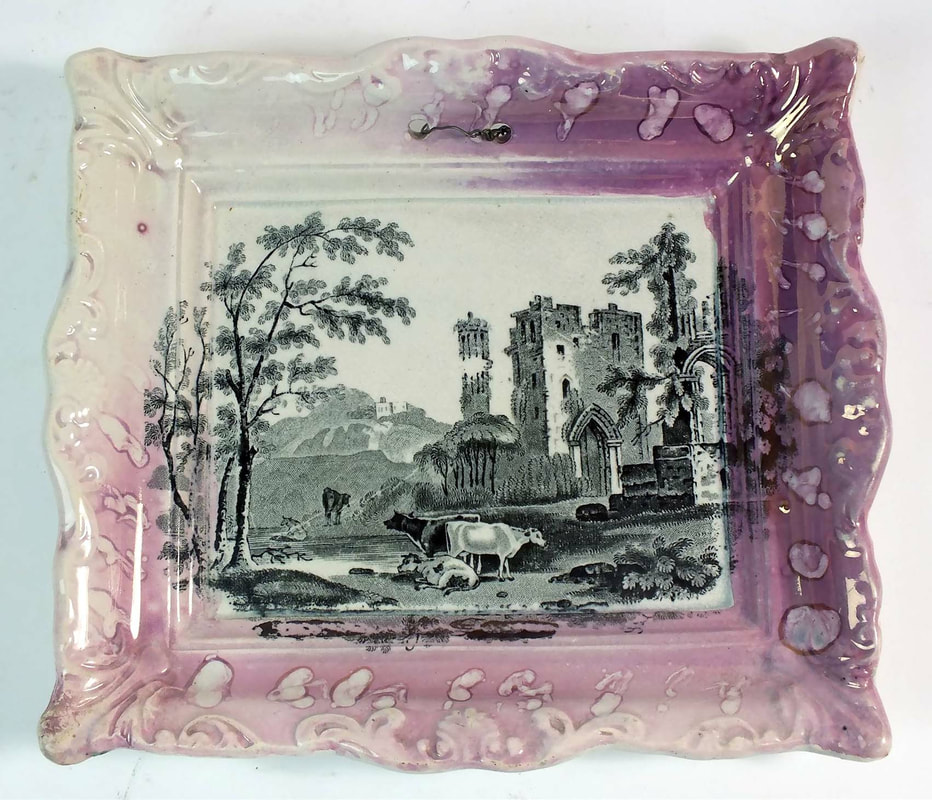
An exceptionally rare, purple and green bordered plaque, with cows before a ruin. The pink-bordered version is similar in shape and lustre decoration to plaques produced by John Carr & Sons, North Shields.
Aelbert Cuyp

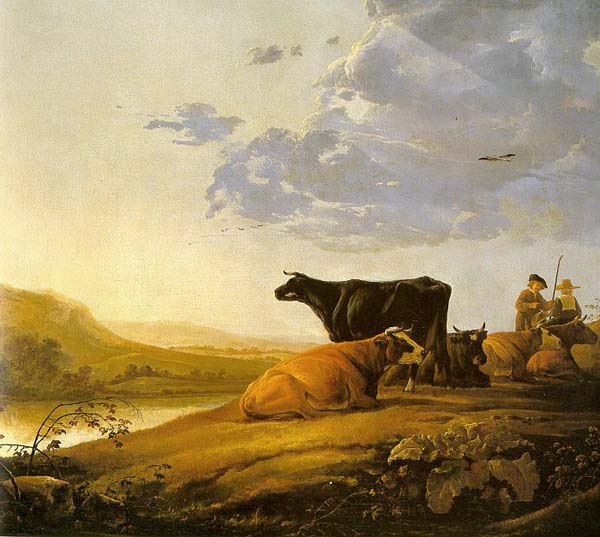
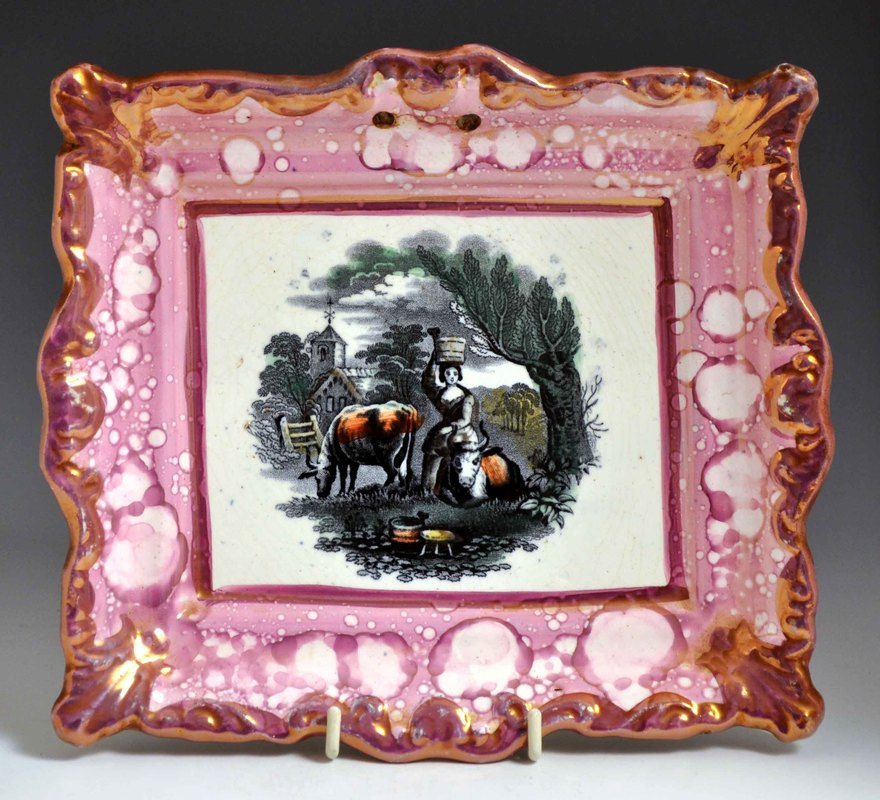

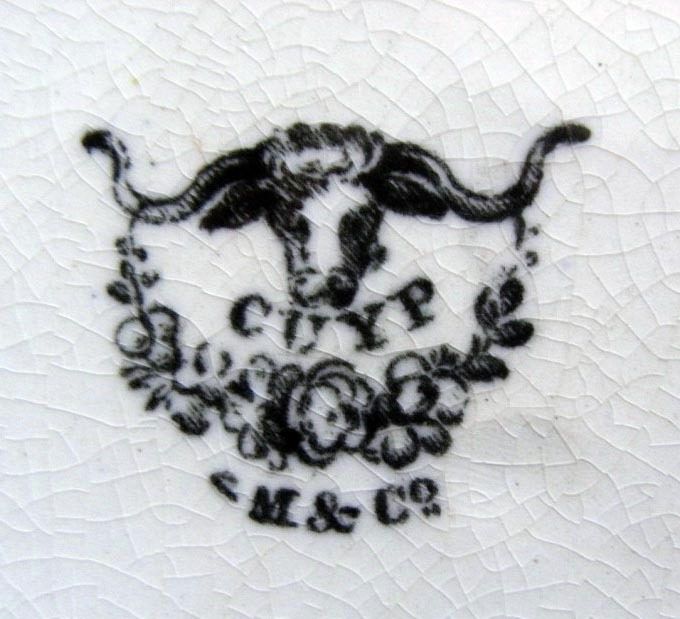
Plaques and a plate by Samuel Moore & Co with transfers after the Dutch landscape painter Aelbert Cuyp (1620–1691), famed for his paintings of cows (see top centre). Both the plate and the plaques have the same printed mark with garland and cowhorns.
http://en.wikipedia.org/wiki/Aelbert_Cuyp
http://en.wikipedia.org/wiki/Aelbert_Cuyp
Eddystone lighthouse (The Edystone)
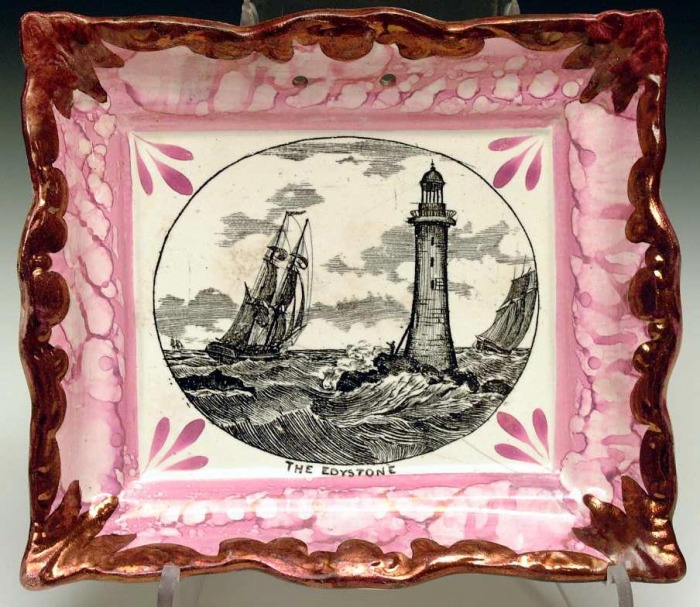
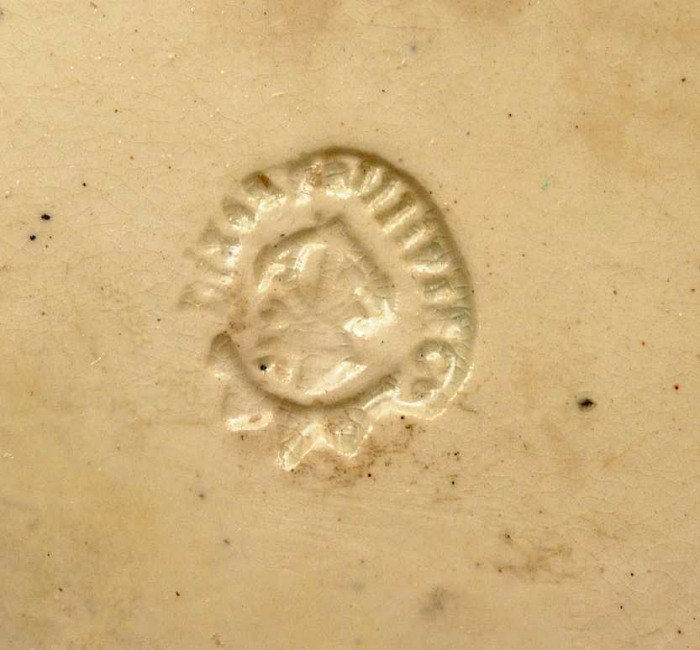
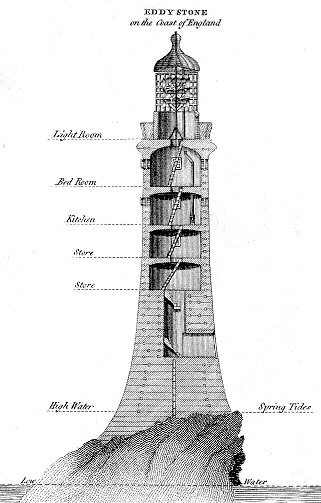
The transfer is titled 'THE EDYSTONE' and shows Smeaton's lighthouse, which was first lit in 1759. It remained in use until 1877, when erosion of the rocks underneath made the structure unsafe. The plaque, which is from the Sunderland Museum & Winter Gardens, Tyne & Wear Archives & Museums collection, has the impressed Dixon, Phillips & Co anchor mark (1839–c1850).
Express – landscape with a train
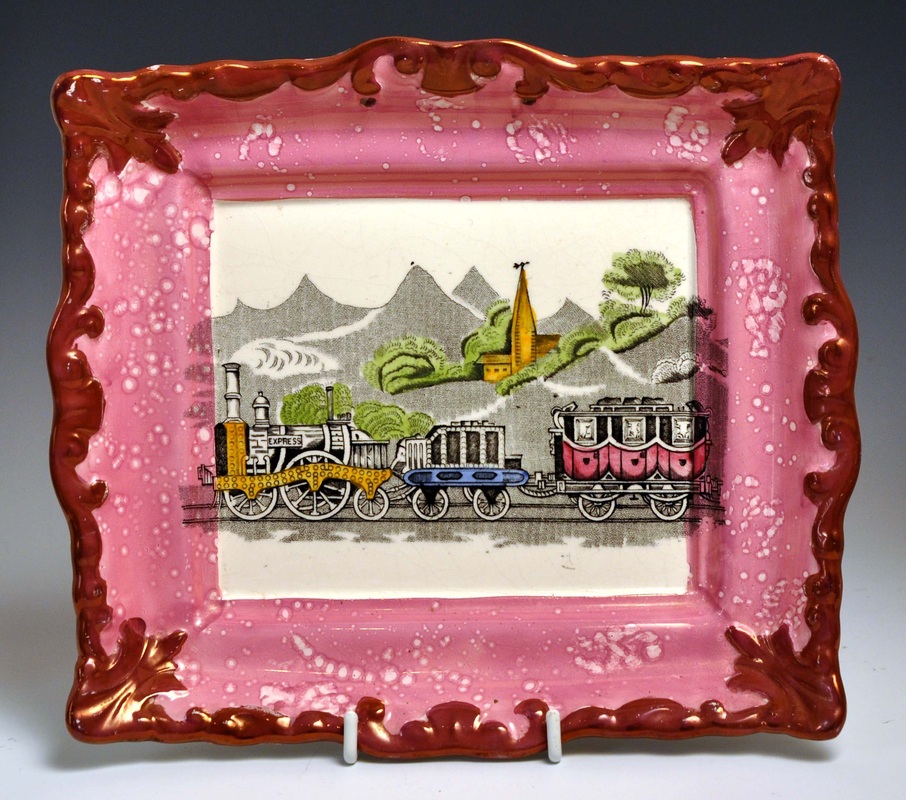

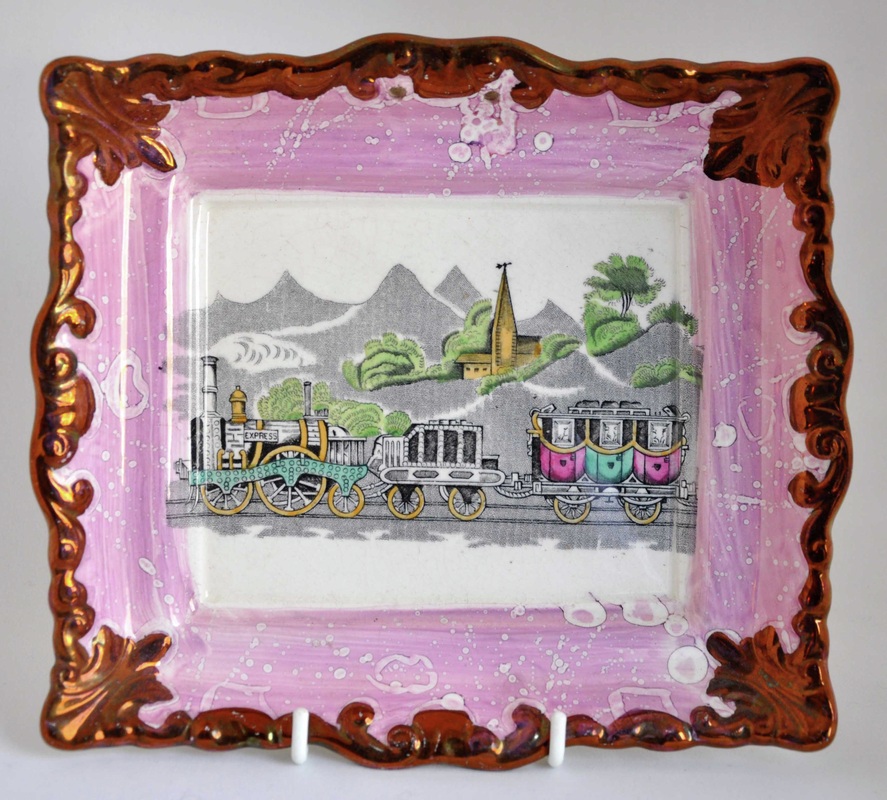
There is a name plate on the engine reading 'EXPRESS'. Grabham writes in his book on Yorkshire Potteries that the Express 'ran between Liverpool and Manchester about 1827–1830'.
These plaques are Adams Pottery, 20th century reproductions, made in Staffordshire. Read more here. See p143 of the 5th edition of Griselda Lewis' 'A Collector's History of English Pottery' for two mugs with this transfer and the printed mark 'RAILWAY W. ADAMS & CO ENGLAND'.
These plaques are Adams Pottery, 20th century reproductions, made in Staffordshire. Read more here. See p143 of the 5th edition of Griselda Lewis' 'A Collector's History of English Pottery' for two mugs with this transfer and the printed mark 'RAILWAY W. ADAMS & CO ENGLAND'.
Gothic folly


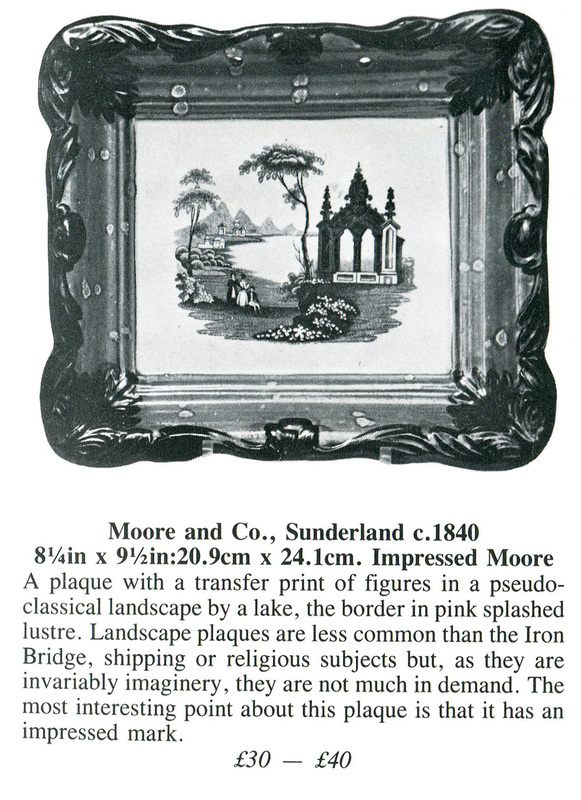
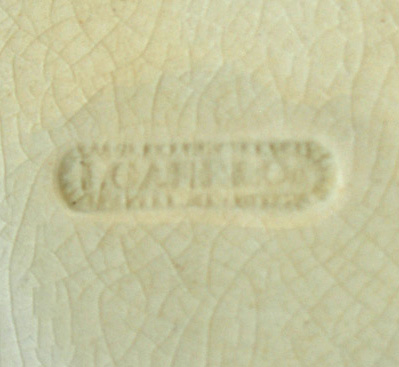
These plaques are attributed to John Carr's Low Lights Pottery, North Shields. The description under the right image (click to enlarge), from Battie and Turner's 'The Price Guide to 19th and 20th Century British Pottery' (reprinted 1990 by the Antique Collectors' Club), confused me at first. However, I am now satisfied that the impressed mark on this plaque reads 'LONDON' and not 'MOORE'. Read more here.
Hunting scenes
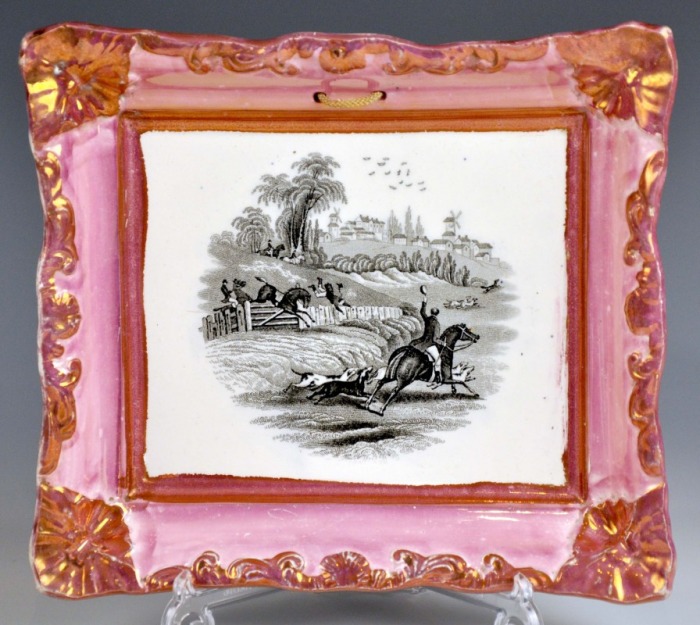


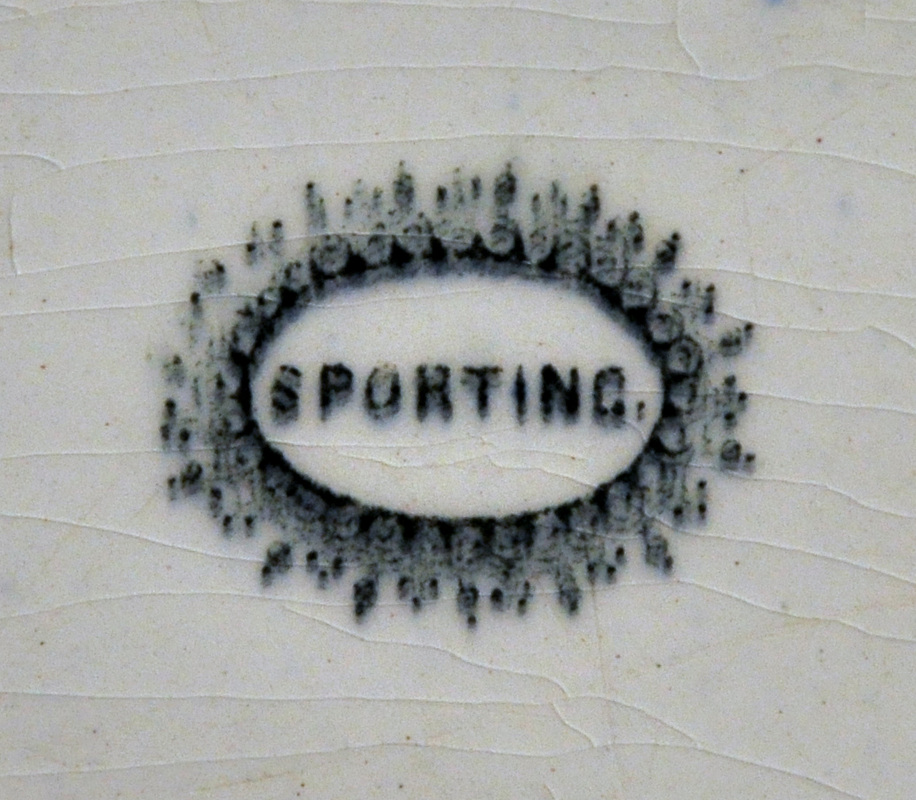
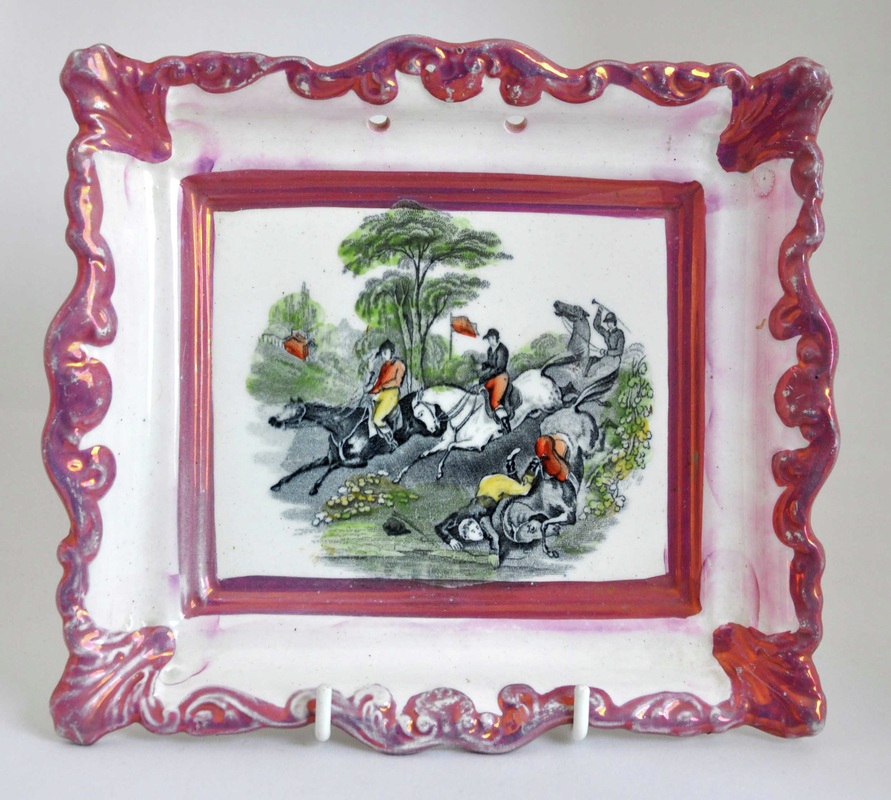
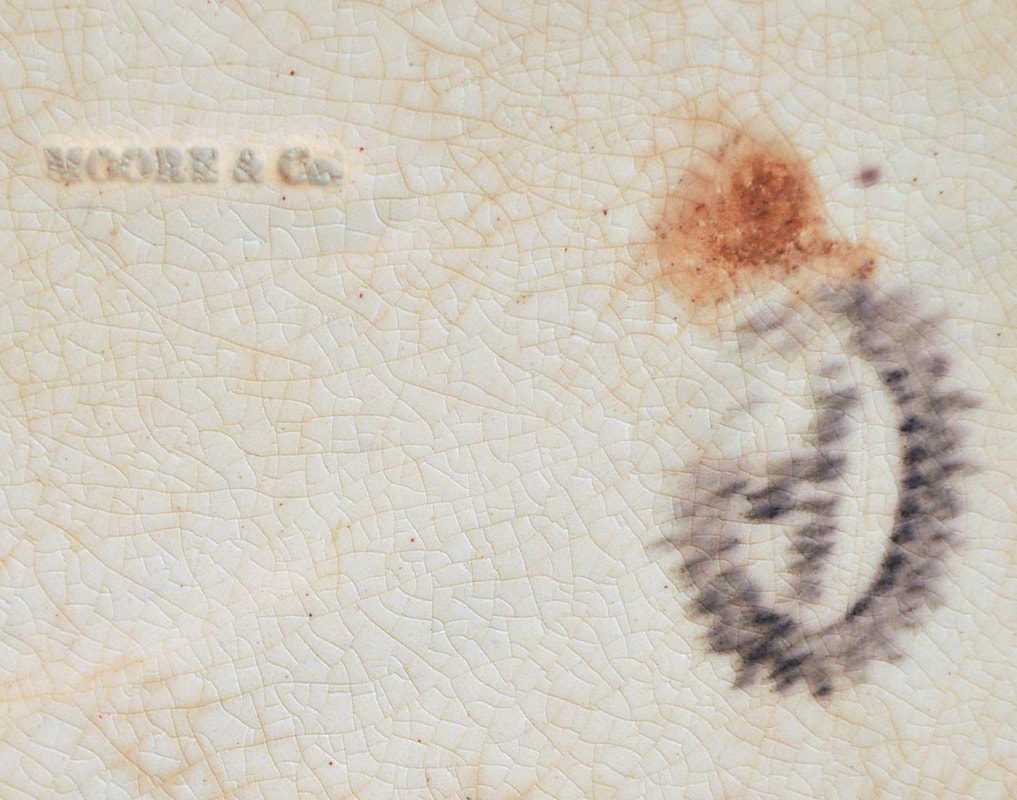
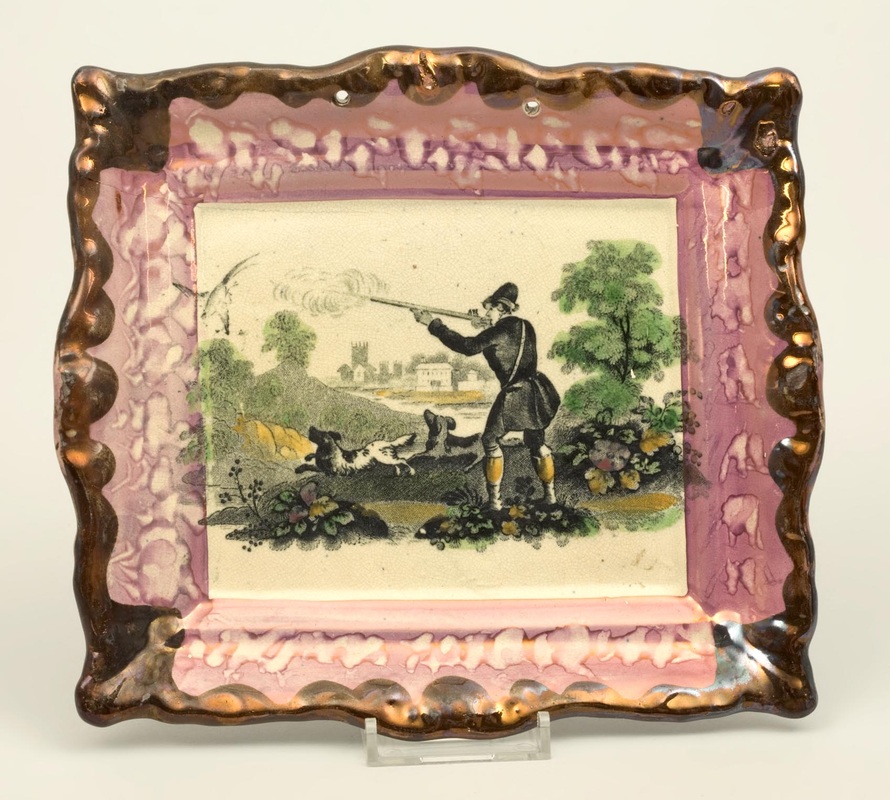
A series of four 'sporting' transfers by Moore & Co. The first two plaques are of a typical Moore form used in the 1840s. The printed marks are on the reverse of the plaques to the left of them. On these earlier versions the printed mark reads 'SPORTING' alone.
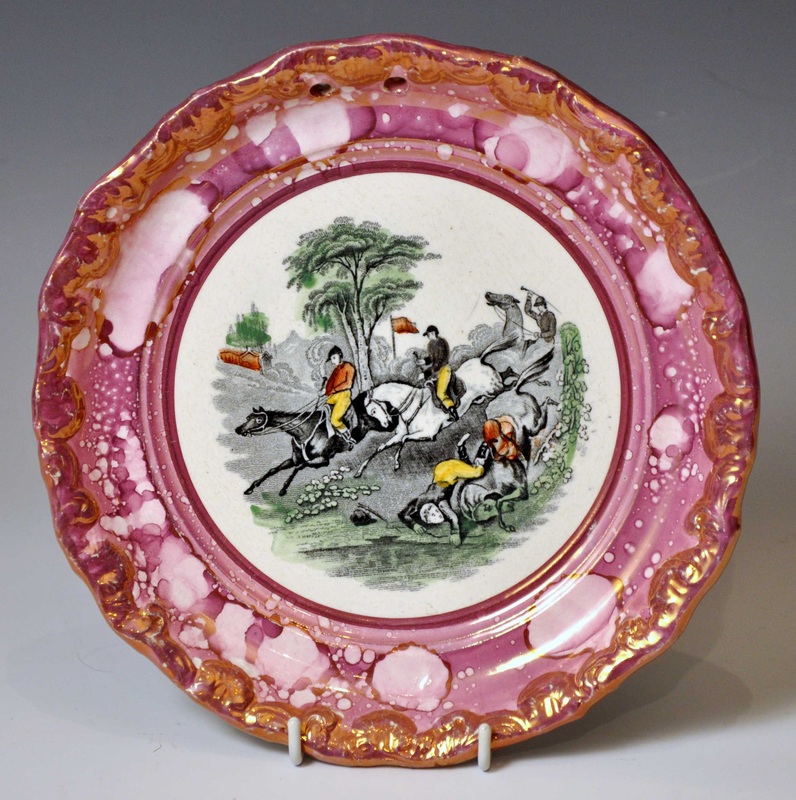
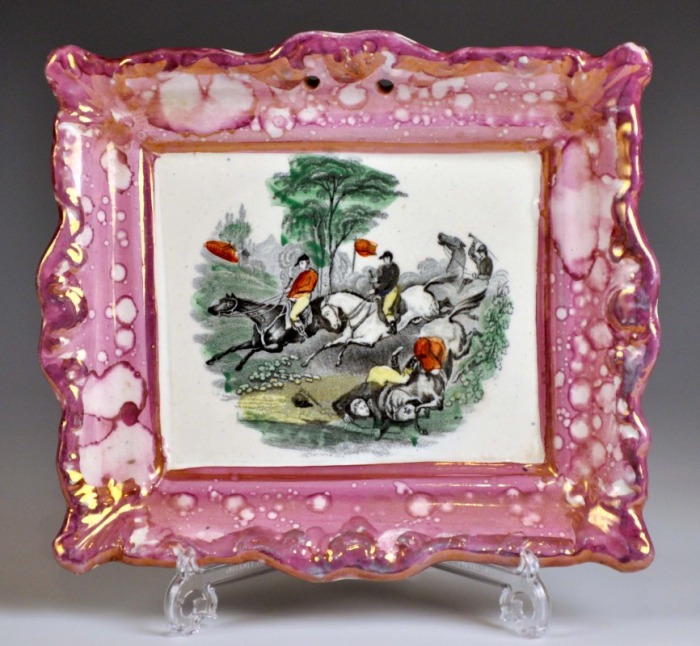
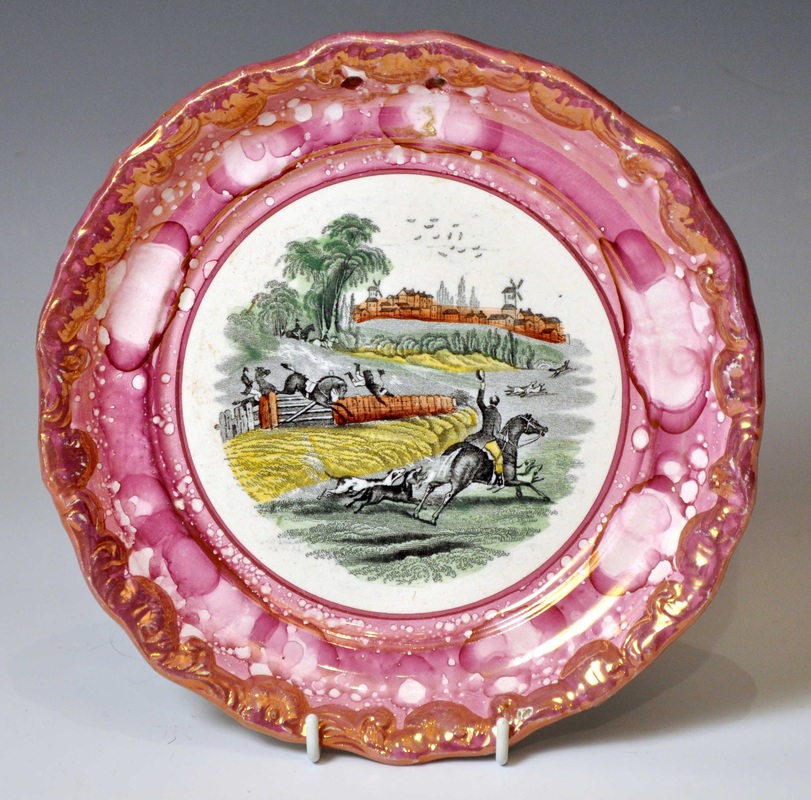
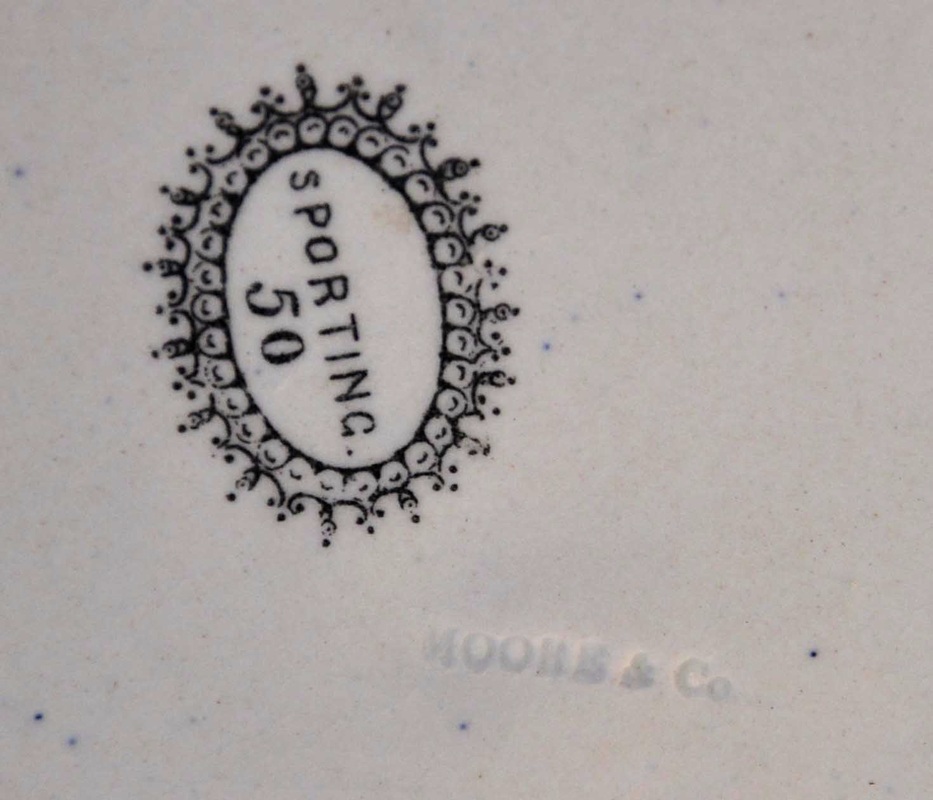
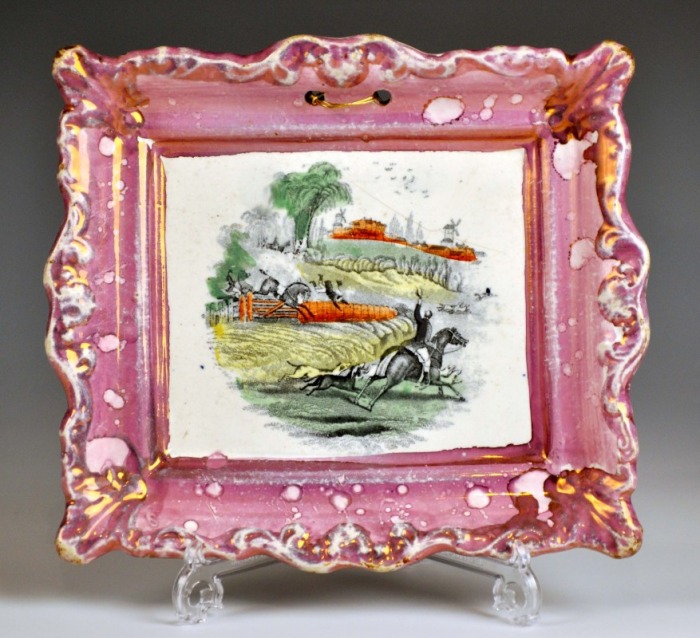
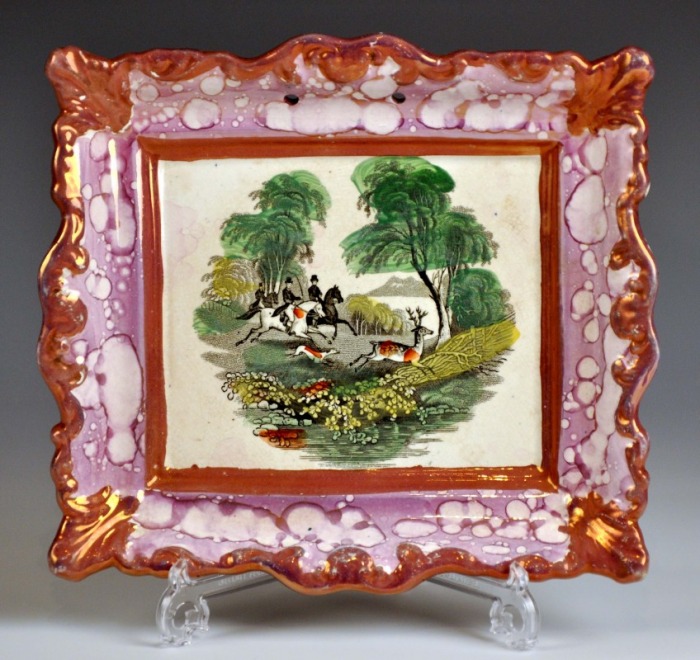

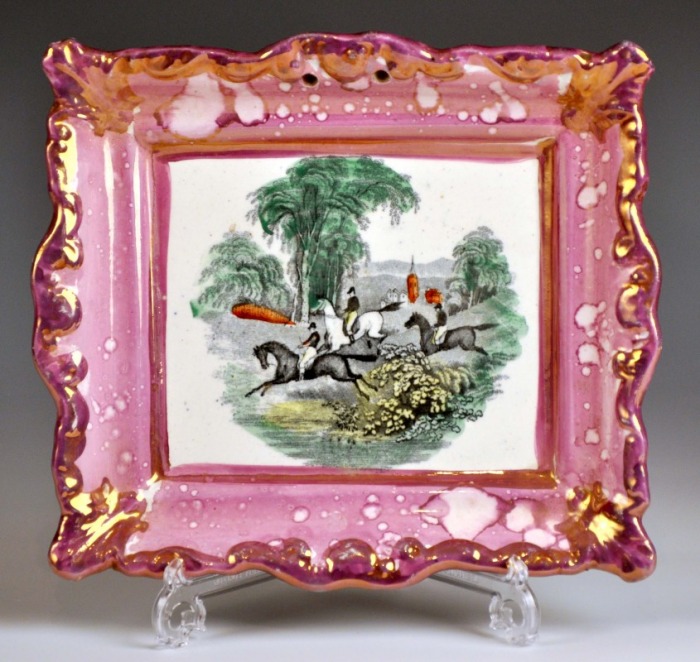
The later (c1850s) plaques have the printed mark 'Sporting. 50'. Dick Henrywood points out that the title isn't centred within its oval frame, suggesting the '50', likely a pattern number, was added at a later date. Note also the 'MOORE & Co' impressed mark beneath the printed mark.
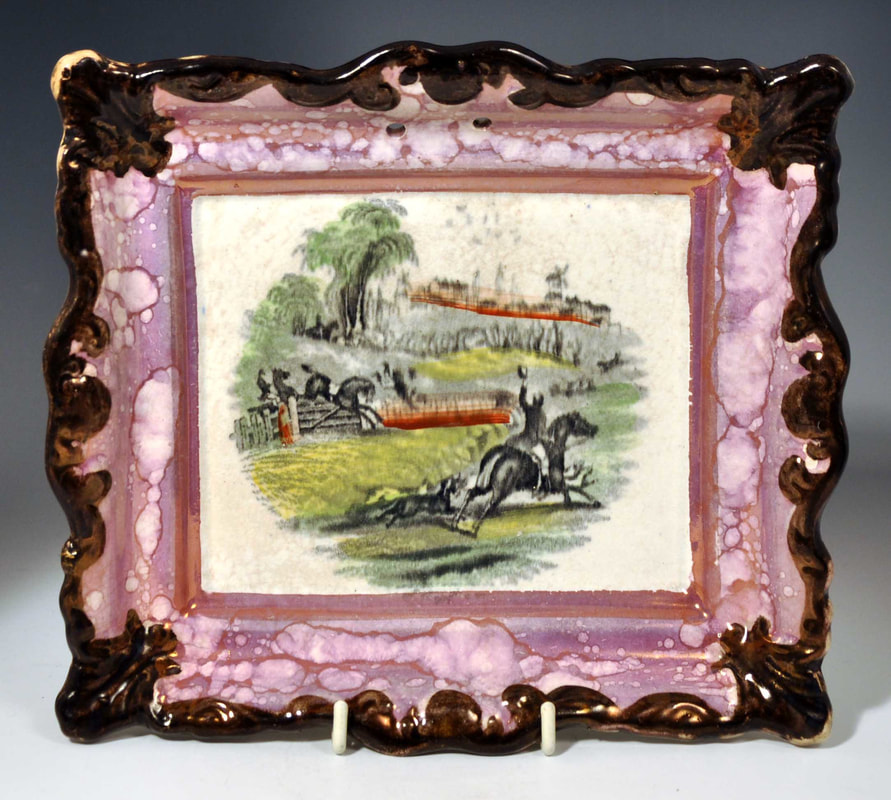
The plaque below is a transitional item, likely from the 1860s when Moore's was moving towards larger volume production. The brown borders are typical of the larger Moore's plaques of the 1860s and 70s.
The plaque below is a transitional item, likely from the 1860s when Moore's was moving towards larger volume production. The brown borders are typical of the larger Moore's plaques of the 1860s and 70s.
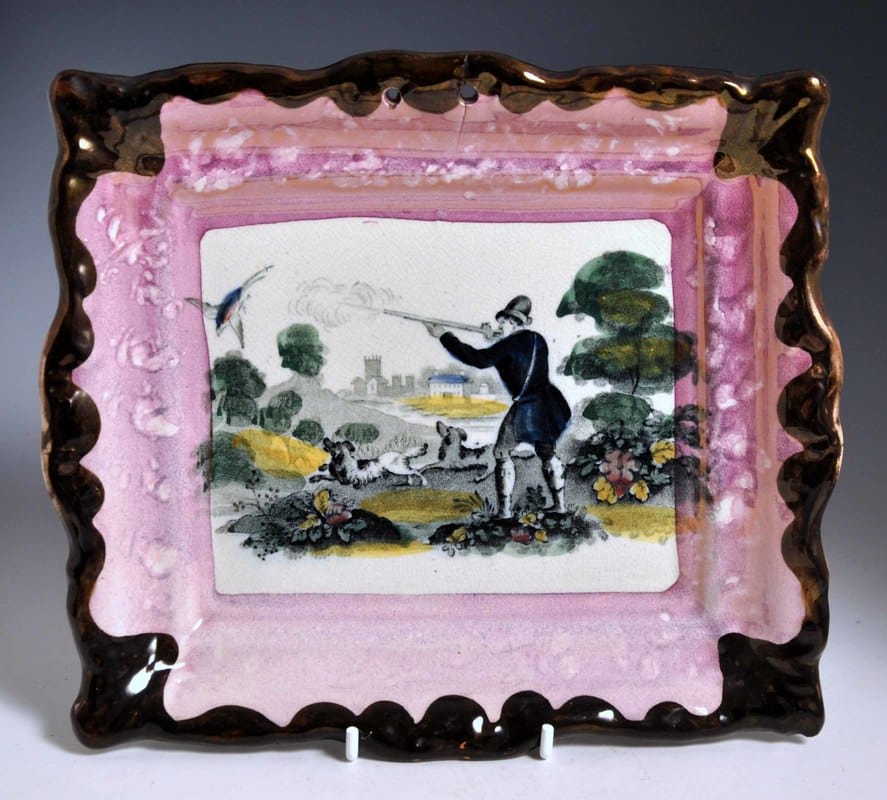
The next three plaques are unmarked, but of a smaller form associated with John Carr. The middle plaque has patches of blue in the copper lustre border. Anderson and Garland write in one of their catalogues: NB the blue is in fact the under painting for the copper lustre. Copper lustre is just pink lustre but shows copper when applied to dark colours. Brown or green were the normal colours used, and blue is an unusual choice.
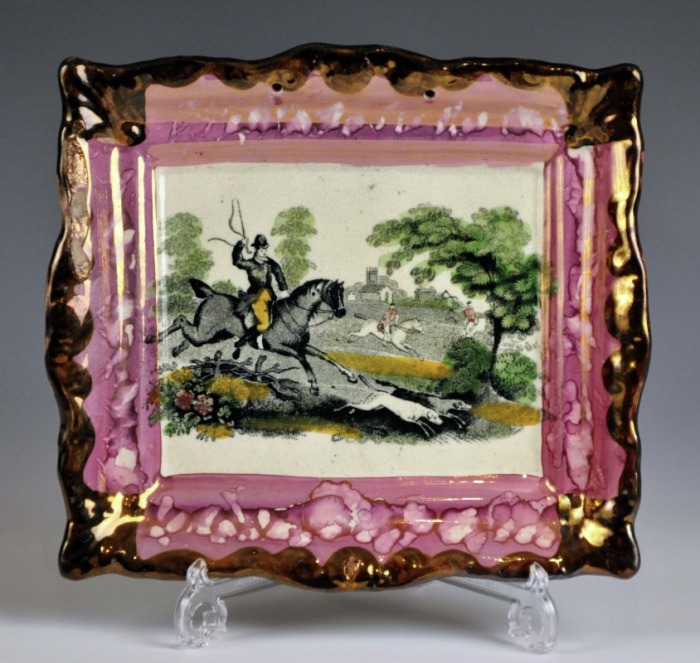
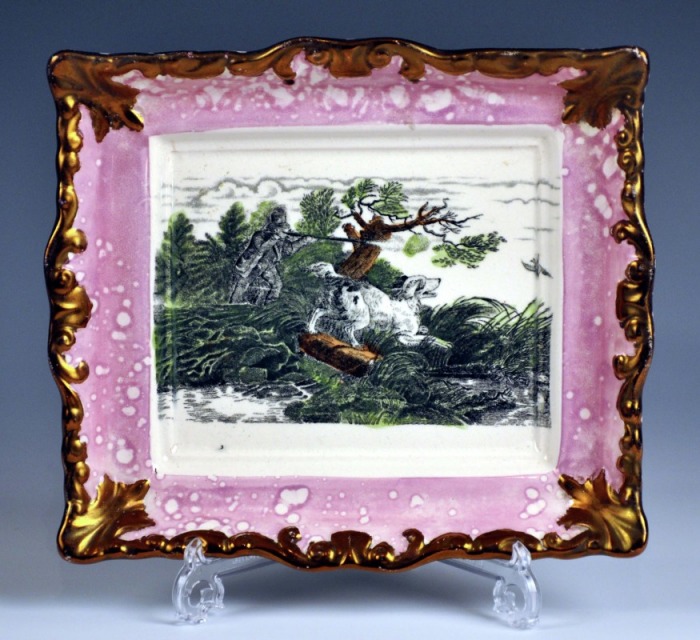
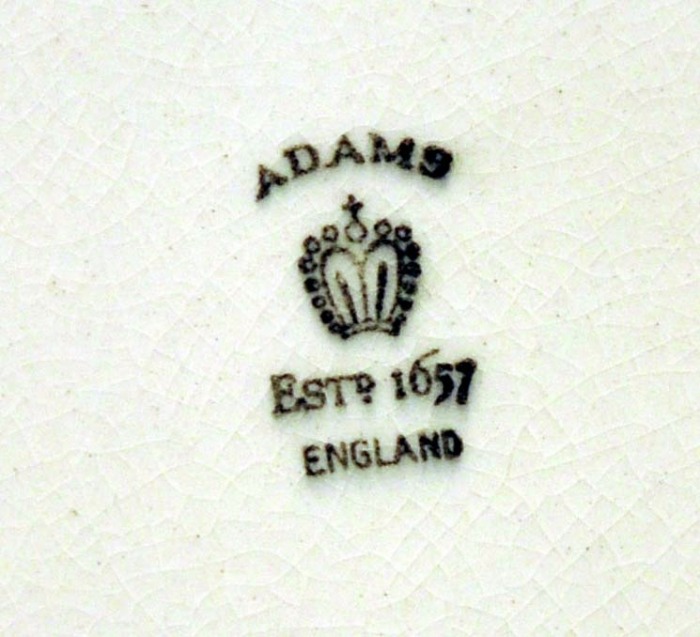
The plaques below are Adams' Staffordshire Pottery reproductions. The left plaque has a printed mark that was used at their Greenfield site 1914–1955, and at their Greengates site 1914–1970.
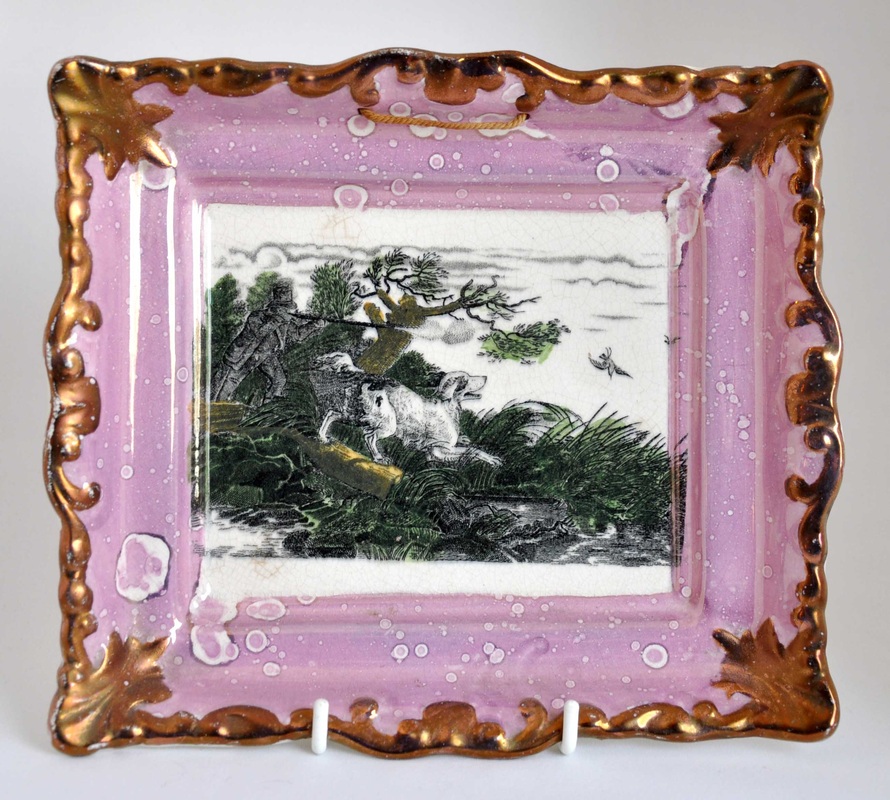
Landscapes that appear on John Carr & Co plates
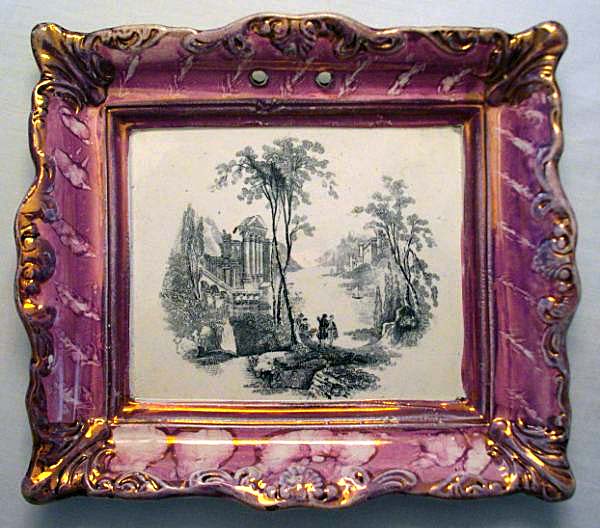

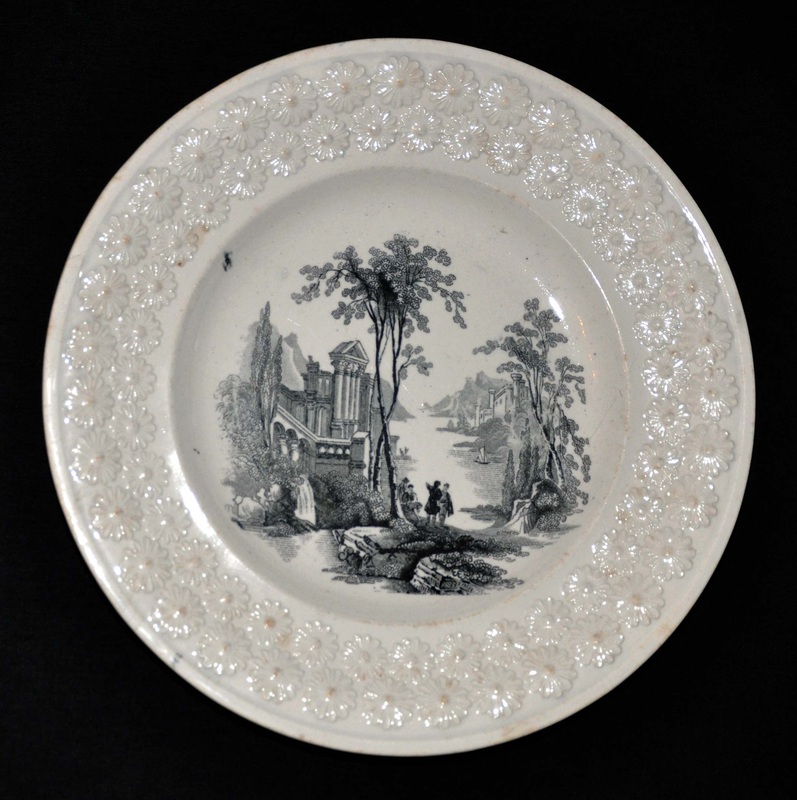
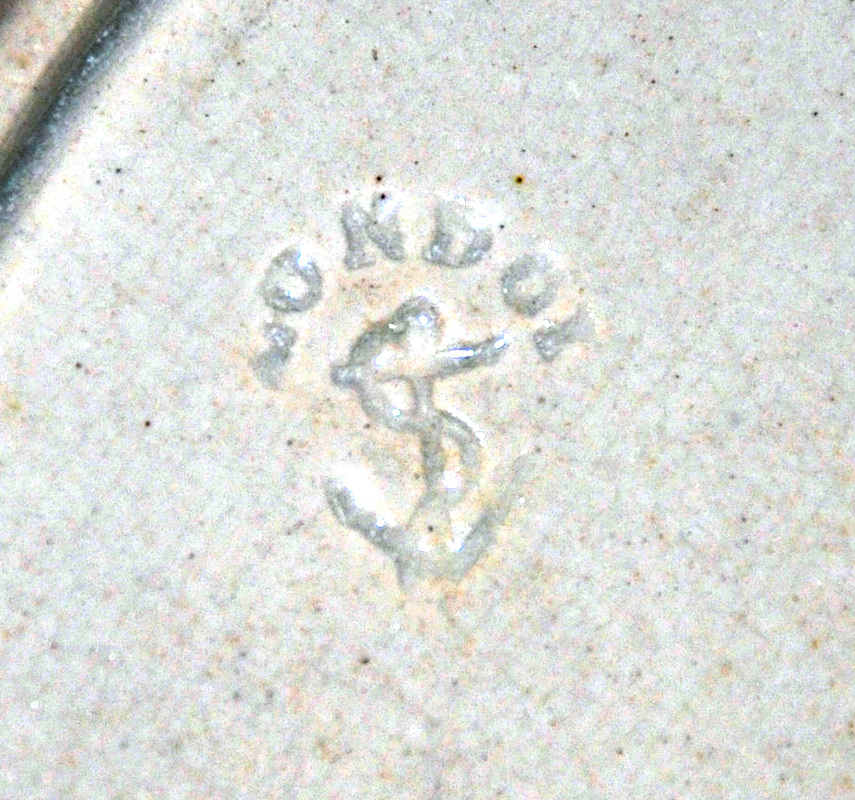
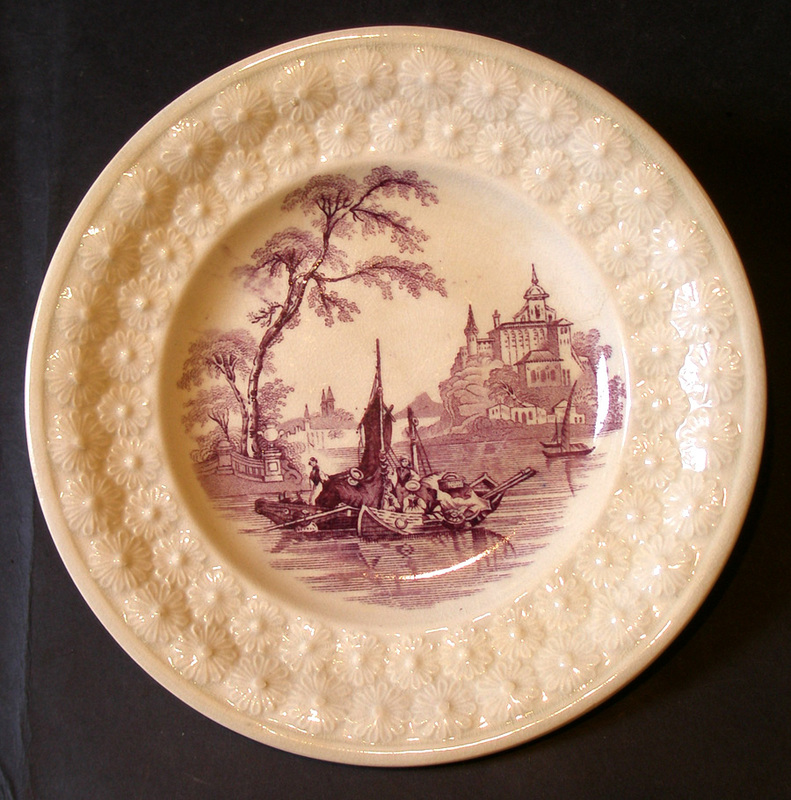
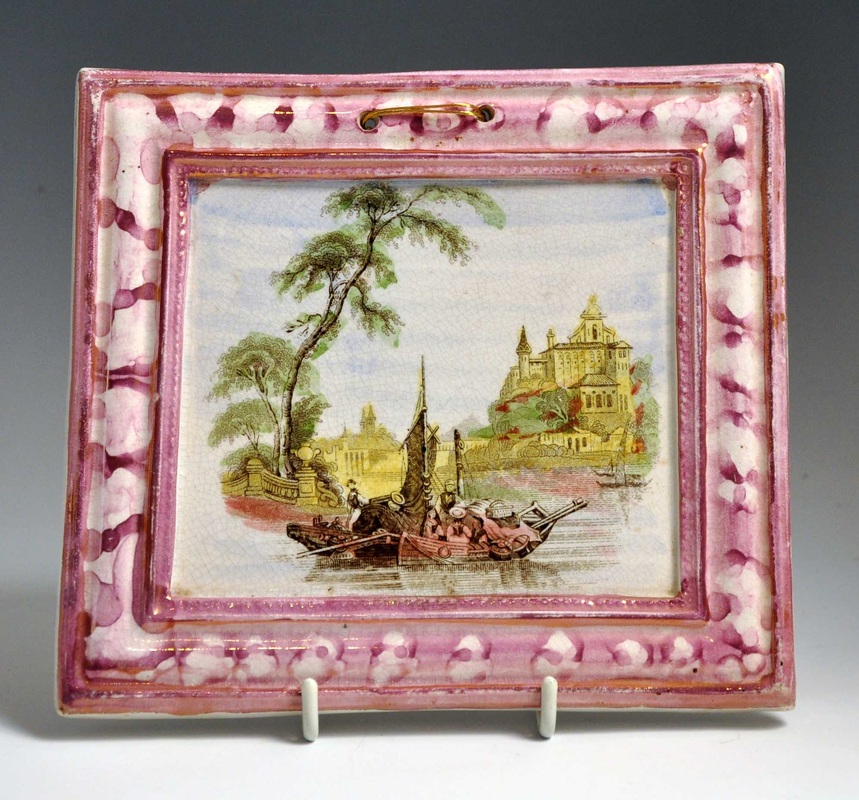
The above plaques are both unmarked. Transfers, apparently from the same copper plates, appear on daisy-bordered plates with the London impressed mark above an anchor (see top left and right below). A variation of the transfer appears on daisy-bordered plates marked J CARR & Co (see bottom left and right below). Read more here.
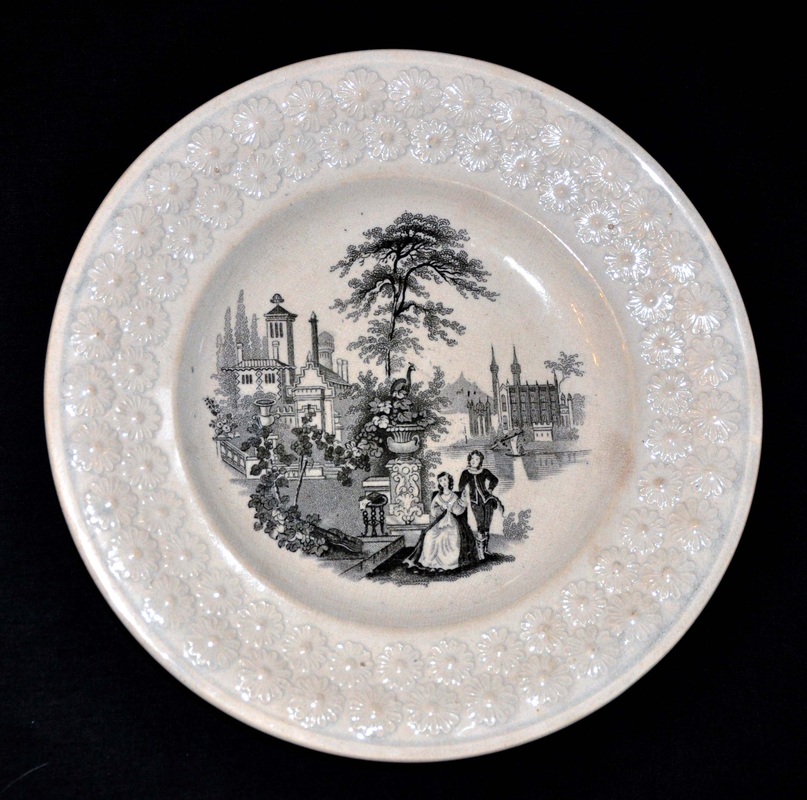
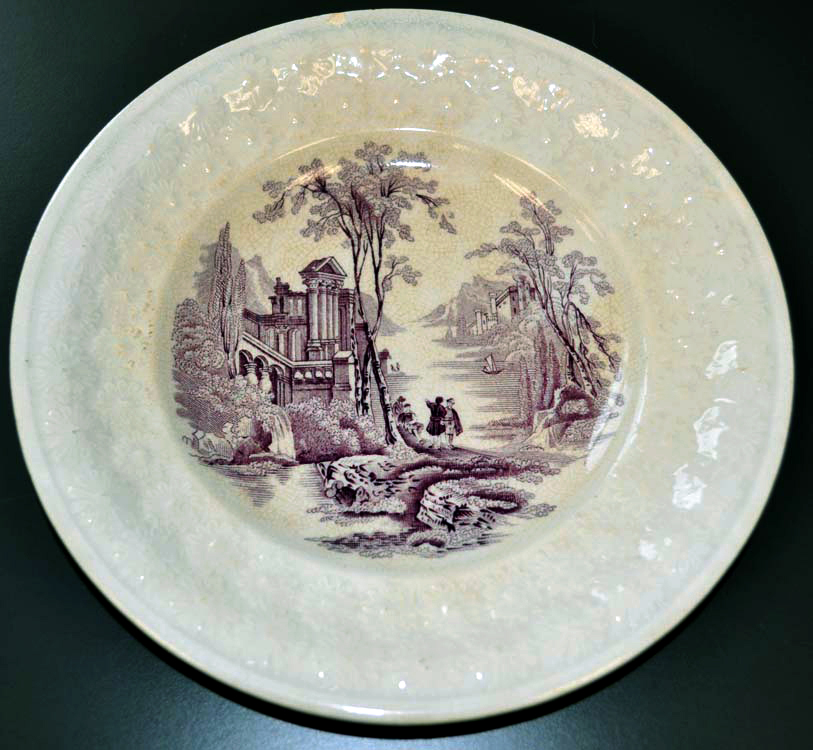
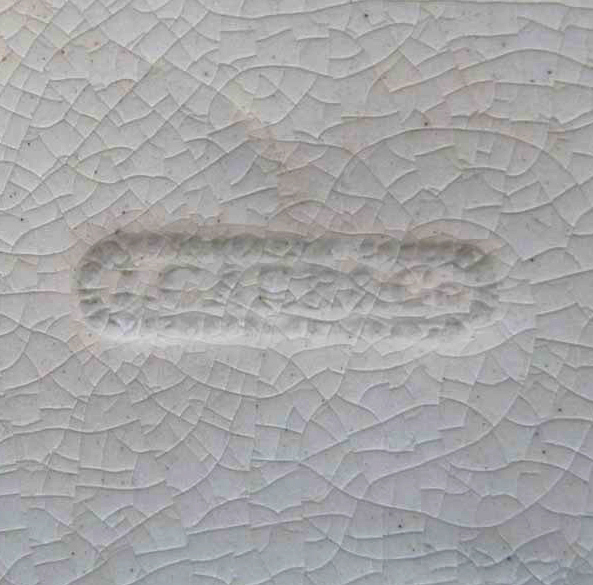
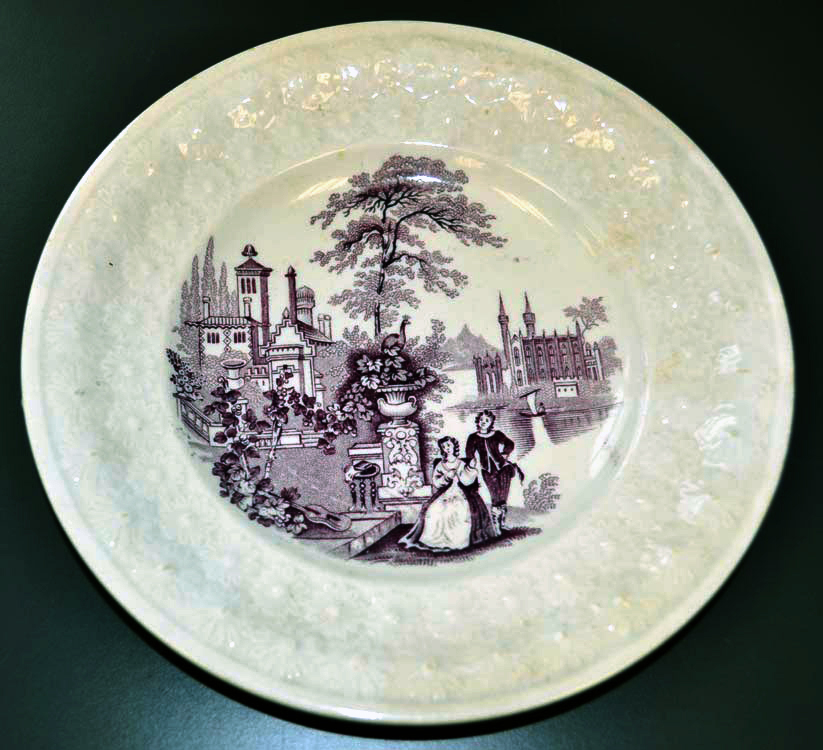
The below right plaque is of a small rare form. The enamel washes are very similar to those used on the right plaque above. A similar landscape, but from a different transfer plate, appears on daisy-bordered plates marked J CARR & Co (see bottom left and centre below).
Oriental landscapes

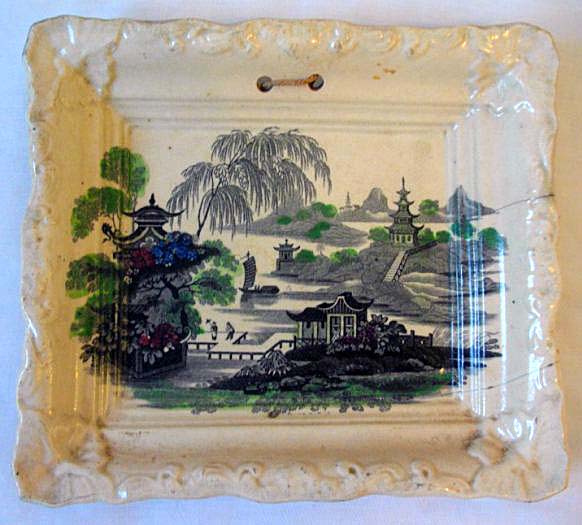
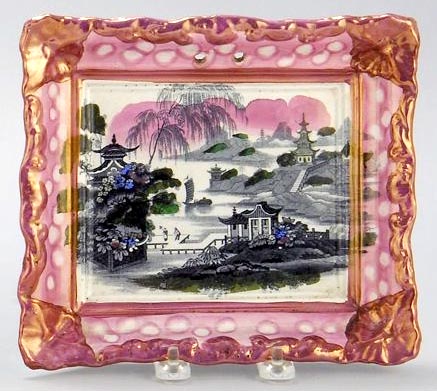
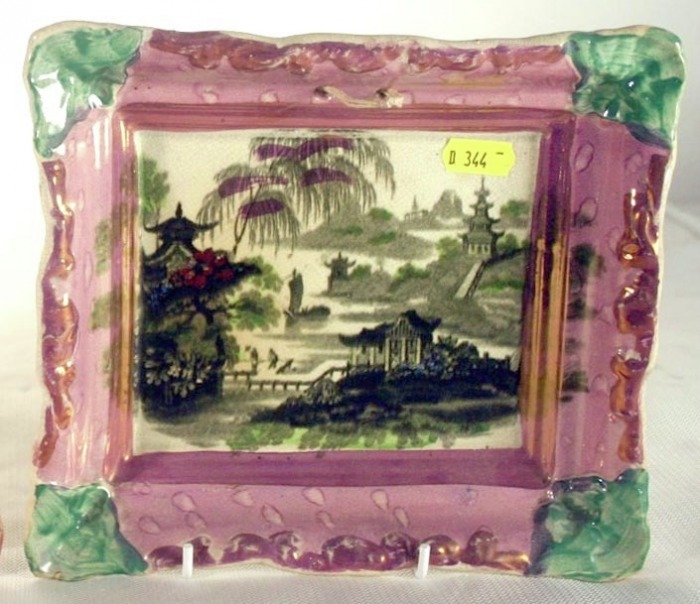
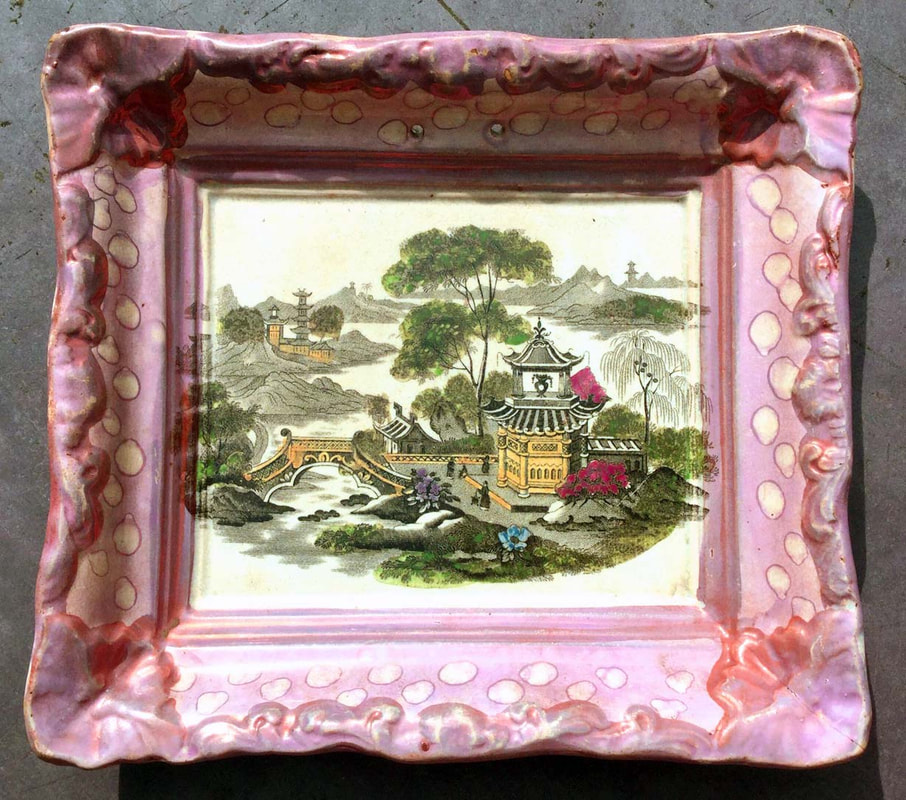
The first plaque below is of a rare form attributed to John Carr.
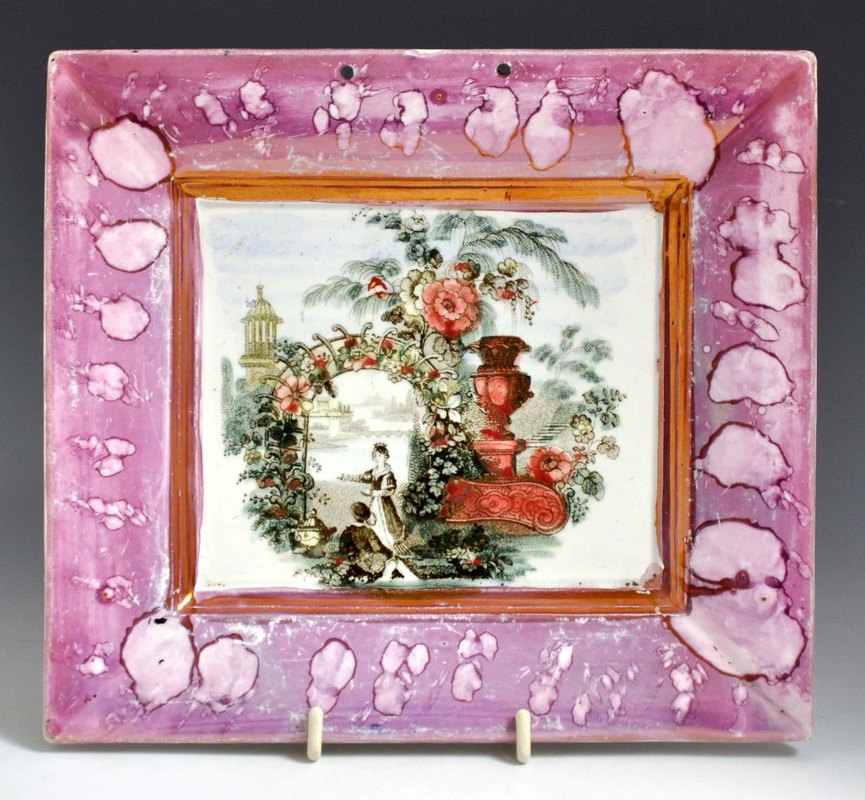
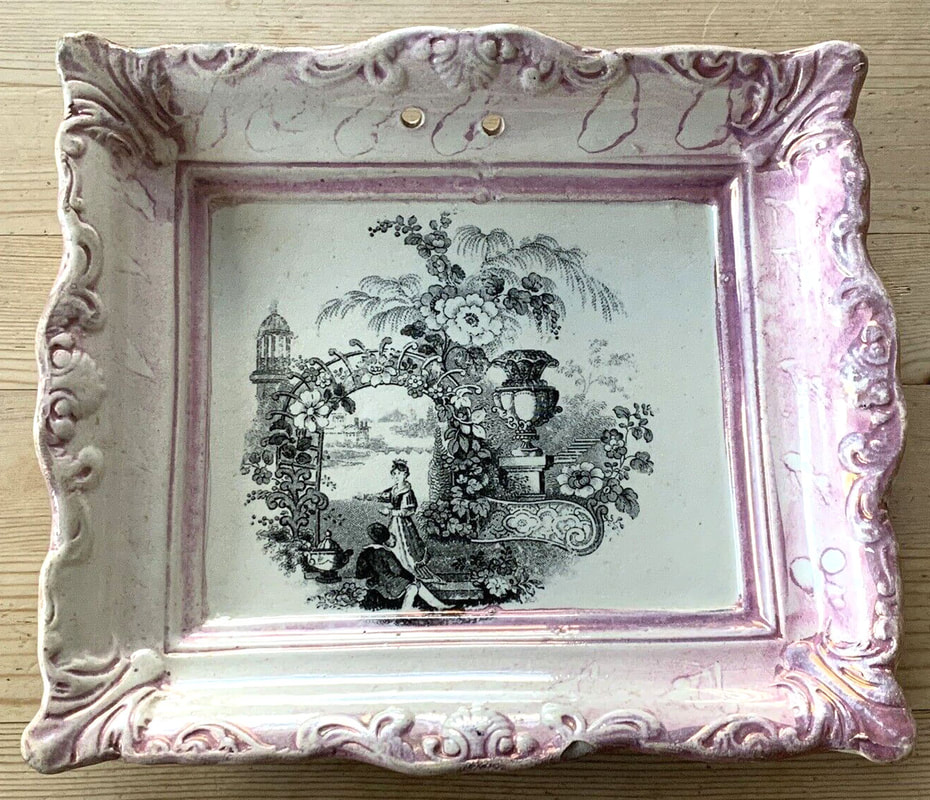
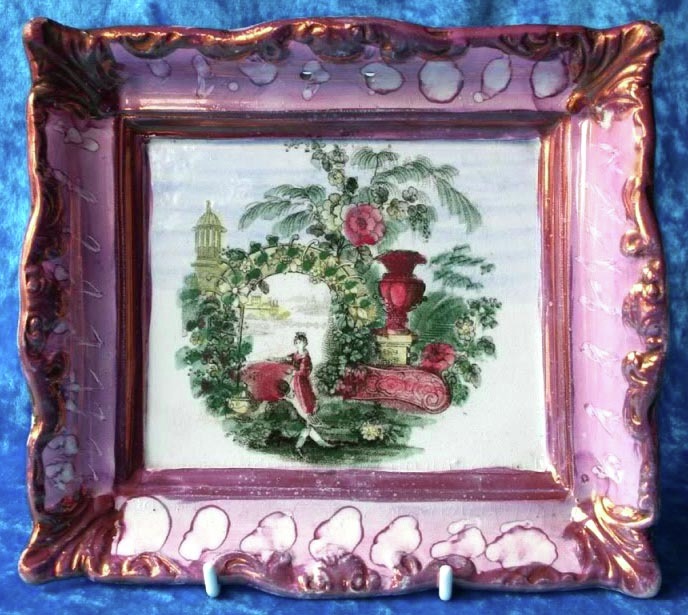
Punting and fishing
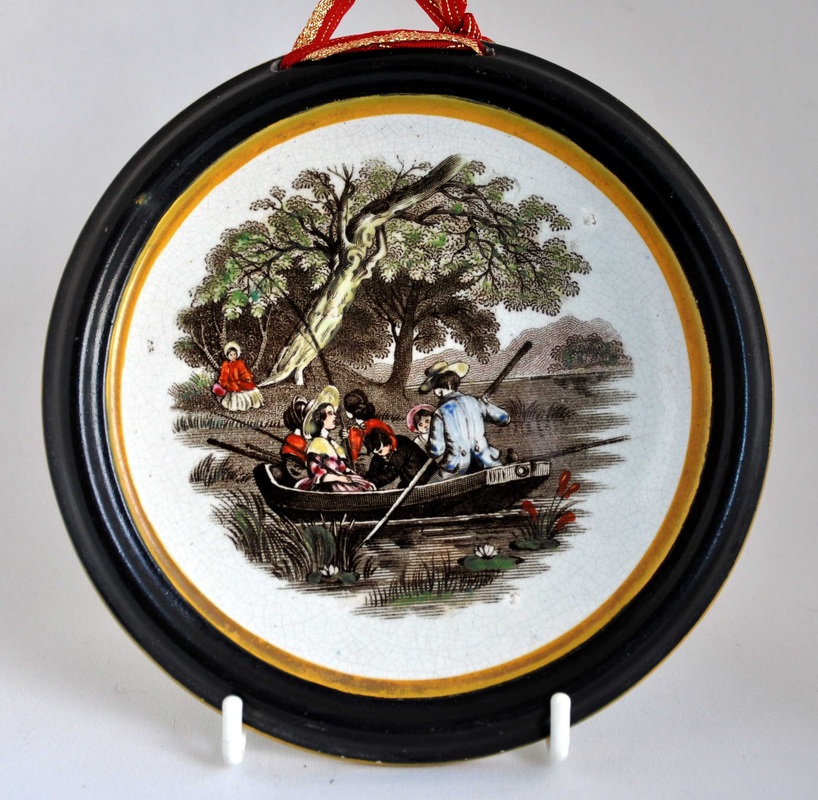
I have seen other plaques in this series with different views.
Romantic landscapes
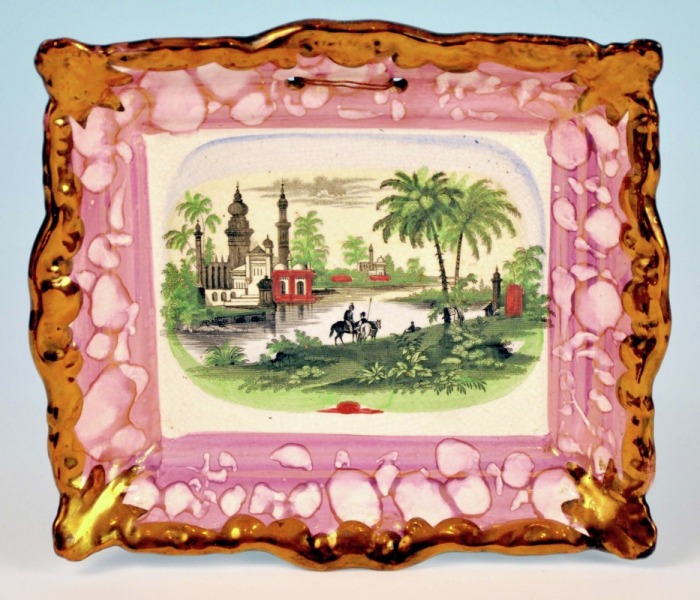
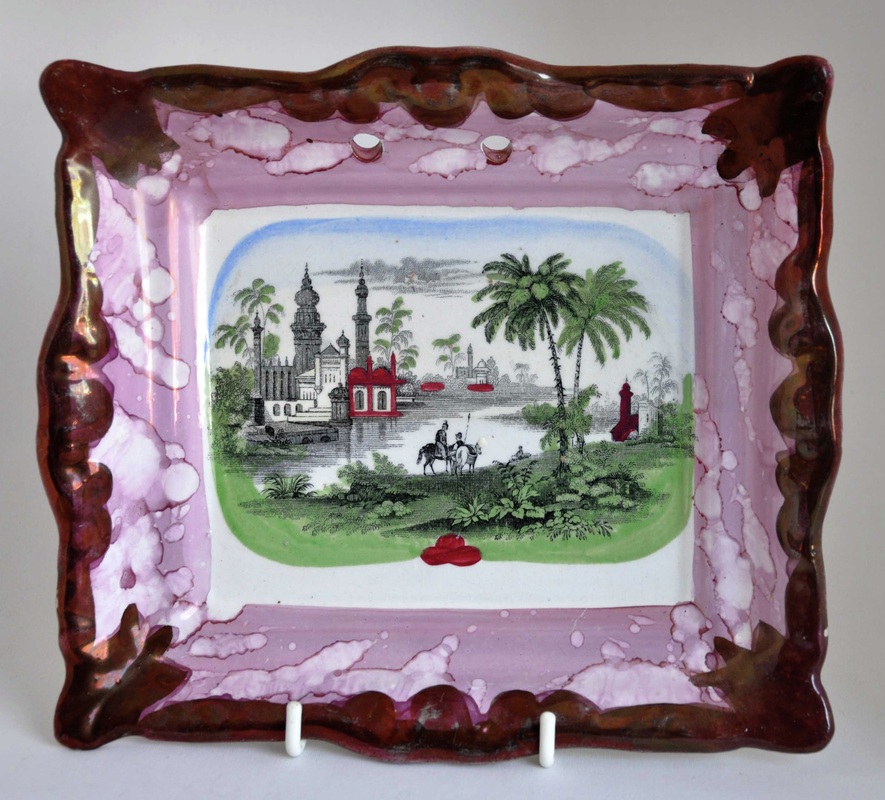
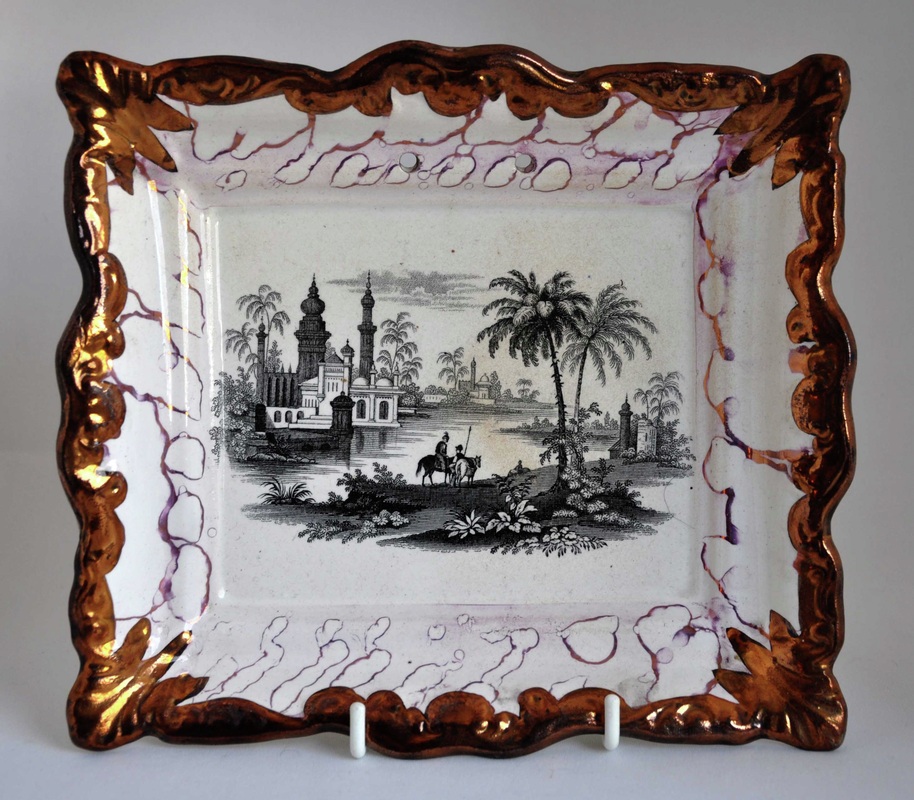
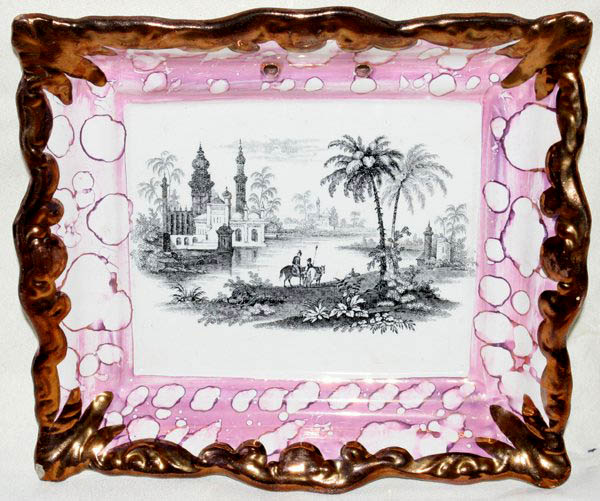
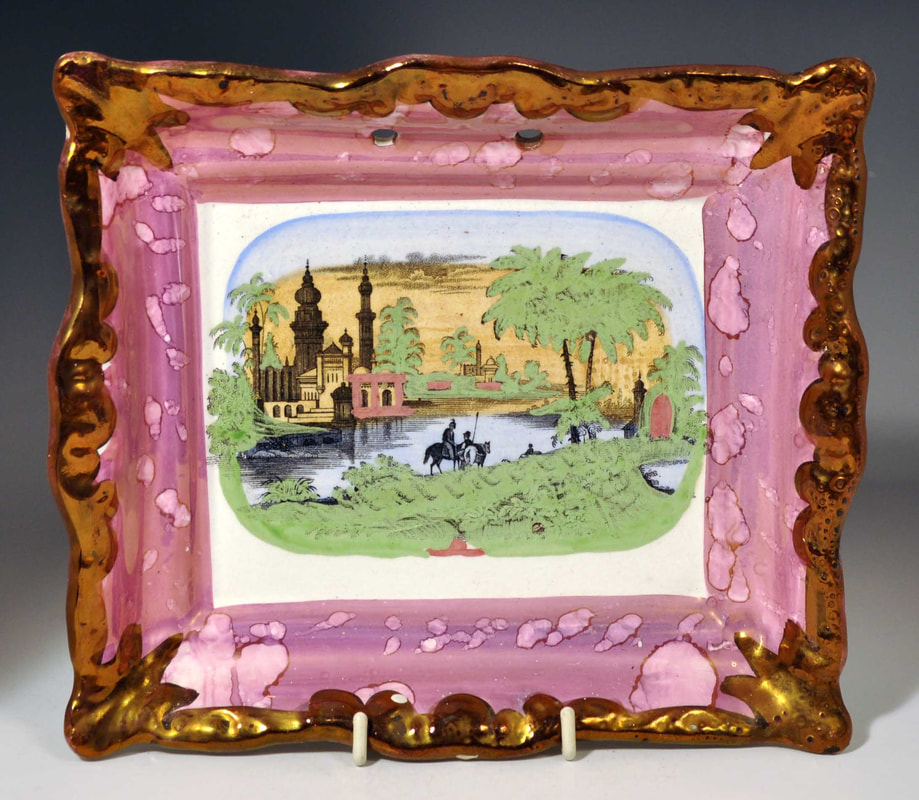
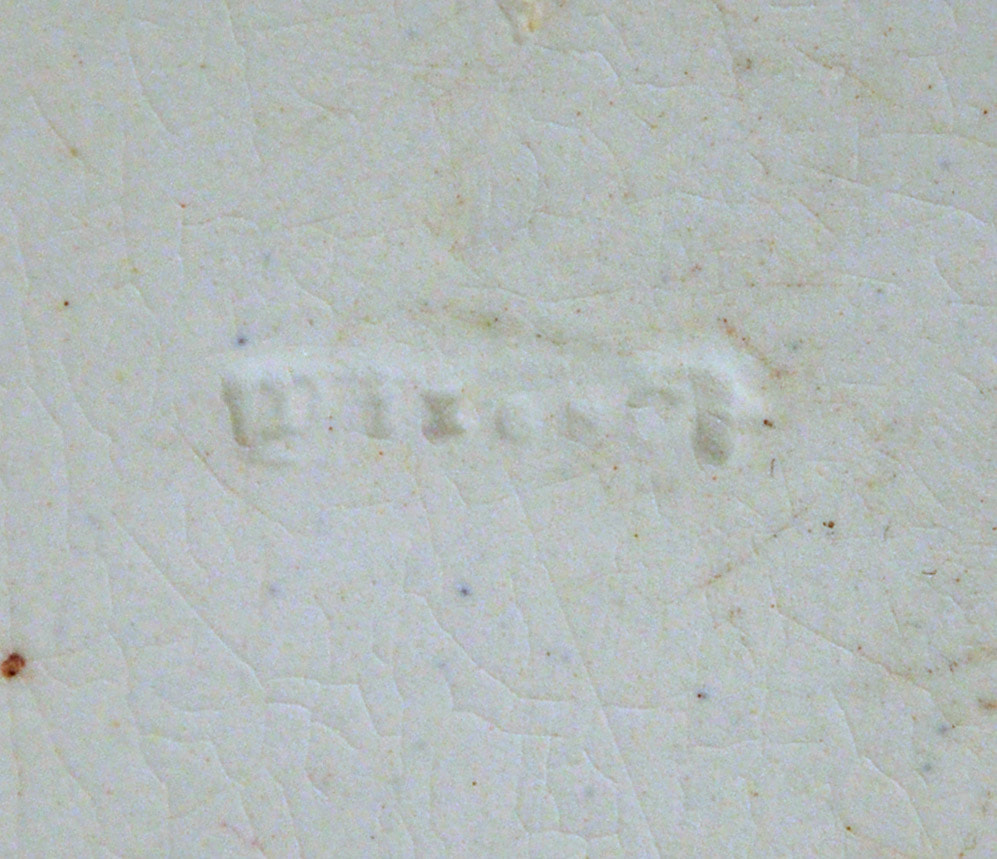
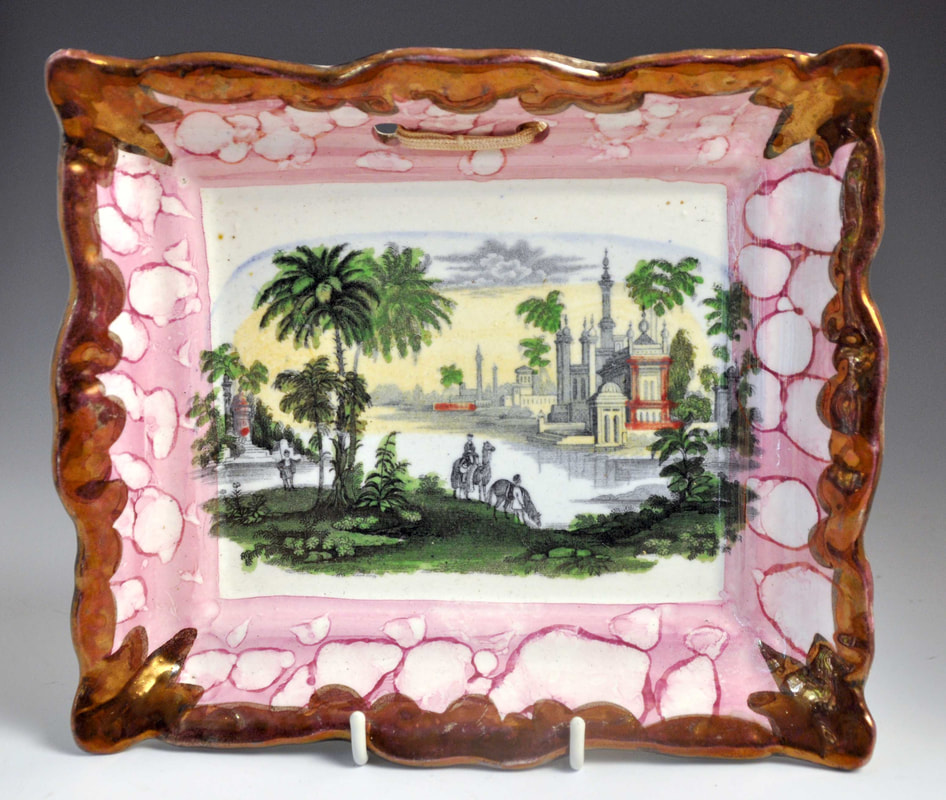
Variations of two transfers of Middle Eastern landscapes with camels and horses. Above: with palm trees on the right. The last plaque above is likely experimental, or the green glaze has misfired. Below: with the palm trees on the left. Most impressed with the mark 'Dixon Co'.
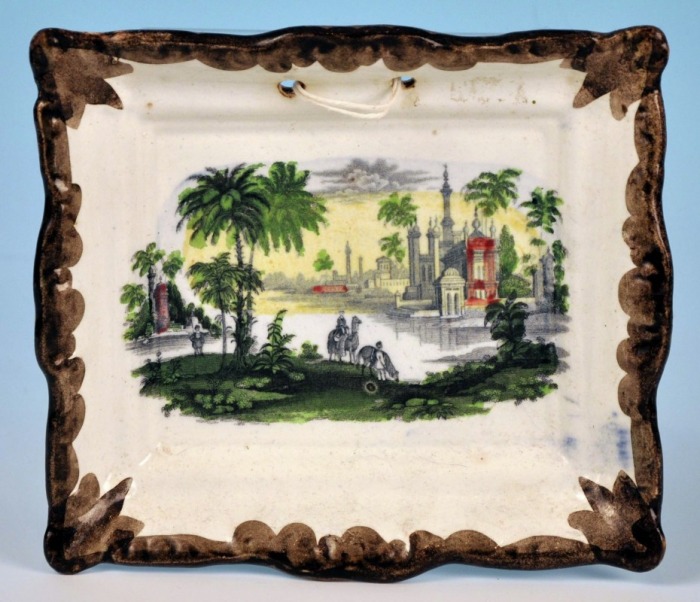
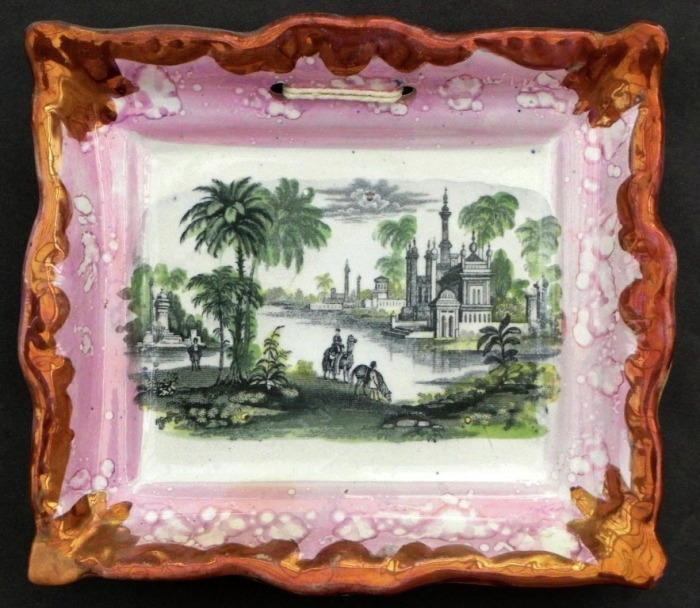
Below, as rare as proverbial hens' teeth, a true pair of these landscape plaques.
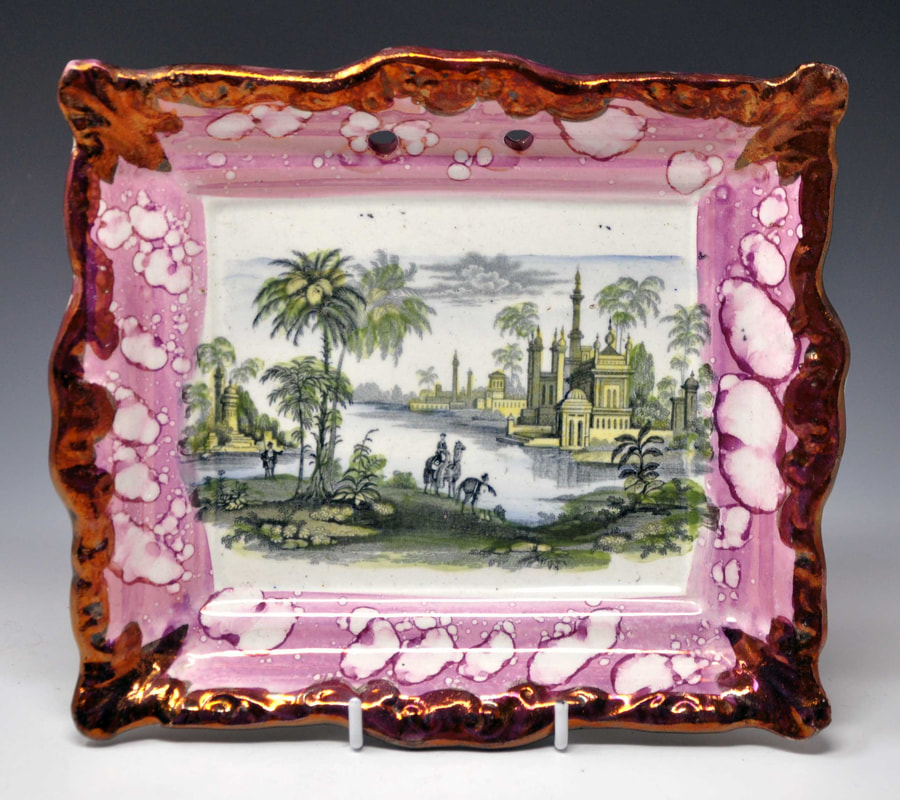
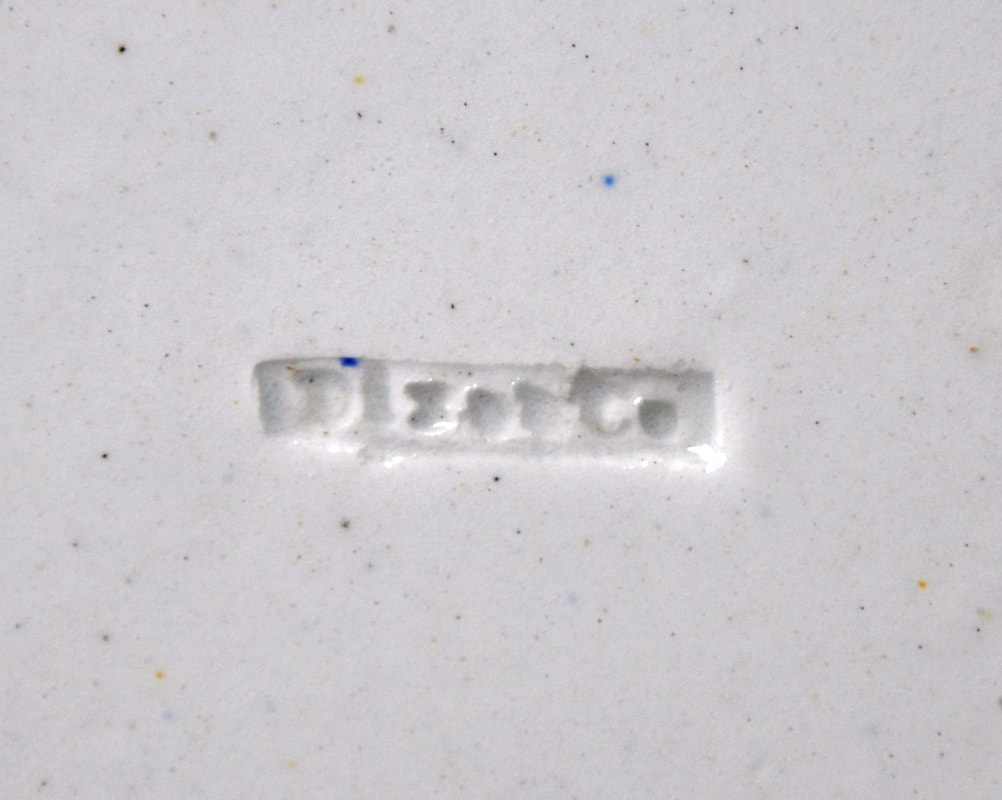
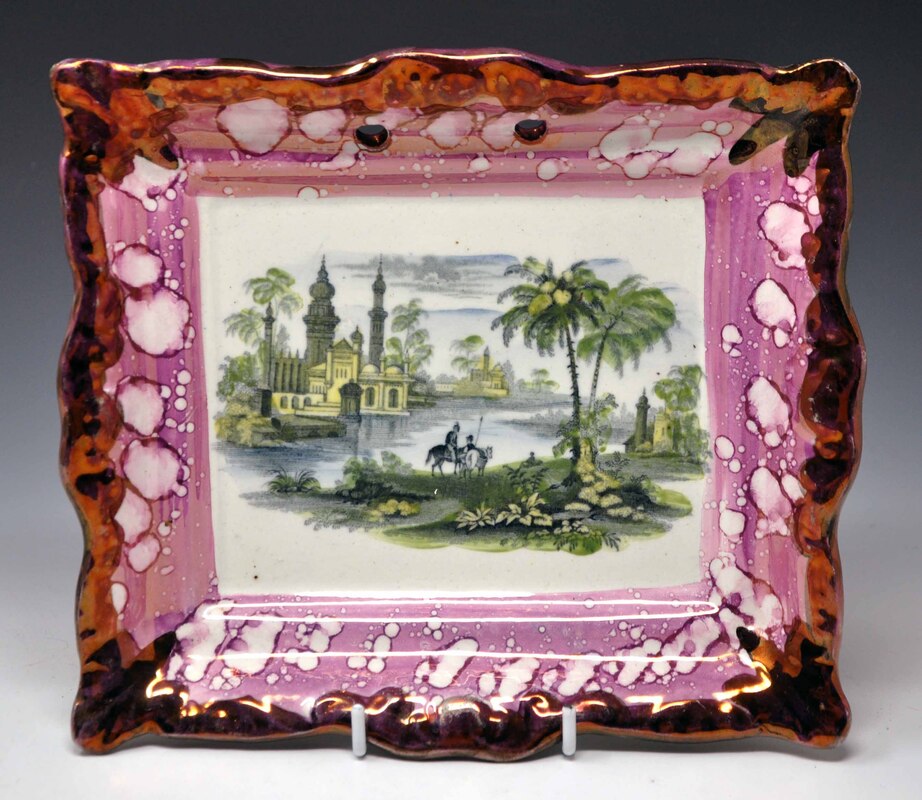
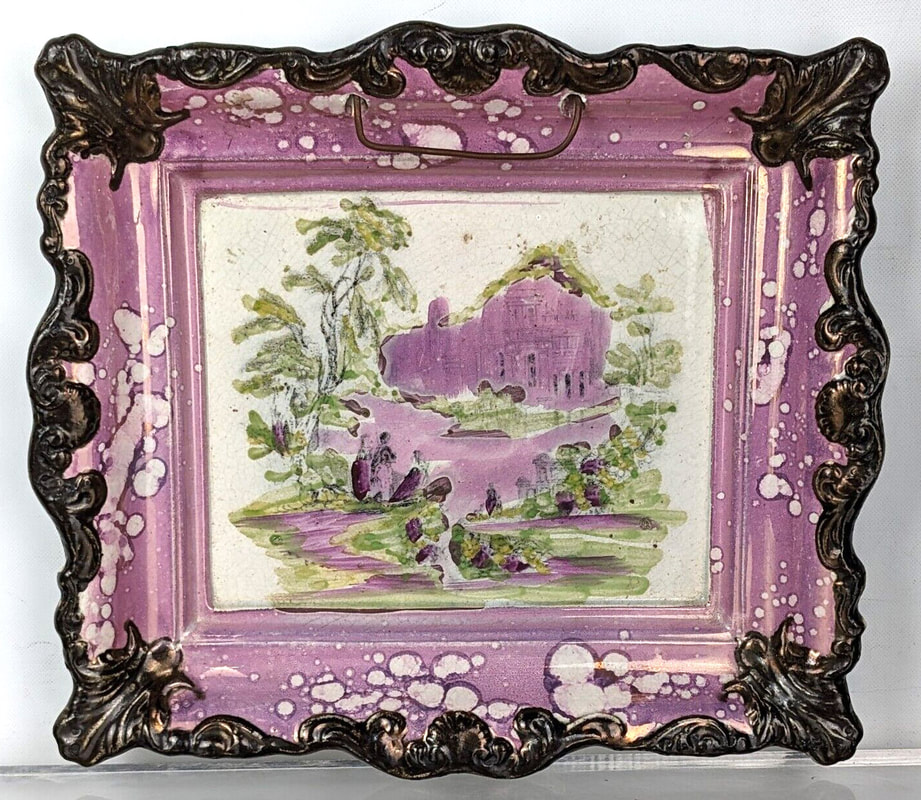
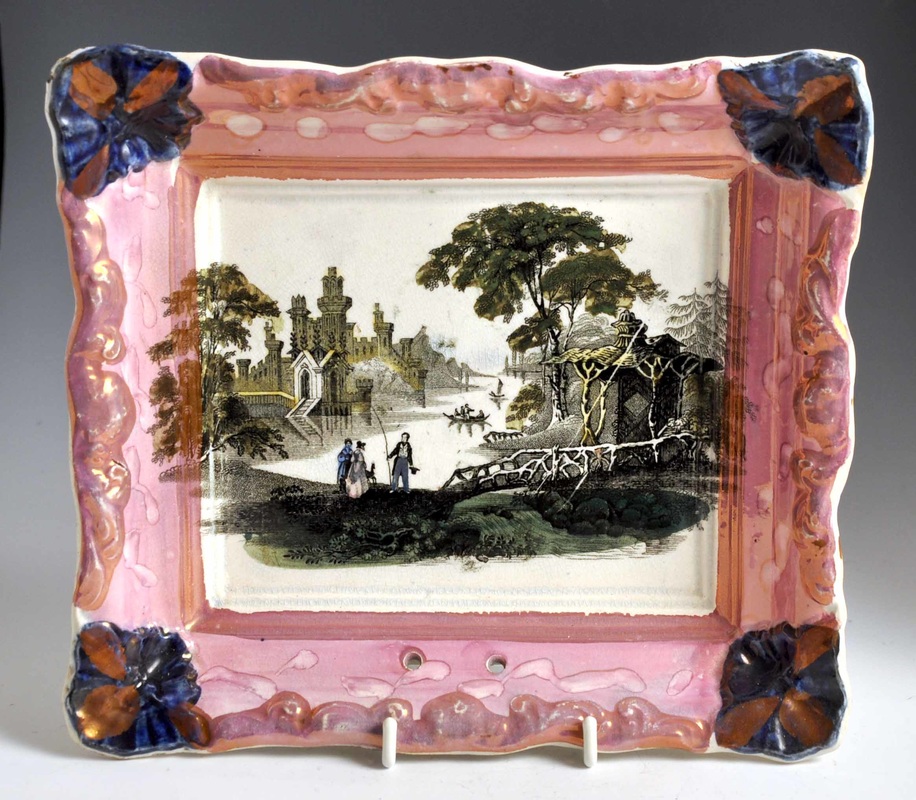
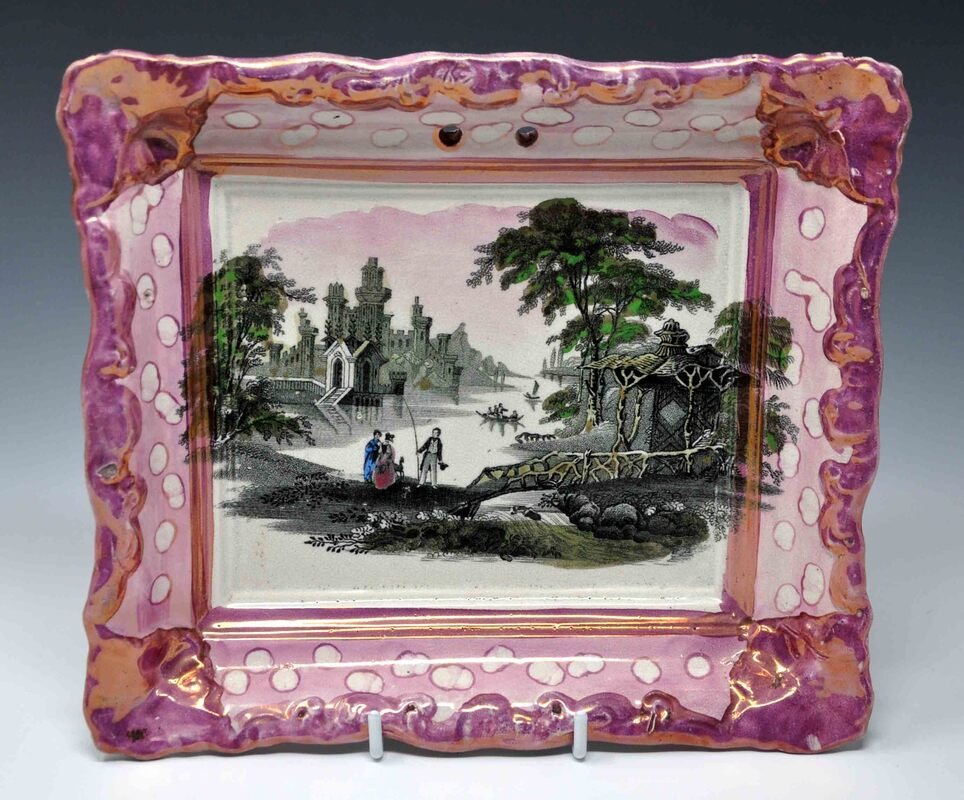
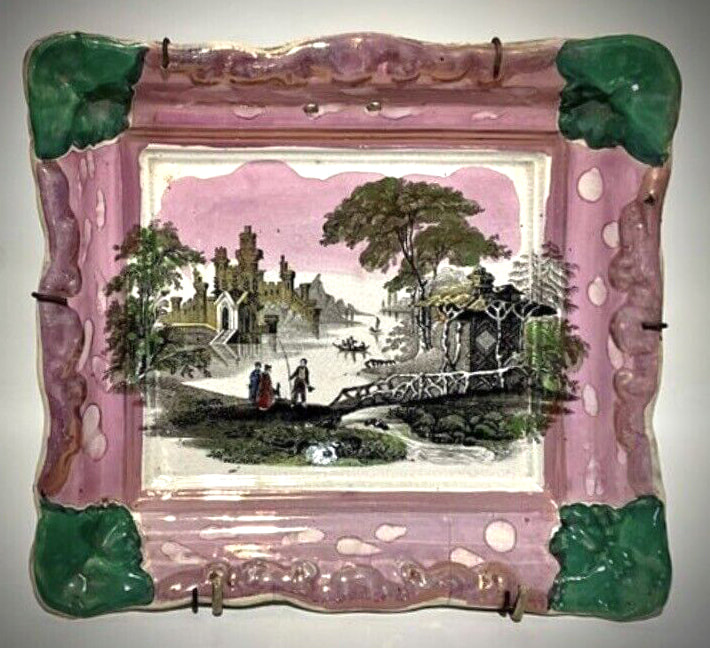
A romantic scene with castle and bridge. Note the red-pink 'snail' shape that also appears in the centre foreground of some of the Eastern landscapes above.
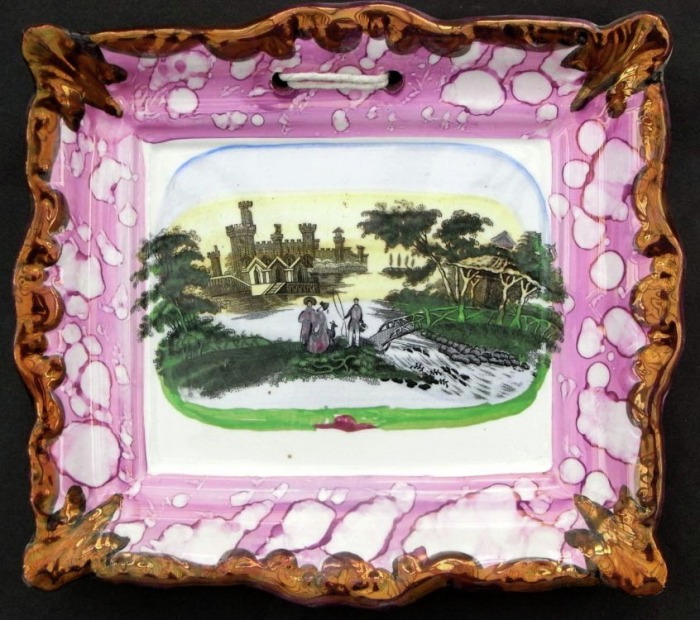
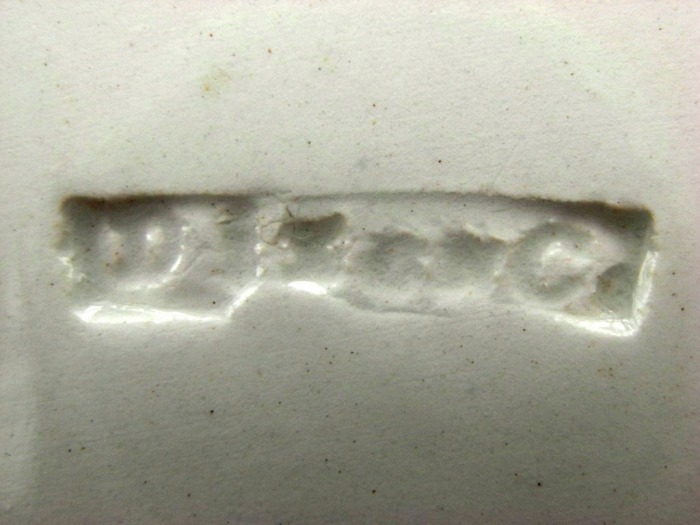
Below: a variation of the castle transfer appears on plaques with scalloped corners, likely from Tyneside
Staffordshire plaques with landscapes
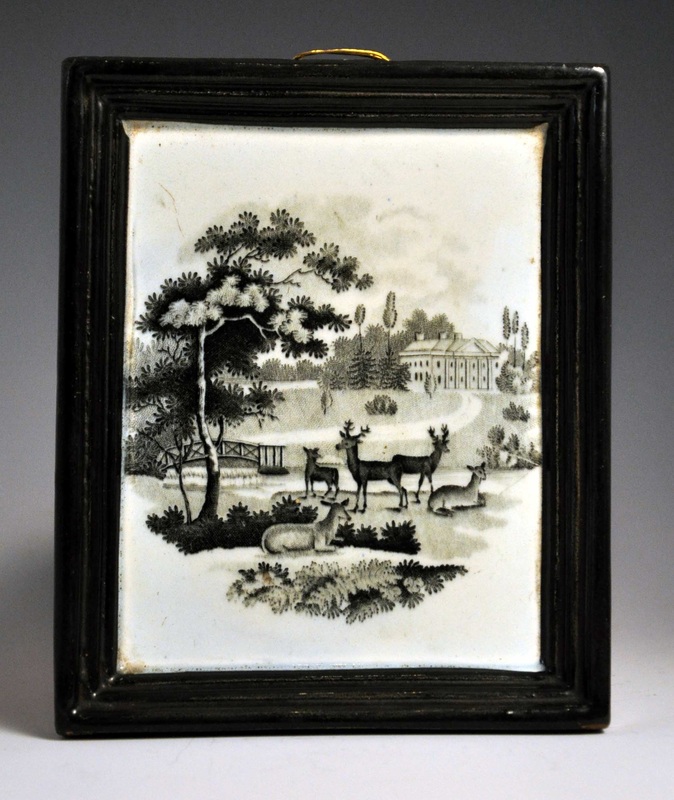
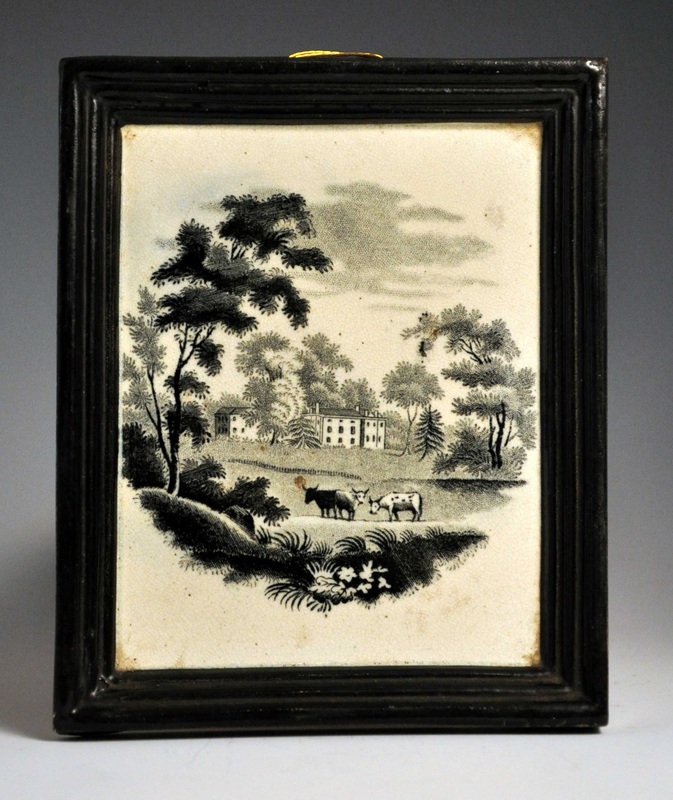
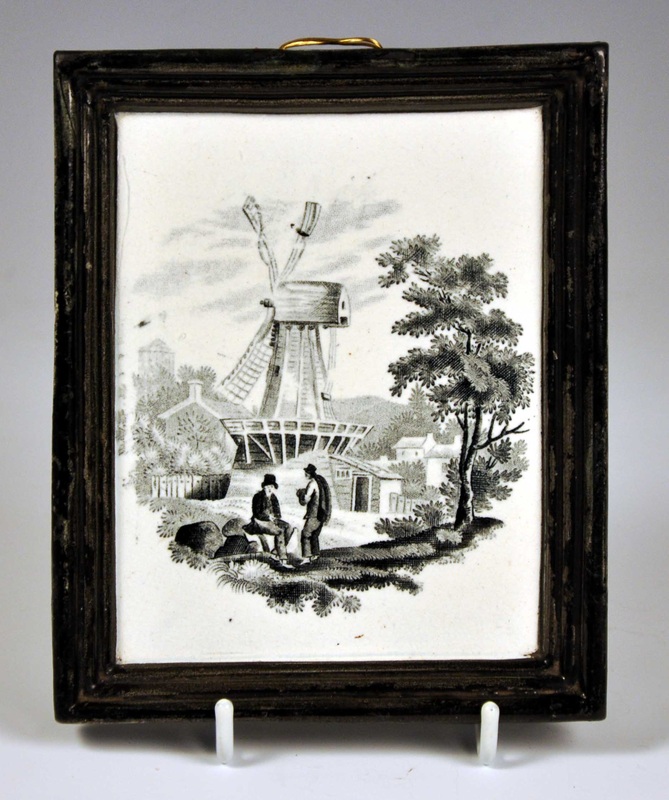
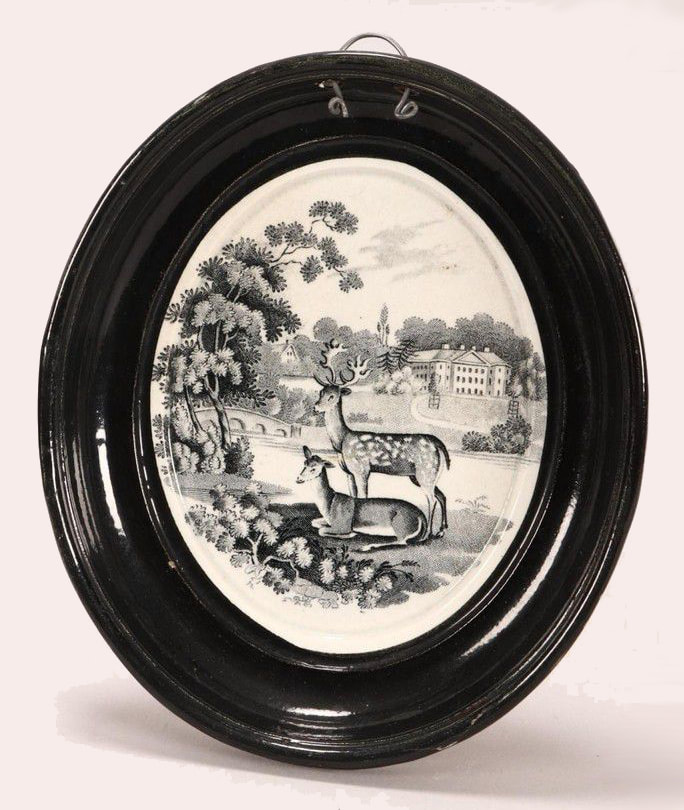
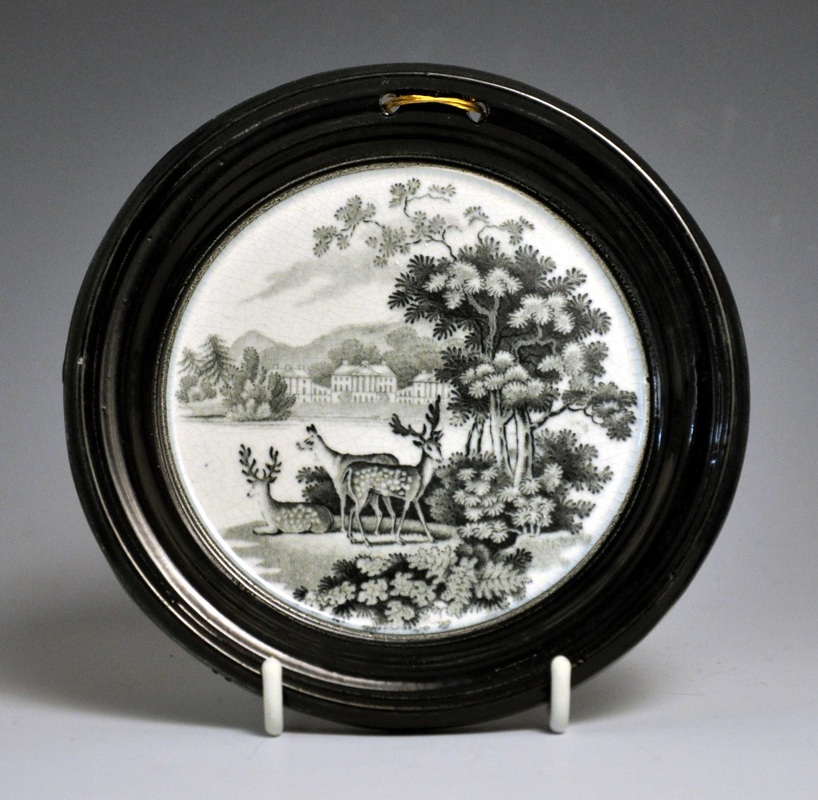
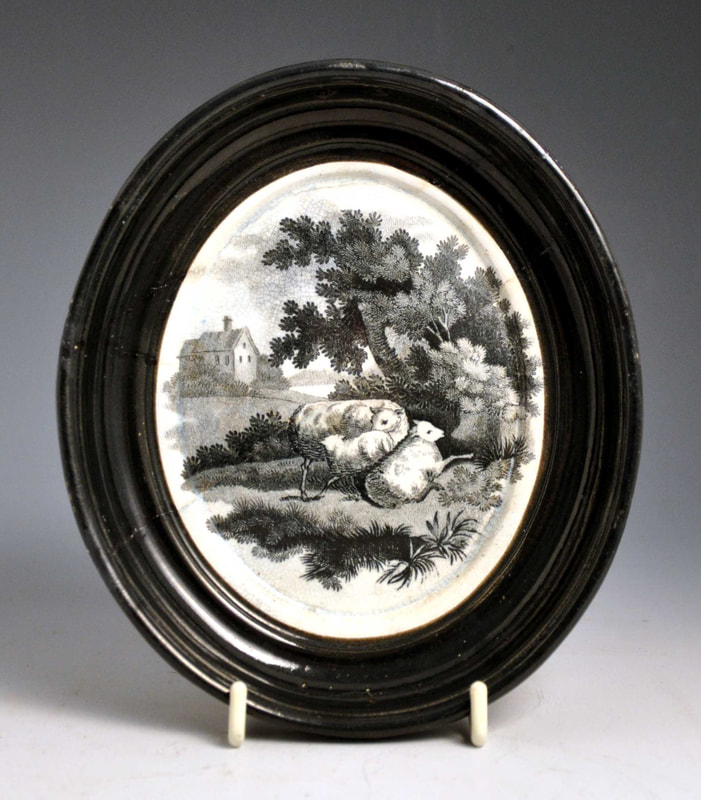
Small black and white plaques made in Staffordshire. The rectangular plaques are 5.5" x 4.5", and the circular is 5.5" diameter. Read more about these plaque forms here.
Unidentified landscapes with large houses
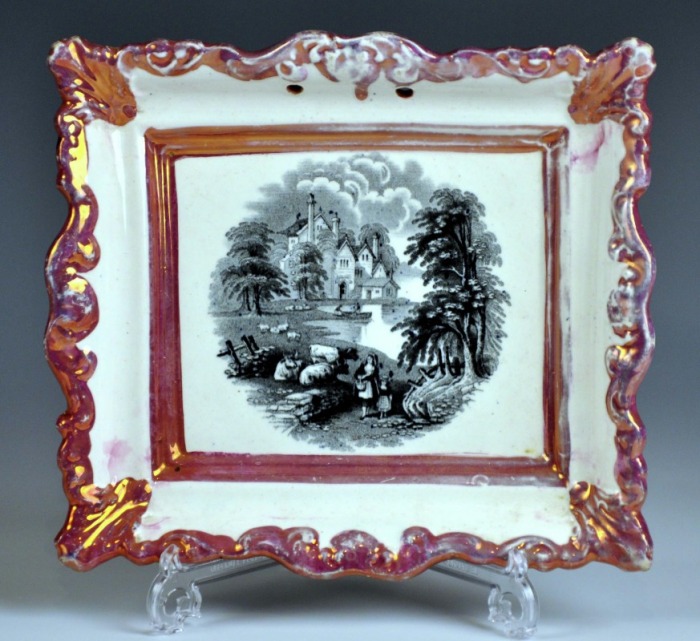
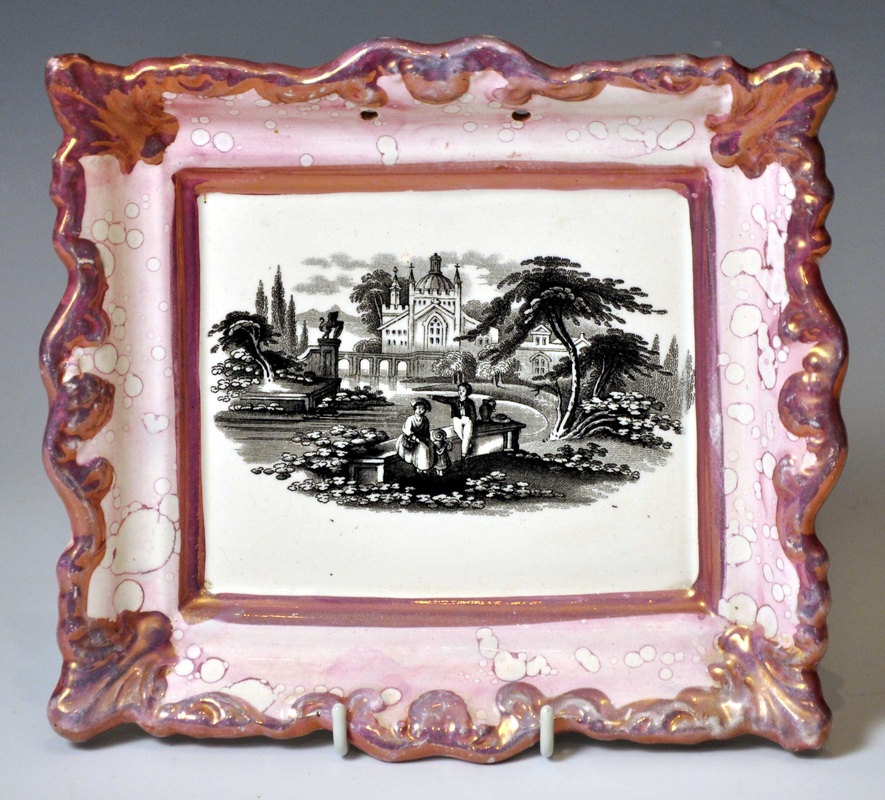

The first with the impressed mark 'MOORE & Co'.
Venice with gondola


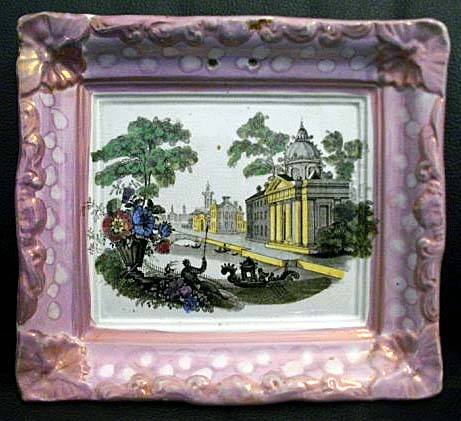
These plaques, from an as-yet unidentified Tyneside pottery, show an Italianate landscape with a gondola in the foreground.
Waverley and Chantry
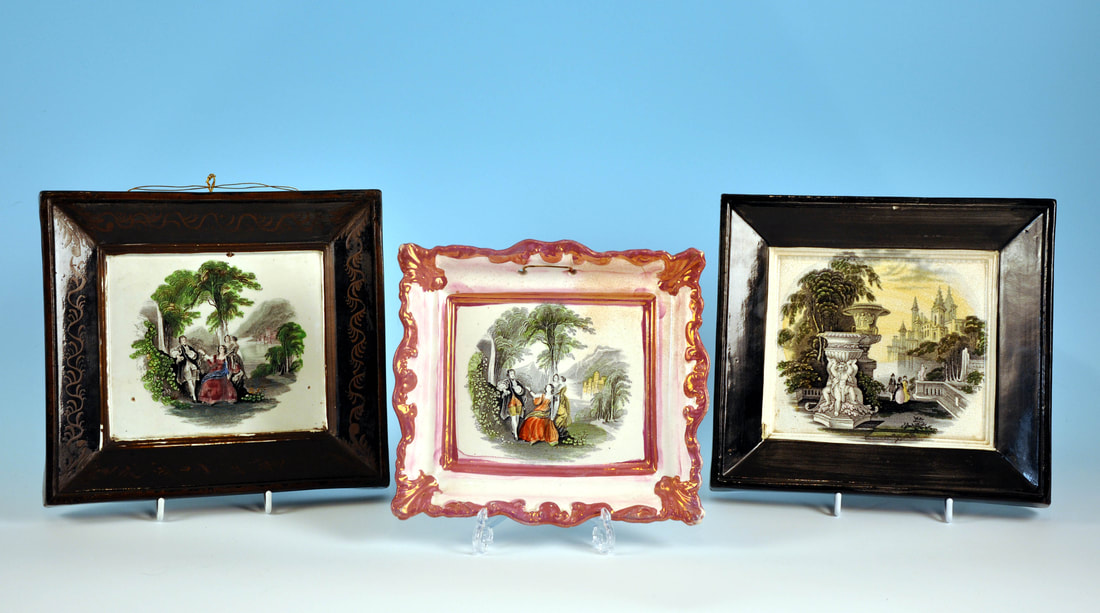
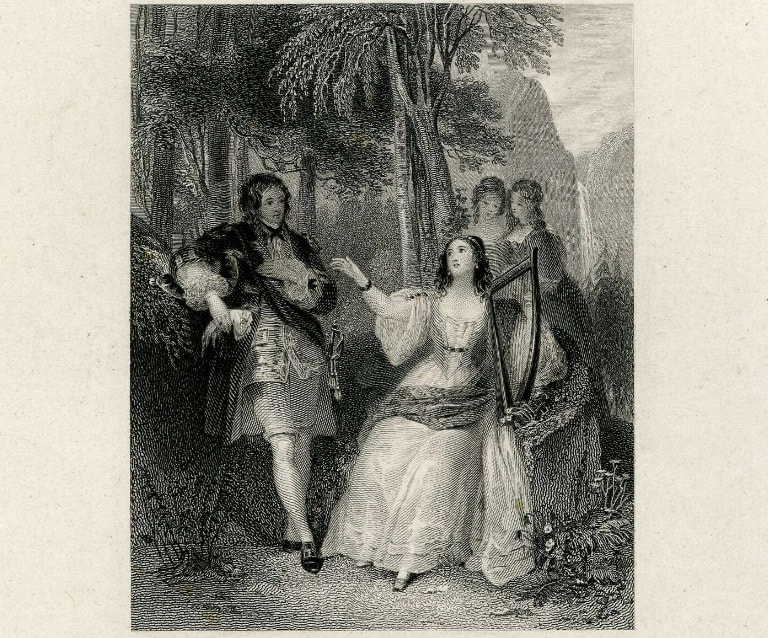
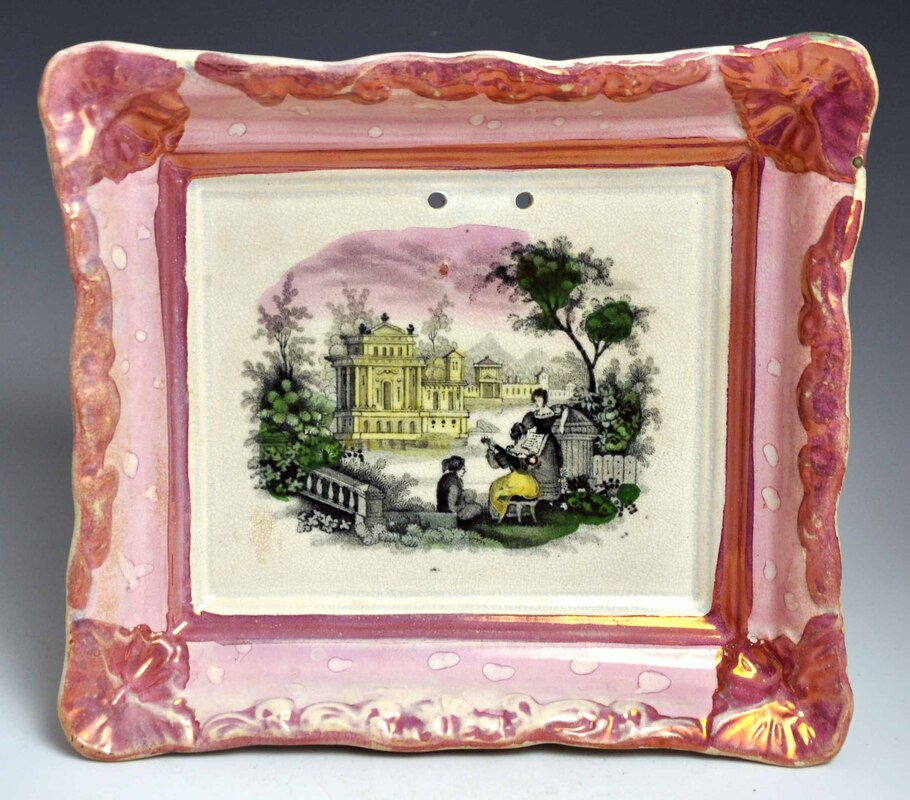
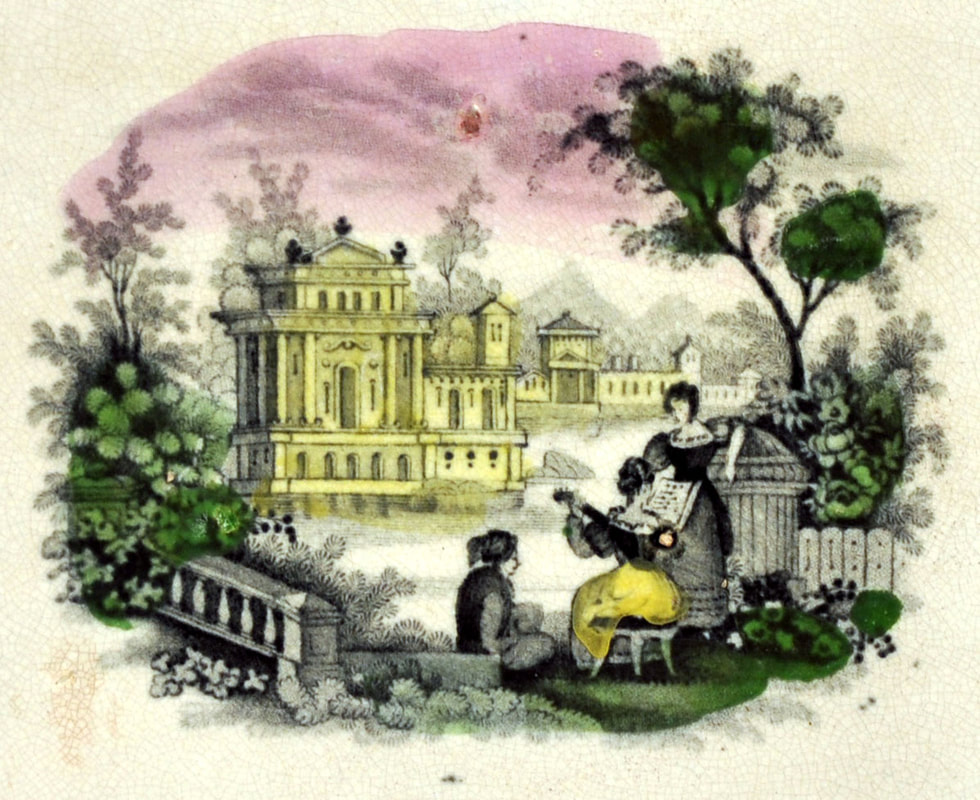
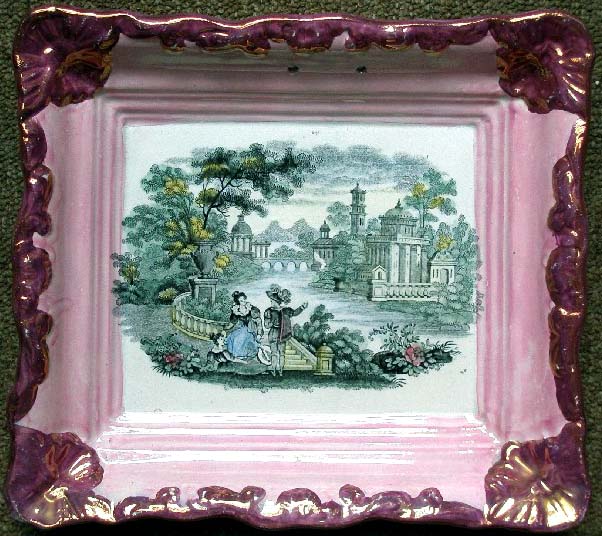
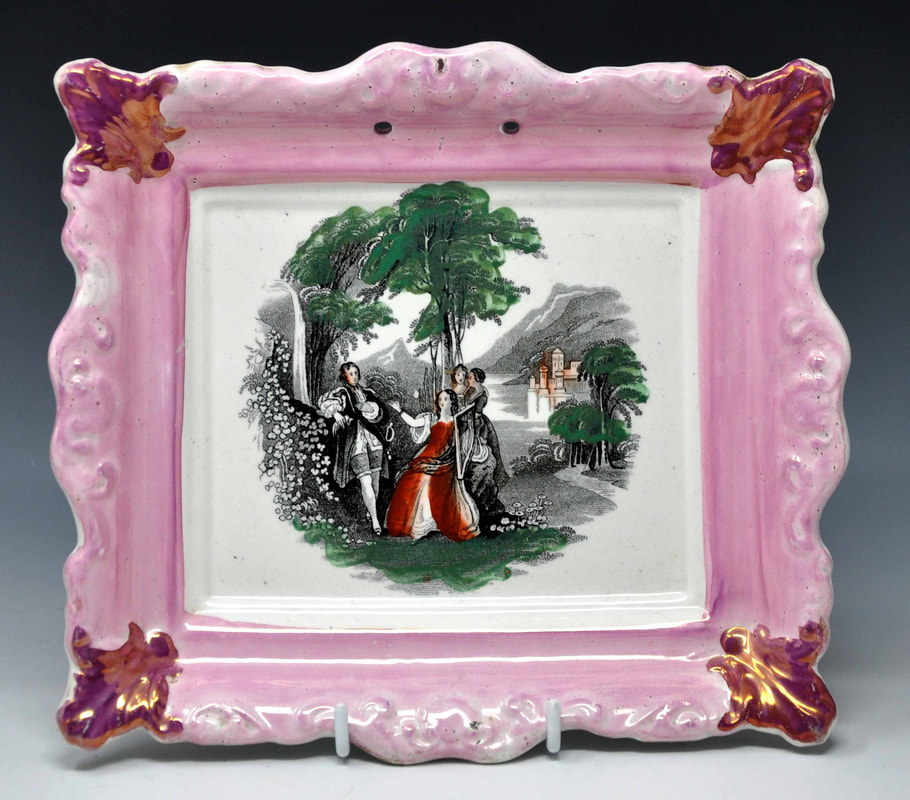
Plaques marked Waverley and Chantry, with views of romanticised landscapes, are found on the same moulds, made by Moore's Wear Pottery in Southwick in the 1840s and 50s. The above right image is the frontispiece of Sir Walter Scott's novel, Waverley.
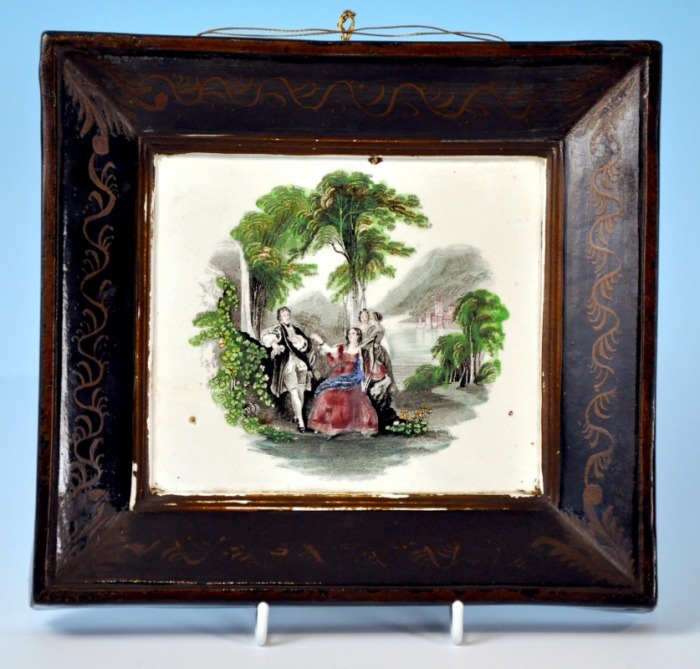
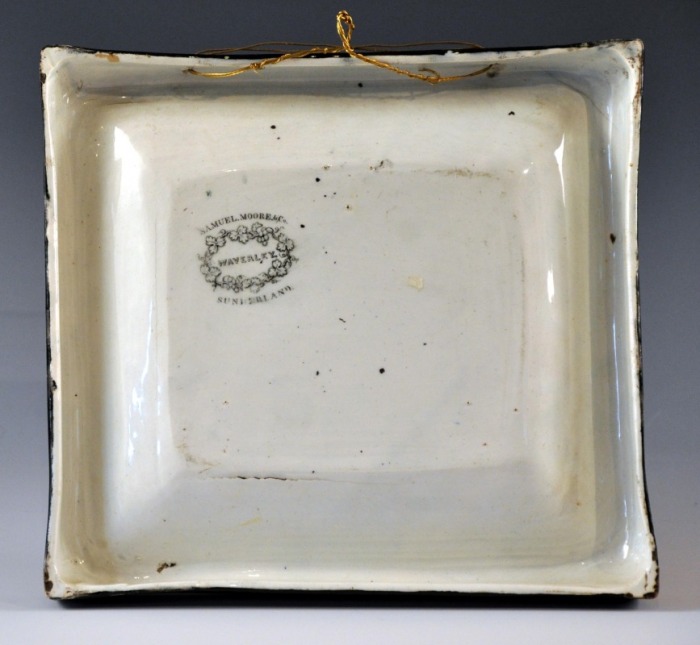

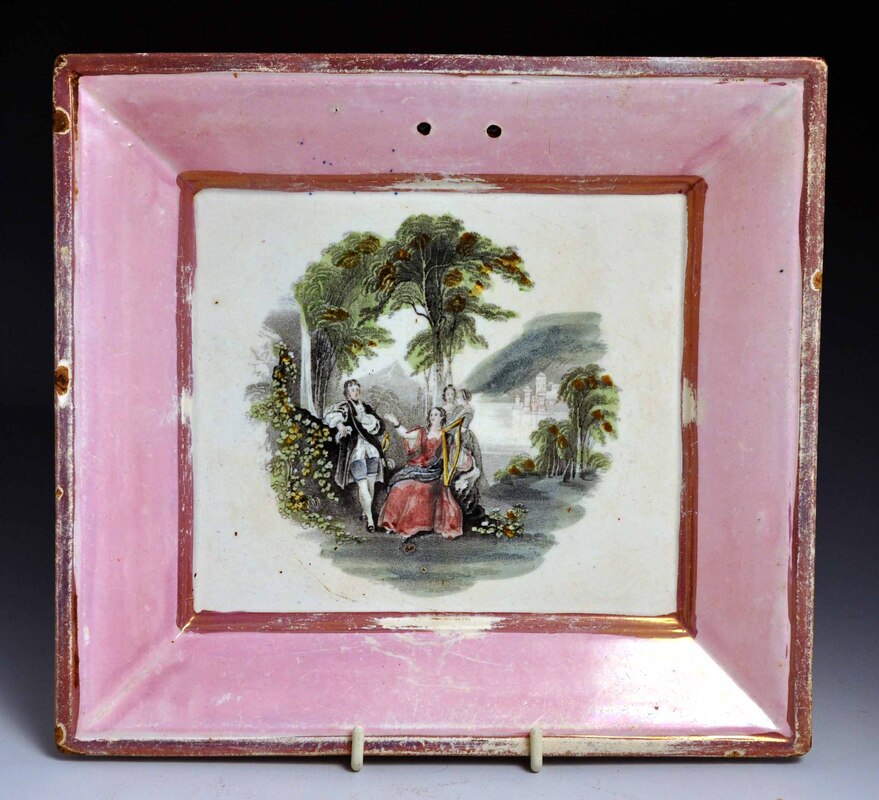
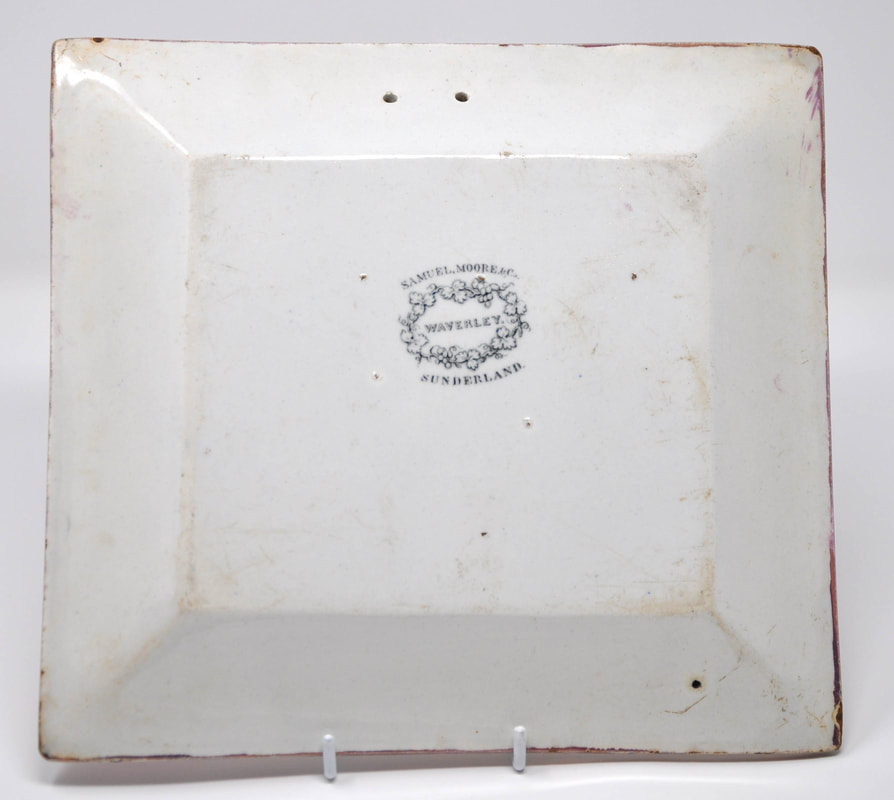
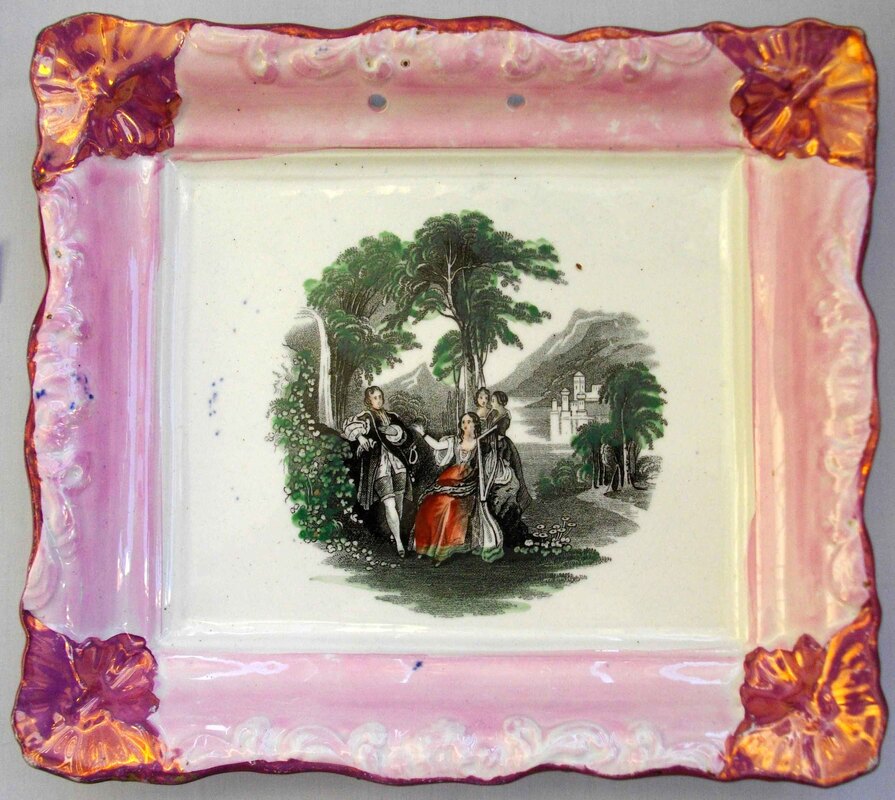
Above are three unusually large plaques with a printed mark Waverley on the reverse. Interestingly, the back of the pink plaque is simplified, without sides. Baker suggests a date of circa 1840 for this rarer plaque form. The last is a more usual large plaque form used by Moore's in the 1840s.
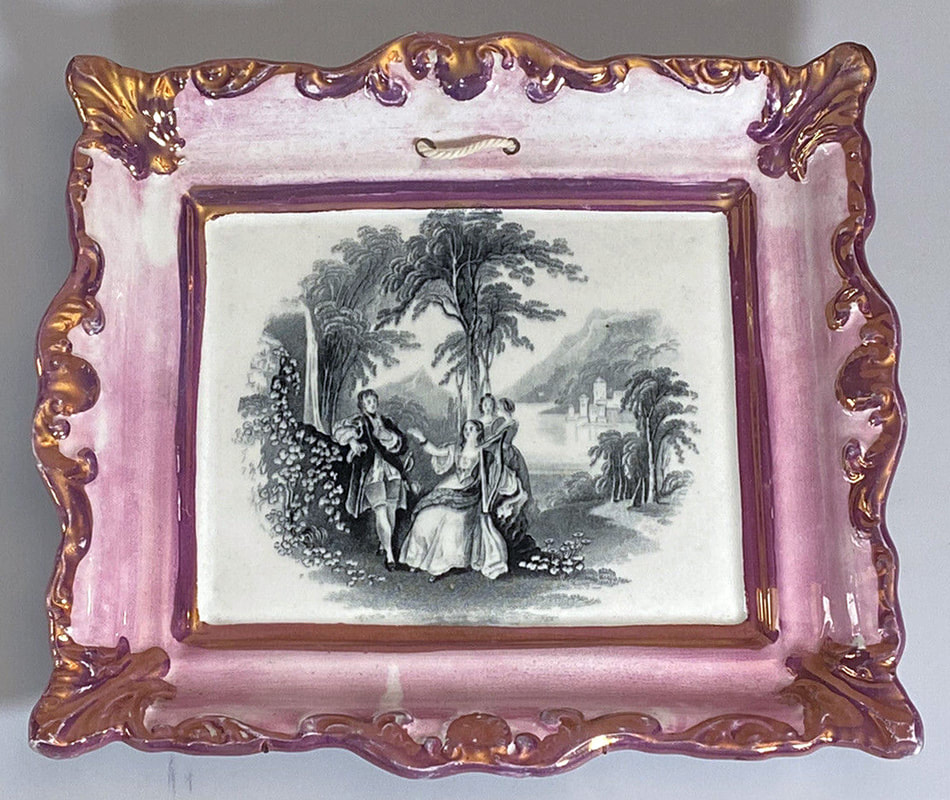
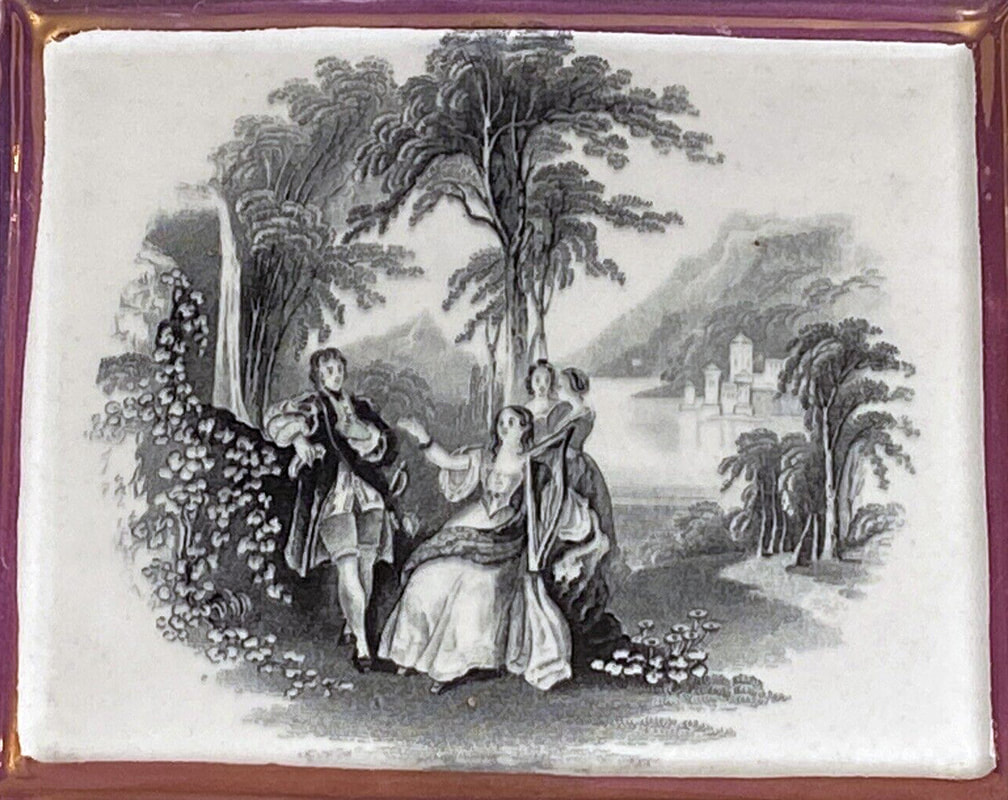
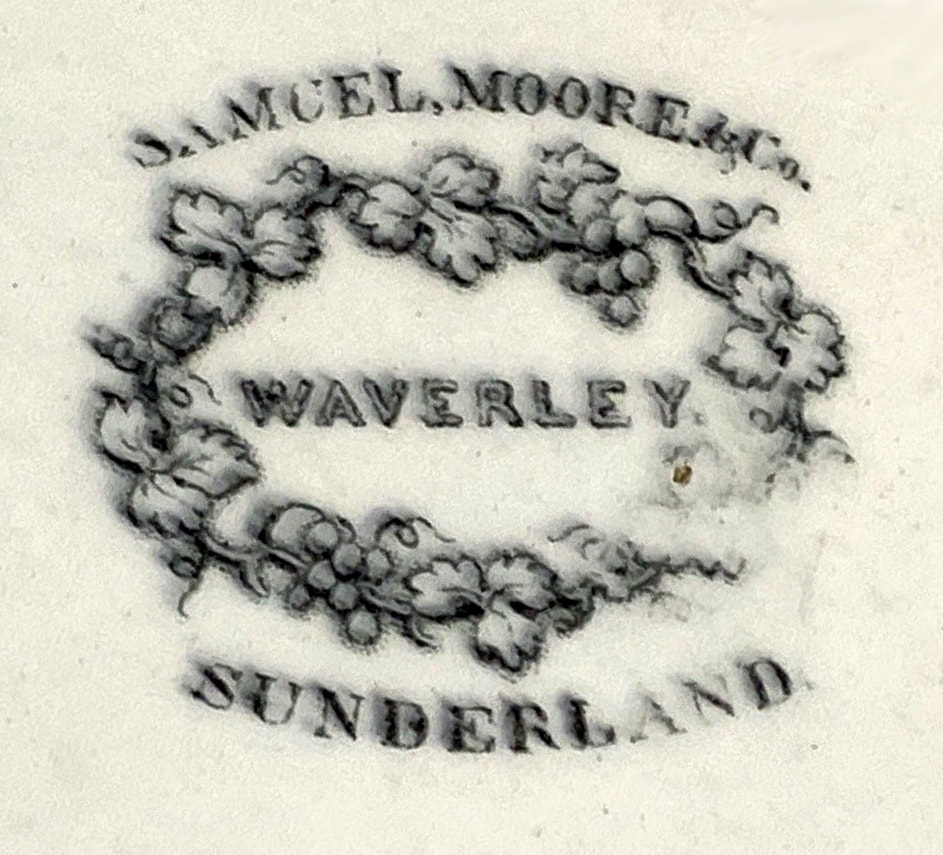
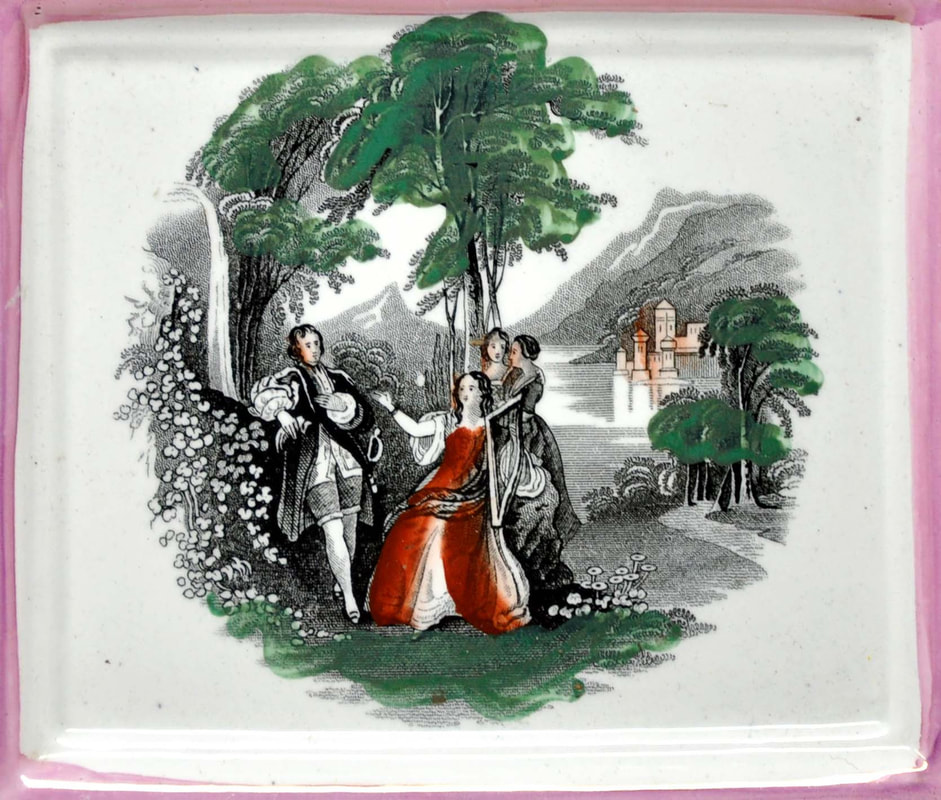
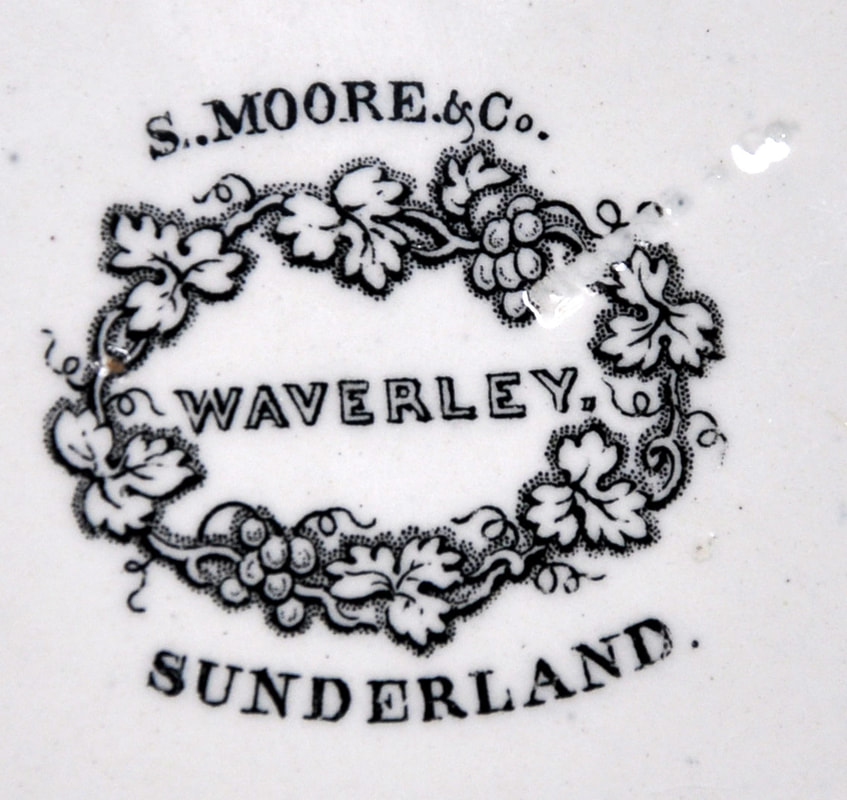
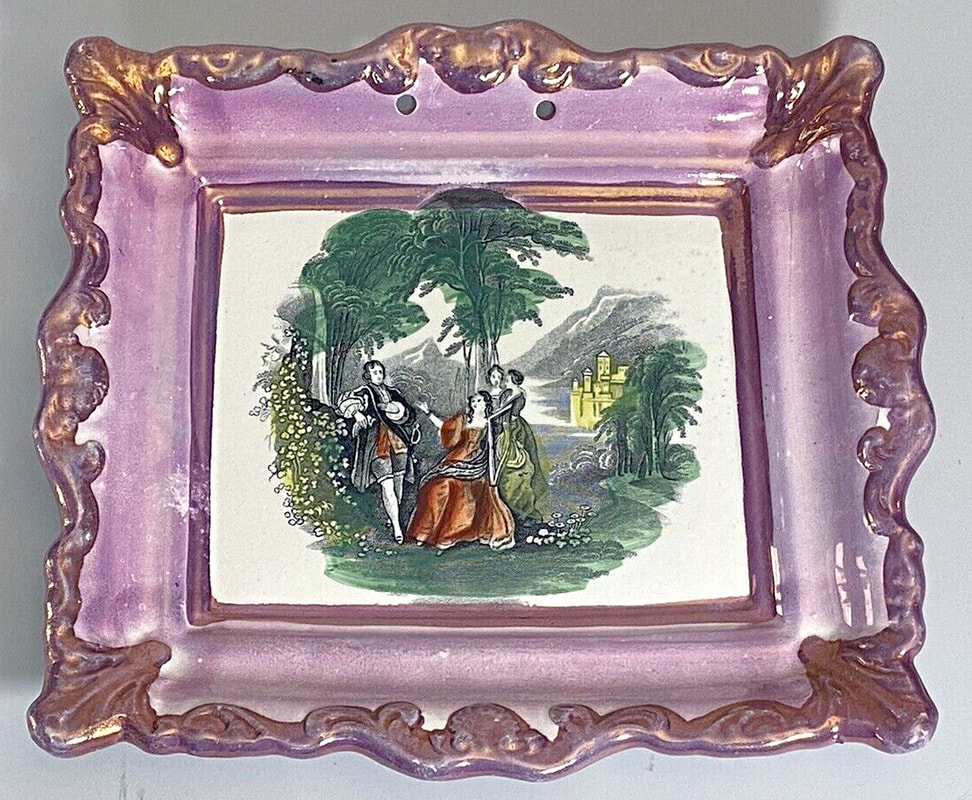
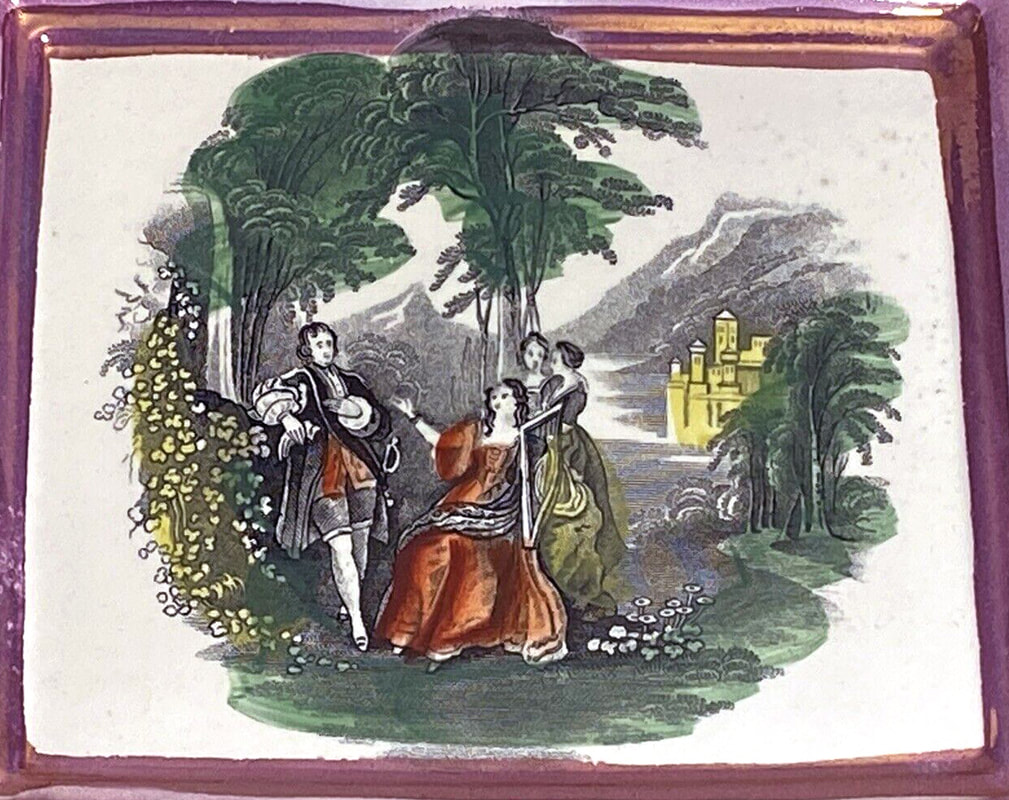
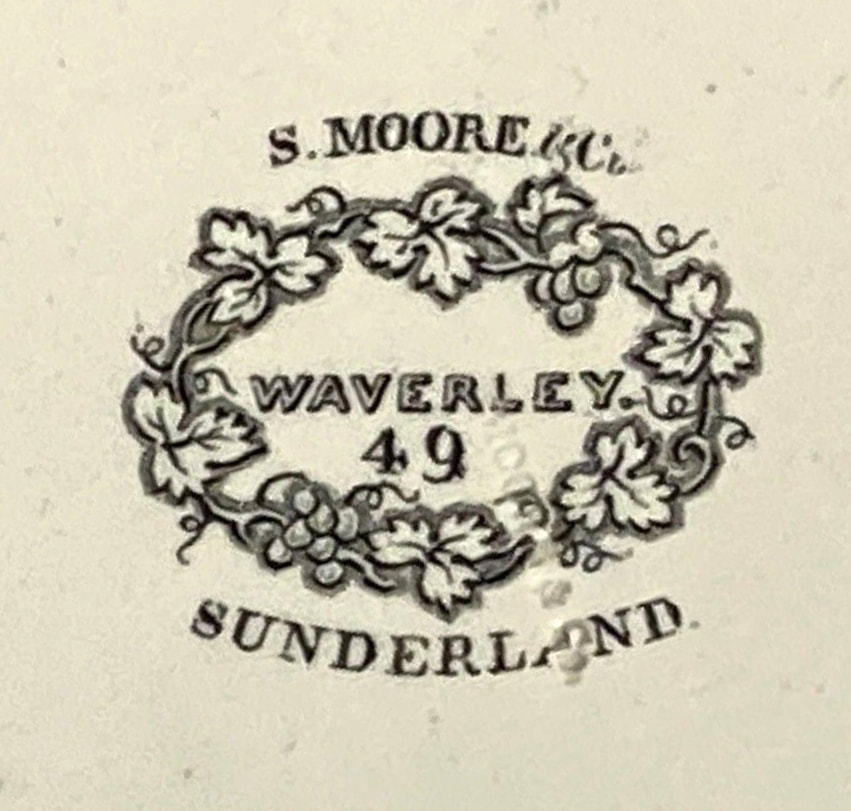
There are three versions of printed mark that appear on these plaques (see above). The earlier version has the full name 'Samuel Moore & Co' and was used on the 1840's items. The later plaques have the abbreviated 'S Moore & Co'. At some point, a number 49 was squeezed into the centre. Note that there is an impressed mark 'MOORE & Co' under the last two printed marks above.
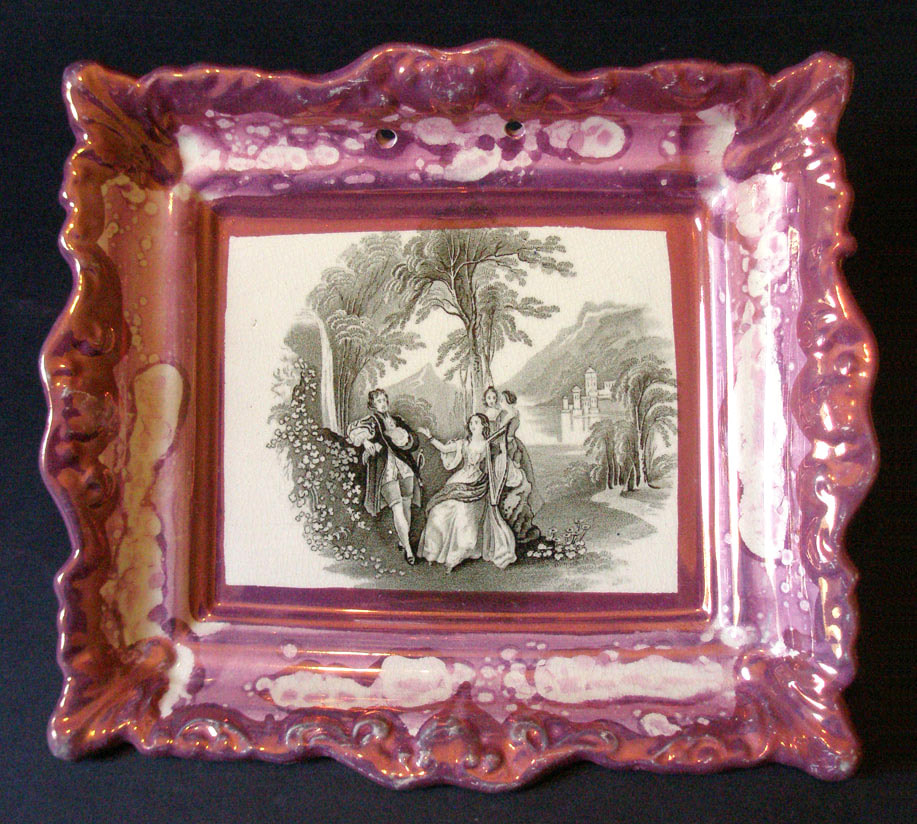
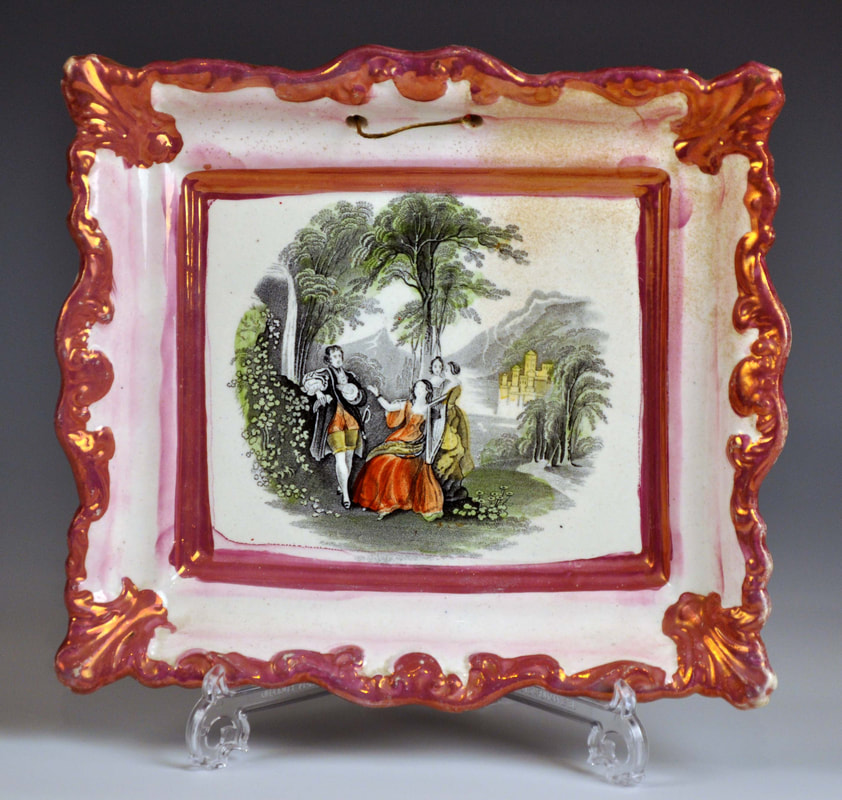
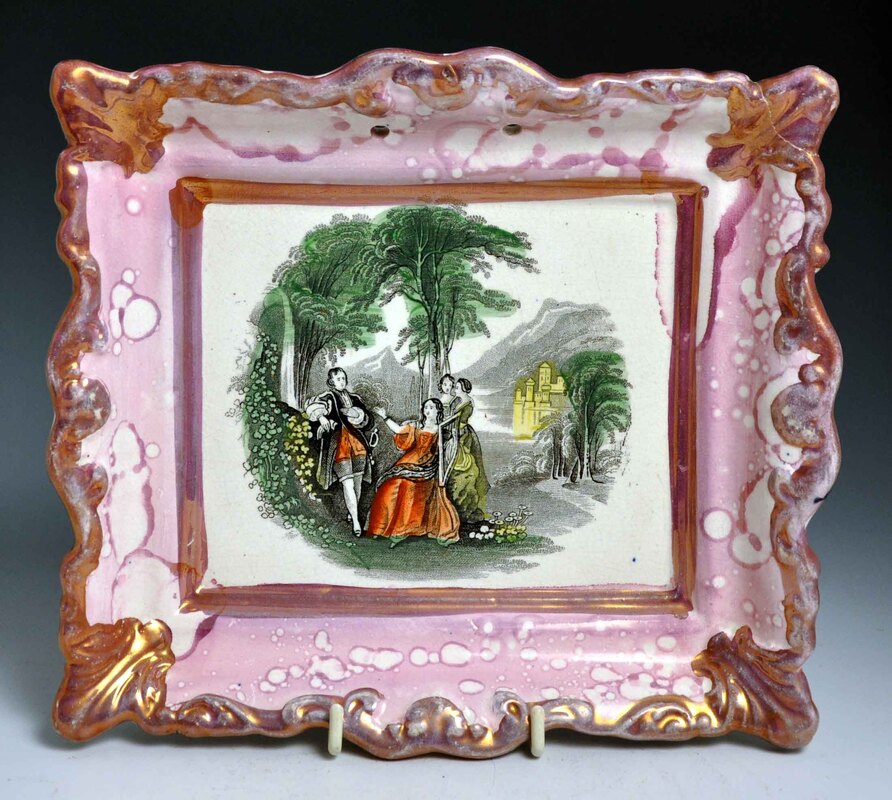
The more conventional plaques above from the 1850s. They all have the mark with the number 49.

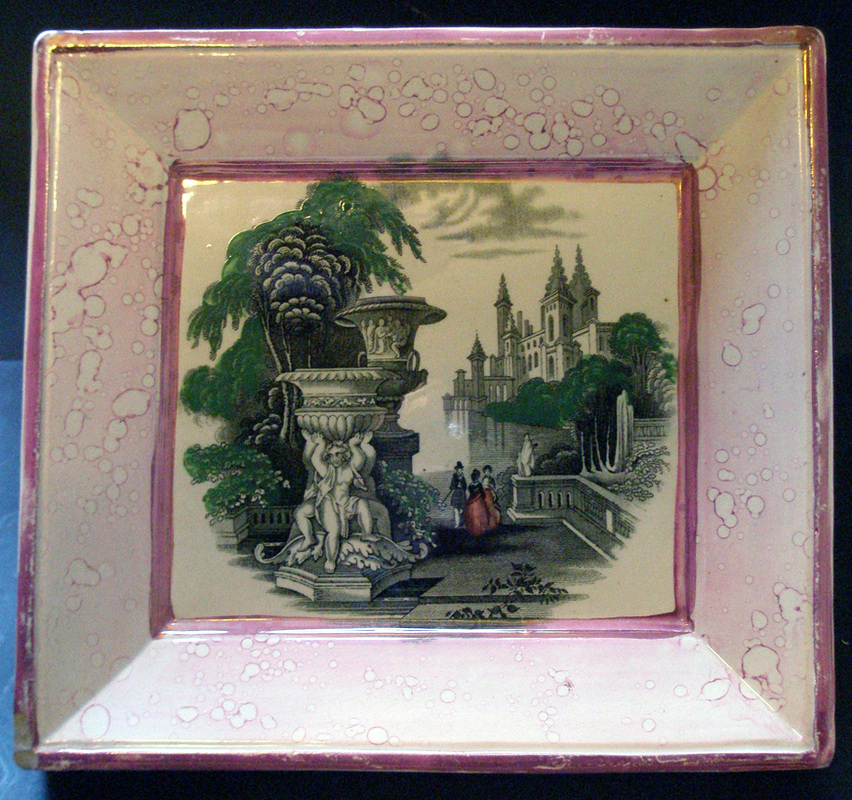
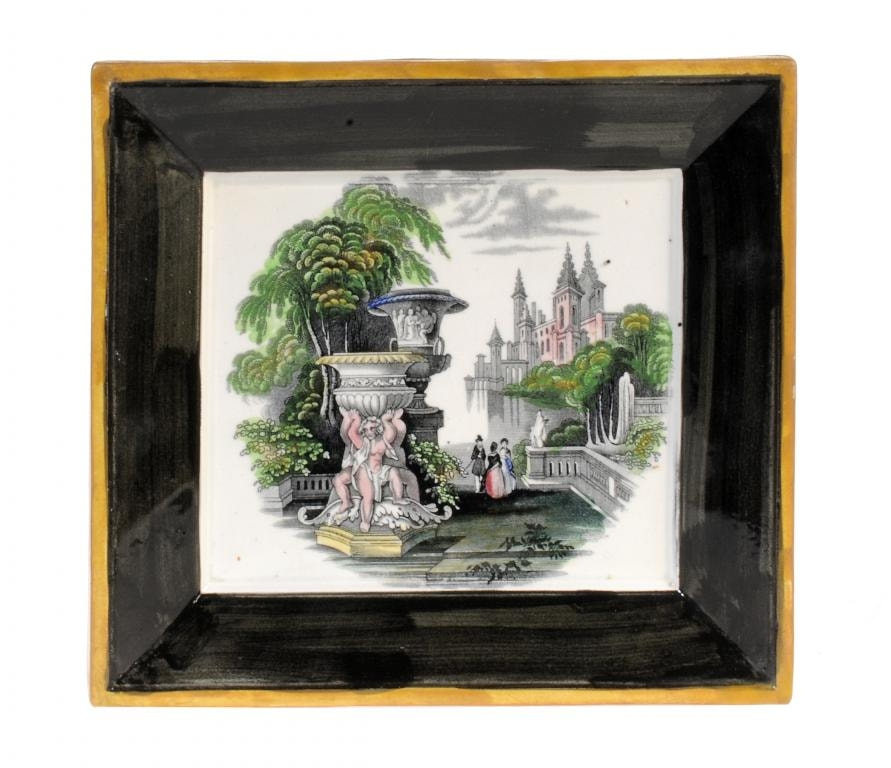
This transfer again appears on a rectangular plaque form with deep sides, with black or pink borders. The first two plaques below have the printed mark 'Chantry' on their reverse, and the initials 'S M & Co'. The last pink-lustre plaque below has a flow blue transfer. Moore's used flow blue on The Bottle series also. interestingly, I have not recorded this transfer on the more common 'picture frame' plaque form (see Waverley above).
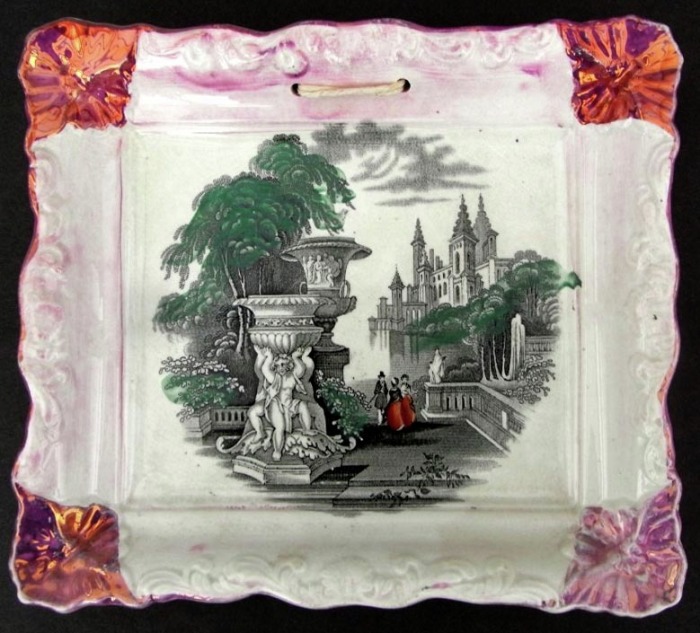
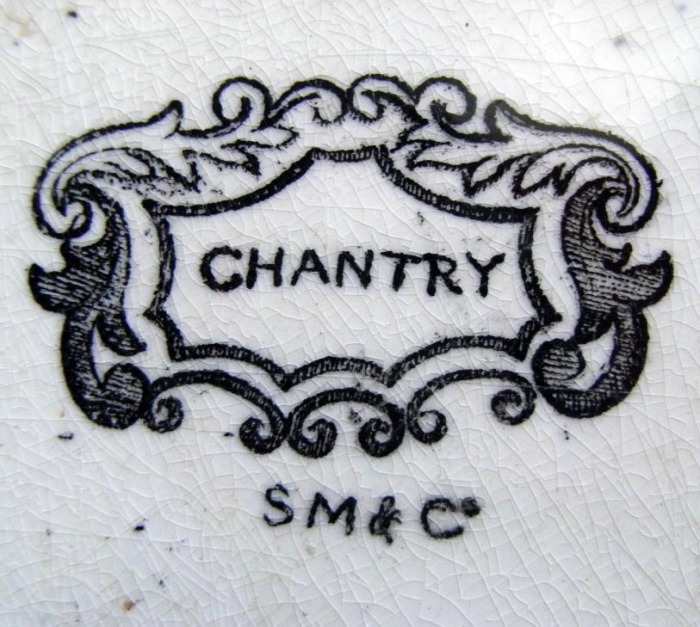
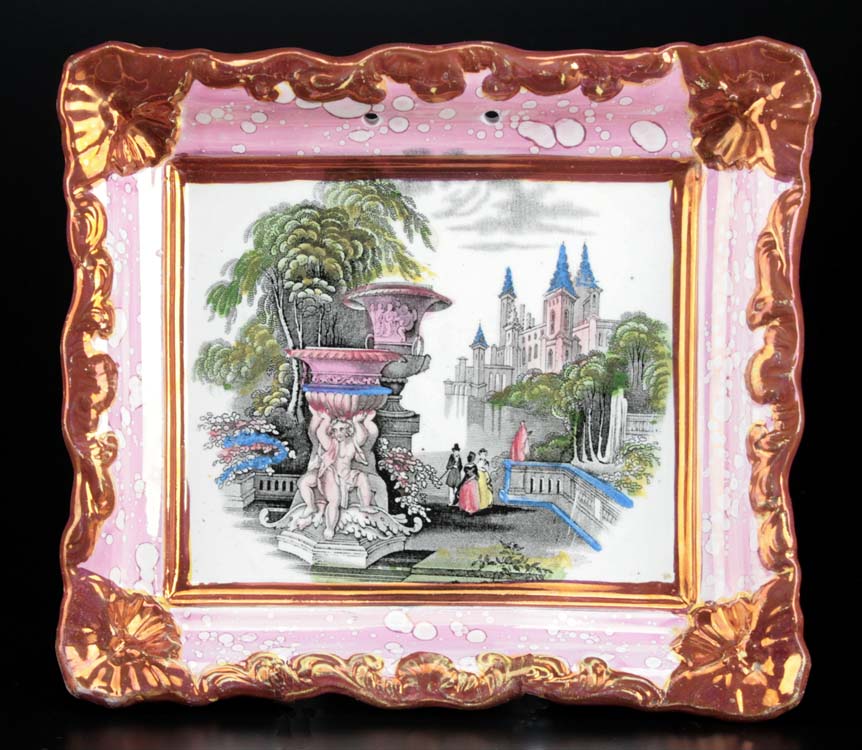
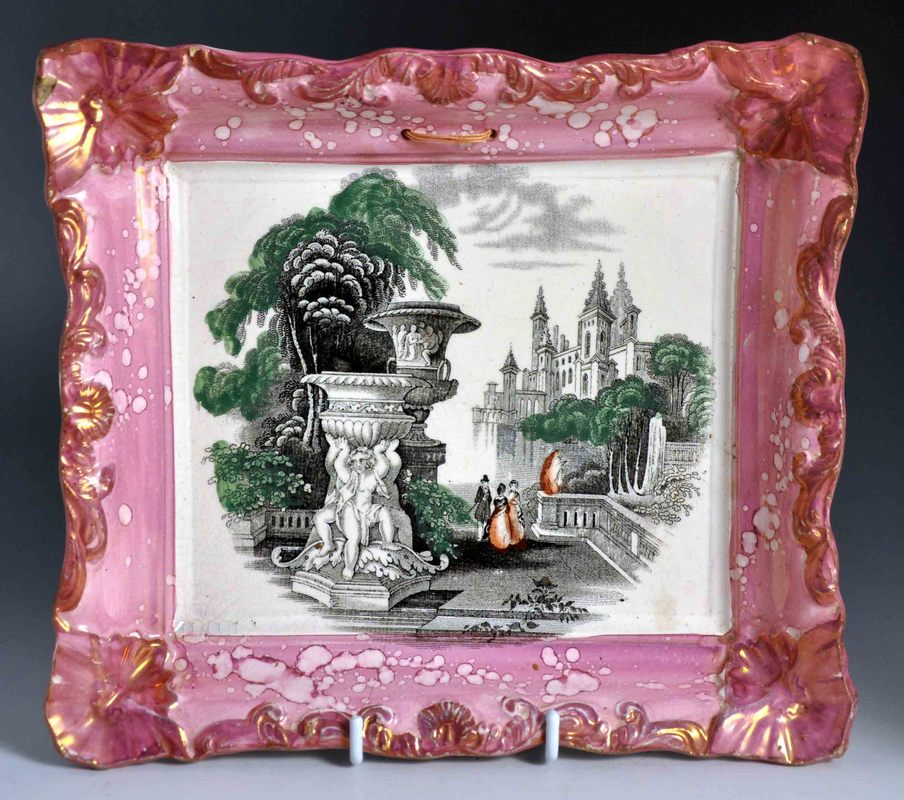
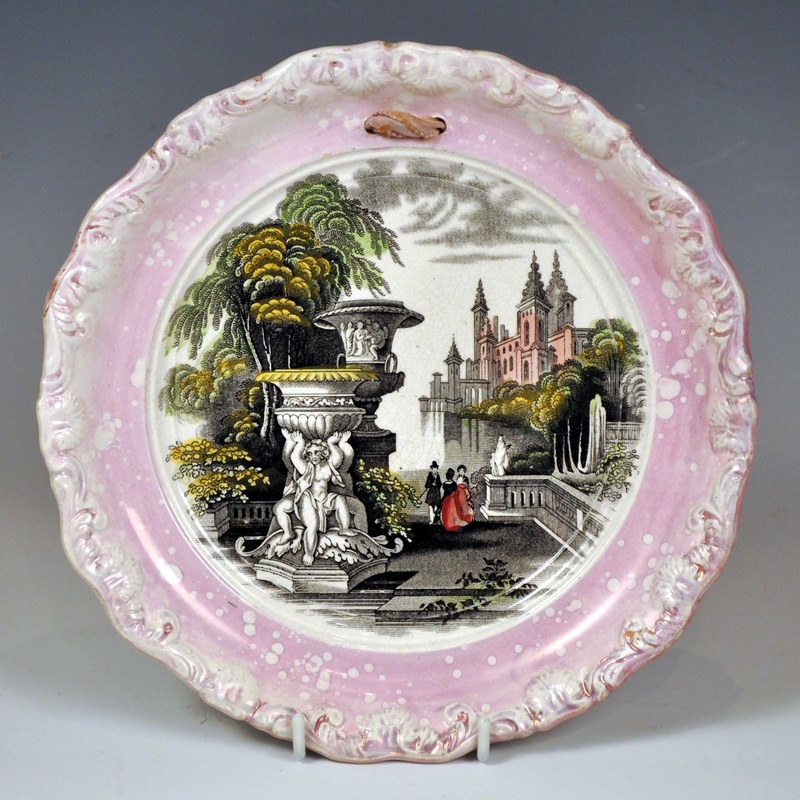
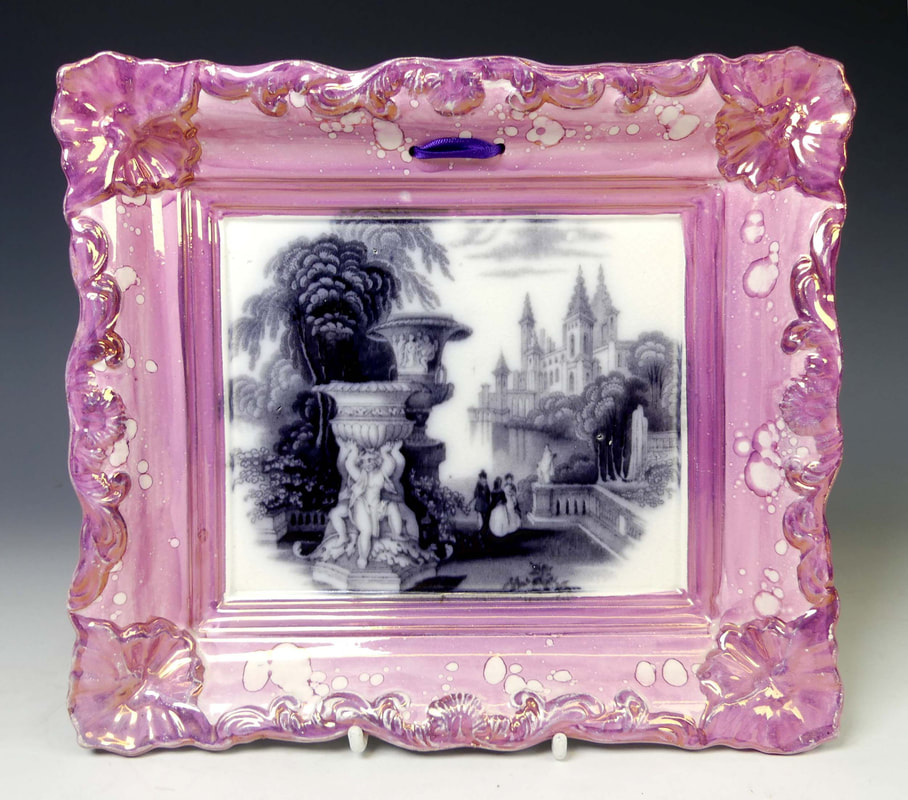
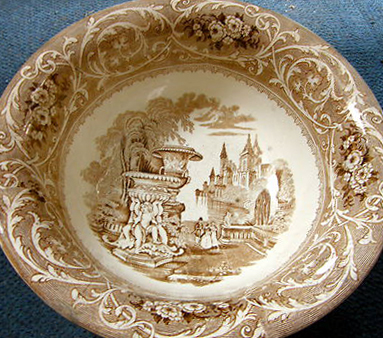
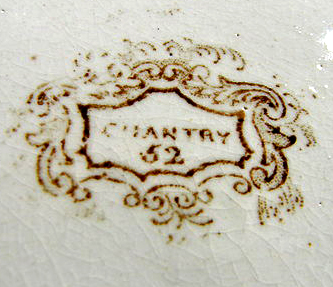
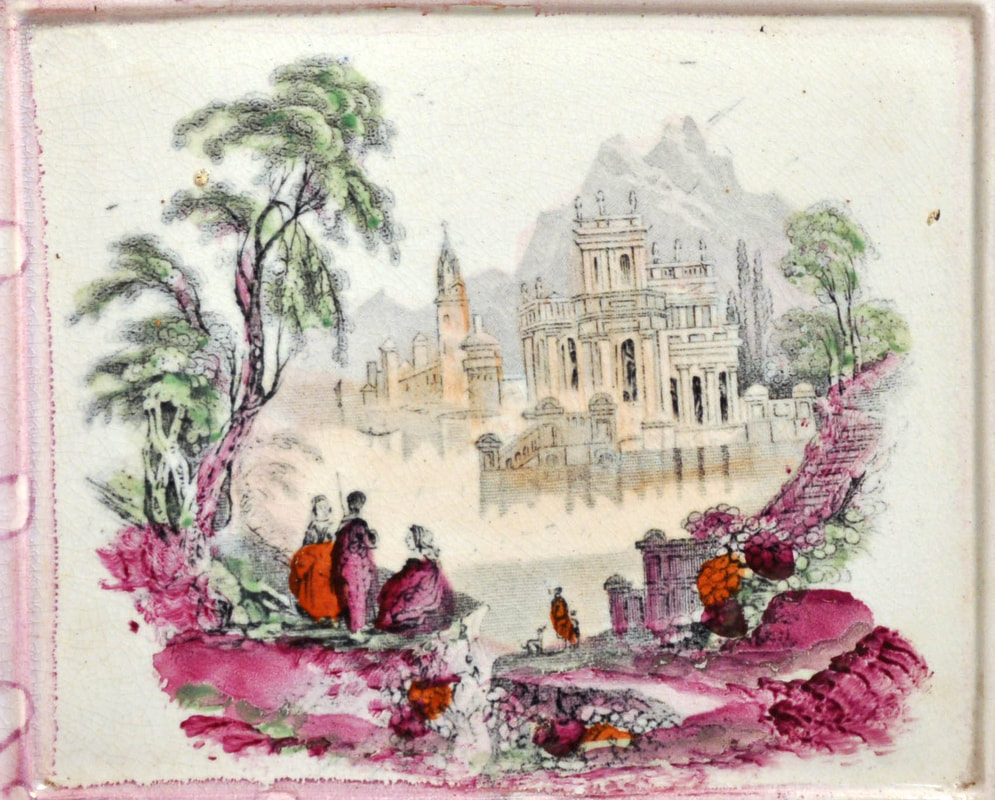
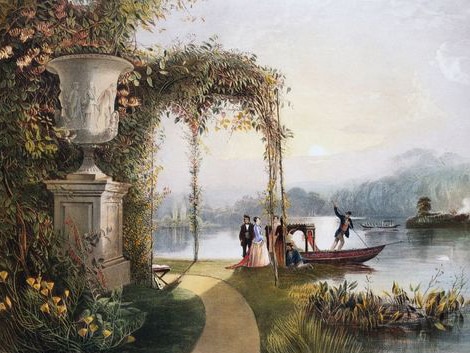
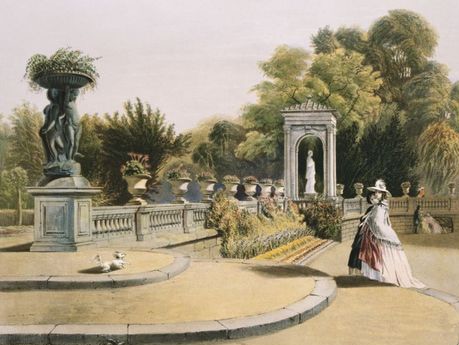
Anderson & Garland write that Chantry 'is based on an engraving of the Italian terraces designed by Charles Barry at Trentham Hall, Staffordshire, for the Duke of Sutherland' (see images below). A variation of the printed mark appears with the number '52'. In this case on the base of a washing jug and bowl.

Wellcombe
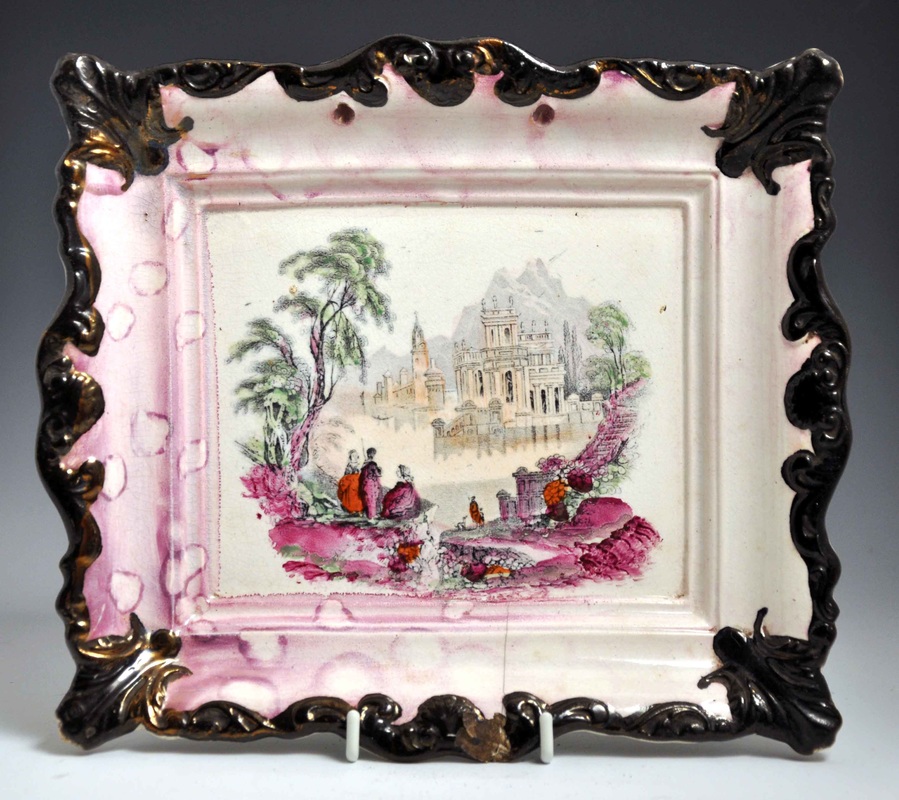
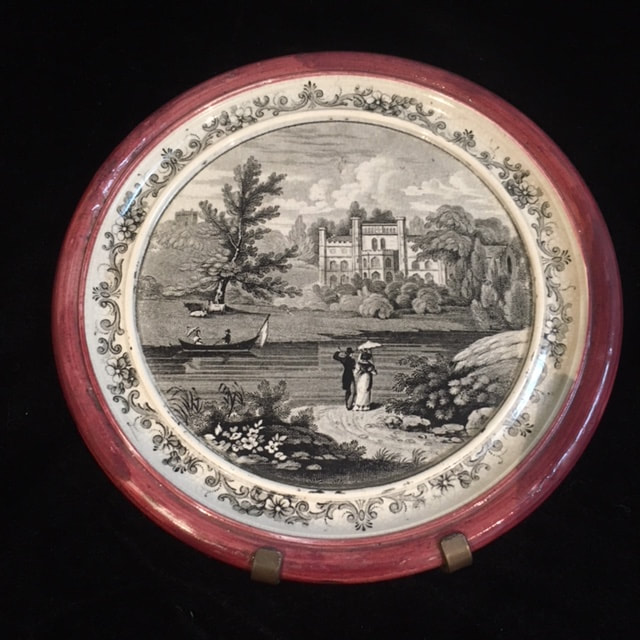
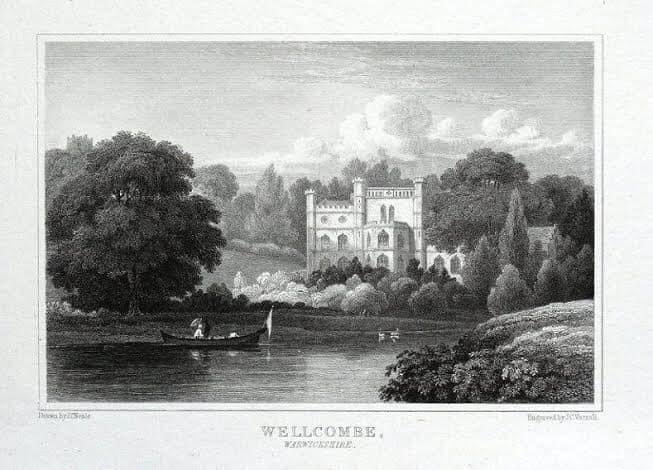
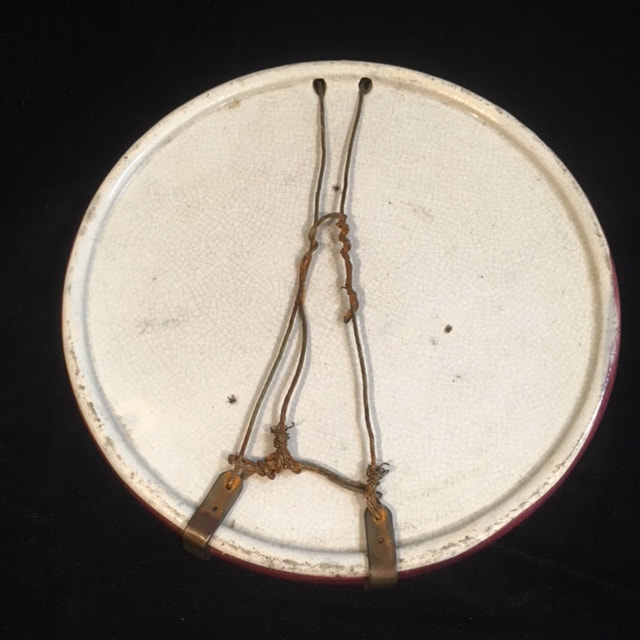
This plaque, diameter 19cm, was likely made in Staffordshire, and has a view of a Warwickshire country house.
William Smith of Stockton 'Select Views'
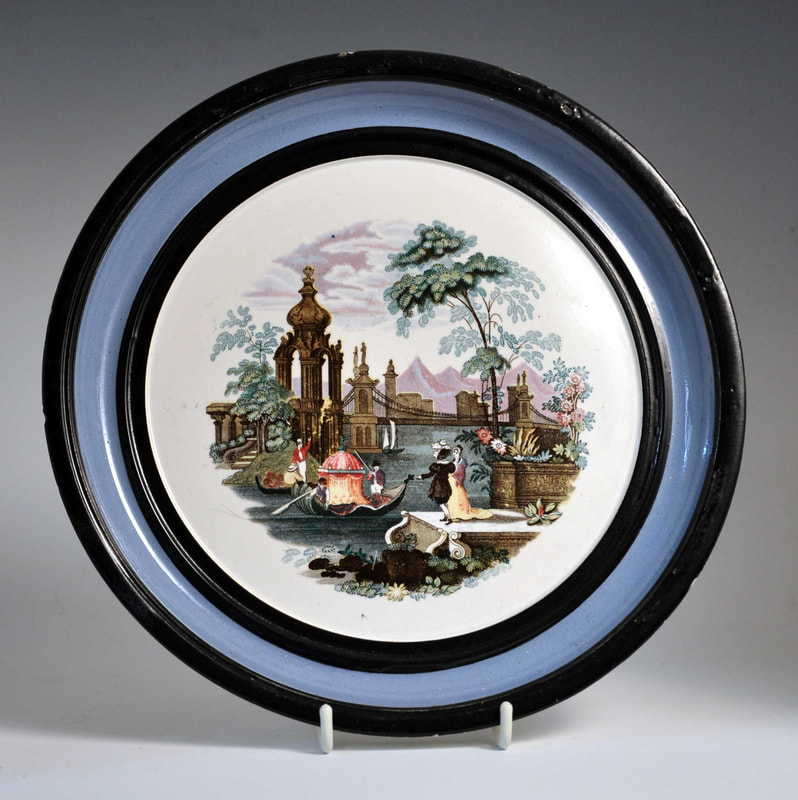
The blue-bordered plaque (left below) has a multi-coloured transfer. Ian Sharp writes of this plaque: William Smith & Co, of the Stafford Pottery, Stockton, produced many multi-coloured transfer prints by layering each coloured transfer on top of one another. Each transfer is lined up using a centralising dot at edge of the transfer. These dots can be seen here, albeit faintly, at exactly “9 o’ clock” and “3 o’clock”.
The mark (centre) is from a red and white plate with a similar view (right). The plate also has a hand drawn inscription on the back, incised into the pottery, with the date 1837.
The mark (centre) is from a red and white plate with a similar view (right). The plate also has a hand drawn inscription on the back, incised into the pottery, with the date 1837.

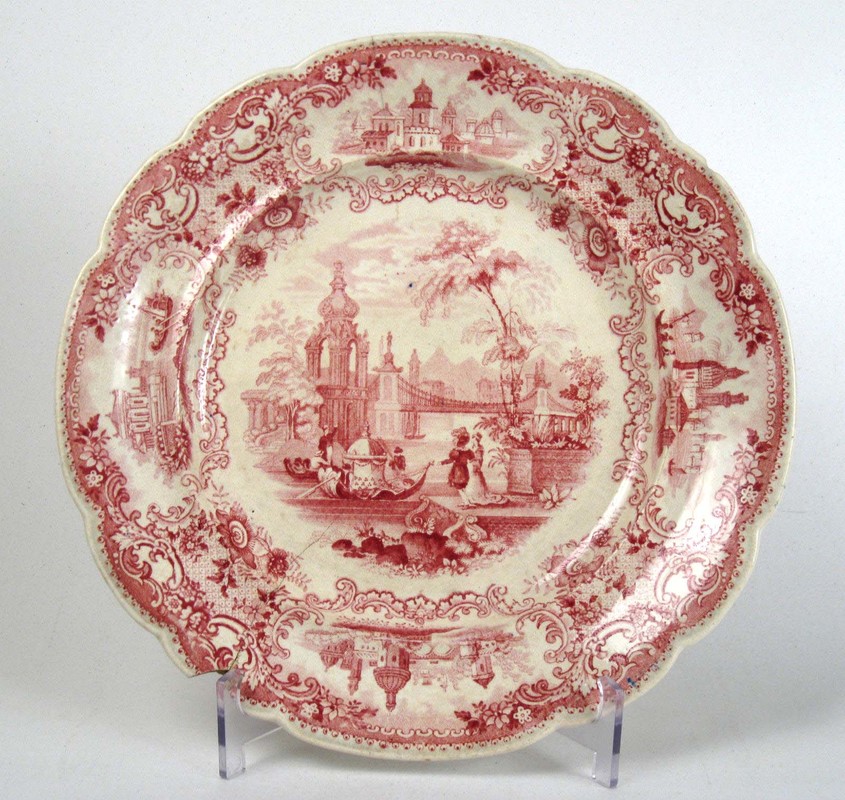
Other landscapes